







Penerangan Umum Tenaga Surya
Inlux Solar supplies commercial solar street lights (also called solar street lamps) for municipal roads, industrial zones, parking areas, pathways, communities, and infrastructure projects where trenching, utility connection, or long-term electricity cost makes conventional lighting less practical. This page helps buyers compare system types, application fit, and engineering considerations before requesting a quote.
Solar Street Light Types (Choose by Project Constraints)
Below is a practical selection map. Each type is engineered for different constraints: installation speed, autonomy nights, panel cleaning, hazardous areas, or hybrid reliability.
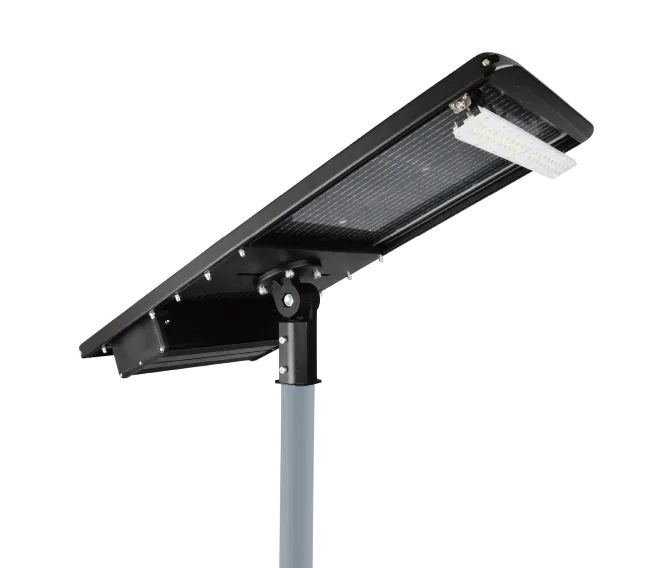
All-In-One Solar Street Light (Integrated)
Best when your priority is fast deployment and clean installation (PV + battery + controller + LED integrated).

All-In-Two Solar Street Light (Semi-Integrated)
Best when you need a flexible PV orientation (panel separated from the luminaire) for better charging under site constraints.

Split Type Solar Street Light (Panel + Battery Box for Higher Capacity)
Best when you need larger battery capacity and long autonomy for rainy seasons.

Application-Specific Solar Lights (Hazardous + Hybrid)
Best for hazardous locations (oil/gas/chemical) or when you require hybrid power reliability.
For projects that need automatic grid backup, see our solar AC hybrid street light (pole + battery kit).

Decorative Solar Street Light (Aesthetic Poles & Accessories)
Best for city image projects, parks, plazas, and streetscape upgrades where appearance matters.

Solar Light Poles (Vertical PV for Easy Cleaning)
Best for dusty/sandy regions where panel cleaning cost is high.
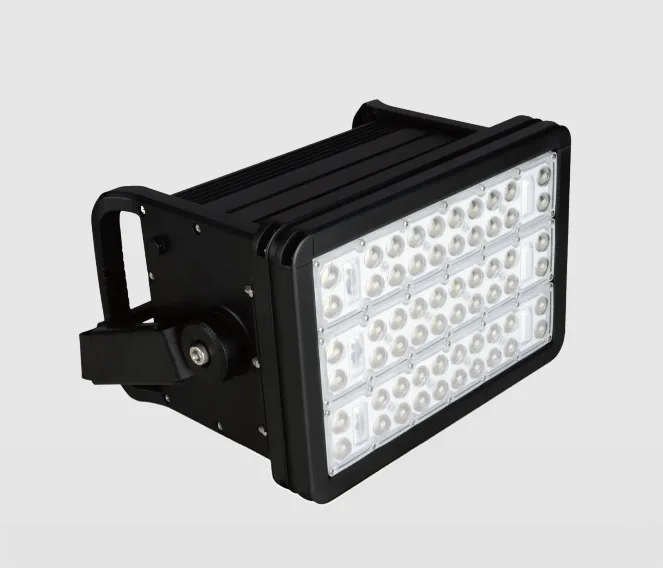
Lampu Banjir Tenaga Surya - Obor
TORCH Solar Flood Light delivers powerful, efficient lighting for large open areas, with LiFePO4 battery and smart controls.
What Are Commercial Solar Street Lights?
Commercial solar street lights are off-grid outdoor lighting systems that use a photovoltaic panel, charge controller, battery, LED luminaire, pole or bracket, and programmed lighting profile to illuminate roads, parking areas, industrial zones, communities, and public infrastructure without a grid connection. Unlike small residential solar lights, project-grade systems must be sized around the installation city, road width, pole height, lighting target, battery autonomy, rainy-season solar conditions, wind exposure, corrosion risk, and maintenance access. For municipal and EPC buyers, the best system is not simply the highest wattage; it is the configuration that can deliver the required lux, uniformity, runtime, and service life under the site’s worst operating conditions.
Quick Project Match for Commercial Solar Street Lights
Use this shortlist to compare the right system architecture before you compare wattage. Different project types usually need different solar street light structures, not just different fixture power.
- Municipal roads and secondary streets: review our road and street lighting approach to compare site requirements before selecting a system architecture. Consider lampu jalan tenaga surya all-in-one when compact construction and faster installation are priorities. For All-in-One specification steps, pole spacing, and illustrative configurations, see our municipal solar street lights guide.
- Main roads, cloudy regions, or higher autonomy targets: compare all-in-two and split-type systems for more flexible panel orientation and larger energy storage.
- Dusty, sandy, or premium streetscape projects: ulasan lampu tiang surya with vertical PV for easier cleaning and stronger project aesthetics.
- Parking areas, yards, and open commercial zones: check lampu tempat parkir tenaga surya atau mini mast light solutions.
- Ports, airports, logistics yards, and very large open areas: move to lampu tiang tinggi surya systems.
Send These Inputs Before You Request a Quote
- Project country and city
- Road width or site dimensions
- Pole height and spacing target
- Target lux, uniformity, or road class
- Required backup nights
- Whether poles, brackets, and foundations are included
Need manufacturer-level support? Visit our solar street light manufacturer page for RFQ inputs, technical files, and project-based recommendations.
Which Solar Street Light Type Fits Your Project?
| System type | Best fit | Use caution when | RFQ inputs to confirm |
|---|---|---|---|
| Lampu Jalan Tenaga Surya All-in-One | Fast deployment, cleaner appearance, secondary roads, compounds, pathways, and projects with simple installation needs. | The site needs large battery capacity, flexible panel orientation, or extended rainy-season autonomy. | Road width, pole height, target spacing, dimming profile, autonomy nights, and installation city. |
| All-in-Two Solar Street Light | Main roads, municipal projects, cloudy regions, and sites where the solar panel should be oriented separately from the luminaire. | The buyer wants the smallest possible integrated fixture or has very limited pole space. | PV orientation, pole arm design, battery capacity, wind load, and lighting layout target. |
| Lampu Jalan Tenaga Surya Tipe Split | Higher-capacity public lighting, long autonomy targets, wide roads, and rainy-season or remote infrastructure projects. | The project requires very fast installation with minimal component mounting. | Battery box location, anti-theft design, cable protection, autonomy nights, and maintenance access. |
| Lampu Tiang Surya | Dusty, sandy, premium streetscape, park, and city-image projects where vertical PV can simplify cleaning and improve appearance. | The site needs maximum panel tilt flexibility or very high lumen output from one pole. | Cleaning frequency, pole finish, PV area, street aesthetics, and local corrosion conditions. |
| Lampu Tiang Tinggi Tenaga Surya | Ports, airports, logistics yards, intersections, large parking areas, and open industrial spaces. | The project has low mounting height limits or narrow pathway lighting needs. | Mast height, lighting radius, wind rating, foundation scope, and required lux/uniformity. |
Where Commercial Solar Street Lights Are Commonly Used
Commercial solar street lights are not selected for one single use case. The right system depends on the project environment, maintenance reality, and performance target.
Typical applications include:
- Municipal and community roads
- Industrial parks and factory roads
- Parking lots and access roads
- Residential developments and compounds
- Parks, pathways, and public-space lighting
- Perimeter and security lighting
- NGO and rural electrification projects
For industrial parks, factory roads, and logistics yards, explore our industrial solar lighting applications to review site-specific lighting requirements and prepare your project RFQ.
For each application, the best configuration may differ in battery size, operating profile, pole height, optics, and maintenance strategy.
How Do Commercial Solar Street Lights Work?
A commercial solar street light charges during the day and operates automatically at night. The solar panel converts sunlight into DC power, the controller manages charging and dimming, the battery stores energy for night operation, and the LED luminaire delivers the required beam pattern for the road or site. In a properly engineered project, the controller profile is matched to the lighting requirement: dusk-to-dawn output, scheduled dimming, motion-based dimming, or a hybrid grid-backup mode. The key design question is whether the system can maintain the required light level through the local rainy season or cloudy period, not whether the catalog wattage looks high.
- Solar panel: sized by local peak sun hours and panel orientation.
- Baterai: sized by load, dimming schedule, autonomy nights, and temperature.
- Pengontrol: protects charging/discharging and manages time or sensor profiles.
- LED and optics: determine useful road illumination, uniformity, and glare control.
- Pole and structure: must match wind load, corrosion exposure, mounting height, and installation method.
Choose Controls for Commercial Solar Street Lights
Dusk-to-dawn, a motion sensor and a remote control do different jobs. Specify the behavior needed on the road, not just a “smart” label. The functions below can be combined; they are not five mutually exclusive product types.
| Control function | What it decides | What the buyer should verify |
|---|---|---|
| Night activation | When the light starts and stops as daylight changes. | Whether the quoted night operation is constant output or includes a separate dimming schedule. Night activation alone does not describe the light level. |
| Scheduled dimming | How output changes during agreed time periods. | The required lighting scene in each period, including early-morning activity. Do not assume the quietest period lasts all night. |
| Motion-responsive lighting | How the light responds when activity is detected. | Background level, triggered level, hold time and return behavior. Confirm detection coverage at the proposed installation and test the actual pedestrian or vehicle approach. |
| Handheld or local remote | How an installer selects supported settings near the fixture. | Which settings can be changed and how they are confirmed. A remote handset is not evidence of network monitoring or fault reporting. |
| Networked monitoring | Which configured operating data and alarms can be viewed remotely. | The actual reported data, communications coverage, access, ongoing costs and behavior when the connection is unavailable. Do not infer these from an app screenshot. |
Before accepting the controls
Walk through the commissioned scenes: night start, a quiet period, an approaching user and a return to the background state. Where network supervision is specified, include the agreed communications-loss behavior. Record the selected configuration and settings so later changes can be traced.
The site’s lighting requirements still govern the permitted low-output scene. Keep the approved control behavior tied to the lighting and energy design; neither a sensor nor a monitoring dashboard creates extra solar input. The DOE parking-lot lighting guide is useful background on choosing controls during design, not a substitute for current local requirements.
How to Choose the Right Solar Street Light: A Data-Driven Approach
Don’t just compare wattages. To ensure your project’s longevity and performance, professional buyers must evaluate three critical metrics based on real-world data:
Verify Solar Street Light Lumens and Luminaire Efficacy
The brightest-looking specification is not necessarily the best road-lighting offer. Compare measured output from the complete luminaire, at the quoted operating setting, before comparing lm/W. An LED-chip figure does not describe the finished light after its optics and electrical losses.
| Claim in the quotation | Evidence to match | Avoid this comparison |
|---|---|---|
| Light output in lumens | A complete-luminaire measurement with the tested model, optic, CCT, operating setting and test conditions identified. | Adding LED-package ratings and presenting the sum as measured luminaire output. |
| Luminaire efficacy in lm/W | Measured luminaire lumens divided by measured electrical input power from the same test, with the input boundary stated. | Comparing chip efficacy with whole-luminaire efficacy, or using solar-panel wattage as the lighting input. |
| Road coverage | Photometric data for the same configuration, used with the actual road width, pole positions, mounting height and agreed maintenance assumptions. | Choosing the largest lumen number without checking uniformity, glare and where the light lands. |
| Output over the night | The lighting calculation and electrical demand corresponding to the agreed operating scenes. | Treating a maximum-output test as evidence that the same output is maintained through a dimmed schedule. |
IES LM-79 addresses optical and electrical measurements under stated conditions; the DOE overview of lighting test methods explains its role. A test-method reference is not, by itself, a product certificate or proof of solar autonomy. Check the report number, laboratory, sample identification and conditions rather than accepting the method name on a brochure.
For an Inlux proposal, keep the selected configuration sheet, measurement report and matching IES/LDT file together. The existing photometric-plan guide explains the layout review. If the model, optic, CCT or operating setting changes, have the corresponding evidence reviewed before approving the substitution; do not silently reuse another variant’s results.
How Long Do Solar Street Lights Last?
Solar street lights do not have one service-life clock. A pole or PV module may remain usable while the battery, controller or LED assembly needs attention. Compare the lighting service that can be maintained, not the longest-lived component in the brochure.
Battery cycle-life figures need their test temperature, depth of discharge and end-of-life capacity threshold. They are not calendar-year guarantees. LiFePO4 chemistry alone does not establish replacement timing; the selected pack, charging conditions and nightly duty still matter.
What belongs in the maintenance handover
- Serviceable assembly. State whether the battery, controller and LED module can be replaced separately, or whether the quoted version is serviced as a complete assembly. Confirm access before choosing the model.
- Matching spare parts. Keep part numbers, approved battery voltage and chemistry, connectors and controller compatibility in the service record. Matching amp-hours alone does not establish compatibility.
- Real maintenance cost. Budget for safe access, lifting equipment where needed, labour, parts and freight—not just the replacement battery. Record who supplies spares and who carries out the work.
- Return to service. Qualified personnel should follow the manufacturer’s service and isolation instructions. After repair, verify the approved lighting programme and enclosure closure, and retain the configuration and repair record.
Inlux Solar’s standard warranty is five years. That is a warranty period, not a promise that every component has the same service life or needs no maintenance. Confirm the written coverage, claim procedure and responsibility for site labour and freight for the selected supply.
The DOE FEMP operations and maintenance guidance explains the value of equipment records, spare-parts planning and checks after repair. It is general PV-system guidance, not a lifespan certification for an Inlux street light.
Pole Height to Spacing Ratio
Fixture selection should be based on road width, pole height, target illuminance, beam angle, and spacing. Pole height and spacing should be treated as one design decision, not as separate product choices.
- For lower poles: shorter spacing and tighter beam control are usually required.
- For higher poles: wider spacing may be possible when lumen package and optics are matched correctly.
- For commercial projects: wattage can be used as an initial guide, but final configuration should be checked by layout simulation.
Need better accuracy? We can support project review with lighting layout assistance based on your road width, pole height, spacing target, and application type.
What Professional Buyers Should Confirm Before Ordering
Before comparing quotations, buyers should confirm the following project inputs:
- Installation location and local solar conditions
- Required operating profile such as dusk-to-dawn or scheduled dimming
- Pole height and spacing assumptions
- Lighting target such as lux, uniformity, or roadway class
- Battery autonomy requirement for cloudy or rainy periods
- Wind, corrosion, and environmental conditions
- Preferred system type: integrated, semi-integrated, split, pole, or hybrid
Without these inputs, wattage-based quotations often look simple but create performance risk after installation.
Total Cost of Ownership (TCO): Solar vs. Traditional Grid Lights
Solar street lighting is often selected not because the fixture is cheaper, but because the total installed and long-term operating cost can be more favorable when trenching, cabling, transformer work, or utility expansion makes conventional lighting expensive and slow to deploy.
| Cost Item | Traditional Grid Street Light | Lampu Jalan Tenaga Surya Komersial |
| Initial Equipment Cost | Often lower at fixture level, but depends on luminaire, pole, and control scope | Often higher at system level because PV, battery, controller, and fixture are integrated into the lighting solution |
| Cabling & Trenching | May be significant where excavation, conduit, copper cable, and grid connection are required | Often reduced or avoided in off-grid projects, depending on foundation and site scope |
| Installation Complexity | Can increase when trenching, wiring, and utility coordination are needed | Can be simpler in projects designed for stand-alone installation |
| Operating Cost | Includes long-term electricity cost and possible utility-related charges | Typically reduces ongoing utility dependence, subject to battery replacement planning over time |
| Maintenance Considerations | May include cable inspection, electrical troubleshooting, and fixture replacement planning | May reduce wiring-related maintenance, but battery, controller, and cleaning strategy should still be considered |
| Best Economic Fit | Projects with easy grid access and low utility connection cost | Projects where trenching is difficult, remote access is common, or long-term operating cost is a major concern |
Buyer Note: The most meaningful comparison is not fixture price alone. Professional buyers should compare total installed cost, utility connection requirements, operating cost, maintenance assumptions, and expected project life before selecting between solar and grid-based street lighting.
Engineering References Buyers Can Use Before Comparing Quotes
Solar street light quotations are easier to compare when every supplier works from the same project assumptions. For public-road and infrastructure projects, buyers should define the lighting target, operating profile, autonomy requirement, pole scope, and installation environment before comparing price. Useful reference points include roadway lighting guidance from the U.S. Federal Highway Administration, EN 13201-style road lighting classes where applicable, and public solar street lighting case documentation such as the NREL Highland Park solar street lighting report. These references do not replace local engineering review, but they help procurement teams avoid wattage-only bids and incomplete system boundaries.
Use Project Evidence Before Approving a Solar Street Light Bid
A reference project is useful when it helps you ask better questions. The Bamako municipal project documents 3,162 Inlux Solar street lights and describes two sample units evaluated before the wider rollout. It used an all-in-two JAGUAR system: it is not field evidence for every all-in-one model or another site.
| Evidence | What it can tell a buyer | What still needs a project-specific check |
|---|---|---|
| Named project and supplied system | The application, installed system type and documented delivery scope. | Whether your road geometry, climate and operating schedule are comparable. |
| Sample evaluation | How the client approached a trial before a larger order. | Agreed test conditions, acceptance criteria and records for your proposed configuration. |
| Your quotation and design pack | The exact system being offered for your site. | Matching drawings, photometric files, energy assumptions and installation responsibilities. |
The case narrative is not an independent laboratory certificate. Keep the proposed configuration and acceptance basis attached to the purchase decision, rather than treating a large deployment total as a performance guarantee.
Engineering Support Available from Inlux Solar
For commercial projects, we support buyers with:
- IES / ULD files
- DIALux lighting layouts
- Product recommendations by pole height and spacing
- Battery and PV sizing logic
- Pole and accessory suggestions
- BOM and tender-support documentation
This helps procurement teams compare systems using lighting performance and project assumptions, not only product labels.
Need help with a real project? Send us your road width, pole height, target spacing, and project country. Our team can recommend the right solar street light type and support your technical review with layout files and project documentation.
Engineered for Demanding Outdoor Environments
Commercial solar street lights are often installed in locations where heat, dust, rain, corrosion, and long operating hours place extra stress on the system. For project-grade applications, durability depends on thermal design, structural protection, optical control, and correct system matching rather than on fixture appearance alone.
Thermal Management System
Heat management is an important part of long-term outdoor lighting performance. Battery stability, LED output, and controller reliability can all be affected when a system is used in demanding climates without proper thermal consideration.
- System design focus: thermal performance should be considered together with battery chemistry, housing design, ventilation path, and operating profile.
- Project note: hot-region installations should be reviewed against actual ambient conditions and runtime expectations instead of relying on generic temperature claims.
Storm & Corrosion Proofing
Outdoor projects in coastal, rainy, dusty, or high-wind regions require more than a standard fixture specification. Structural details, surface treatment, sealing quality, and mounting configuration all influence long-term field performance.
- Corrosion considerations: coastal and humid environments may require stronger anti-corrosion treatment for poles, fasteners, brackets, and external hardware.
- Wind considerations: mounting height, bracket structure, and pole design should be reviewed as part of the full installation system, not as isolated product choices.
Optical Control
Reliable street lighting is not only about brightness. Optical control helps determine useful roadway coverage, spacing efficiency, glare management, and lighting uniformity across different applications.
- Application fit: roads, pathways, parking areas, and industrial sites usually require different beam distributions and mounting strategies.
- Project review: optics should be evaluated together with pole height, spacing, road width, and target lighting level rather than by wattage alone.
For commercial projects, environmental conditions should be reviewed together with lighting target, autonomy requirement, installation method, and maintenance expectations. This helps buyers compare solutions on project suitability, not only on catalog claims.
Solar Street Light Deployments in French-Speaking Africa
Discover our country-by-country reference deployments — each guide is based on a real project, not a generic template:
- 🇲🇱 Mali (Bamako) — 3,162 JAGUAR INL-AIT5-150W lights (City of Bamako, 2025)
- 🇧🇫 Burkina Faso (Sahel) — 1,095 JAGUAR with IoT (World Bank, 2024)
- 🇸🇳 Senegal — 460 Split-Type APOLLO 80W LiFePO₄ (2025)
- 🇳🇪 Niger (Diffa) — 1,750 APOLLO Split-Type (UNDP, 2021, 100% success rate)
- 🇩🇿 Algeria (Algiers) — Off-grid solar masts for coastal and hillside roads
Cumulative across these reference deployments: over 6,460 Inlux Solar street lights in active service in francophone Africa, including World Bank and UNDP-mandated projects.
Request a Commercial Solar Street Light Proposal
Tell us the installation city, lighting task and quantity in the message. Add a site plan or specification if available; you do not need a finished design to start the review.
Solar Street Light FAQs
What is the best solar street light for a municipal road?
The best solar street light for a municipal road is the system that meets the required lighting level, pole spacing, autonomy nights, and maintenance plan under the site’s local solar conditions. All-in-one systems can work for secondary roads and faster installations; all-in-two and split-type systems are usually better when the project needs larger batteries, flexible panel orientation, or longer rainy-season autonomy. A serious municipal quote should include the installation city, road width, pole height, target spacing, operating profile, battery autonomy, wind and corrosion requirements, and whether poles, brackets, foundations, and technical files are included.
How many backup nights should commercial solar street lights be designed for?
Commercial solar street lights are usually designed around a project-specific autonomy target rather than one universal number. Many buyers request 2-5 backup nights, but the correct value depends on the installation city, rainy season, peak sun hours, dimming schedule, battery chemistry, discharge depth, and required nighttime light level. For tender projects, autonomy should be stated as an engineering assumption in the RFQ so suppliers can size the PV panel and battery consistently. If one quote uses annual-average sun while another uses worst-month sun, the cheaper quote may carry a higher field-failure risk.
Why do commercial solar street light quotes vary so much?
Commercial solar street light quotes vary because suppliers may include different system boundaries. One quote may include only the fixture, while another includes the solar panel, LiFePO4 battery, controller, pole, bracket, foundation design support, DIALux layout, IES/ULD files, packaging, and after-sales documentation. Price also changes with lumen output, optics, battery autonomy, corrosion treatment, wind rating, control profile, and project quantity. To compare quotations fairly, ask each supplier to state the same road width, pole height, spacing, target lux or road class, autonomy nights, and included accessories.
Bagaimana harga proyek lampu jalan tenaga surya komersial biasanya?
Harga lampu jalan tenaga surya komersial tergantung pada jenis sistem, tinggi tiang, target otonomi baterai, optik, cakupan pemasangan, dan apakah tiang, braket, dan pondasi sudah termasuk. Untuk proyek-proyek yang serius, pembeli harus membandingkan total cakupan yang terpasang daripada harga perlengkapan saja.
Apa yang harus dikonfirmasi oleh pembeli profesional sebelum memesan lampu jalan surya?
Sebelum membandingkan penawaran, pembeli profesional harus memastikan lokasi pemasangan, lebar jalan atau dimensi lokasi, tinggi tiang, jarak target, target pencahayaan seperti lux atau kelas jalan, malam hari yang diperlukan, dan apakah tiang dan aksesori disertakan. Tanpa masukan ini, penawaran harga berdasarkan watt sering kali menimbulkan risiko performa setelah pemasangan.
Berapa banyak perawatan yang biasanya dibutuhkan oleh lampu jalan tenaga surya komersial?
Lampu jalan tenaga surya komersial masih memerlukan pemeriksaan rutin, tetapi perencanaan pemeliharaan biasanya difokuskan pada kebersihan panel, kesehatan baterai, status pengontrol, kondisi pengikat, dan kinerja sistem secara keseluruhan daripada pemecahan masalah parit kabel. Cakupan pemeliharaan tergantung pada iklim, tingkat debu, profil operasi, dan konfigurasi produk.
Apa perbedaan antara lampu all-in-one, all-in-two, tipe split, dan lampu tiang surya?
Sistem-sistem ini memecahkan berbagai kendala proyek. Sistem all-in-one biasanya dipilih untuk penerapan yang lebih cepat dan instalasi yang lebih bersih. Sistem all-in-two dan sistem tipe terpisah lebih cocok jika orientasi panel, otonomi, atau kapasitas baterai membutuhkan fleksibilitas yang lebih besar. Lampu tiang surya sering dipilih untuk proyek-proyek pemandangan jalan berdebu, berpasir, atau premium yang membutuhkan pembersihan yang lebih mudah dan integrasi visual yang lebih kuat.
What documents can Inlux Solar provide for municipal or tender projects?
For commercial and tender-based projects, Inlux Solar can support buyers with IES or ULD files, DIALux lighting layouts, product recommendations by pole height and spacing, battery and PV sizing logic, pole and accessory suggestions, and BOM or tender-support documentation.
How many cloudy days can a commercial solar street light run without sun?
Commercial solar street light systems are designed around project-specific autonomy targets rather than one universal number. In many projects, buyers request 2–5 backup nights depending on local solar conditions, dimming profile, and battery sizing assumptions. For serious projects, autonomy should be checked against the installation location rather than assumed from a generic catalog claim.
Are commercial solar street lights suitable for municipal and industrial projects?
Yes. Commercial solar street lights can be suitable for municipal roads, industrial zones, parking areas, pathways, compounds, and infrastructure projects when the system is selected according to actual project conditions. The correct solution depends on lighting target, operating profile, local solar resource, battery autonomy, pole height, and maintenance strategy.
Solar Street Light Trusted by the United Nations and Global NGOs
Inlux Solar supports municipal, industrial, NGO-funded, and infrastructure lighting projects with commercial solar street light systems designed for real outdoor deployment. Our team works with project buyers who need off-grid lighting for roads, communities, public spaces, and remote installations where trenching or unstable utility access makes conventional lighting less practical.
We support project review with product selection guidance, technical documentation, and commercial manufacturing capability for larger-scale deployments. This allows buyers to evaluate solutions based on project fit, documentation readiness, and long-term field use rather than on catalog claims alone.

Mengapa Inlux Solar
Commercial buyers usually compare more than fixture appearance. They need a supplier that can support project review, documentation, and long-term outdoor deployment.
Project-oriented selection
we help buyers compare system types by pole height, spacing, autonomy target, and application instead of wattage alone.
Technical support
we support project review with lighting layouts, product recommendations, and tender-oriented documentation.
Commercial manufacturing capability
our focus is on repeatable product platforms for municipal, industrial, distributor, and infrastructure projects.
Application coverage
our range includes all-in-one, all-in-two, split type, solar pole lights, decorative systems, and other project-specific configurations.
Lighting the Way: Solar Street Light Video Insights
Temukan bagaimana lampu jalan tenaga surya kami memberikan penerangan yang berkelanjutan, efisien, dan dapat diandalkan melalui aplikasi dunia nyata dan demonstrasi produk dalam video ini.