Recently, while browsing social media, I often see complaints about all-in-one solar street lights. Some people complain that the lamp housings are made of plastic and crack within a year of use. Others report issues with the circuit boards corroding due to moisture, making them fail within a year. There are even accusations that Chinese suppliers tend to “inflate specifications.” Why are people so dissatisfied with solar street lights, and why do they believe Chinese suppliers are constantly engaged in false advertising? This blog will provide some insights.
Understanding the Basic Structure and Common Issues of All-in-One Solar Street Lights
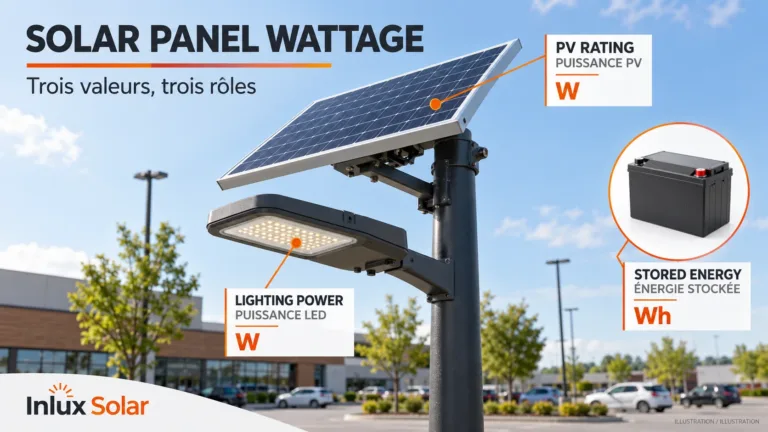
All-in-one solar street lights mainly consist of key components such as lithium batteries, controllers, light sources, and solar panels.
So, what are the common issues with low-quality, low-cost solar street lights?
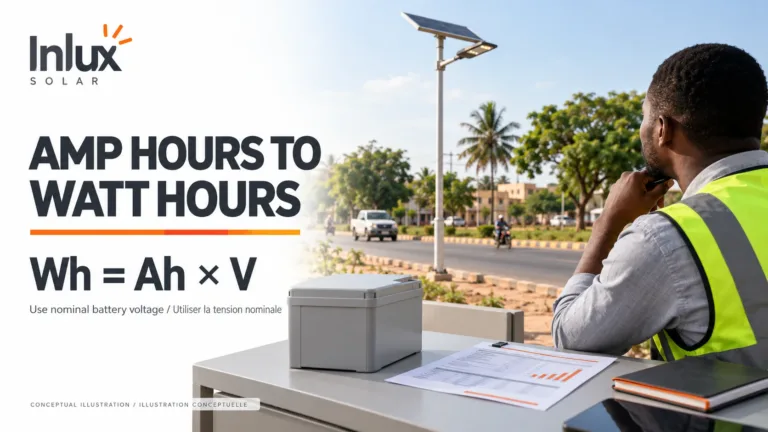
Bateri: Often uses recycled lithium batteries with exaggerated capacity ratings (e.g., labeled as 30Ah, but only 20Ah).
Pengawal: Uses cheap components such as transistors and resistors, skips crucial overcharge and over-discharge protection, and integrates electronic parts on exposed circuit boards without protective encapsulation, lacking waterproof and moisture-resistant features.
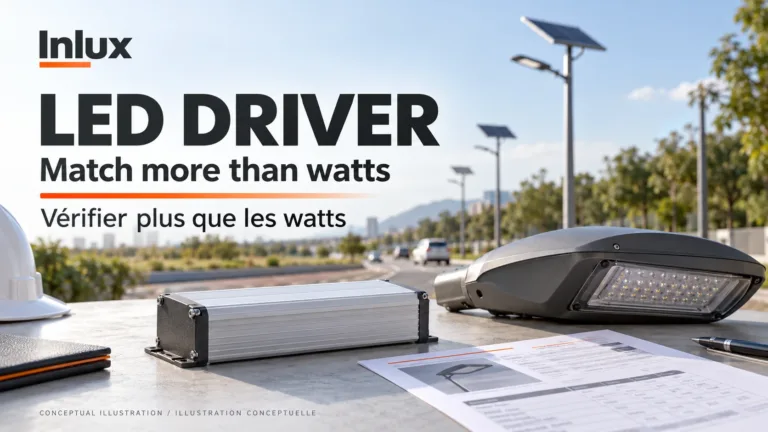
Sumber Cahaya: Uses outdated flip-chip or second-hand LEDs, directly soldered to plastic substrates without aluminum heat sinks; power ratings are inflated (e.g., marketed as 100W when it’s actually only 60W).
Panel Suria: Employs low-efficiency polycrystalline silicon (conversion rate <15%) or amorphous silicon thin-film panels (conversion rate <10%), with poor light transmittance in the glass cover and weak adhesion in the EVA film.
Why Do People Distrust All-in-One Solar Street Lights from Chinese Suppliers?
China is the largest global producer and exporter of all-in-one solar street lights. From raw materials, components, batteries, LED chip packaging to light assembly and export, China covers almost the entire industry chain, meaning most all-in-one solar street lights on the market come from China. However, due to this, there is a huge variation in product quality.
Currently, many solar lights sold on major e-commerce platforms suffer from power rating inflation. For example, a 30W solar flood light is often marketed as 300W. This is largely due to the global economic downturn, which makes consumers more price-sensitive and eager to get “higher-powered” lights for less money. Merchants exploit this psychology by cutting costs and attracting buyers with inflated specifications.
For instance: if all 30W lights on the market were truthfully labeled as 30W, but one seller marks theirs as 50W, consumers would naturally opt for the “50W” light at the same price. This leads to “bad money driving out good money,” where inflated specifications worsen, profit margins shrink, and component costs are continually reduced, forming a vicious cycle.
The Harm to the Industry’s Reputation
Legitimate Chinese suppliers, who use high-quality materials and have higher production costs, struggle to compete with low-cost, low-quality products. Some consumers even misunderstand that “higher prices mean inflated profits,” leading to a reduced market share for high-quality products. Even if the products are certified by international quality standards such as ISO9001, customers may still be skeptical. For example, to prove product reliability, suppliers often need to provide brightness tests, waterproof tests, anti-aging tests, or even on-site disassembly demonstrations, which add to operational costs and management pressure.
High-Quality Commercial All-in-One Solar Street Lights Do Exist
High-quality all-in-one solar street lights typically meet the following criteria:
Bateri: Uses original, brand-new lithium battery cells with reliable capacity. Each lithium battery undergoes charge and discharge testing, and battery packs are assembled with cells of similar properties. Battery packs are monitored for performance.
Pengawal: Uses MPPT controllers, with overcharge and over-discharge protection, as well as an intelligent management module to ensure system safety and stability.
Panel Suria: Uses high-efficiency monocrystalline or polycrystalline solar panels with high glass transmittance and reliable EVA film adhesion.
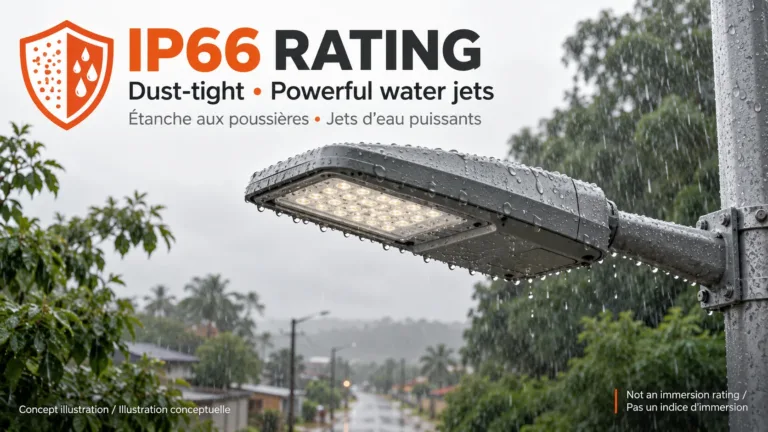
Lamp Housing: Made from durable materials like die-cast aluminum, which is weatherproof, waterproof, and corrosion-resistant. Seals at the joints ensure water and dust cannot enter the circuitry.
Key Features and Selection Tips:
Ask about the lamp housing material. Avoid plastic; choose aluminum.
| Ciri | Low-Quality “300W” Light | High-Quality (Inlux Solar) Light |
| Housing | Ordinary ABS Plastic (cracks easily) | Die-Cast Aluminum (weatherproof) |
| Bateri | Recycled Lithium (fake capacity) | Brand-New, A-Grade Lithium (true capacity) 2 |
| Pengawal | Cheap components, no protection | Pengawal MPPT (overcharge protection) |
| Sumber Cahaya | Second-hand LEDs, no heat sink | High-efficiency LEDs, Aluminum Heat Sink |
| Panel Suria | Low-efficiency (<15%) | High-Efficiency Monocrystalline (>22%) |
| Specs | Inflated (30W is labeled 300W) | True, Honest Parameters |
Monocrystalline or polycrystalline solar panels typically have conversion efficiencies of 15%–23%. Under standard test conditions:
1 m² of solar panel ≈ 150W–230W power (depending on efficiency).
To reach 1000W of power, even at maximum efficiency, you would need at least 4.3 m² of solar panel area, roughly equivalent to a 2m × 2m double bed. Clearly, exaggerated parameter numbers are unrealistic.
Additionally, some people wonder, “Why is a 60W solar street light brighter than a 100W one?” I’ve explained this in another blog, including how to identify real parameters and why high-quality 60W lights often outperform inflated 100W ones: [How to Choose the Brightest Solar Street Lights – Inlux Solar].
Inlux Solar Offers the Best All-in-One Solar Street Lights
Sebagai seorang performance-tested solar street light manufacturer, we consistently use the highest quality batteries, controllers, light sources, and solar panels. Our professional design and simulation ensure each light performs optimally in various climatic conditions. We tailor the most reasonable designs for our clients, ensuring both lighting effectiveness and cost efficiency, and we provide comprehensive, reliable after-sales support.
Contact us today for an honest quote and a free lighting simulation. Let us show you what a real, high-performance solar street light can do for your project.