






This Libya road lighting project in Ajdabia uses 2000 JAGUAR all-in-two solar street lights for highway and road illumination. The confirmed configuration includes 150W LED power, 160 lm/W efficacy, 6000K color temperature, a 9m Q235 hot-dip galvanized pole, IP66 / IK09 protection, and a 60Ah / 25.6V LiFePO4 battery rated for 3500 cycles. For EPC and public road lighting buyers, this project is a practical reference for road and street lighting procurement where quantity, pole strength, battery sizing, and installation responsibility must be confirmed before production.
Site Application & Lighting Requirement
The project application is highway and road lighting in Ajdabia, Libya. A 2000-set scope requires more than selecting a fixture wattage. The buyer needs a repeatable solar street light solution that can align LED output, pole height, battery capacity, protection level, and installation workflow across many lighting points.
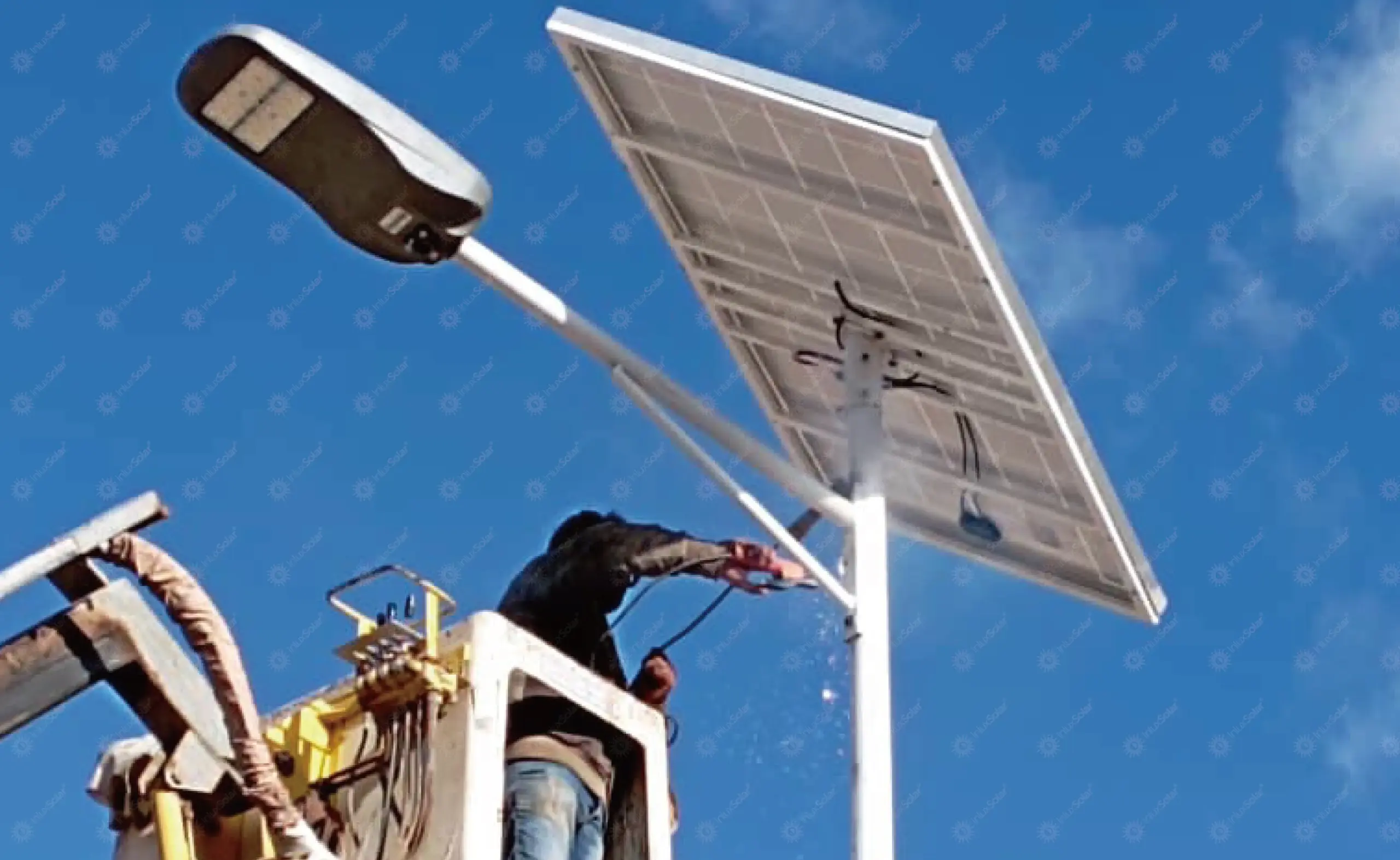
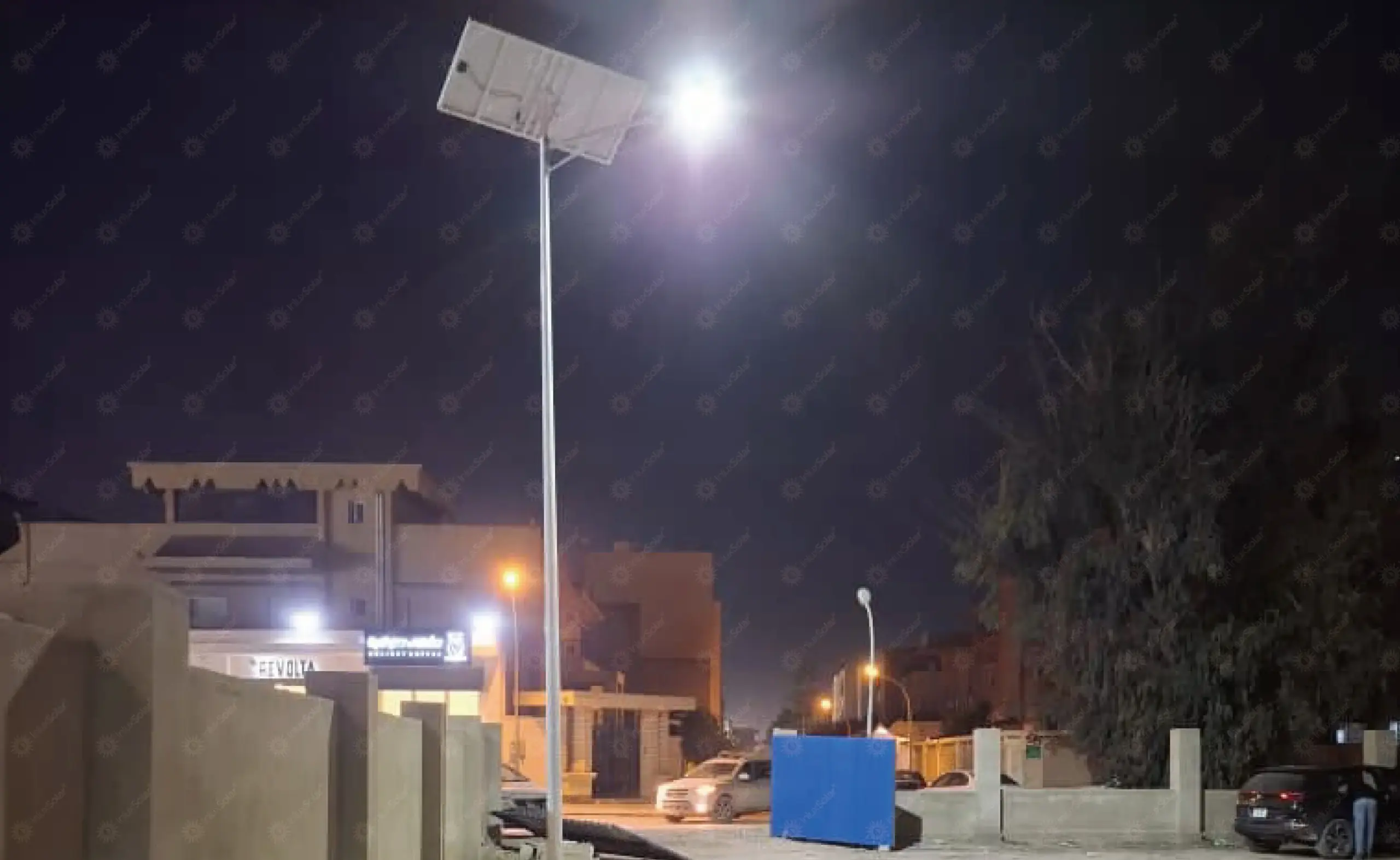
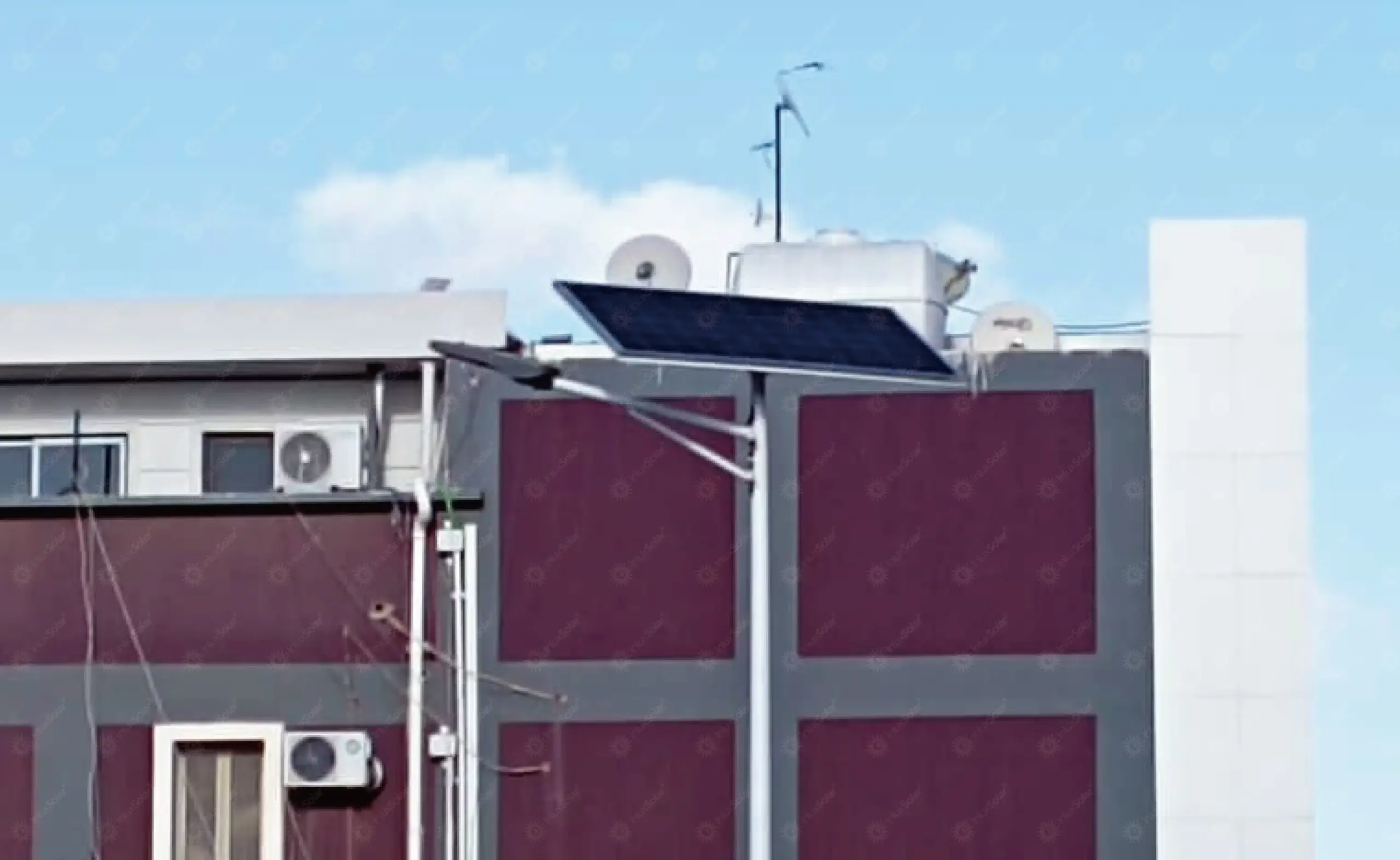
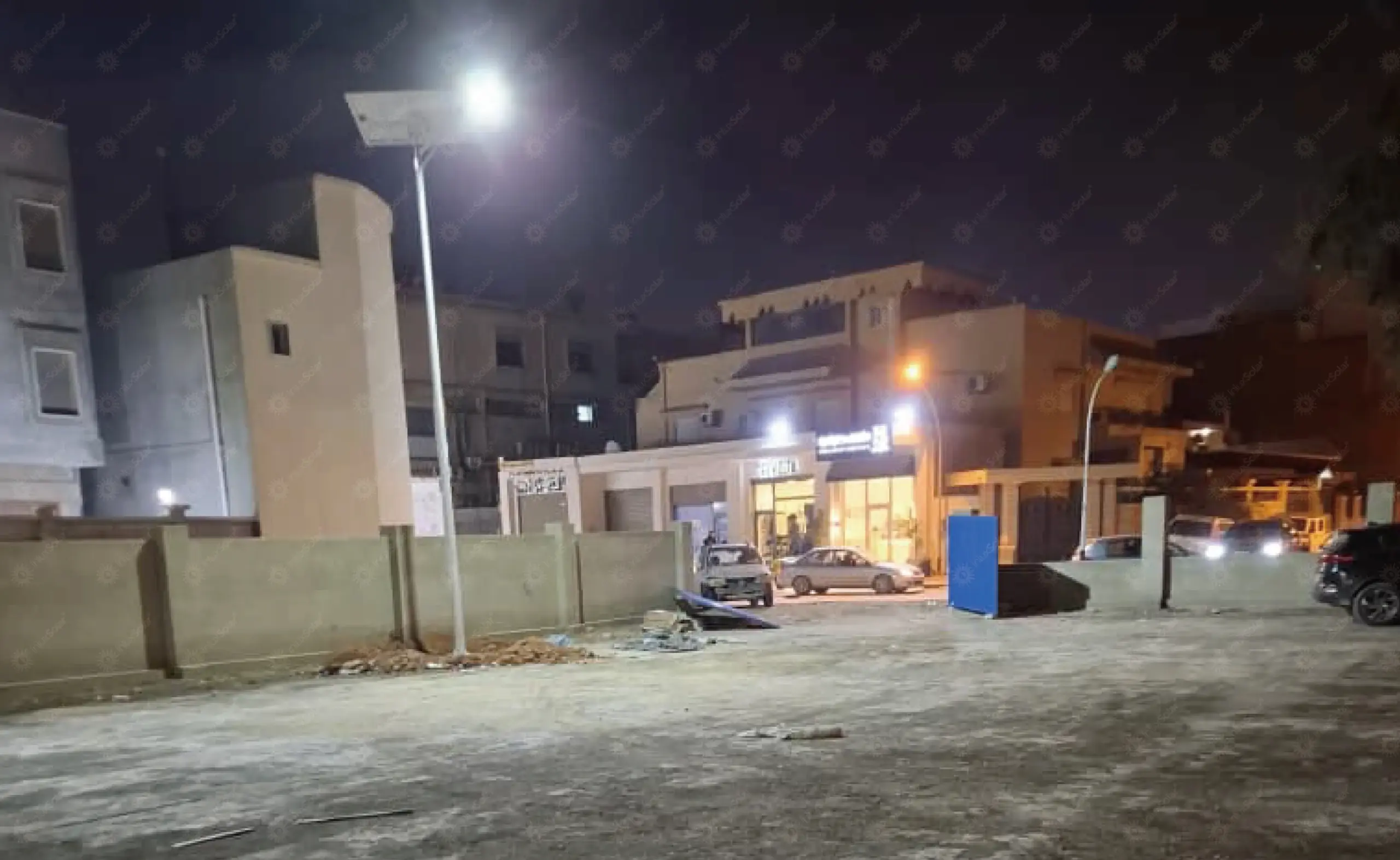
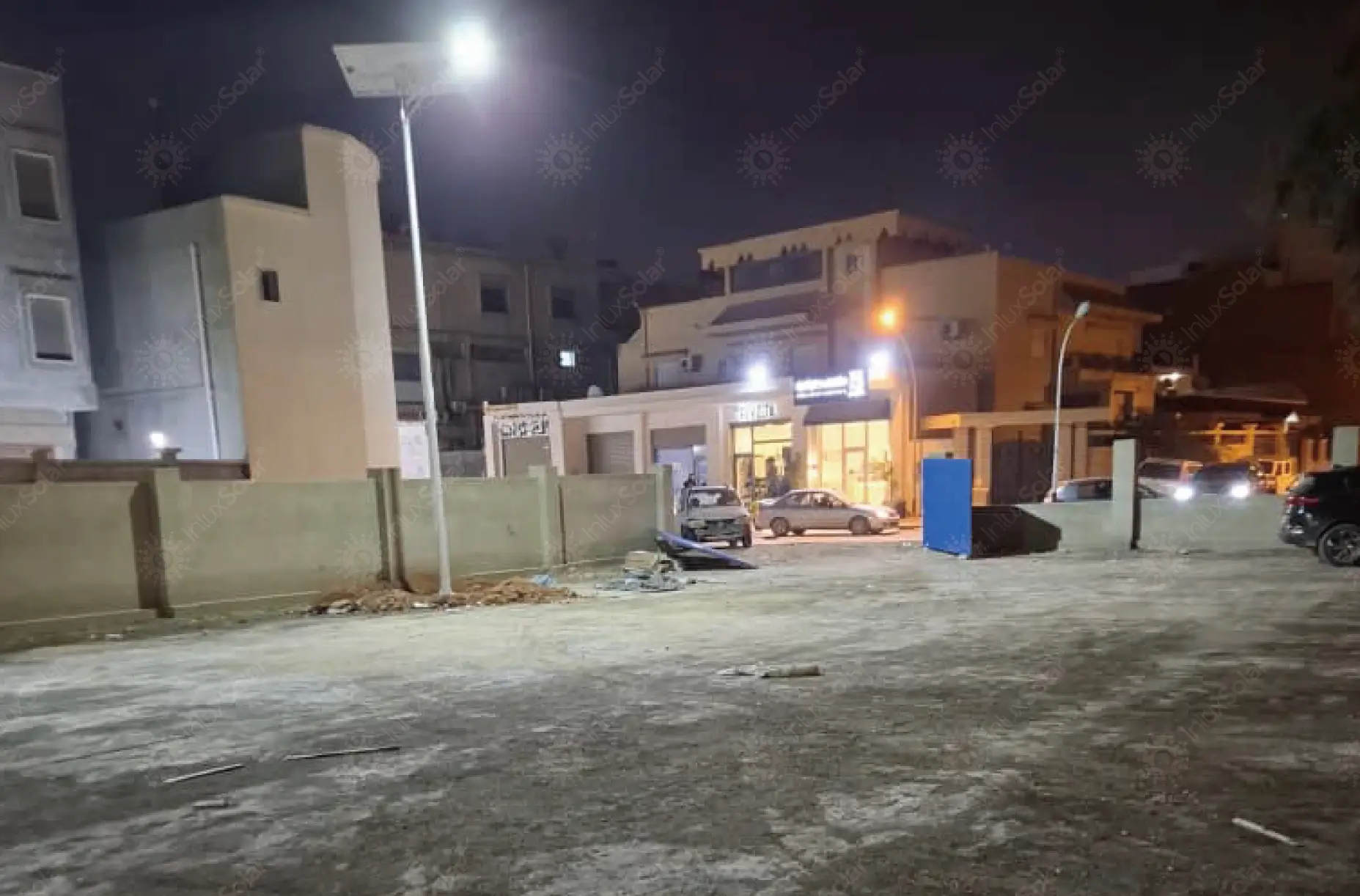
The live gallery shows sample installation and night testing views, including pole-mounted JAGUAR lights, solar panels, and illuminated open areas near buildings. These images are useful for checking installation form and night operation, while the final road layout should still be confirmed against site drawings, pole spacing, and local road conditions.
Why This Configuration Was Selected
The JAGUAR model is an all-in-two solar street light, which keeps the solar panel separated from the luminaire while integrating the system for project deployment. For highway and road lighting, this structure helps buyers balance pole mounting, solar exposure, battery service access, and installation efficiency.
The confirmed 150W LED power, 160 lm/W efficacy, and 6000K color temperature support high-output road lighting requirements. The 9m Q235 hot-dip galvanized pole, 120 km/h wind requirement, IP66 / IK09 protection, and LiFePO4 battery specification should be reflected in the RFQ so that commercial comparison is based on the same engineering baseline.
Procurement Value for Similar Buyers
For EPC buyers and road lighting contractors, a 2000-set project needs consistent documentation, packing plans, spare parts planning, and installation coordination. The key procurement value is not only the JAGUAR product itself, but the ability to define a repeatable configuration across a large road lighting scope.
Buyers preparing a similar project can compare the JAGUAR series with the broader all-in-two solar street light range, then use a structured solar street light buyer’s guide to organize quantity, pole height, battery autonomy, road width, installation responsibility, and shipping requirements before requesting pricing.
What Similar Project Buyers Should Confirm
- Road type, lane width, pole spacing, mounting height, and whether 9m poles match the lighting layout.
- Required LED power, target efficacy, color temperature, battery autonomy, and local solar conditions.
- Whether Q235 hot-dip galvanized poles, IP66 / IK09 protection, and 120 km/h wind requirement must be specified in the tender.
- Who handles installation, foundation preparation, lifting equipment, commissioning, and site acceptance.
- Shipping plan, container loading, spare parts, packing marks, and customs or project approval documents.
Related Solar Lighting Solutions
For similar Libya, North Africa, or EPC road lighting projects, start with the JAGUAR product page and the all-in-two collection, then review Panduan lampu jalan solar, yang project roadmap, and other Africa project references before preparing a final RFQ.
Soalan Lazim
What configuration was used for the Libya JAGUAR road lighting project?
The project uses 2000 JAGUAR all-in-two solar street lights with 150W LED power, 160 lm/W efficacy, 6000K color temperature, 9m Q235 hot-dip galvanized poles, and 60Ah / 25.6V LiFePO4 batteries rated for 3500 cycles.
Why is JAGUAR suitable for road and highway lighting projects?
JAGUAR is an all-in-two solar street light, so the solar panel and luminaire can be positioned for road lighting needs while keeping the system practical for large-scale installation, maintenance access, and battery management.
Should every road project use the same 150W and 9m pole configuration?
No. This configuration is specific to the Libya project facts. Buyers should confirm lane width, pole spacing, target brightness, autonomy requirements, foundation conditions, and wind requirements before ordering.
What information should an EPC buyer provide for a similar RFQ?
Provide country, city, road type, quantity, pole height, LED power target, battery autonomy, wind requirement, installation responsibility, shipping destination, and any tender documents or drawings required for approval.
Can the gallery images be used as highway lighting proof?
The gallery images show sample installation and night testing views, not a complete highway scene. They are useful for checking product form and lighting operation, while final road performance should be confirmed with site drawings or lighting design files.
bahasaGaleri Projek



About Me