







Residential Street Lights for Communities and Neighborhoods
Residential street lights should make internal roads, entrances, pedestrian paths and parking areas easier to use after dark without sending unnecessary glare into homes. Inlux Solar plans residential street lighting for gated communities, villa compounds, housing developments and neighborhood streets using solar or grid-connected LED systems. Start with the road and pedestrian geometry, local lighting criteria, pole locations, camera or recognition needs, curfew policy, power availability and maintenance access—not a generic wattage. For residential solar street lights, also provide the installation coordinates, shading, nightly operating profile and autonomy policy so the proposed PV, battery and controller can be checked against the site.
Residential Street Lights: Key Design Considerations

Resident-Centric Targets
Balance safety with comfort; avoid over-lighting and preserve nighttime ambience.

Standards Alignment
Agree the applicable road, path, CCTV and obtrusive-light criteria with the project authority; identify the standard and edition and verify model-specific photometry.

Uniformity First
Meet practical U₀/Uᵢ ratios to eliminate dark patches rather than chasing high averages.

Warm-to-Neutral CCT
Favor 2700–3500K in residential cores and 3000–4000K near gates/parking for recognition and comfort.
CRI for Recognition
Specify CRI ≥80 around entrances, crossings, and playground edges for color fidelity.
Glare & Trespass Control
Zero uplight optics, shielded backlight, and careful tilt to protect façades and bedrooms (BUG/TM-15).
Mounting & Optics
Use Type II/III distributions and heights that keep light on the path without lighting windows.
Curfew & Controls
Time-of-night dimming with motion boost for late hours; restore instantly on detection.
Durability
IP66/IK08+ housings, surge protection, and anti-corrosion finishes for weather resistance.
Power Strategy
Solar where trenching is costly or resilience matters; LED CA for dense loads—both support smart controls.
Residential Street Lighting Design Principles

Dark-Sky Mindset
Minimize uplight and high-angle intensity to preserve the night and reduce complaints.

Contextual CCT
Warmer in living areas, slightly cooler near entries/parking for recognition.
Linhas de visão uniformes — Pole rhythm and luminance gradients guide drivers and walkers without glare.

Mantenha a luz na tarefa
Backlight shields and zero-tilt aim keep light off façades and trees.

Maintainability
Tool-less access, standard drivers/LED engines, and spare part continuity.

Lifecycle ROI
Use controls and dimming profiles to cut OPEX while meeting curfew policies.

Accessibility
Ensure paths, ramps, crossings, and mailbox clusters are consistently lit.

Scalable Controls
From standalone sensors to networked nodes for community-wide policies.

Linhas de visão uniformes
Pole rhythm and luminance gradients guide drivers and walkers without glare.
Residential Street Lighting Solutions by Scenario
Community Entrances & Gatehouses
Recognition-ready vertical light and low glare for ID checks and signage.
Internal Streets & Cul-de-Sacs
Class-based roadway lighting with smooth luminance transitions.
Pedestrian Paths & Greenways
Shielded path optics and warmer CCT to preserve comfort after curfew.
Parking Courts & Carports
Uniform lighting with spill control to surrounding residences.
Playgrounds & Pocket Parks
Softer vertical light for supervision without harsh glare.
Perimeter Walks & Fences
Cut-off distributions supporting patrol and neighbor privacy.
Bus Stops / School Zones
Higher uniformity and CRI for visibility of markings and faces.
Clubhouse & Mail Areas
Accent + task lighting for signage, drop-off, and parcel lockers.
What a Residential Street Lighting Project Receives
- Community-grade lighting layout referencing EN 13201 / IES RP-8 classes and BUG limits.
- Uniformity & glare checks with vertical illuminance where CCTV is planned.
- Pole & optics schedule(heights, offsets, foundations, EPA/wind notes).
- Controls & curfew plan(dimming profiles, sensors, schedules, energy savings)。
- Lista de materiais e submissões(datasheets, IES files, warranties, installation drawings)。
- Notas de conformidade mapping standards to local ordinances.
How to Specify Residential Street Lights
Resposta rápida: Residential street lights should be selected as a complete site-lighting system, not by luminaire wattage alone. The usable proposal needs the application-zone geometry, project lighting criteria, model-specific photometric file, pole and foundation scope, controls profile, power or solar-energy basis, maintenance plan and acceptance documents.
| Application zone | Buyer input | Proposal output to require |
|---|---|---|
| Internal roads and cul-de-sacs | Road width, surface, intersections, parking edges, pole setbacks and applicable road-lighting criteria | Layout using the quoted model’s IES/LDT file, with maintained values, uniformity, glare and spill-light assumptions |
| Entrances and gatehouses | Vehicle and pedestrian approaches, barriers, signs, camera positions and recognition requirement | Horizontal and vertical-lighting check, aiming plan, shields and controls sequence |
| Paths, greenways and play areas | Path width, landscaping, nearby windows, operating hours, accessibility and curfew policy | Pole rhythm, optical distribution, CCT option, dimming profile and light-trespass controls |
| Parking, clubhouse and mailbox areas | Stall layout, crossings, conflict points, façades, access times and security priorities | Area layout, transition zones, control groups and commissioning checks |
| Solar supply | Coordinates, shading, worst-month solar resource, nightly load profile, autonomy policy and temperature range | PV, usable battery energy and controller schedule with stated losses and sizing assumptions |
| Commercial handover | Required submittals, warranty, spares, training, response scope and acceptance process | Exact model/BOM, drawings, photometric file, manuals, test evidence and exclusions. Inlux Solar’s standard warranty is five years; the quotation should identify covered components and terms. |
Residential solar street lights can avoid new trenching where an off-grid system fits the site, while grid-connected residential street lights may suit dense loads or locations with reliable existing circuits. Compare complete installed scope and maintenance responsibility instead of assuming one power strategy is universally cheaper. The U.S. Department of Energy’s exterior-lighting purchasing guidance covers roadway, decorative and other outdoor luminaire applications; the DarkSky outdoor-lighting principles provide a practical check on usefulness, targeting, light level, controls and color. Keep both links as ordinary dofollow editorial links; do not enable nofollow, sponsored or UGC.
Review the solar street-light product range, compare the FALCON e BISON All-in-Two options, and use the street-light design guide to prepare the site brief. For evidence, review the Senegal public-park and residential-zone project e o residential-area project reference. Then send the layout inputs for an RFQ.
Recommended Residential Solar Street Lights

BISON (INL-AIT7)
Compacto, eficiente, classe >180 lm/W - pronto para uso em pátios comunitários e industriais.

FALCON (INL-AIT6)
Saída média, ótica versátil, instalação rápida - ideal para ruas, caminhos e lotes.
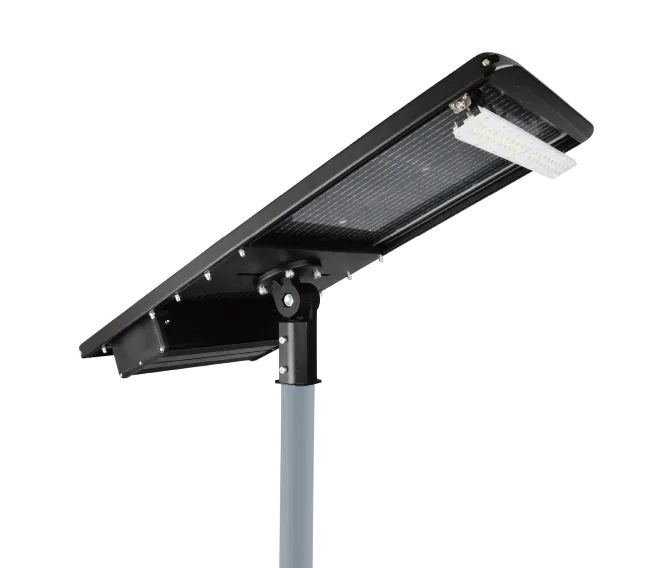
GALÁXIA (INL-AIO6)
AIO modular para saídas de pequeno a médio porte; LEDs 5050, LiFePO4 e movimento opcional/IoT - fácil manutenção para ruas, caminhos e estacionamentos.
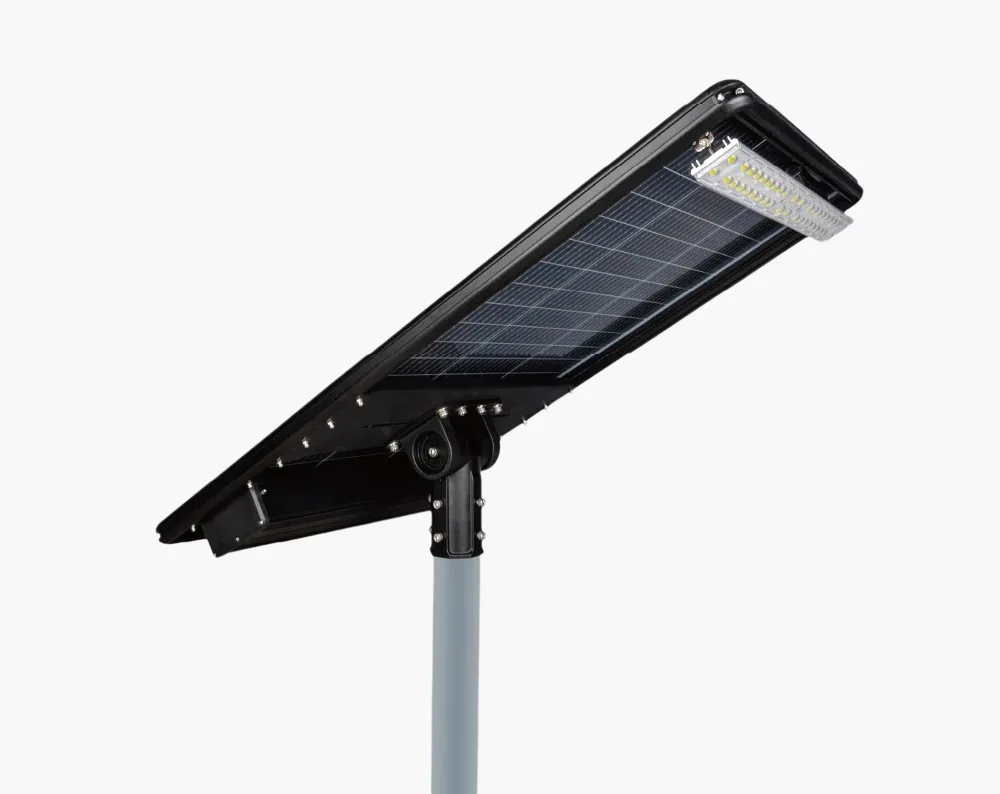
SIRIUS (INL-AIO9)
AIO de alto rendimento com cabeçote ajustável, óptica Tipo II/III, LEDs 5050 e LiFePO4 - construído para estradas e rodovias de mão dupla.

INL-SPL02 - PV vertical + bateria no polo
Vertical PV panels with the lithium battery housed inside the pole for added security. 30–150W LED, 100–720W PV range, engineered for reliable autonomy and harsh sites.
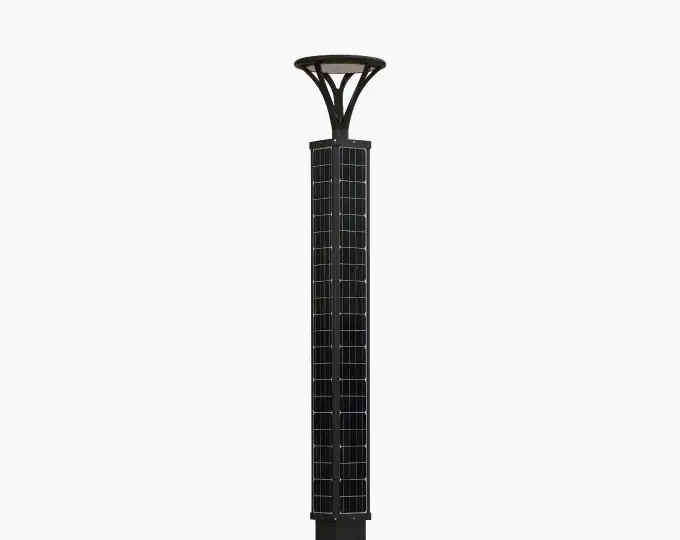
INL-SPL03 - Luz solar decorativa para poste
Vertical PV + decorative head for streets, parks and boulevards. Project-grade LEDs (up to >180 lm/W), LiFePO4 storage, and robust galvanized steel or aluminum poles.
Recommended Residential LED Street Lights
Descubra nossas soluções de iluminação pública de LED projetadas para cenários de iluminação de parques e recreação. Todos esses produtos podem ser personalizados de acordo com os requisitos das especificações de seu projeto.

INL-LED25 - Luz de rua de LED
Pacotes de 100-200 W, óptica de estrada e drivers prontos para controles para estradas principais e coletoras.

INL-LED22 - Luz de rua de LED
Plataforma versátil de 60-200 W com opções de controles e distribuições de pista.
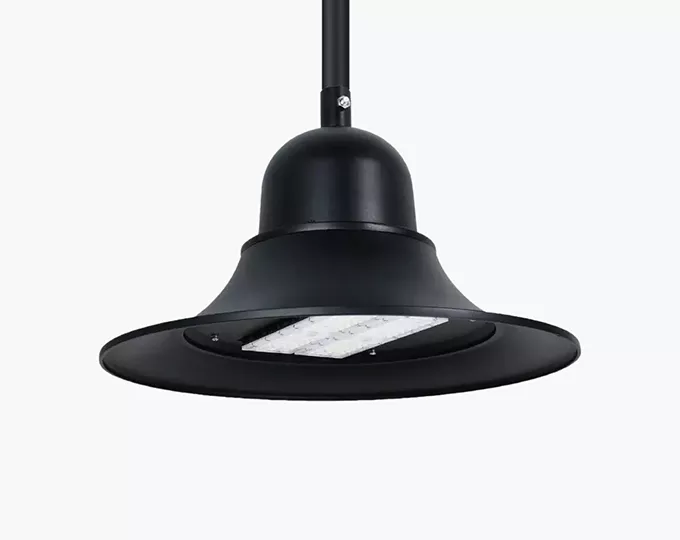
INL-DSL01 – Decorative Street Light
Classical post-top styling with comfortable optics for parks and residential streets; controls-ready and maintenance-friendly.
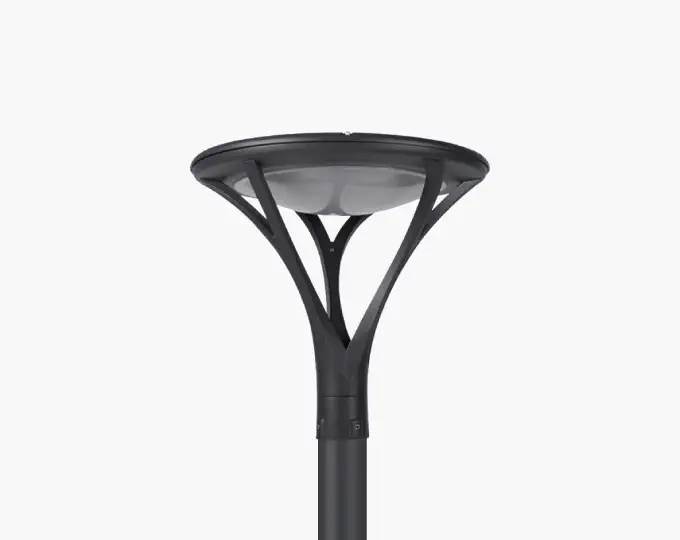
INL-DSL02 — Decorative Street Light
Modern profile for campuses and plazas; multiple distributions and controls options for consistent night-time ambience.
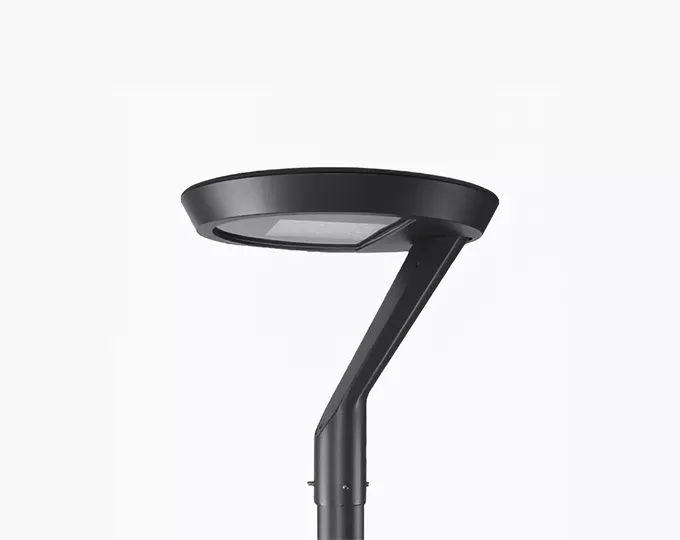
INL-DSL04 — Decorative Street Light
Modern LED post-top with módulo de luz removível for fast maintenance; ideal for parks, lots and garden avenues.