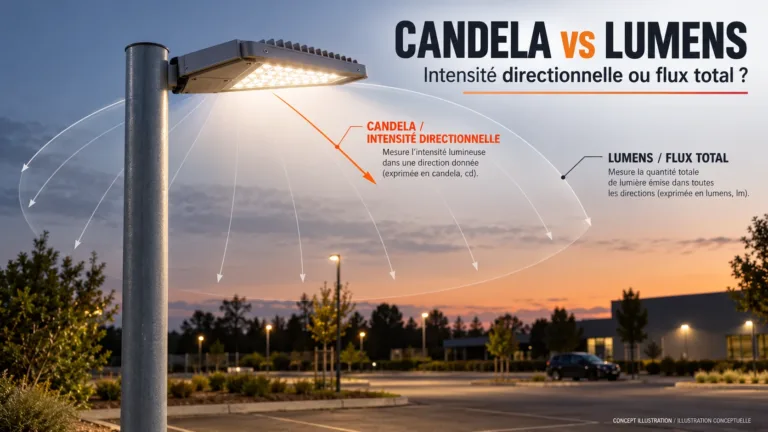
A BMS battery system pairs battery cells with a battery management system that monitors their condition and controls protective action. The BMS is not a battery chemistry, and a high amp rating alone does not establish compatibility. For solar street lights, the useful purchase is a battery, BMS and charge controller that work together—not an impressive-looking circuit board.
What does a BMS do for a battery?
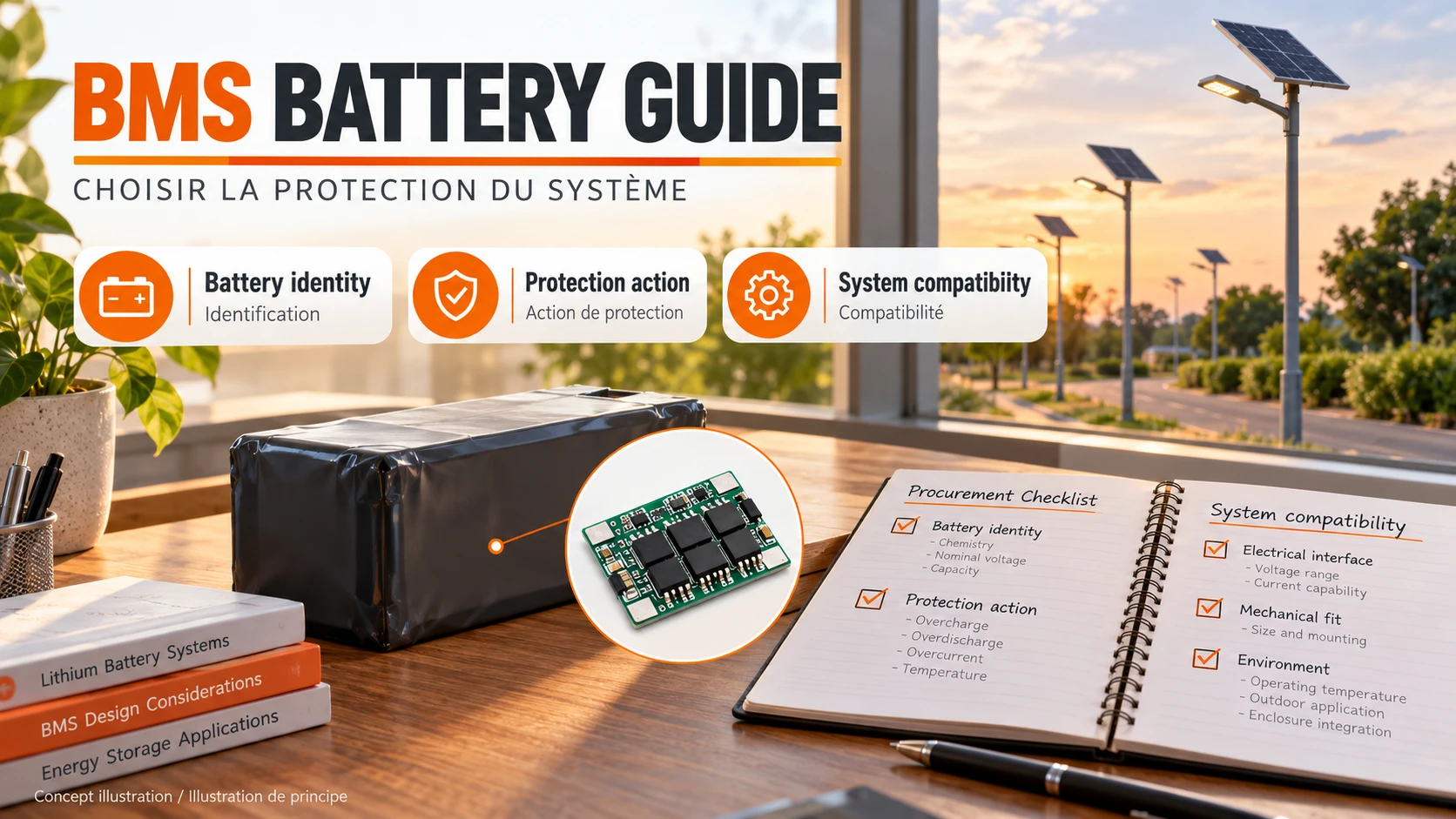
BMS stands for battery management system. Depending on the design, it supervises cell voltage, temperature and current, responds to abnormal conditions, and may support balancing, state-of-charge estimation or communications. Those last features are not guaranteed by the letters “BMS.” Ask which functions are present in the exact supplied pack.
For a simple manufacturer example, RELiON describes its built-in BMS as protection against conditions including abnormal voltage, current and temperature. That is RELiON’s product architecture, not proof that every lithium pack contains the same hardware.
A buyer should separate three questions: what is measured, what action follows, and which device carries out that action. A temperature reading on an app is useful information; it is not, by itself, evidence that charging stops when the battery requires it.
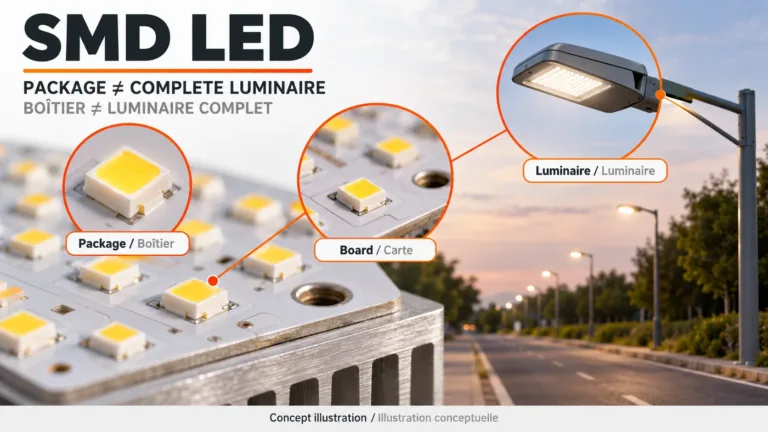
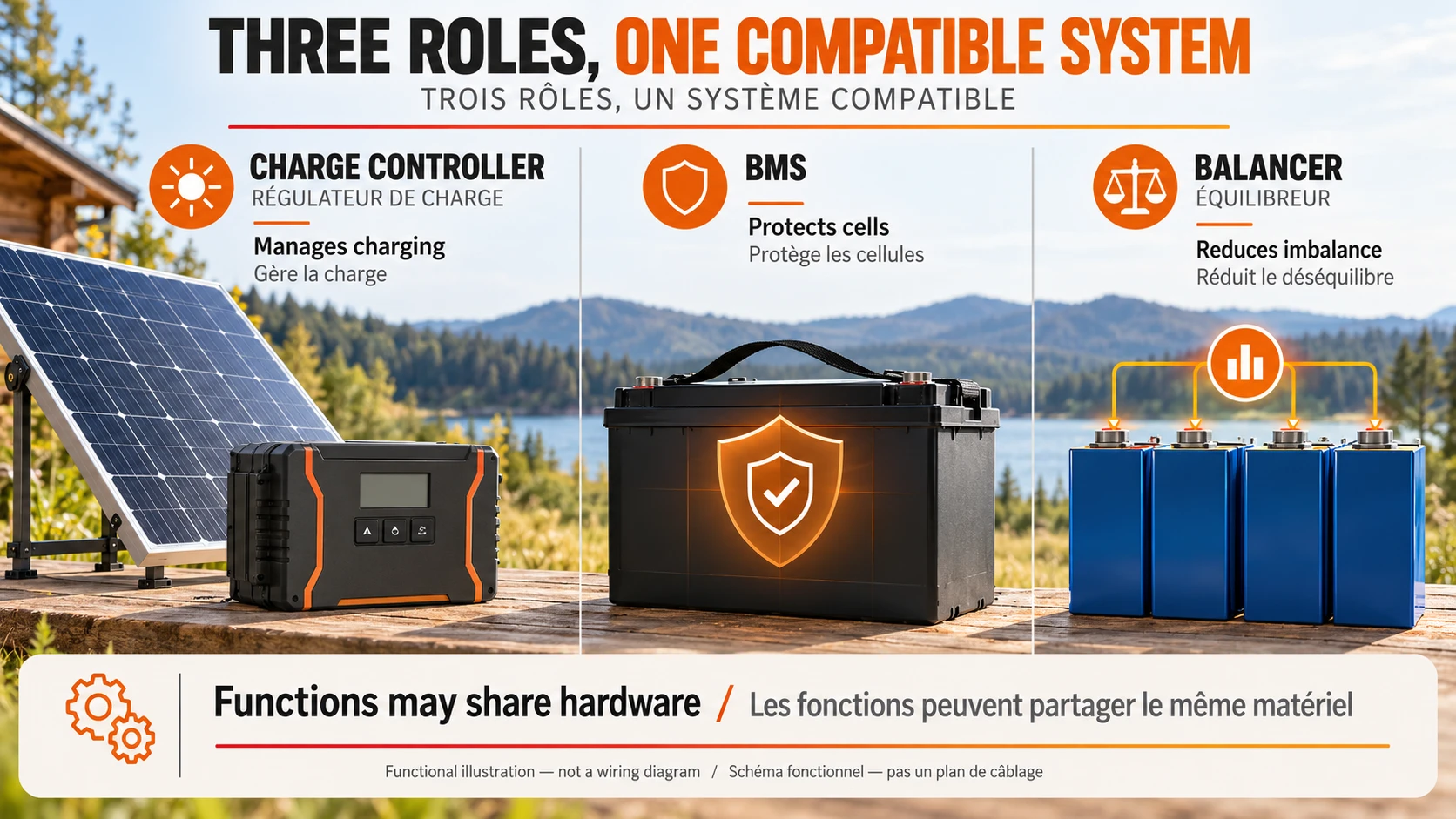
BMS, solar charge controller and balancer: different jobs
These functions may share an enclosure or circuit assembly. They still need separate answers in a quotation. A controller’s load timer does not establish cell-level protection, while a balancing feature does not replace the charging equipment.
| الوظيفة | What the buyer needs to establish | What not to assume |
|---|---|---|
| Solar charge controller | How the selected PV supply charges the specified battery and operates the lighting schedule | A matching nominal voltage proves compatibility |
| Battery BMS | Which conditions are supervised and how charging or consumption is stopped | A displayed alarm always interrupts current |
| Cell balancing | Whether balancing is fitted, its method and operating conditions | Balancing repairs damaged cells or guarantees extra capacity |
| Battery monitor / communications | Which measurements, alarms and records are available to the maintenance team | Bluetooth or a percentage display is a safety approval |
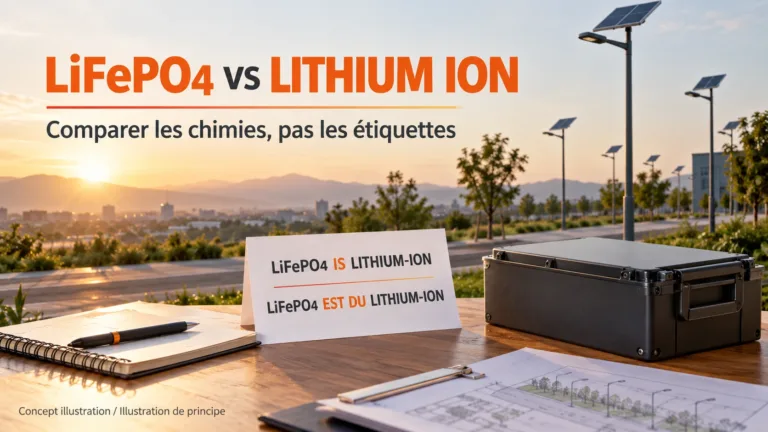
For the charging side, consult the solar charge controller guide. For cell chemistry, the LiFePO4 versus lithium-ion comparison explains why “lithium” is not a complete battery specification. Neither label answers the BMS compatibility question.
Buy the complete protection chain, not only the board
There is no universal rule that the BMS must sit inside the pack. Victron’s Lithium Smart manual, for example, describes internal balancing and cell monitoring connected to an external BMS. That particular arrangement must not be copied into an unrelated street-light specification.
The corresponding Victron BMS selection guide distinguishes control signals sent to compatible equipment from physical disconnection. For procurement, the point is straightforward: a protection instruction must reach something that can actually stop the relevant current.
Ask the supplier to describe the normal charge path, normal lighting path and response to each declared protection event. You are not asking for a do-it-yourself wiring lesson. You are checking that the quoted assembly has an identified responsibility for stopping charge, stopping the load and returning to service under its own product instructions.
Do not defeat a BMS, bridge terminals or use a generic internet reset method to prove operation. Qualified personnel must follow the selected battery and controller manuals and the site’s safety procedures. A purchasing review can be completed without deliberately creating an electrical fault.
Temperature deserves its own question. Ask whether the limit refers to the cells, the battery enclosure or ambient air, and whether the declared range applies to charging, discharging or storage. A site can be warm during the afternoon but cold before sunrise. The answer must describe the supplied assembly and its sensors, not a climate label such as “suitable for Africa.” An outdoor enclosure rating does not answer these battery-temperature questions.
Read the BMS current rating with its conditions
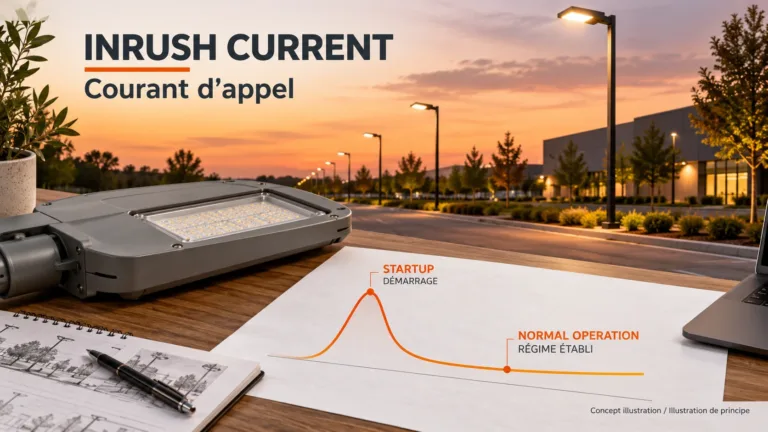
A single large current number is a poor basis for comparing offers. Continuous discharge, continuous charging and a short peak are different duties. A peak rating without a permitted duration does not tell the engineer whether the equipment can start and run the intended load.
Request the conditions attached to the rating: operating temperature, enclosure arrangement, supported battery configuration and any derating. Then have the system supplier check the actual lighting duty and start-up demand. Choosing an oversized board independently can leave the cells, connectors or other protective devices mismatched.
Account for standby consumption—even when the lamp is off
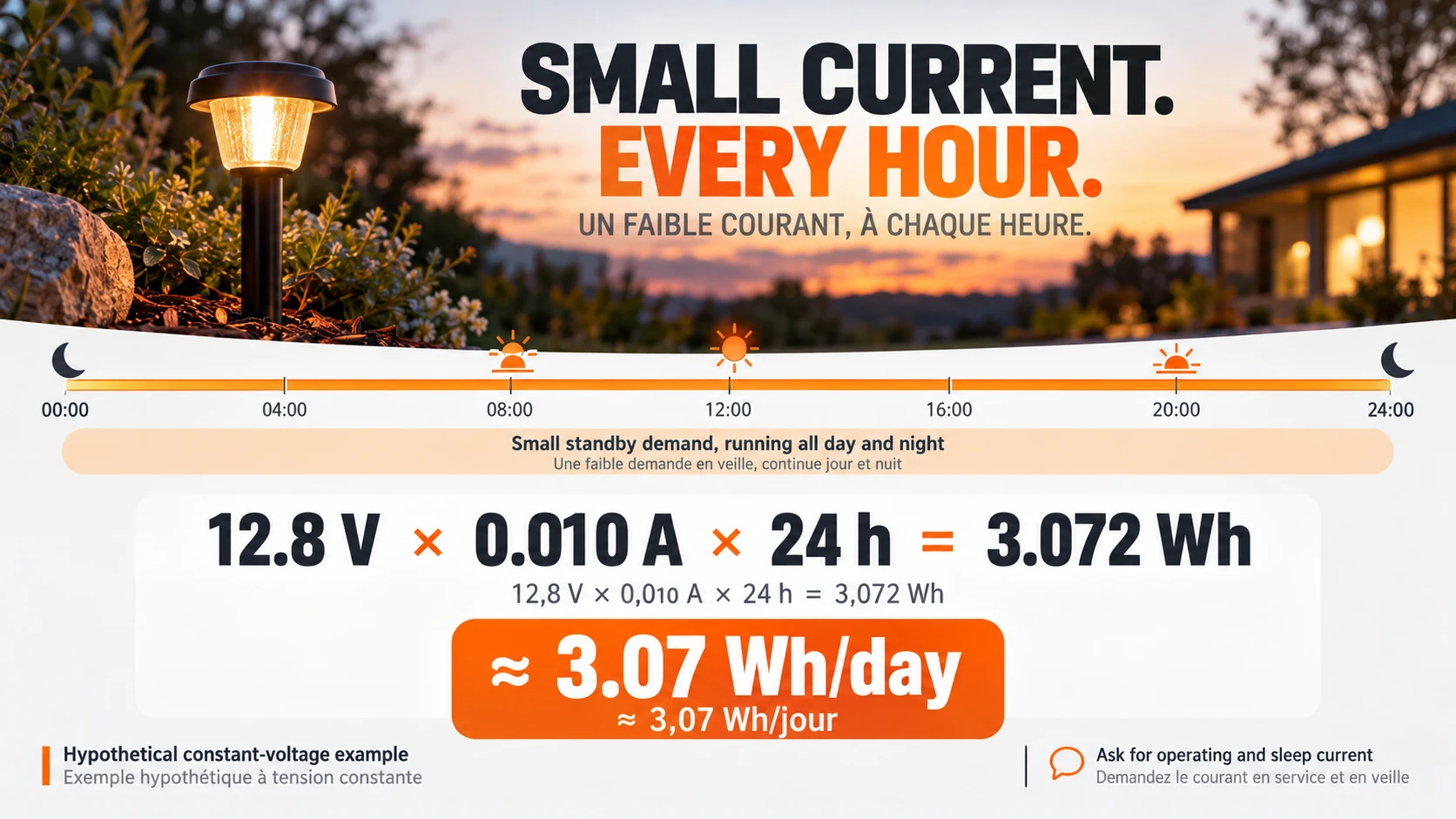
Compare a BMS battery offer on energy used as well as energy stored. The electronics may consume power while the lamp is off. Ask for operating, standby and sleep consumption, the conditions for entering each mode, and whether optional communications change the figures.
Here is a hypothetical arithmetic example, not an Inlux specification: electronics drawing a constant 10 mA from a constant 12.8 V supply for 24 hours use 12.8 × 0.010 × 24 = 3.072 Wh, or about 3.07 Wh per day. The actual value depends on voltage and operating mode; do not add the same consumption twice if it is already included in a system measurement.
This matters most when comparing small off-grid systems or long storage periods. A pack with a larger printed Ah figure is not automatically the better choice once system consumption and usable energy are considered. Keep this allowance in the same budget as the lighting load, following the solar street light battery sizing guide.
What belongs in a solar-light battery quotation?
On the Inlux website, the battery materials overview identifies LiFePO4 and BMS functions. For a purchase, that general description needs to become a defined battery-and-controller combination. Do not assume every model has the same balancing method, communications or service access.
| Quotation line | Useful supplier response | Why it changes the decision |
|---|---|---|
| Battery identity | Pack code, cell chemistry, series configuration and compatible controller reference | Prevents approval based only on a nominal voltage or Ah label |
| Protection response | Declared events, action taken, responsible device and permitted recovery route | Distinguishes an alarm display from effective system control |
| Electrical duty | Charge and discharge ratings, peak duration, applicable temperature and derating | Makes current ratings comparable under the intended use |
| Balancing and idle demand | Fitted balancing functions; operating, standby and sleep consumption | Avoids treating optional features and parasitic demand as invisible |
| Replacement scope | Approved replacement assembly, configuration identification and qualified service route | Reduces the risk of an apparently compatible spare changing protection behaviour |
For a new installation, compare the Inlux All-in-One range و the Inlux All-in-Two range against the project’s installation and service requirements. Integration changes access and replacement scope; it does not remove the need for compatible battery protection.
Replacement decisions: a board swap is not a pack approval
For an existing fleet, start with the installed pack and controller identifiers, not the nearest-looking online board. Preserve the system’s approved protection behaviour and mechanical fit. The supplier may specify replacement of the complete sealed assembly rather than a board-level repair; establish this before ordering spares.
This guide covers selection, not fault recovery. If an installed light appears to have entered protection, use the separate BMS protection-mode troubleshooting guide for context and obtain the product-specific instructions. Do not use a replacement purchase to bypass an unresolved fault.
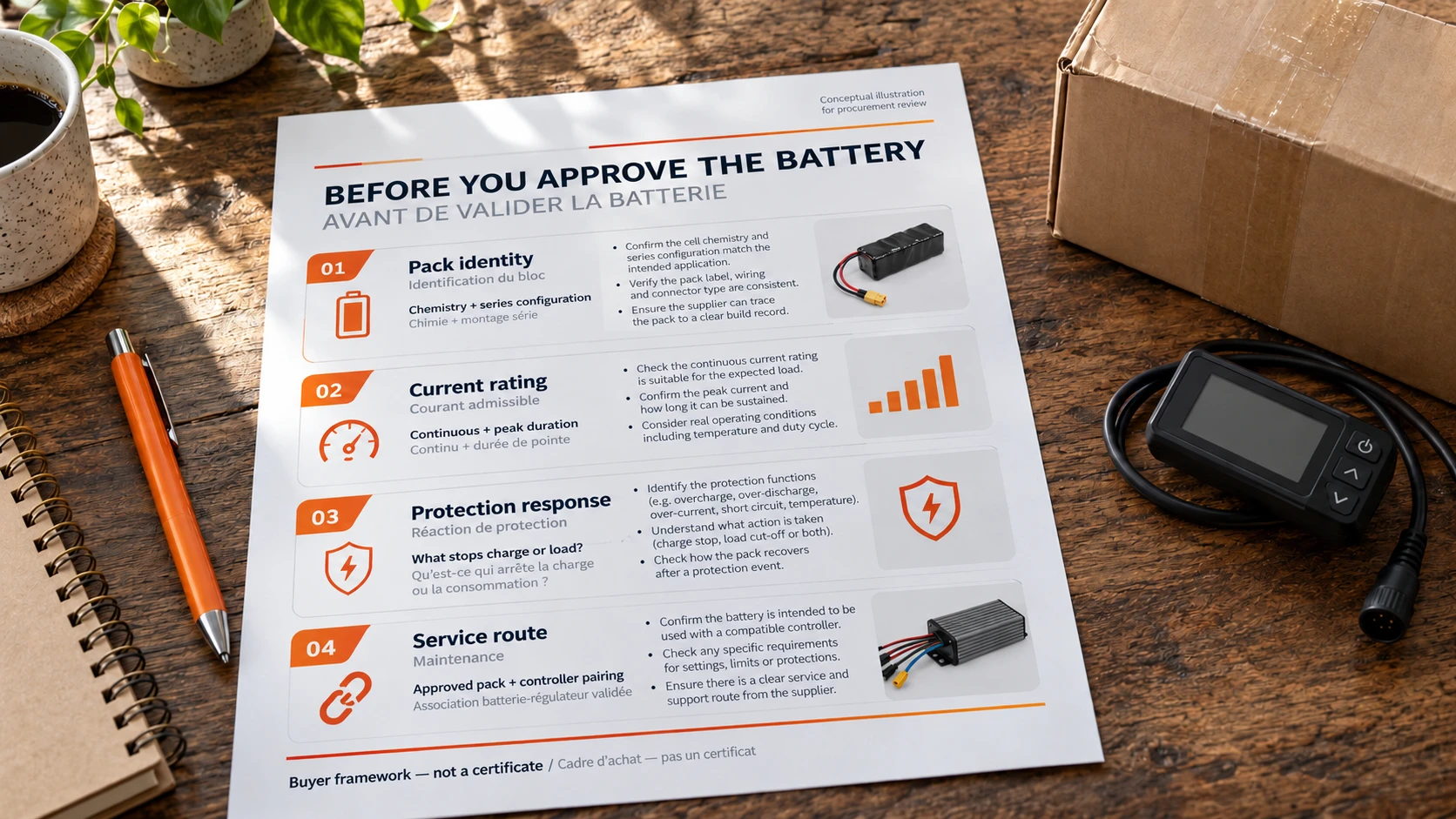
Send a system question, not just “What is your BMS price?”
For a solar-lighting quotation, send the project location, lighting duty, proposed product family and maintenance arrangement. For replacements, add the installed pack and controller references without opening sealed equipment. Ask the supplier to identify the compatible assembly and explain its protection and service boundaries.
Browse the solar street light product range, or review commercial solar parking lot lighting for a parking project. To discuss the battery as part of a complete system, send an Inlux project RFQ. A bare-board price is not a like-for-like quote for a protected, compatible lighting assembly.
الأسئلة المتداولة
Is a BMS battery a different type of lithium battery?
No. “BMS battery” usually means a battery fitted with or intended to work with a battery management system. It does not identify the cell chemistry. Specify both the chemistry and the protection architecture when comparing offers.
Can a solar charge controller replace the battery BMS?
Do not assume so. Charging control and cell protection are different responsibilities. They may be integrated in a specific design, but the complete assembly still needs the manufacturer’s approved protection functions and compatibility. A controller’s battery voltage setting alone is not sufficient.
Does every lithium battery need a separate external BMS?
Not necessarily external: some packs have integrated protection, while other systems require a specified external BMS. Do not operate or modify a lithium system without the protection required by its manufacturer. Check the exact pack and system instructions rather than the housing’s appearance.
Does a higher BMS amp rating make a battery last longer?
Not by itself. Current capability, capacity and service life are different properties. The rating needs to suit the specified cells, operating conditions and system protection design. Increasing one board rating does not establish a safe or longer-lasting combination.
Does a smart BMS guarantee remote fault diagnosis?
No. “Smart” needs a feature list: accessible measurements, event history, communications, permissions and the equipment needed to retrieve them. Local Bluetooth access and remote fleet monitoring are not the same service. Confirm what the maintenance team will actually receive.
How much does a BMS battery system cost?
There is no reliable universal price. Compare the same pack chemistry, energy, current duty, enclosure, protection functions, controller compatibility and replacement scope. Ask whether the offer covers only a board, a complete battery pack or the whole lighting system; otherwise the prices answer different questions.