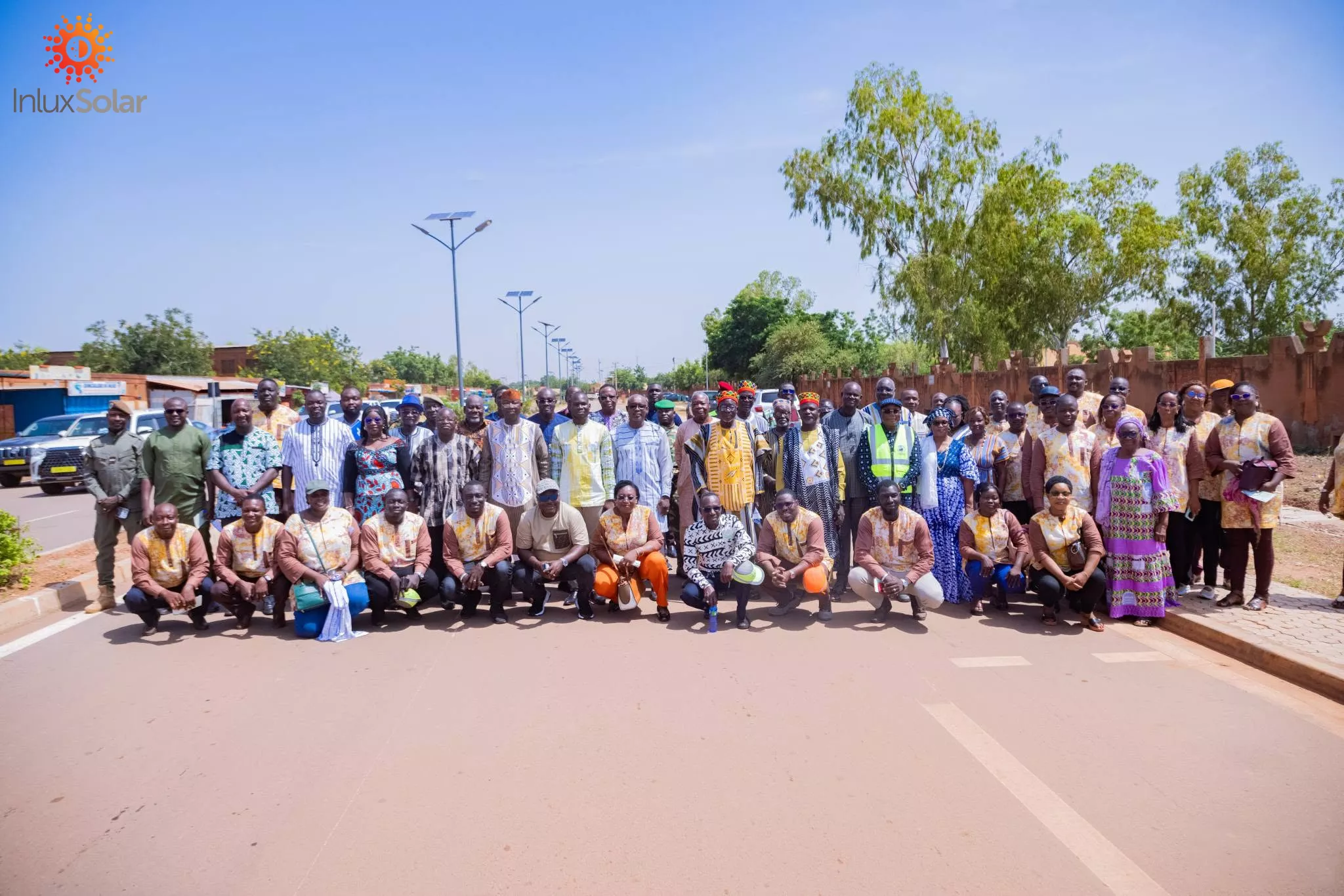
Inlux Solar supplied 520 sets of APOLLO split type solar street lights for the AMGT municipal road-lighting project in Ouagadougou, Burkina Faso. Completed in August 2026, the off-grid installation covers 8 m municipal main-road sections using 8 m poles, 80W LED luminaires, 280W solar panels, and 25.6V 50Ah LiFePO4 batteries.
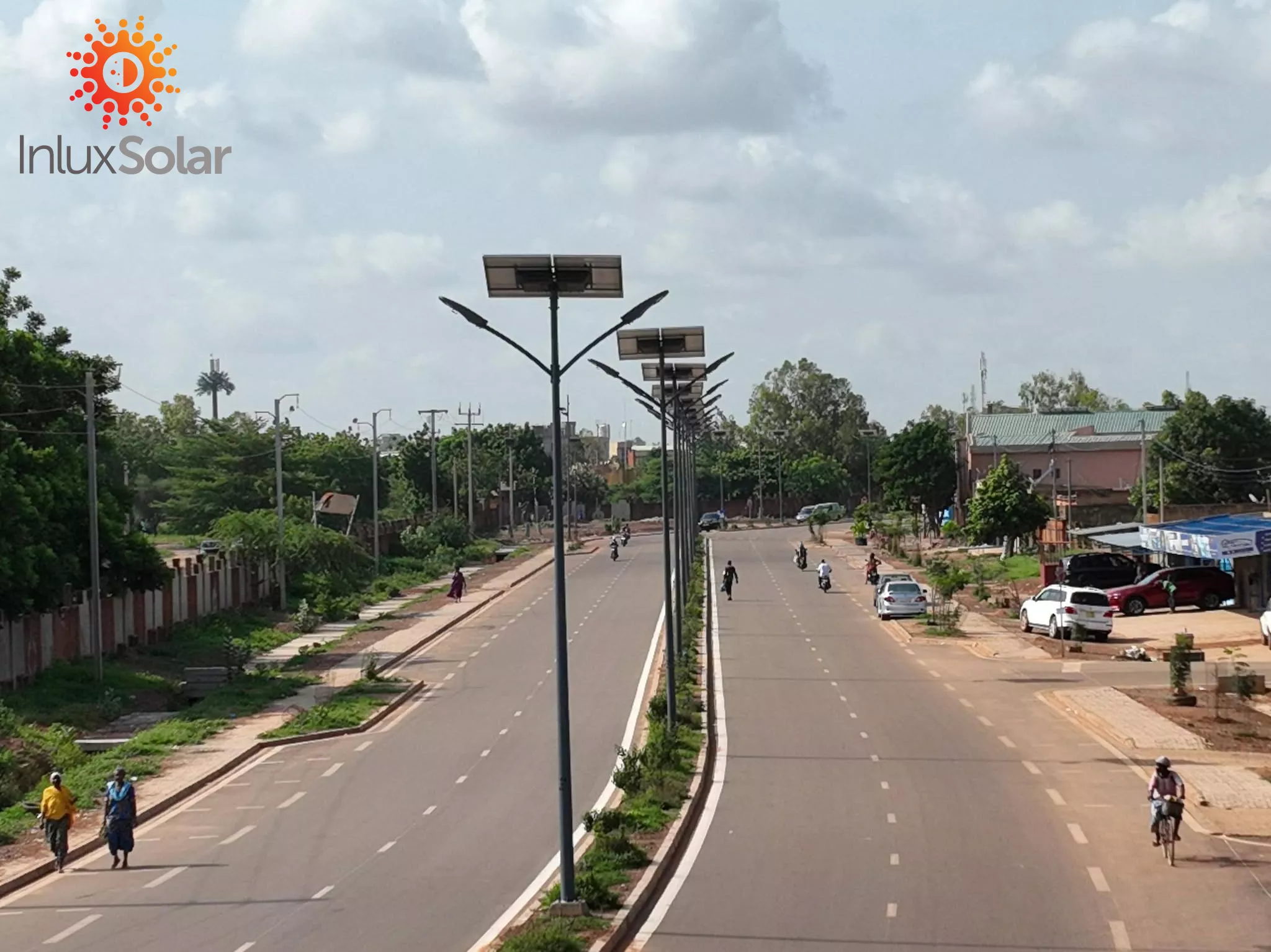
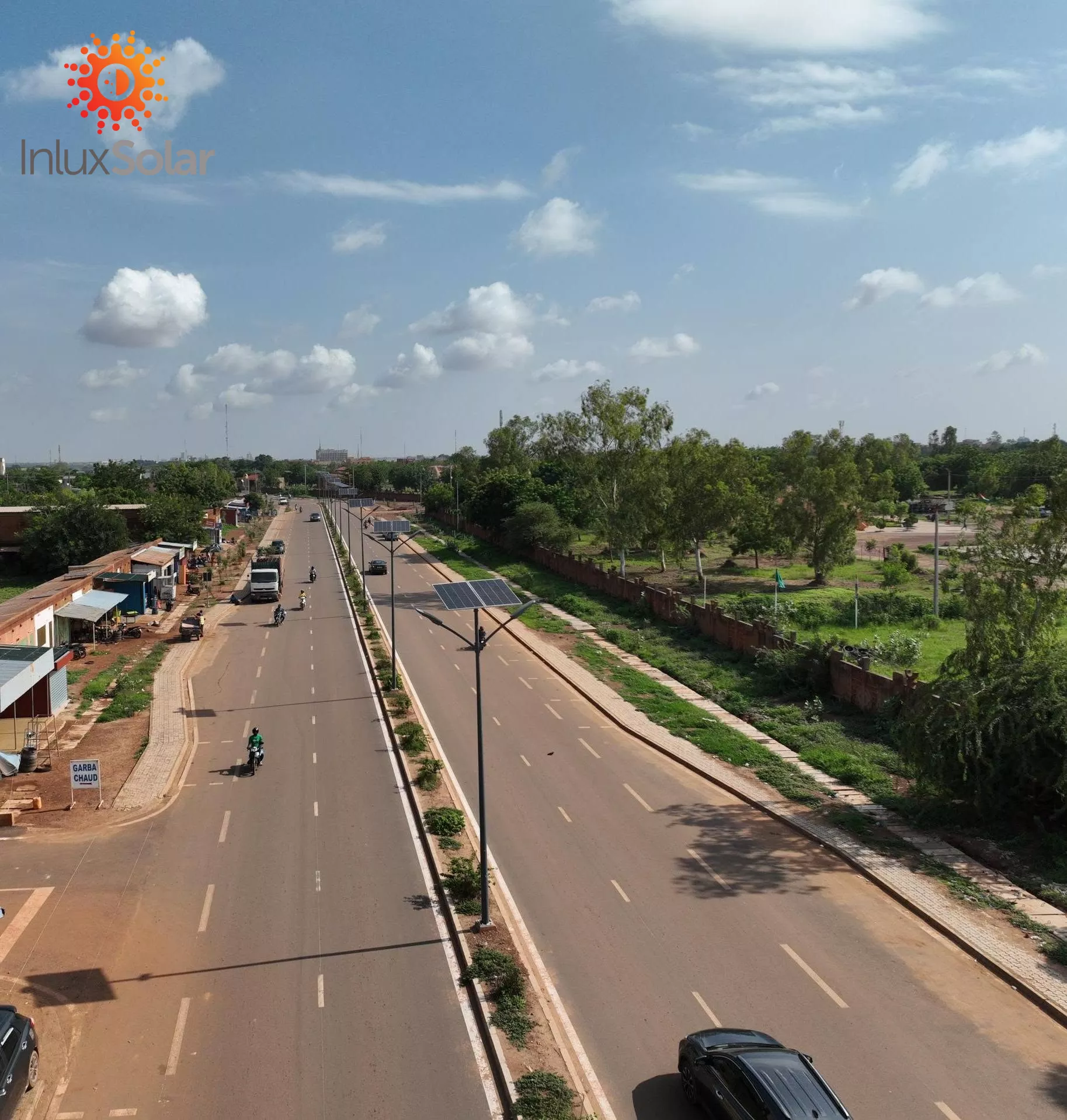
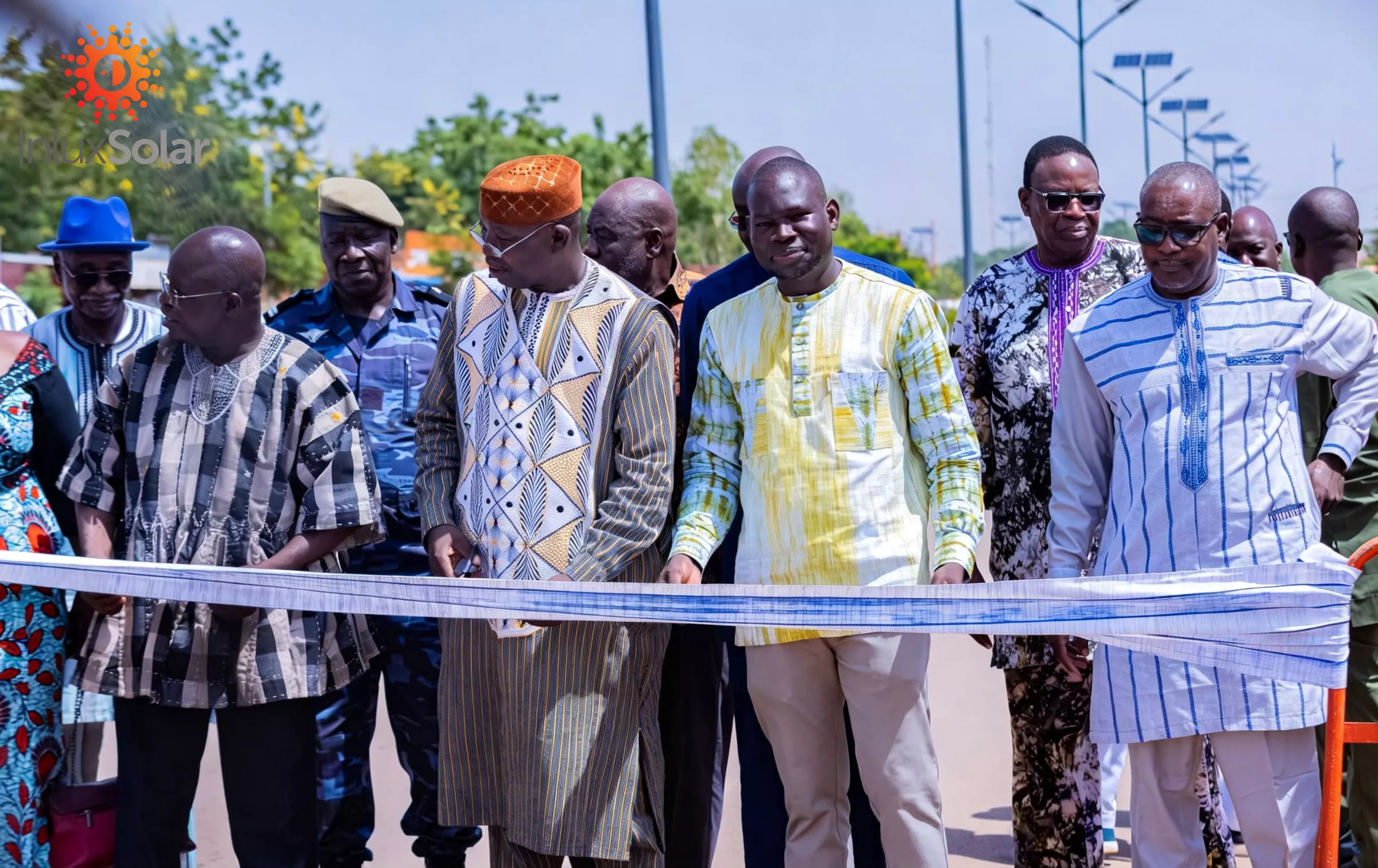
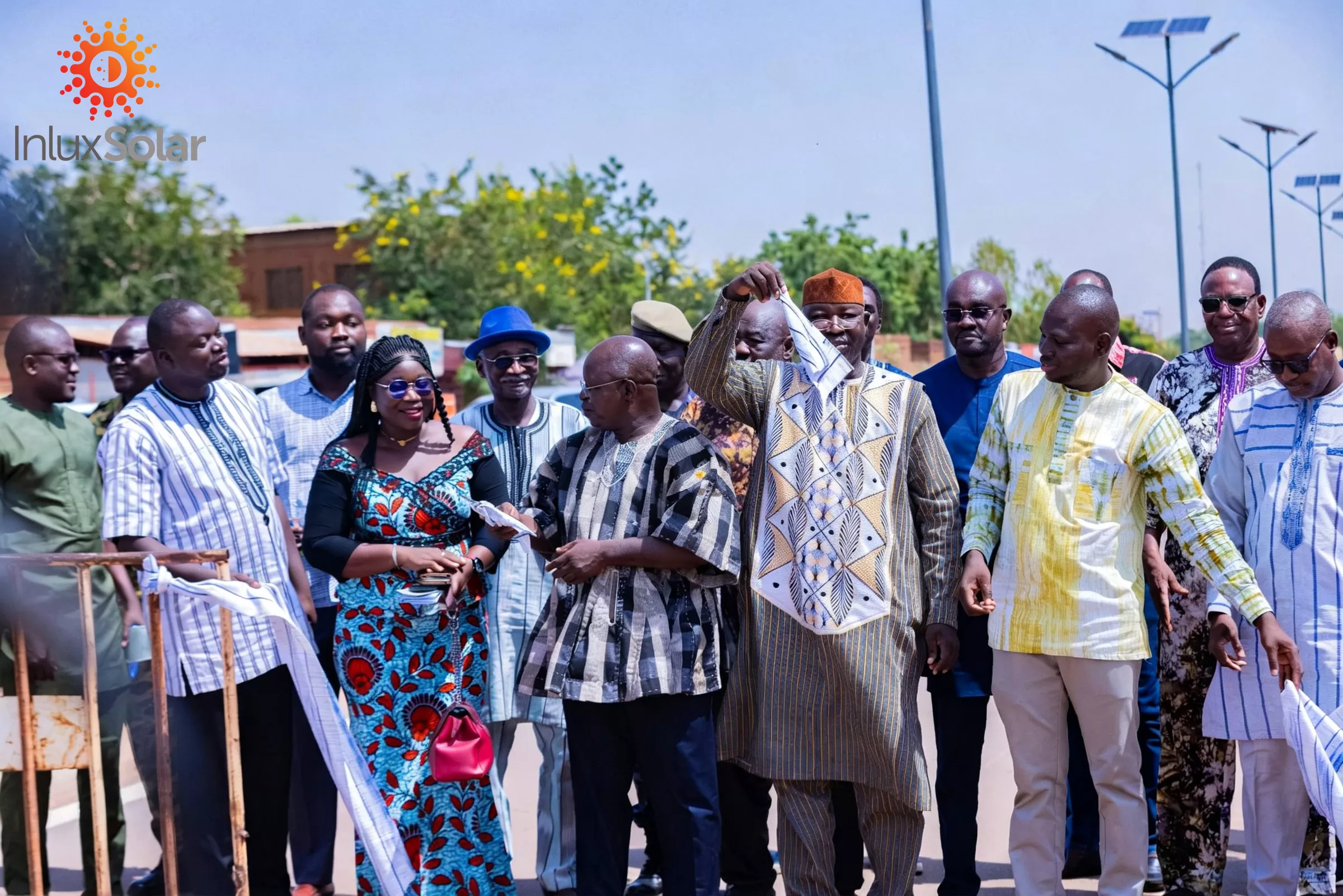
The project used both single-side and central-median arrangements across different road sections. The recorded layout applied approximately 30 m pole spacing, while the central-median sections used dual-arm pole structures to serve traffic lanes on both sides. The customer completed the installation, and the finished roads were formally opened for public use in September 2026.
Site Application & Lighting Requirement
The installation serves municipal main roads where grid power was not available. For this type of site, the lighting design has to coordinate road width, pole height, pole spacing, luminaire output, solar charging, battery storage, and the operating profile as one system. The project therefore provides a relevant reference for buyers comparing commercial solar street light solutions for municipal roads.
The confirmed 8 m road width and 8 m mounting height were paired with 80W LED luminaires. The specified LED efficacy was 185 lm/W, with a 6000K color temperature. The luminaire specification recorded IP66 ingress protection and IK09 impact resistance. These are component specifications rather than field measurements; the project materials did not provide measured illuminance, uniformity, lighting-class acceptance, or post-installation energy data.
Why This Configuration Was Selected
The final configuration followed the customer’s standard parameter requirements. The split type solar street light architecture keeps the solar panel, battery, controller, and LED luminaire as separately configured components, which allows the pole arrangement and solar collection surface to be matched to the road layout.
Each system was specified with a 280W solar panel and a 25.6V 50Ah LiFePO4 battery. The SRNE DM160 MPPT controller was programmed for six hours at full output followed by six hours at half output. The project also included remote-management functionality, but no unverified communication protocol or platform feature is claimed on this page.
The pole finish combined galvanizing and spray coating. Single-side placement was used on applicable road sections, while the project photos show dual-arm solar lighting installed along central medians. For similar projects, these arrangements should be evaluated separately because the number of luminaires, arms, foundations, panels, and battery systems may differ by road section.
Procurement Value for Similar Buyers
The 520-set order required four 40HC containers. The recorded order-to-shipment period was 90 days, followed by approximately 45 days of sea transit. Because installation was handled by the customer, equipment identification, packing sequence, pole and arm matching, wiring guidance, controller settings, and installation documentation were important handover items.
For municipal authorities, EPC contractors, and distributors preparing a comparable RFQ, quantity should be broken down by road section and pole arrangement rather than stated only as a project total. A central-median dual-arm location and a single-side location may require different bills of materials even when they use the same 80W luminaire specification.
Buyers can use the solar street light selector to identify a suitable product family, then submit the exact road width, pole layout, operating profile, local solar conditions, and lighting target for project-specific review.
What Similar Project Buyers Should Confirm
- Road width, road class, lane arrangement, and the length of each lighting section.
- Single-side, staggered, opposite, or central-median layout for each road segment.
- Whether quantity refers to complete lighting systems, luminaires, or pole assemblies.
- Target illuminance, uniformity, glare limits, and the photometric file used for design.
- Nightly operating hours, dimming schedule, required autonomy, and worst-month solar conditions.
- Wind-load requirement, pole and arm design, foundation scope, corrosion protection, and installation responsibility.
- Remote-management scope, communication method, commissioning responsibility, and long-term access to the management platform.
- Container loading sequence, spare-parts plan, installation documentation, and acceptance records.
إن solar street light engineering resource center provides RFQ, specification, quality-control, and IES/DIALux preparation resources for buyers who need comparable supplier submissions.
Related Solar Lighting Solutions
Projects with similar off-grid municipal-road requirements can compare the APOLLO product configuration with the broader split-type system range. Buyers who are still defining road class, width, layout, and power-source constraints should begin with the commercial solar street light hub and selector before finalizing a bill of materials.
الأسئلة الشائعة
Where was this solar street light project installed?
The project was installed on municipal main-road sections in Ouagadougou, Burkina Faso.
How many APOLLO solar street lights were supplied?
Inlux Solar supplied 520 sets of APOLLO split type solar street lights for the project.
What configuration was used for the project?
Each system was specified with an 80W LED luminaire, a 280W solar panel, a 25.6V 50Ah LiFePO4 battery, and an 8 m pole.
How were the solar street lights arranged along the roads?
The project used single-side and central-median layouts across different road sections, with approximately 30 m pole spacing.
What lighting control profile was used?
The DM160 MPPT controller was set for six hours at full output followed by six hours at half output, and the project included remote-management functionality.
What should buyers confirm before requesting a quote for a similar project?
Buyers should confirm road width by section, pole layout, target lighting level, operating profile, local solar conditions, wind-load requirements, foundation scope, and installation responsibility.
موقع المشروع
التكوينات الرئيسية
معرض المشاريع



About Me