You can charge solar lights without direct sun, but the practical answer depends on what “without sun” means. Bright indirect daylight or cloudy outdoor daylight can still charge the panel. Indoor bulbs and flashlights may create a little current, but they are usually too weak and inefficient to recover a depleted solar light. For most users, the better fix is cleaning, better placement, switching the light off for a recovery charge, and checking the battery.
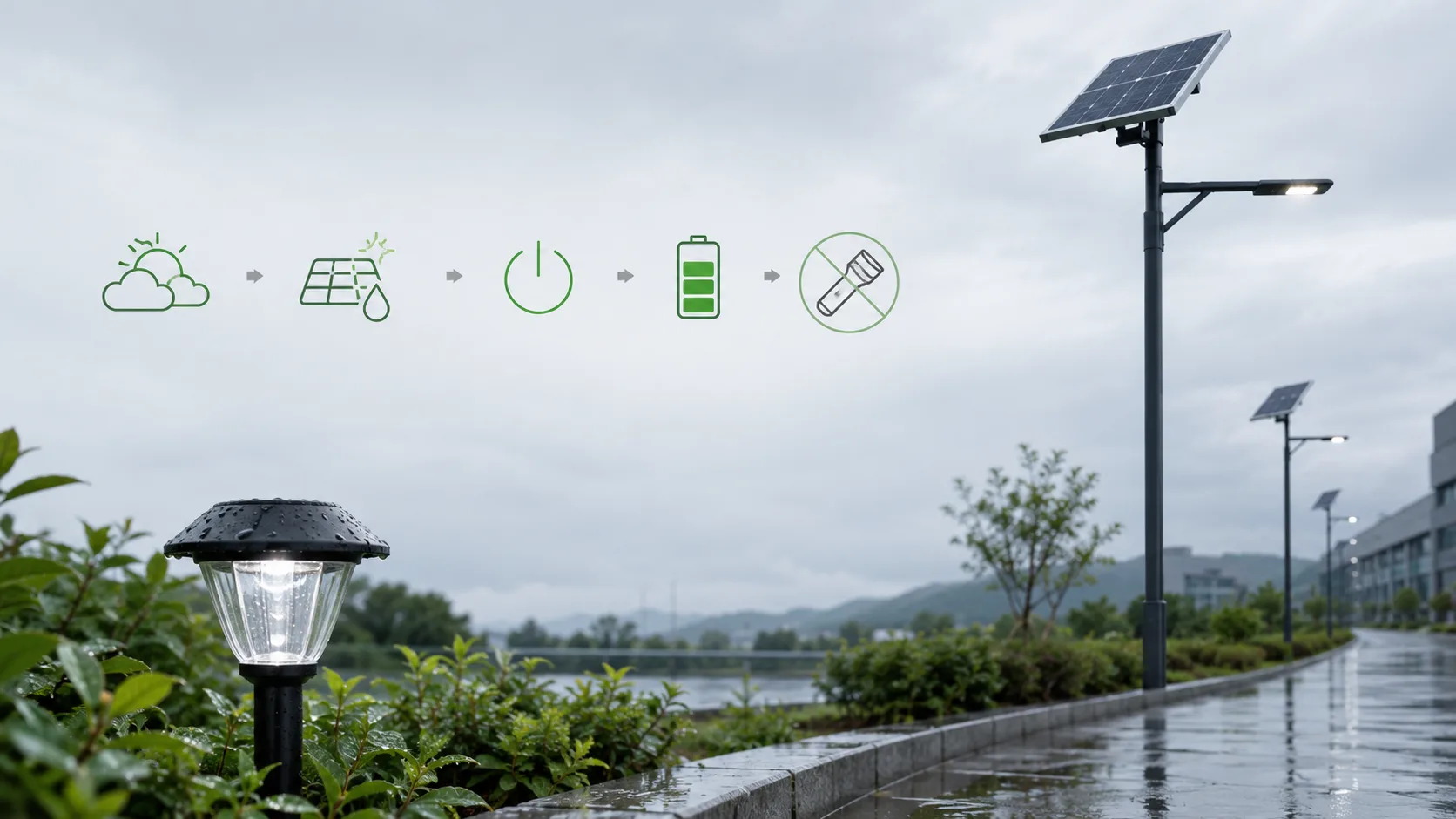
The Short Answer
If your solar light is not charging well, use this order:
- Give the panel open-sky daylight, even if it is cloudy.
- Clean the panel and remove shade before blaming the weather.
- Switch the light off for one or two bright days so charging is not immediately spent at night.
- Check the battery if runtime stays short after a recovery charge.
- Use artificial light only as a small emergency workaround, not as a normal charging method.
The U.S. Department of Energy explains that photovoltaic materials convert sunlight into electrical energy and that PV output depends on incoming light or solar resource. That is why a bright outdoor day without direct sun is normally more useful than a lamp across the room.
For the broader question of whether solar lights need direct sunlight, use the separate guide on direct sunlight, shade and cloudy charging. This page focuses on what to do when direct sun is not available.
First, Define “Without Sun”
People use “without sun” to mean several different situations. They are not equal.
| Situation | Can it charge? | Practical answer |
|---|---|---|
| Bright cloudy day outdoors | Sim | Usually the best no-direct-sun option |
| Shade with open sky nearby | Sometimes | Move the panel to the brightest open-sky position |
| Behind a window | Sometimes | Better than a dim room, but weaker than outdoors |
| Under a porch or roof | Usually poor | The panel may see daylight but not enough sky |
| Indoor LED or desk lamp | Technically possible | Slow and inefficient for most solar lights |
| Flashlight or phone light | Technically possible at very close distance | Usually not worth the time |
| Electrical battery charger | Only if the product is designed for it | Do not improvise charging wires |
The useful distinction is not “sun or no sun.” It is how much usable light reaches the photovoltaic cells and whether the battery can safely store that energy.
Method Comparison: What Works, What Barely Works
| Method | Best use | What to expect | Risco principal |
|---|---|---|---|
| Open-sky cloudy daylight | Normal recovery when direct sun is unavailable | Slow but realistic charging | Shade, dirt or poor angle can still limit input |
| Move a detachable panel | Gardens, paths, wall lights with separate panels | Often the easiest improvement | Cable length and mounting limits |
| Clean the panel | Any light that has been outside for months | Restores blocked light input | Scratching the panel with harsh tools |
| Switch the light off | Battery recovery after several weak days | Lets the battery charge without nightly drain | Does not fix an aged battery |
| Window charging | Small portable lights | Partial recovery in bright conditions | Glass, angle and indoor shade reduce input |
| LED or bulb charging | Tiny emergency top-up | Very slow, close-range only | Wastes purchased electricity and may overheat if too close |
| Flashlight charging | Demonstration or last-resort test | Usually negligible for normal use | Misleads users into ignoring the real fault |
| Replace battery | Aged or deeply degraded battery | Can restore runtime if the system is otherwise healthy | Wrong chemistry, voltage or size can damage the light |
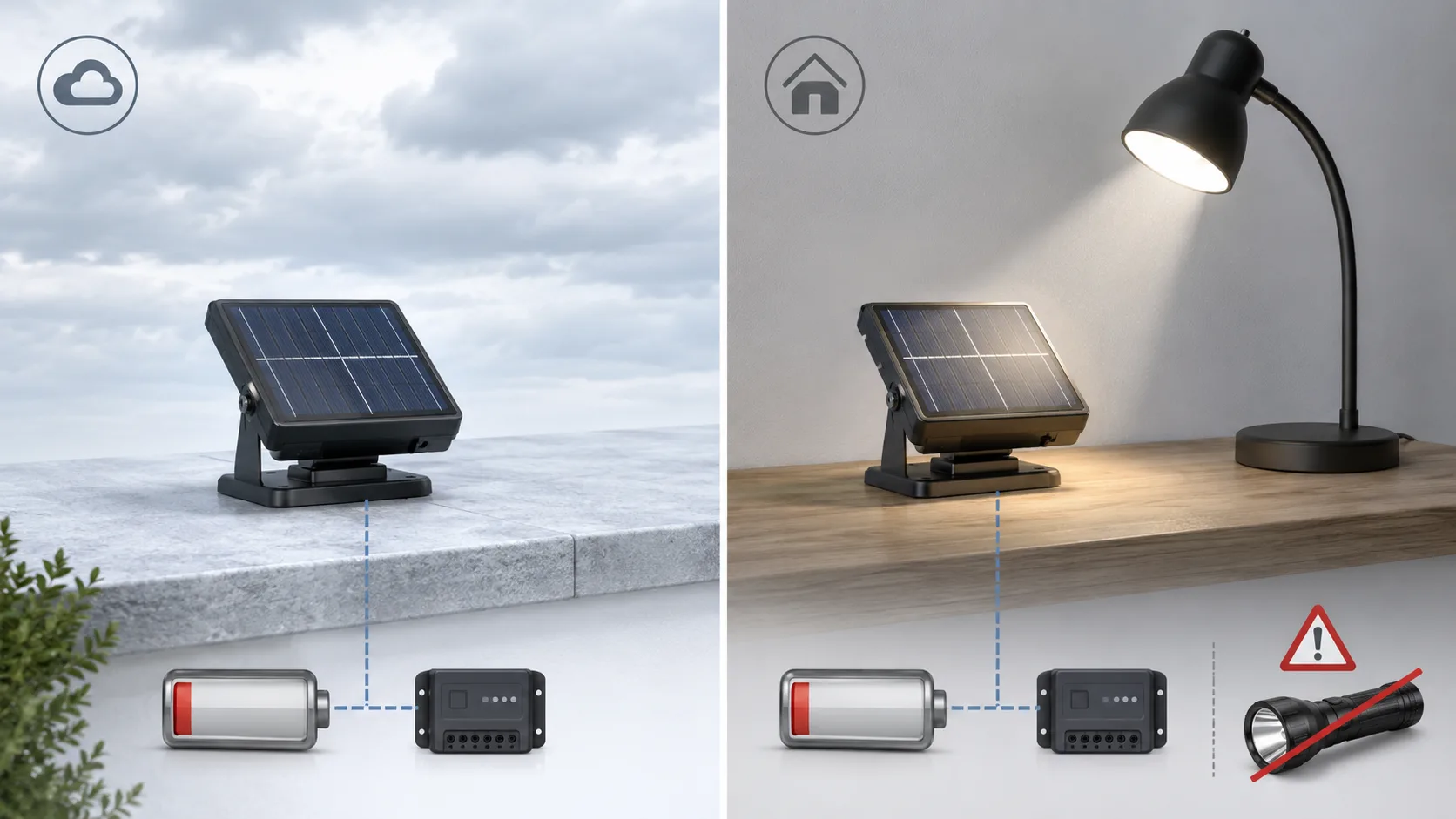
The table is intentionally conservative. Some small consumer lights may respond to a strong indoor lamp placed close to the panel, but that does not make artificial light a good charging strategy.
Use Indirect Daylight Before Artificial Light
Indirect daylight is still solar energy. A panel outdoors under a bright overcast sky can receive broad, natural light across its surface. A lamp indoors sends a narrow beam from a limited source, and much of the electrical energy has already been spent turning grid power into light.
Try this first:
- place the panel outside with the widest possible view of the sky
- avoid roof overhangs, fences, balcony rails and dense trees
- face the panel toward the brightest part of the sky when possible
- keep the panel uncovered for the whole daylight period
- switch the light off if the battery is heavily depleted
This is especially important for small solar garden lights. Many failures that look like “no sun” are really a combination of winter daylight, shade, dirty panels and an aging battery.
Clean and Reposition the Solar Panel
Before using any artificial charging method, inspect the panel.
Common blockers include:
- dust
- pollen
- bird droppings
- leaves
- water spots
- snow or ice
- plastic film left from shipping
- yellowed or scratched covers
- new shade from plants or nearby structures
Use a soft cloth and clean water. Avoid abrasive pads, solvents and pressure that can scratch the cover. A scratched or cloudy cover may still look transparent to your eye while reducing useful light reaching the cells.
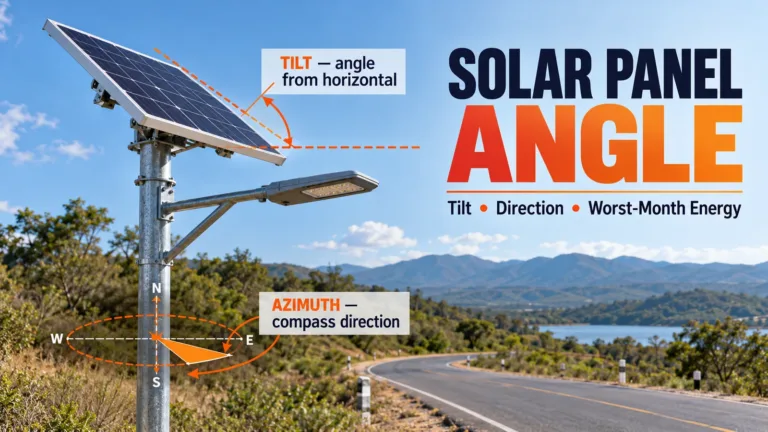
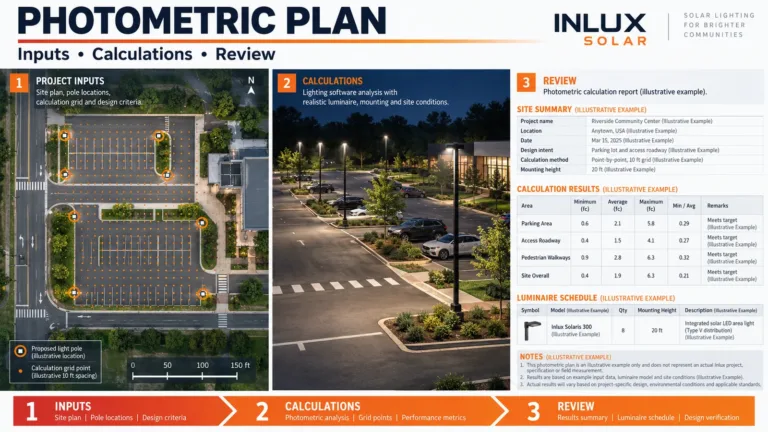
For a fixed solar street light, cleaning is only one part of the check. The panel angle, pole location, surrounding shade, soiling rate and seasonal solar path all matter. If the panel is too small for the site, cleaning helps but will not create enough daily energy.
Switch the Light Off for a Recovery Charge
If the battery has been low for several nights, let the panel charge without running the LED load.
For many small lights, that means:
- turn the switch off
- place the panel in the brightest outdoor daylight available
- leave it off through the next night
- test runtime after a full recovery day
This works because the battery is no longer spending the new charge immediately after dark.
It does not prove the battery is healthy. If runtime becomes short again after one or two nights, the likely issues are:
- battery capacity loss
- poor daily charging
- shade
- dirty panel
- high-output mode
- controller low-voltage protection
- water or corrosion inside the light
For the runtime side of this problem, see how long solar lights last at night.
Can You Use a Light Bulb or LED Lamp?
Yes, a bright artificial light can produce some charging current if it is close enough to the solar panel. That does not mean it is efficient.
There are three practical limits:
- Distance matters.
Indoor light drops quickly with distance. A ceiling light may look bright to you but be weak at the panel. - Spectrum matters.
Solar cells respond differently across wavelengths. A lamp’s spectrum is not the same as outdoor sunlight. - Energy conversion is wasteful.
You use electricity to power a bulb, the bulb emits light, the panel captures only part of that light, and the battery stores only part of what the panel generates.
DOE describes LEDs as highly energy-efficient lighting technology, which is useful when an LED is the load in a solar light. It does not mean an LED lamp is an efficient replacement for outdoor daylight when charging a solar panel.
Use an indoor lamp only when:
- the solar light is small
- the battery is not deeply depleted
- you need a short emergency top-up
- the lamp can be placed close without heating the light
- the product instructions do not forbid indoor charging
Do not place a hot lamp against plastic housing, battery compartments or lens covers. Heat can damage batteries, gaskets and plastics.
Can a Flashlight Charge a Solar Panel?
A flashlight can trigger a small response from a solar panel at very close range, but it is usually not a useful way to charge a solar light.
It may be helpful only as a quick test:
- cover the panel and confirm the light switches on
- shine a flashlight on the panel and see whether the light turns off
- use the result to check whether the day/night sensing circuit responds
That is a sensor test, not a charging plan.
If a user has time to hold a flashlight on a panel, the better action is normally to place the solar light outdoors, clean the panel, switch the light off and let daylight do the work.
When the Battery, Not the Sun, Is the Problem
Charging complaints often start after a product has worked for months or years. In that case, the sunlight may not be the main problem.
Battery-related signs include:
- the light charges but runs for only one or two hours
- runtime is much shorter than when the light was new
- brightness drops quickly after switch-on
- the light works after one sunny day but fails after a cloudy sequence
- the battery compartment shows corrosion, swelling or leakage
- the light turns off even though the panel received daylight
If the battery is replaceable, match the chemistry, voltage, capacity, connector and physical size specified by the manufacturer. Do not upgrade randomly. A larger battery will not fix a panel that cannot recharge it.
For project systems, battery chemistry, charge limits, depth of discharge, temperature and controller behavior decide whether the system survives low-sun periods. The LiFePO4 battery lifespan guide covers those variables in more depth.
Troubleshooting Table
| Symptom | More likely cause | First check |
|---|---|---|
| Light never turns on | Switch, shipping tab, sensor, wiring or battery | Cover the panel, check switch and connectors |
| Light works for one hour | Low charge or aged battery | Switch off for recovery charge, then compare runtime |
| Light works only after sunny days | Insufficient daily energy | Check shade, panel size, dirt and operating mode |
| Light stays on during daytime | Covered panel, failed sensor or controller fault | Expose panel fully and test day/night response |
| Light flickers | Low-voltage protection, loose connector or water ingress | Inspect wiring and battery under load |
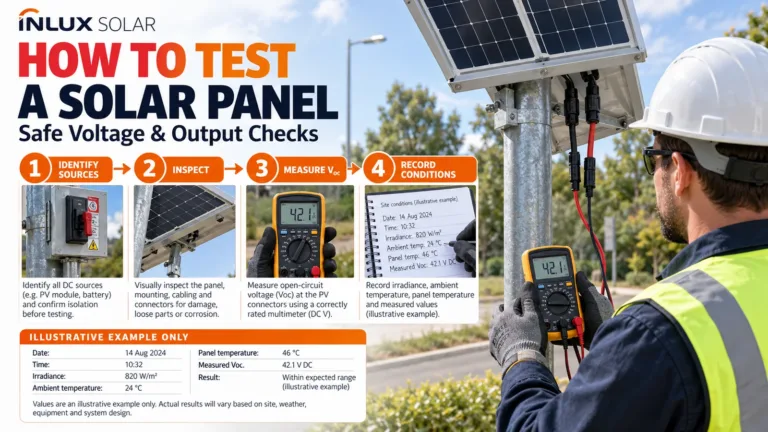
| Panel looks clean but charging is weak | Angle, shade, cloudy cover, internal corrosion | Move to open sky and compare response |
| Artificial light does almost nothing | Light source too weak or too far | Stop using the lamp and use outdoor daylight |
| New battery still drains quickly | System energy deficit or wrong battery | Check panel output, controller and load schedule |
Uso how solar lights work if you need the basic panel-controller-battery-LED sequence.
For Projects: Design for Low-Sun Days, Do Not Rely on Emergency Charging
A commercial solar street light should not need indoor lamps, flashlights or manual emergency charging. It should be designed for the location and operating schedule.
For a project, the real questions are:
- What is the minimum-season solar resource at the site?
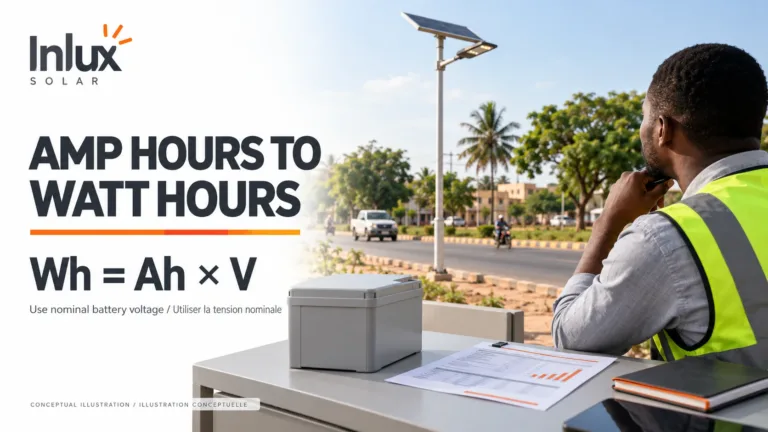
- What is the nightly load in watt-hours?
- How many autonomy days are required?
- What dimming schedule is acceptable?
- What battery chemistry and usable depth of discharge are specified?
- What happens after several cloudy days?
- Can the controller reduce output before deep discharge?
- Is panel orientation limited by road layout, buildings or trees?
- How will the system be cleaned and inspected?
The basic load calculation starts with:
Nightly load (Wh) = LED power (W) x operating hours at each dimming level
The battery must then account for usable capacity, temperature, aging, conversion loss and backup-night requirements. The panel must replace enough energy during the design season, not only on a perfect clear day.
Use o autonomy days calculation guide e o MPPT vs PWM controller guide to connect low-sun charging to real system design.
For procurement, compare complete commercial solar street light systems instead of choosing by a single wattage or battery size.
Perguntas frequentes
Can solar lights charge on cloudy days?
Yes. DOE explains that photovoltaic materials convert sunlight into electrical energy and that PV output depends on incoming light or solar resource. Cloudy daylight is usually slower than clear direct sun, but it is normally more practical than charging from indoor lamps.
Can solar lights charge through a window?
Sometimes, but it is weaker than outdoor exposure. Glass, screens, curtains, angle and indoor shade reduce the light reaching the panel. If possible, place the panel outside with open sky exposure.
Can a light bulb charge solar lights?
It can produce some charging if the light is bright and close, but it is usually slow and inefficient. Use it only as an emergency workaround for a small light, not as a normal charging plan.
Can a phone flashlight charge a solar panel?
Technically, it can create a small response at close range. Practically, it is poor for charging. It is more useful as a quick sensor test than as a way to refill a battery.
Should I leave solar lights on or off while charging?
If the battery is low, switch the light off during the recovery day. This lets the panel charge the battery without the LED using the energy again at night.
Why do my solar lights only work after sunny days?
The system is probably operating with too little energy reserve. Common causes include shade, dirt, winter daylight, an undersized panel, high-output mode, an aged battery or controller protection.
Can I charge solar-light batteries in a separate charger?
Only if the battery is removable and the manufacturer allows it. Match the correct chemistry, voltage and charger. Do not improvise wiring into a sealed solar light.
What is the best long-term fix for no-sun charging problems?
For small lights, improve placement, clean the panel and replace the battery when appropriate. For commercial projects, size the panel, battery, controller and dimming schedule for the site and backup-night requirement.
From Emergency Fix to Reliable Solar Lighting
Charging a small solar light without direct sun is possible, but the most reliable path is still daylight, clean panels, healthy batteries and correct operating settings. Artificial light is a workaround, not a design strategy.
Inlux Solar has delivered more than 300,000 total units across 60+ countries and completed 1,000+ projects. The standard warranty is five years. Those facts do not replace a site-specific design, but they support a procurement workflow built around low-sun performance, battery reserve, controller protection and maintainable components.
Review Inlux Solar manufacturing capability or send the project location, lighting requirement, operating schedule, autonomy target, environment and quantity for a low-sun configuration review.
Request a low-sun solar lighting design review