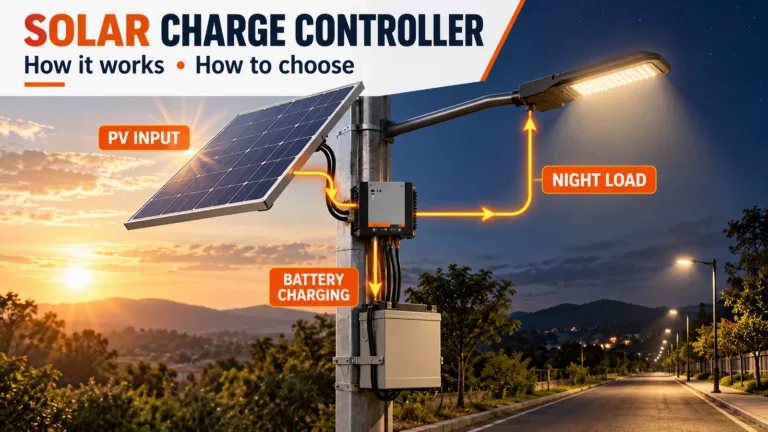
Foot candles measure the light arriving on a surface. One foot-candle (fc) is one lumen per square foot; 1 fc is approximately 10.7639 lux. The unit helps you read a lighting plan or check a completed installation, but it does not tell you the lamp’s wattage, battery capacity or total light output.
The costly mistake is comparing numbers before checking what they describe. A proposal showing 2 fc and another showing 20 lux are not identical. Nor are two plans with the same average necessarily equally useful: their darkest points, measurement planes and operating states may differ. Here is how to make those comparisons properly for outdoor lighting.
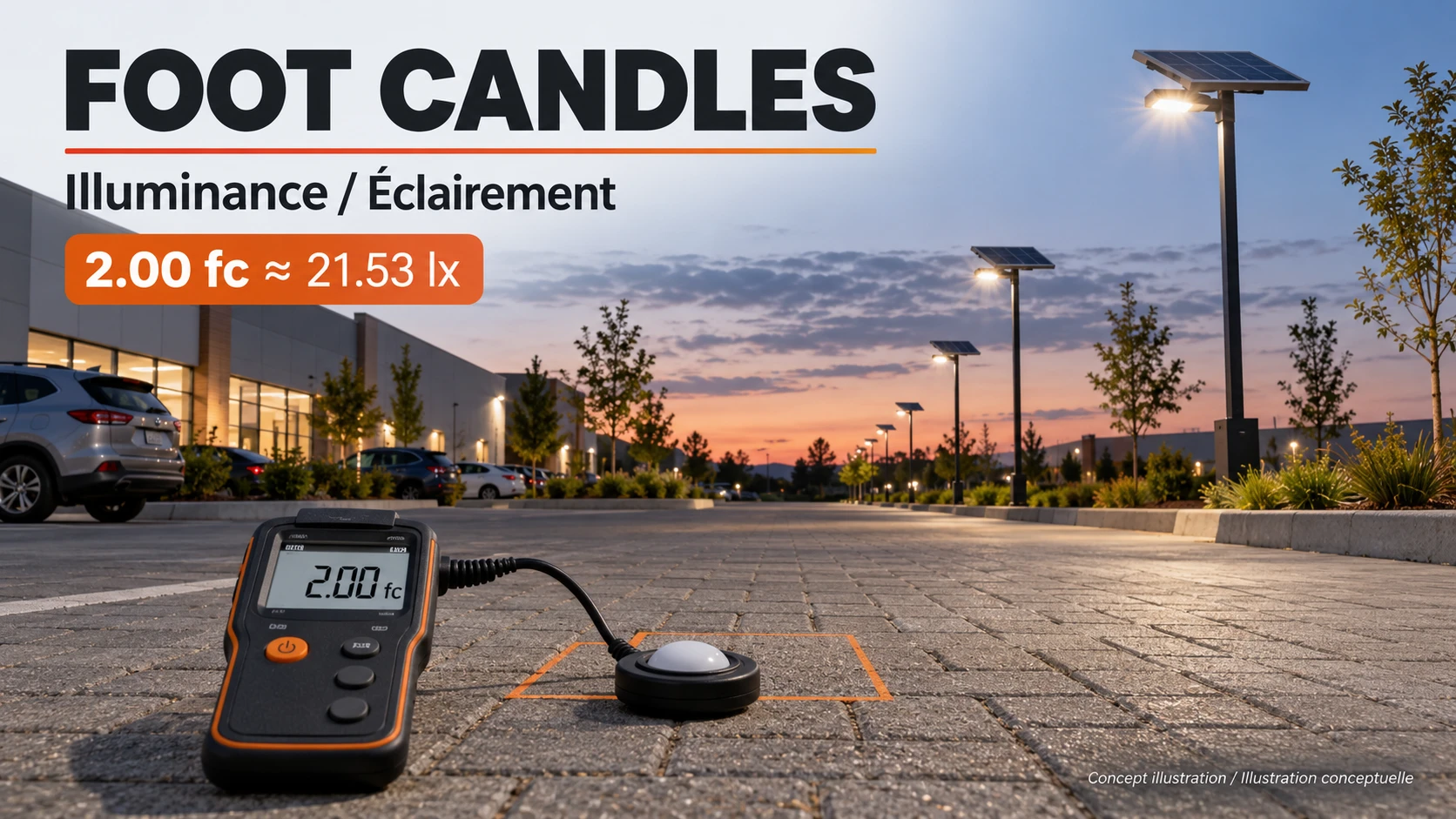
What foot candles tell you—and what they do not
A light source emits luminous flux, measured in lumens. Only some of that light reaches the surface you want to illuminate. Foot candles describe the illuminance at that receiving surface. The distinction matters when a supplier offers a high-lumen luminaire but provides no calculation showing the light on the road, parking aisle or pedestrian route.
| Lighting quantity | Common unit | Meaning of the measurement |
|---|---|---|
| Illuminance at a surface | fc or lux | Light arriving per unit area |
| Flux from a light source | ل م | Light output |
| Electrical input power | W | Electrical input, not illumination |
| Intensity in a direction | cd | Light emitted in a particular direction |
Moving the same fitting, changing its optics or altering its mounting height can change the readings on the ground. There is therefore no fixed conversion from watts or a lamp’s lumens to foot candles without a defined layout. Our lux vs lumens guide explains the source-output distinction in more detail.
Foot candles to lux: formulas and conversion table
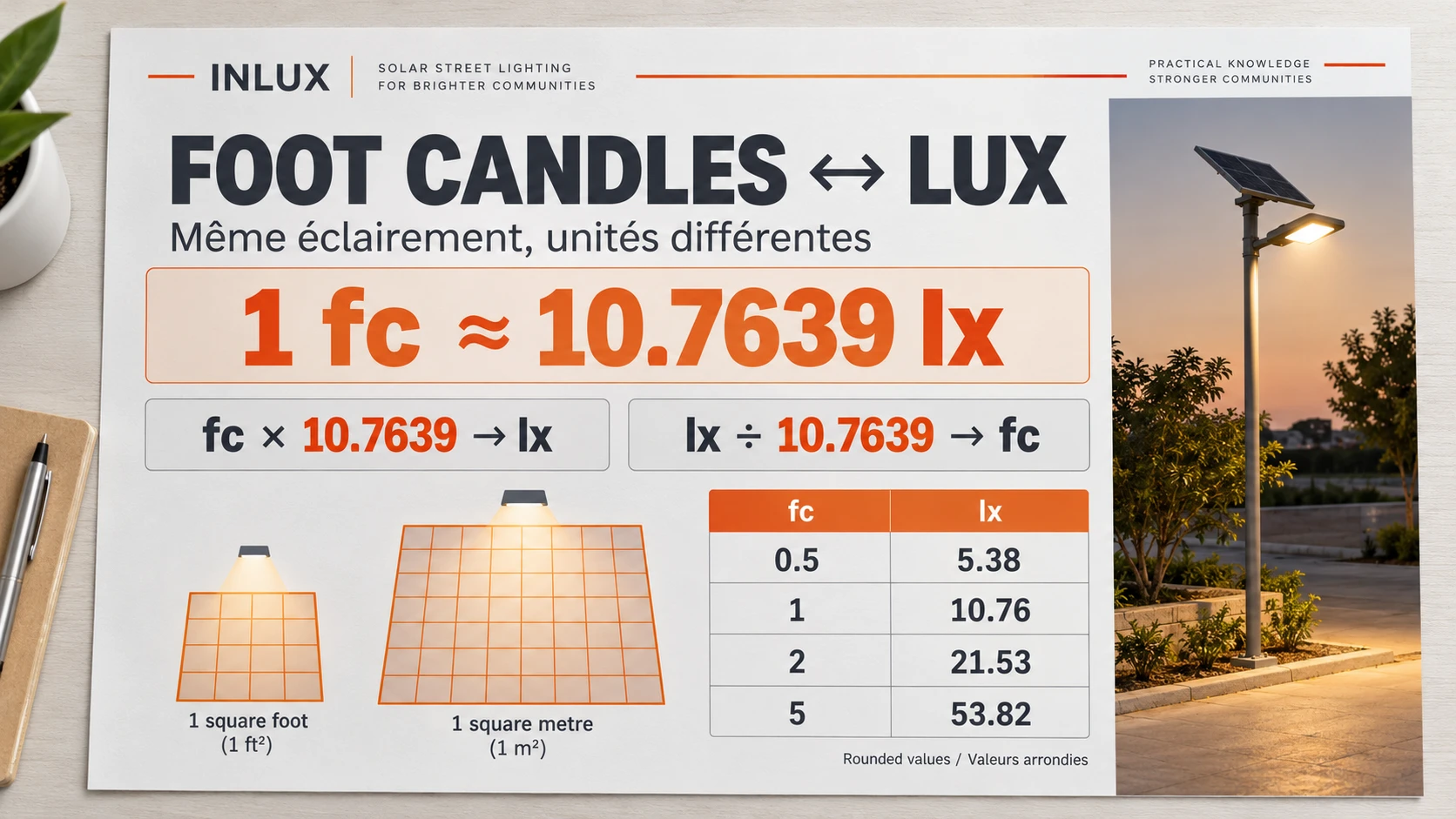
Lux and foot candles measure the same physical quantity using different area units. Lux is lumens per square metre; fc is lumens per square foot. NIST’s conversion table gives a factor of 10.76391 from footcandle to lux. The extra digits are useful in calculations; a report can display suitably rounded results.
Lux ≈ foot candles × 10.7639
Foot candles ≈ lux ÷ 10.7639
| Foot candles (fc) | Lux, rounded |
|---|---|
| 0.1 | 1.08 |
| 0.2 | 2.15 |
| 0.5 | 5.38 |
| 1 | 10.76 |
| 2 | 21.53 |
| 3 | 32.29 |
| 5 | 53.82 |
| 10 | 107.64 |
| 20 | 215.28 |
For example, 20 lux is approximately 1.8581 fc, not 2 fc. Multiplying or dividing by ten is a useful mental estimate, but it can change a near-threshold decision. If the agreed requirement is stated in fc, convert the underlying result before comparing it with that requirement. Do not round both the requirement and the result until they appear to match.
Keep the unit beside every value in a spreadsheet, screenshot or quotation. A column headed only “light level” leaves room for a tenfold misunderstanding. Conversion changes the numerical scale, not the lighting performance.
Average foot candles can hide a dark spot
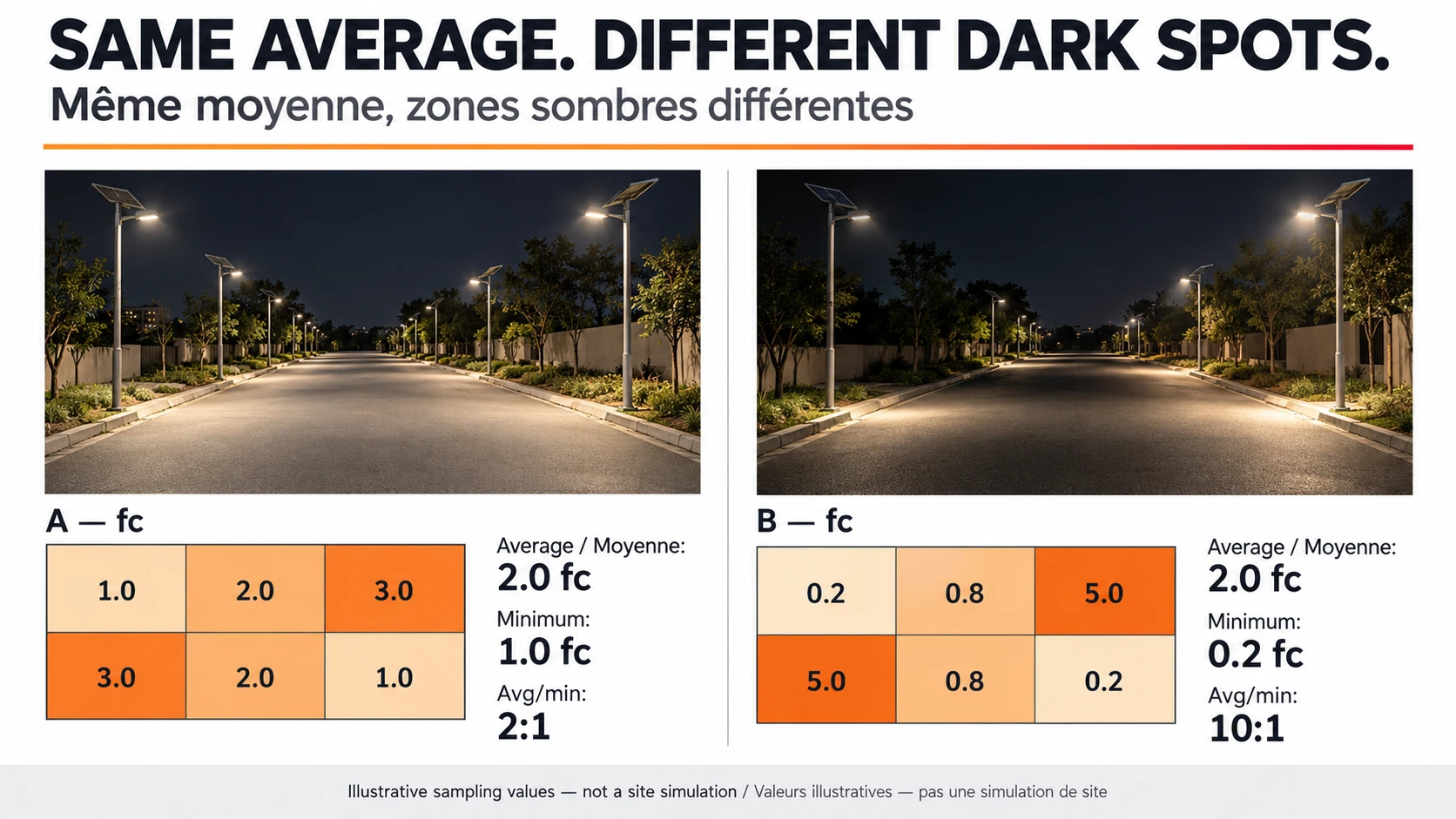
A single average is not a map. The following small example uses six equally weighted points in each grid. Both grids average 2.0 fc, yet the minimum in grid B is only one fifth of the minimum in grid A. These are illustrative arithmetic values, not an Inlux simulation or a recommended lighting standard.
| Grid comparison | Grid A | Grid B |
|---|---|---|
| Six readings (fc) | 1, 2, 3, 3, 2, 1 | 0.2, 0.8, 5, 5, 0.8, 0.2 |
| Average (fc) | 2.0 | 2.0 |
| Minimum (fc) | 1.0 | 0.2 |
| Average ÷ minimum | 2:1 | 10:1 |
Ask which uniformity ratio the report uses. Average-to-minimum and maximum-to-minimum are different calculations. A ratio has no illuminance unit, and changing from fc to lux does not improve it: every reading is multiplied by the same factor. The ratio also depends on the calculation area and sampling grid, so keep those boundaries consistent.
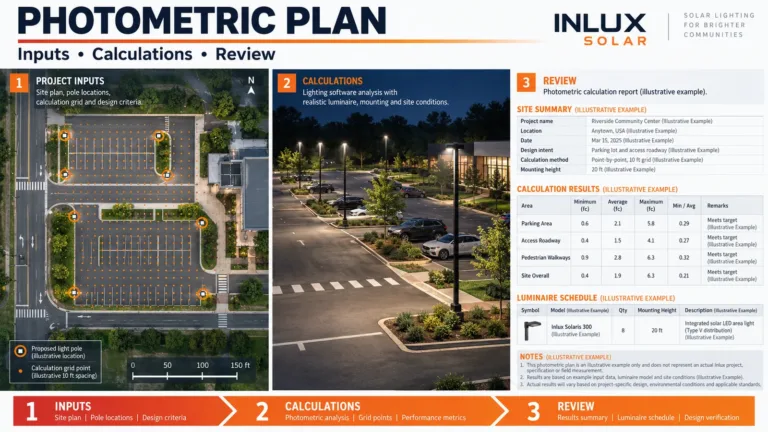
Check whether the values are initial or maintained. A maintained calculation includes the stated allowances for changes over service, whereas an initial calculation describes a different condition. Comparing an initial average with a maintained minimum—or a large open area with a narrow bright strip—is not a fair comparison. The photometric plan review guide shows what a reproducible submission should contain.
How many foot candles does an outdoor project need?
There is no single target for every road, parking lot, loading bay and path. Define the task, calculation plane, operating period and applicable project criteria before choosing a number. The IES Lighting Library and Illuminance Selector organise recommendations by application; they are not a substitute for identifying the requirements adopted for your project.
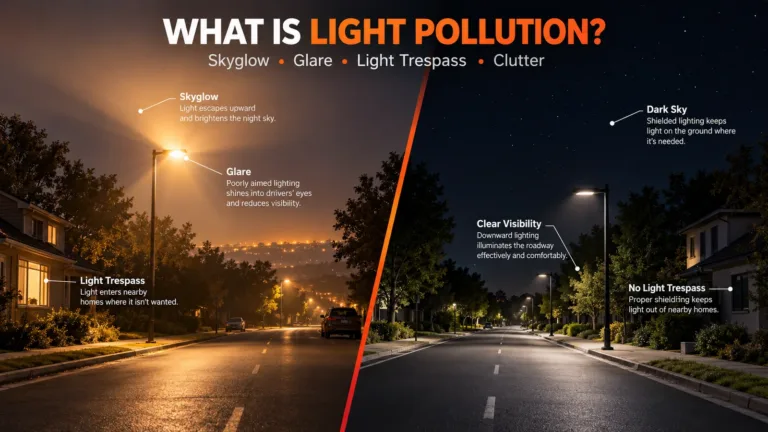
In a parking project, vehicle circulation, pedestrian crossings and entrances may need separate assessment. Property boundaries also matter: increasing light everywhere can create unwanted spill or glare. Ask the designer to identify the zones and the assessment method, rather than treating the highest average as the winning offer.
Do not copy an OSHA construction table into a permanent public-road specification. OSHA 1926.56 is a US construction illumination provision with different entries for specified operations. It is not a universal parking-lot or street-light design rule. Confirm the applicable jurisdiction and project standard with the responsible designer or authority.
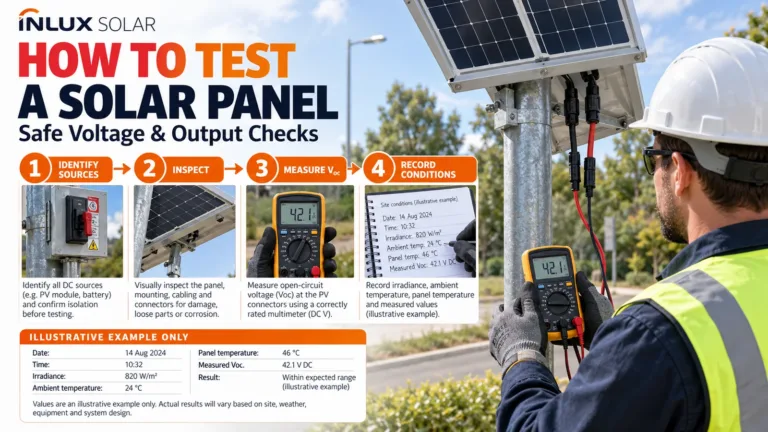
How to measure foot candles: 5 checks before accepting readings
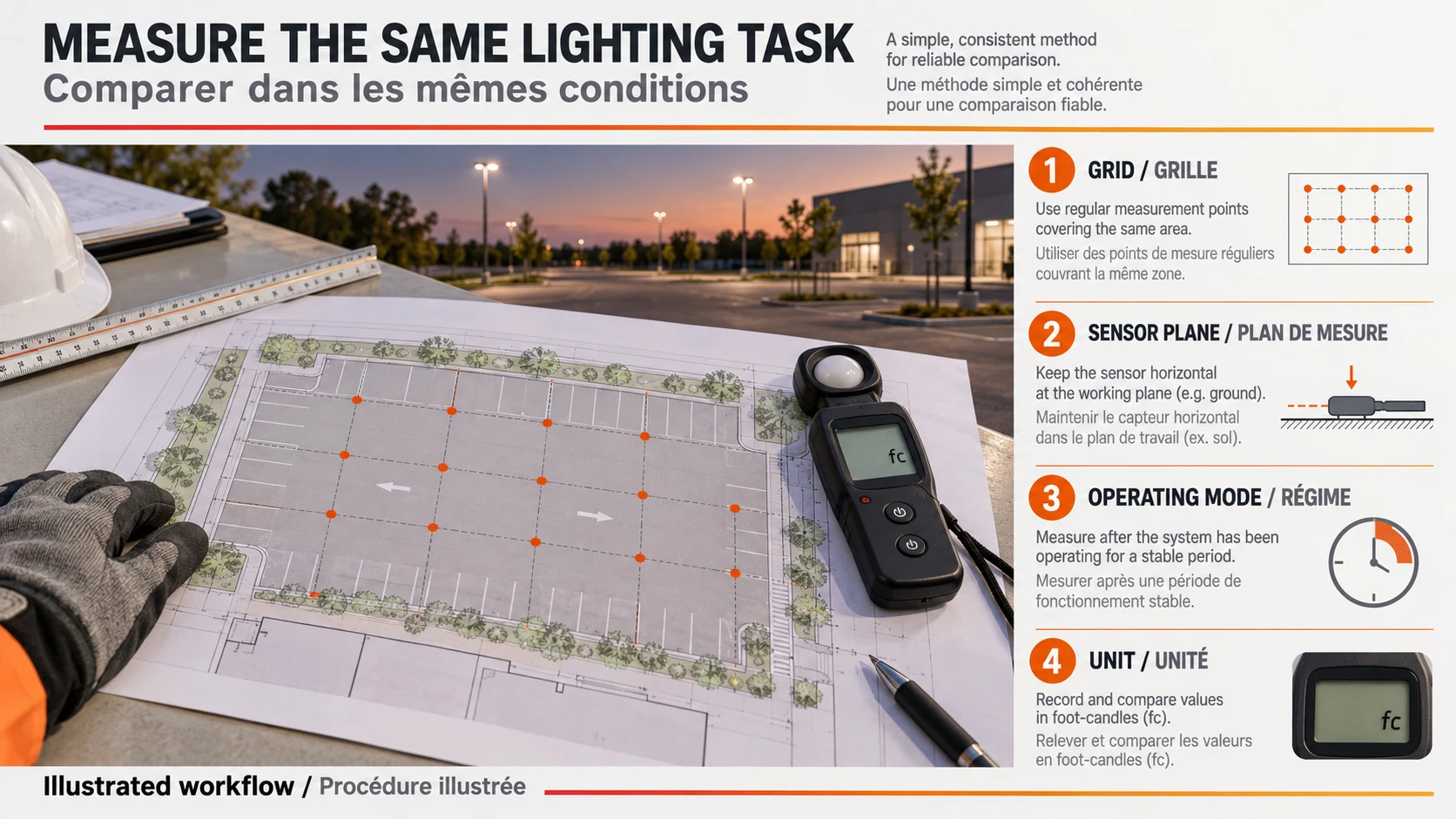
1. Agree the measurement plane
For a horizontal ground-level check, the sensor must represent that horizontal plane. A vertical assessment requires a different orientation. Record the agreed height and orientation; a convenient reading at chest height is not interchangeable with a ground reading. Use a suitable illuminance meter and follow its instructions for range, calibration and sensor placement.
2. Follow the agreed grid
Take readings at identified points across the assessment area, including locations between poles where low values may occur. Measuring only directly under a luminaire selects the most favourable part of the distribution. Keep point identifiers on the plan so another person can repeat the survey. If an obstruction prevents a reading, record it rather than silently moving the point.
3. Record the operating state
Write down the time, dimming state and any motion-triggered boost. For solar lighting, record relevant battery and controller status available through the approved system interface. A brief high-output sensor event cannot establish the light level delivered throughout the night. Agree how the survey will cover the operating periods that matter to the project; do not open equipment or bypass protections to force a test state.
4. Identify other light and obstructions
Daylight, adjacent premises, vehicle headlights, trees and temporary obstructions can affect what the meter receives. Record the conditions and use the agreed test method to account for background light. Keep your body and equipment from shading the sensor. Restrict access or use an authorised safe survey arrangement where traffic or other site activities create risk.
5. Keep units and raw readings together
Record whether the meter was set to fc or lux, its range and the original reading. Convert a copy for comparison, keeping the raw record. Recalculate the average and minimum using the agreed method, including any weighting. Do not substitute a photograph of the brightest meter reading for the full grid. For handover, link the readings to the tested luminaire configuration and operating programme.
Use foot candles to compare solar street-light proposals
Start by putting both proposals into one unit. Then hold the road or parking geometry, calculation area, mounting positions and operating schedule constant. Compare the minimum and uniformity as well as the average. If one bidder changes the pole count or mounting height, request a revised comparable layout rather than attributing the difference to the luminaire alone.
Keep the lighting calculation and the energy calculation connected. A plan at a stated output does not by itself prove that the solar panel and usable battery energy can support that output through the agreed nightly programme. Equally, a large battery does not prove that the optics put enough light where people need it. Both checks are needed before specifying a system.
For product routes, compare the All-in-One series with the All-in-Two range, or review the complete solar parking-lot lighting options. Select the configuration against the site task; an architecture name is not a foot-candle performance guarantee.
Inlux Solar’s published Bamako project reference records 3,162 solar street lights. That documents a delivery reference, not a measured illuminance result for your site. Ask for a proposal tied to your own layout, operating profile and acceptance criteria, with the applicable supporting information confirmed during the enquiry.
FAQs about foot candles
Are foot candles and lux the same?
They measure the same quantity—illuminance—but use different area units. Multiply fc by approximately 10.7639 to obtain lux. A change of unit does not change how much light reaches the surface.
How many foot candles does a 100 W light produce?
There is no fixed answer from wattage alone. The result depends on the luminaire’s output and distribution, mounting position, aiming, distance and receiving plane. Use the exact luminaire photometry and a defined layout, not a universal watts-to-fc conversion.
How many lumens equal one foot-candle?
One foot-candle means one lumen arriving per square foot. At a perfectly uniform 1 fc across 100 square feet, 100 lumens reach that plane. That is incident flux on the area, not necessarily the luminaire’s total output; real layouts include distribution and other losses.
Can a phone app replace a foot-candle meter?
Do not assume it can. Sensor response, calibration and orientation can differ substantially. For acceptance measurements, use the instrument and procedure agreed in the project’s test plan. A phone reading may be a rough indication, not evidence of contractual compliance.
Does a higher average always mean better lighting?
No. A high average can coexist with dark points, glare or excessive spill. Compare the required minimum, the specified uniformity metric, the relevant zones and the operating state. More light is not automatically more useful light.
Does an OSHA foot-candle value apply to every outdoor site?
No. The cited US construction provision has a specific scope. Permanent roads, parking areas and other sites must be assessed against their applicable requirements. Have the responsible authority or designer confirm which criteria govern the project before using a value in a purchase specification.
Turn the lighting requirement into a comparable quotation
Send the site layout, calculation unit, required average and minimum, uniformity definition and nightly operating programme with your project enquiry to Inlux Solar. Include any authority-approved criteria you already have. That lets the discussion start with the lighting service you need—not a wattage label or an isolated bright reading.