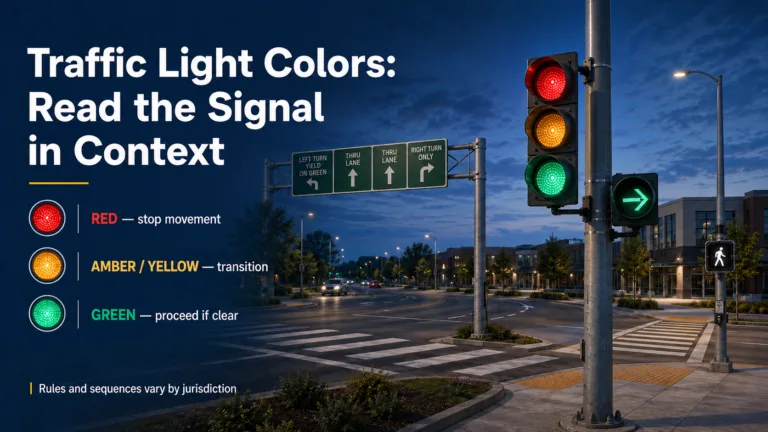
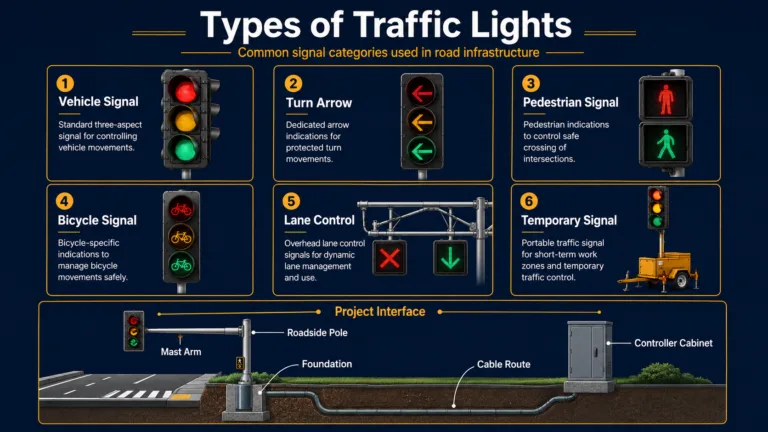
Sometimes, yes. But a box or lens mounted near a signal does not tell you one simple story. It may be part of a video-detection system that helps a controller respond to vehicles. It may be a traffic-monitoring device. It may be an enforcement system. Or it may not be a camera at all.
The useful answer is therefore not “all traffic lights have cameras” or “that device gives tickets.” The responsible authority decides what equipment is installed, how it operates and whether any enforcement program exists. A street-side photo is not enough to establish that.
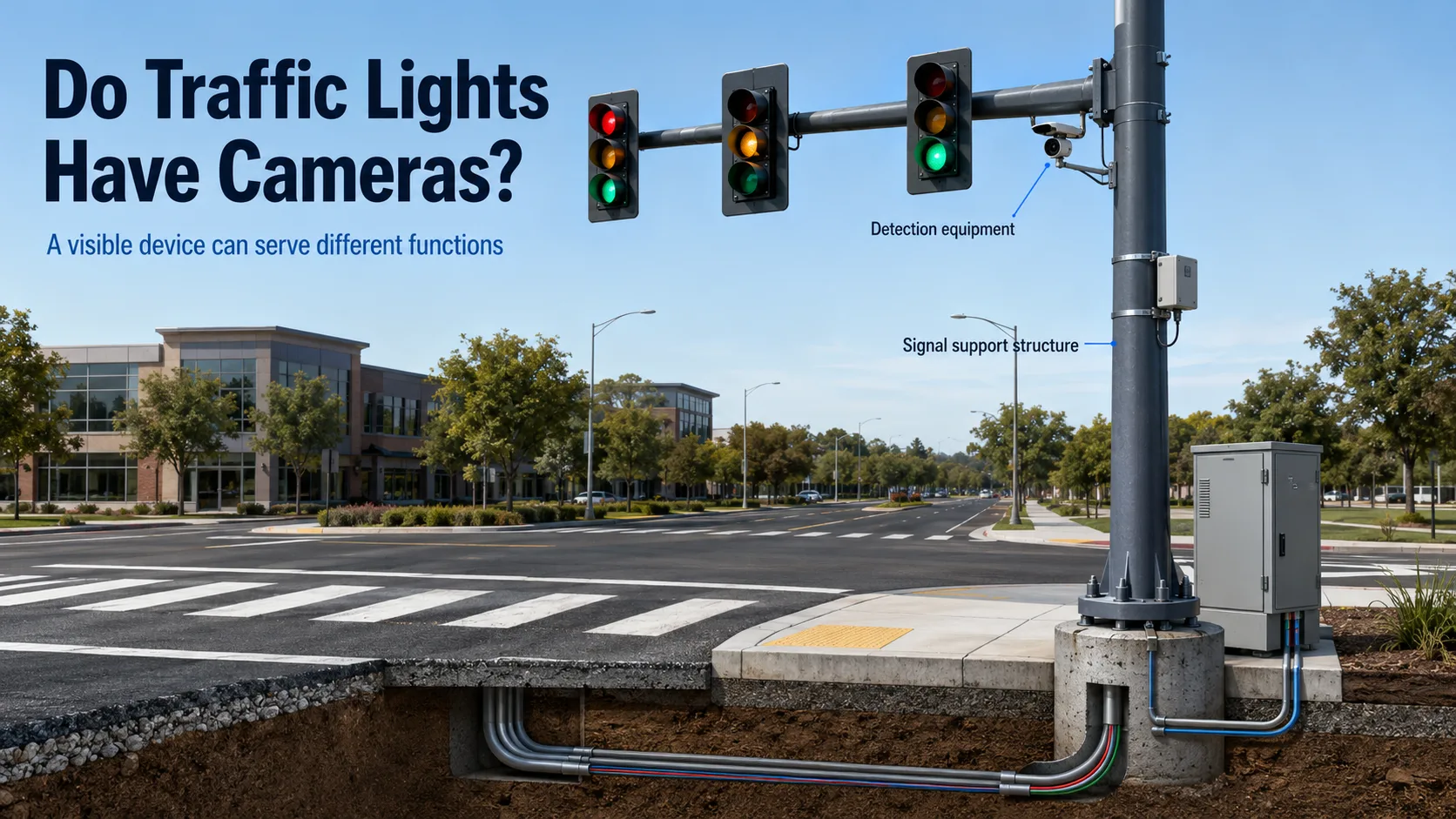
Scope note: This is a general infrastructure explainer. It is not legal advice and cannot identify equipment at a particular intersection. Inlux Solar’s relevant public scope is outdoor-infrastructure support, including traffic-light poles—not signal controllers, detection hardware or enforcement systems.
The short answer: some signalized intersections use cameras, many use other sensors
Signalized intersections can use more than one way to detect demand or observe traffic. The U.S. Federal Highway Administration describes video detection equipment and in-pavement loops as examples of detection at signalized intersections. Other systems can use radar, thermal devices, push buttons, communications equipment or authority-specific technologies.
That means two important things:
- A visible unit near a signal might help detect vehicles and feed information to the controller.
- Not every device on a mast arm is a camera, and not every camera is used for enforcement.
The exact equipment, data handling and operating rules vary by agency and location. If a question concerns a particular junction, ticket, privacy rule or enforcement notice, the local road authority, traffic engineering department or police authority is the proper source.
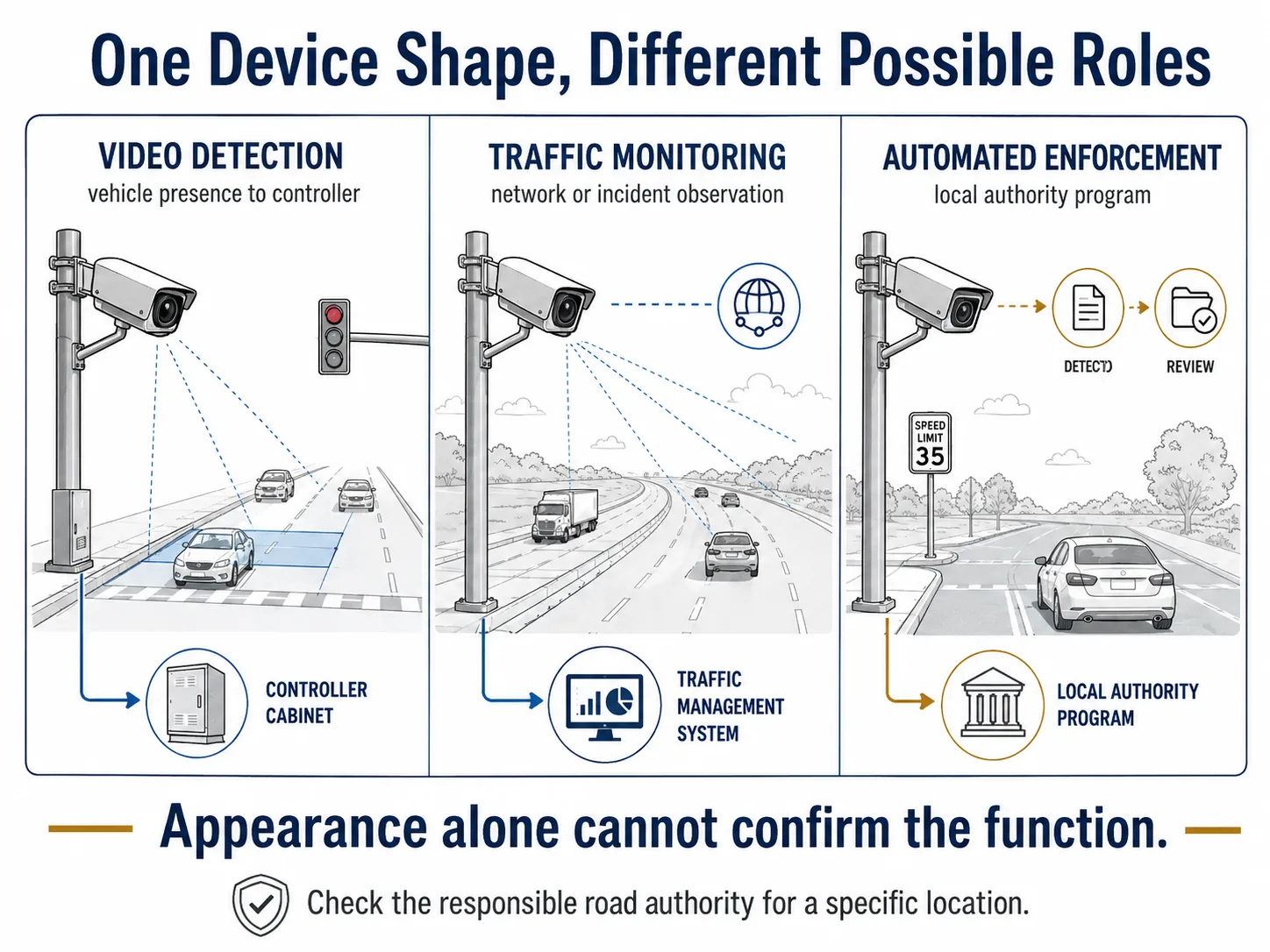
Detection cameras: helping a signal respond to traffic
Video detection can provide a view of one or more approaches to an intersection. A processor interprets the image and can provide vehicle-presence information to the traffic-signal controller. In practice, the camera’s field of view, mounting position, weather, shadows, glare, night conditions and maintenance all affect how a detection system performs.
This is a system decision, not a decorative accessory on a pole. The project needs to define where the device looks, which lanes or movements it serves, cable or communications routing, controller interface, mounting details and access for maintenance. The signal head is only one part of that whole arrangement.
Monitoring is different from issuing a citation
Some agencies use cameras to observe congestion, incidents or intersection conditions. Some locations use automated enforcement systems for specific violations. Those are different functions, with different authority, privacy, signage, records and legal processes.
The Federal Highway Administration explicitly notes that it does not own or operate automated enforcement systems such as red-light cameras, and that questions about tickets or citations should go to the relevant local or state authority. That is a sensible line for readers too: do not infer a fine, a recording policy or a legal status from the shape of equipment on a pole.
Why one intersection may look heavily equipped and another does not
An intersection can have a simple fixed-time signal, a detector for selected approaches, a networked controller, pedestrian push buttons, emergency-preemption equipment, monitoring devices or a combination of these. Road geometry, traffic volumes, transit or pedestrian movements, communications availability and the local operating plan all change the equipment package.
This is also why an image search can be misleading. A camera visible on one city’s mast arm does not prove that the same-looking unit in another city has the same role. The installation drawing, device schedule and road authority documentation matter more than appearance.
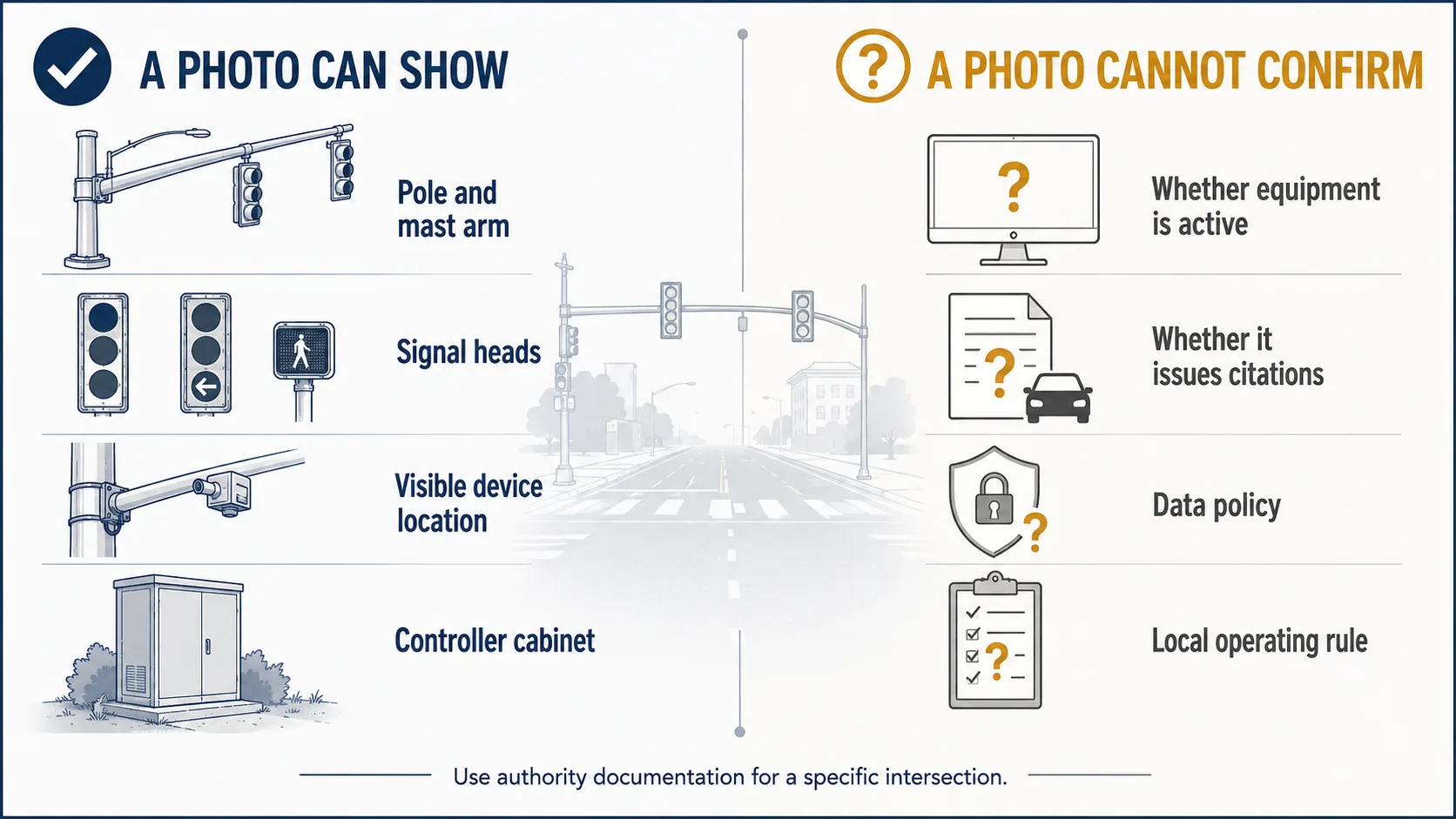
What can be identified from a photo—and what cannot
A photo can help a project team spot broad physical facts: there may be a mast arm, a pole-top device, a controller cabinet, a conduit route or multiple signal heads. It cannot reliably confirm who owns the equipment, whether it is active, what data it records, whether a local program issues citations, or how the controller is programmed.
For a public question about a particular location, use the authority’s published camera/enforcement list or contact its traffic operations team. For an engineering project, use the approved design package rather than an online photograph.
The structural package is still separate from the detection package
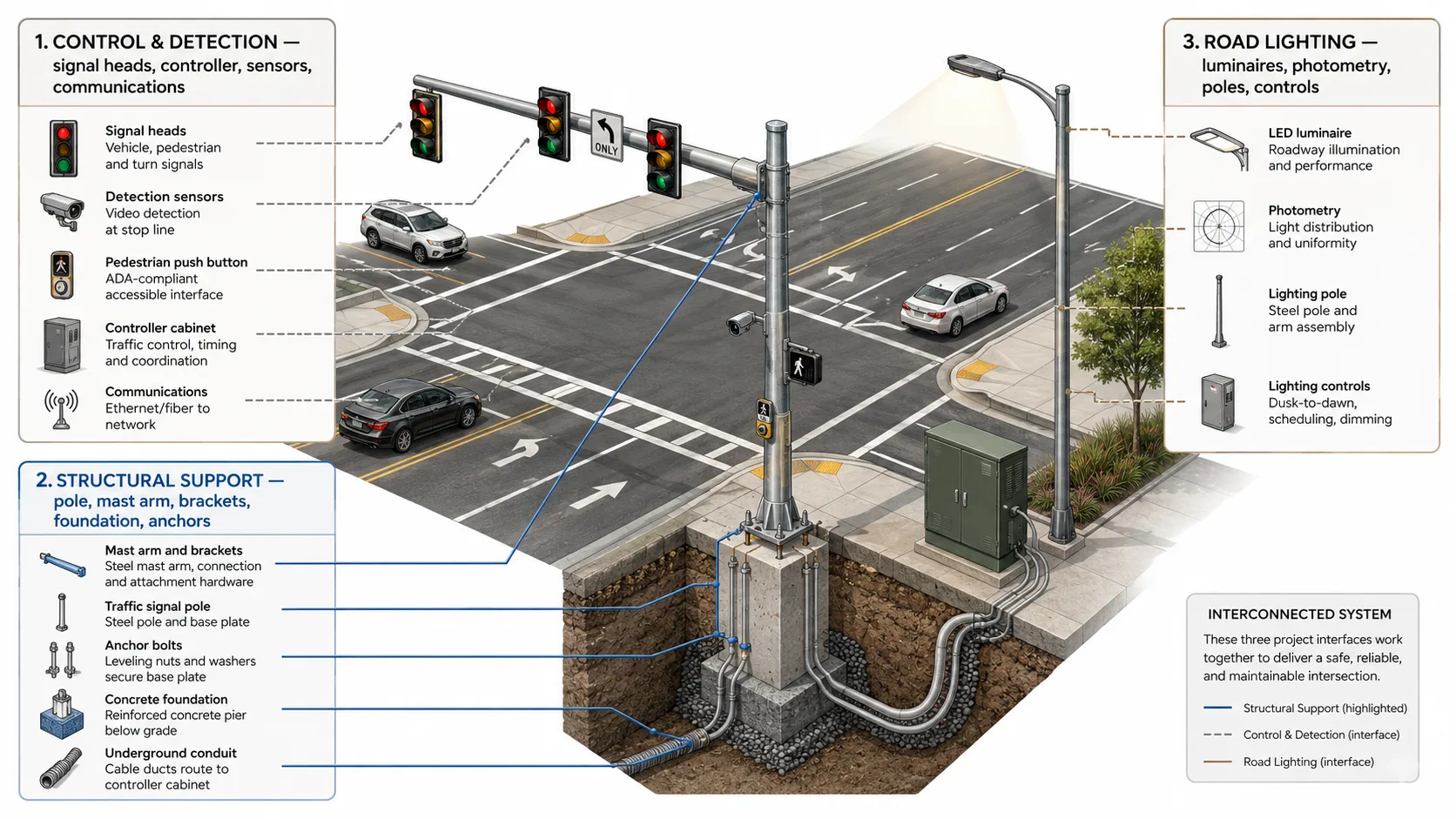
Camera or sensor hardware changes the support coordination, but it does not turn a pole supplier into a traffic-control-system supplier. A complete intersection scope should separate:
- Traffic-control and detection: signal heads, controller, detection, timing, communications and operating approval.
- Structural support: traffic-light pole, mast arm, brackets, foundation, coating, anchors, cable passages and verified equipment loads.
- Road lighting: luminaires, photometric layout, poles, energy/solar sizing and lighting controls.
This separation keeps procurement honest. The Poste de semáforo path is relevant when the project needs the structural support and the corresponding drawings/load schedule. It does not imply that Inlux supplies a camera, identifies a camera in the field or determines traffic enforcement.
For an adjacent but different question about cameras attached to street-light infrastructure rather than traffic signals, see Os postes de iluminação pública têm câmeras?. For the signal categories and support configurations at an intersection, see Types of Traffic Lights. These pages intentionally serve different questions.
What should be in a traffic-signal support RFQ?
If a project requires poles or mast arms that will carry signal heads and authority-specified equipment, start with facts that can be engineered:
- approved intersection drawing and responsibility matrix;
- pole height, arm geometry and mounting arrangement;
- signal-head, bracket and accessory load schedule supplied by the control-system team;
- wind, corrosion and environmental conditions;
- foundation, anchors, conduits and cable-entry requirements;
- finish, quantity, destination and delivery requirement.
For the working logic of traffic signal controllers and detection, read How Traffic Signals Work. If the same scheme includes a road-lighting package, route that scope separately through Iluminação de ruas e estradas.
Common questions
Do all traffic lights have cameras?
No. Signalized intersections can use different detection methods, and some may have no visible camera. A local authority is the only reliable source for a specific location.
Are cameras on traffic lights always red-light cameras?
No. A camera-like device may support detection or monitoring, and a camera can serve a different function from automated enforcement. Do not draw a legal conclusion from its appearance.
Can a camera mounted high on a mast arm detect traffic?
It can be part of a video-detection system, but the function depends on the equipment, controller design and local operating plan. The mounting height and field of view are only part of the system.
Can Inlux Solar quote the pole or mast arm for a signal project?
Inlux can review the structural-support scope when the project supplies the approved drawing, geometry, support loads, environmental conditions and required quantities. Signal heads, controllers, detectors and approvals remain separate scope unless explicitly defined elsewhere by the project.
Who should I contact about a possible traffic-light camera ticket?
Contact the authority named on the notice or the relevant local/state traffic or police authority. This page cannot determine whether a device is an enforcement camera or assess a specific citation.
Need the support structure for an intersection project?
Send the approved drawings, pole and arm geometry, equipment-load schedule, foundation/anchor requirements, installation country, corrosion environment, quantities and delivery date. The Inlux engineering team can review the structural support scope for a poste de semáforo and coordinate the separate road-lighting interface where relevant.
Editorial sources and limitations
For general U.S. examples of signalized-intersection equipment, see the FHWA Signalized Intersections Informational Guide. For the distinction between automated enforcement and traffic-control devices, see FHWA’s signalized-intersections guidance. Accessed 2026-08-06. Requirements, camera programs and privacy/enforcement rules are local; this article does not provide legal advice or identify devices at a particular site.