مقدمة
The selection of appropriate street lighting creates substantial effects that extend to security risks together with electricity usage and ecological matters and design expenses. The High-Pressure Sodium (HPS) lamps maintained their position as the dominant lighting solution by illuminating roads and pathways with their yellowish hue for multiple years. The emergence of Light Emitting Diode (LED) technology combined with its fast development has created a strong competition between lighting options because people now wonder which solution best suits their requirements. The following text examines HPS and LED street lighting systems through an extensive analysis to guide your selection process.
Understanding the Basics: HPS and LED Technology

People need to understand the essential distinctions between these two lighting systems before making an informed choice.
High-Pressure Sodium (HPS) Technology:The High-Pressure Sodium (HPS) technology produces its illumination through High-Intensity Discharge (HID) lamps. The combination of vaporized sodium and mercury under high pressure allows electric arcs to produce light. Lighting technology produces yellow-orange light through its operating process, which has defined street illumination for many years. HPS lamps demonstrate good energy-to-light conversion rates but their efficiency reaches maximum levels.
Light Emitting Diode (الصمام الثنائي الباعث للضوء) Technology: LEDs function as semiconductor devices which generate light output from electric current flow. The process of electroluminescence produces light more efficiently than the arc discharge mechanism used in HPS lamps. The advantages of LEDs include superior energy efficiency and extended lifespan together with precise control of light color and direction. LEDs provide instant illumination because they differ from HPS lamps which need time to achieve maximum brightness.
Head-to-Head Comparison: Key Performance Metrics
The comparison of HPS and LED street lights depends on a number of different performance indicators. Let’s analyze them:
Energy Efficiency and Operational Costs
LED energy savings depend on measured system input power, operating hours, dimming and the maintained lighting result. Compare the existing HPS lamp plus ballast with the proposed LED luminaire at the same site criteria; a generic percentage is not a project saving forecast.
Light Quality: Brightness, Color, and Uniformity

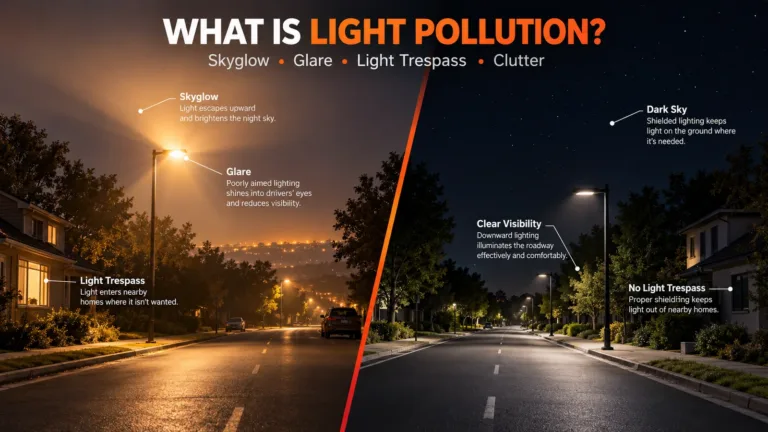
HPS lamps produce a yellowish light output that has a poor Color Rendering Index (CRI) value which affects color visibility accuracy. The lighting from HPS illumination creates challenges for color identification because different colors become harder to differentiate. LEDs provide a broad spectrum of color temperature options ranging from warm white to cool white and achieve superior Color Rendering Index performance. The improved lighting quality under LED illumination creates better visibility which enhances safety for drivers together with pedestrians. LED lighting produces clear white illumination which creates safer streets that resemble the difference between old blurry televisions and modern high-definition screens. LED fixtures utilize precise design elements to concentrate light output which minimizes light pollution while directing illumination exactly where it needs to go.
Lifespan and Maintenance Requirements
Compare the exact HPS lamp’s rated life with the proposed LED luminaire’s stated lumen-maintenance criterion, driver reliability and operating conditions. LED products can reduce lamp replacement, but light-source hours do not guarantee complete-fixture life. Budget for inspection, cleaning, drivers, surge protection, access equipment and the specified maintenance plan.
Environmental Impact and Sustainability
The environmental advantages of LED street lights surpass those of HPS lamps. The lower energy requirements of these lights reduce subsequent carbon emissions. The disposal of HPS lamps becomes complicated because they contain trace amounts of hazardous mercury. The absence of mercury in LEDs makes them a better option for sustainability. Environmental protection along with green innovation drivers have gained momentum worldwide to make LED street lights an attractive option.
Initial Investment and Long-Term ROI
The higher initial expense for LED street lights compared to HPS lamps does not prevent LED from delivering superior long-term Return on Investment (ROI). Overall saving both energy expenses and maintenance costs during LED lighting system lifespan results in better return on investment despite their higher initial expense. The higher initial price of LED street lights functions similarly to purchasing a durable appliance because their efficiency and extended lifespan lead to substantial savings throughout their operational period.
Durability and Resistance to Environmental Factors
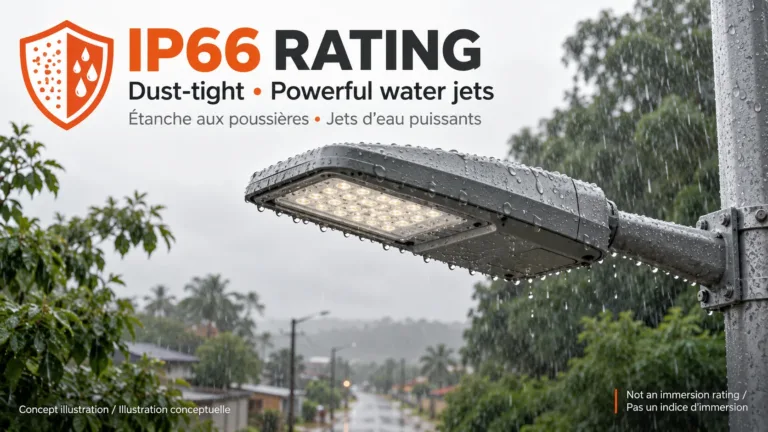
The solid-state nature of LEDs makes them stronger than HPS lamps because they resist both shock and vibration better than the glass bulbs of traditional lighting devices. The solid construction of LEDs requires less lamp replacement because it withstands weather elements and vandalism and accidents. The better ingress protection (IP ratings) of LED fixtures ensures they remain resistant to both dust and water, which is essential for outdoor installations.
Smart Control and Features
Smart control systems pair effortlessly with LED technology. The intensity of LED street lights can be adjusted remotely, as well as being scheduled for certain times which helps control the lights based on the traffic or time of day. This kind of control can maximize energy savings and increase efficiency. Equipping these with sensors and communication features enable smarter city services like monitoring environment changes or issuing public safety notifications. While some dimming with HPS technology is possible, it does not allow for the same level of control integration.
| Performance Metric | HPS Street Lights | مصابيح الشوارع LED |
| Energy Efficiency and Operational Costs | Consumes more electricity to generate the same illumination. | Compare measured system power and operating hours at an equivalent maintained lighting result. |
| Light Quality: Brightness, Color, and Uniformity | Emits yellowish light with a poor Color Rendering Index (CRI), making color identification difficult. | Provides a broad spectrum of color temperatures (warm white to cool white) with superior CRI, improving visibility and safety. |
| Lifespan and Maintenance Requirements | Use the exact lamp rating, switching conditions and relamping/ballast maintenance plan. | Check the stated lumen-maintenance criterion, driver reliability, operating conditions and maintenance plan. |
| Environmental Impact and Sustainability | Contains hazardous mercury, making disposal complicated; higher energy consumption increases carbon emissions. | Mercury-free and energy-efficient, reducing environmental impact and promoting sustainability. |
| Initial Investment and Long-Term ROI | Lower initial cost but higher operational and maintenance expenses over time. | Higher initial cost but delivers better ROI through energy and maintenance savings. |
| Durability and Resistance to Environmental Factors | Glass bulb construction is more vulnerable to shock, vibration, and weather conditions. | Solid-state design is highly durable, resistant to shock, vibration, dust, and water, making it ideal for outdoor use. |
| Smart Control and Features | Limited dimming capabilities and control options. | Supports smart control systems with remote dimming, scheduling, and sensor integration for optimized efficiency. |
LED Street Lights: Advantages and Benefits

Following the analysis above, the reasons for adopting LED street lights are compelling:
- Superior كفاءة الطاقة: Exceptional cost savings due to profound reduced energy spending.
- Enhanced Light Quality: Visibility and safety are further improved with higher CRI and improved range of color temperatures.
- Extended Lifespan: Improved operational life significantly reduces maintenance and replacement costs, requiring less maintenance in terms of longevity.
- البيئة Friendliness: Lower carbon footprint contributes to a greener planet.
- Greater Durability: Better resistance towards shock, vibration, and environmental factors due to solid state design.
- Smart Control Integration: Seamless compatibility with dimming, scheduling, and remote monitoring systems.
HPS Street Lights: Advantages and Benefits
Although LEDs have the upper hand in many aspects, HPS streetlights maintain an edge in the following few areas:
- Lower Initial Cost: HPS fixtures are usually cheaper than comparable LED fixtures. This is an important consideration for projects with tight budgets in the short term.
- Established Technology: HPS technology has been in use for a long time in street lighting hence it is well understood. This means that maintenance and having qualified personnel to service the lamps is often easier (although this is changing with the increase in LED usage).
Making the Right Choice: Factors to Consider for Your Project
Selecting the optimal street lighting technology requires careful consideration of your specific project needs and priorities. Key factors to consider include:
- Budget: While LED offers long-term savings, the initial capital investment might be a constraint.
- Light Quality Requirements: LED lighting stands out as the best choice when precise color reproduction and high visibility levels are essential requirements.
- كفاءة الطاقة Goals: The selection of LED becomes essential for projects which aim to minimize energy usage and decrease carbon emissions.
- الصيانة Capabilities: LEDs extend their operational lifetime, which leads to decreased maintenance requirements.
- البيئة Regulations: The increasing environmental regulations along with growing environmental awareness support the adoption of mercury-free LED technology.
- Smart City Initiatives: The implementation of smart city control systems requires LED technology as the better platform.
Inlux Solar: Sustainable and Efficient LED Street Lighting Solutions

إنلكس سولار supplies solar-powered LED systems for project-specific requirements. The company-level field failure baseline is ≤0.3%; it is not a guaranteed rate for every model or operating environment. An off-grid solar system can avoid grid electricity purchases at the lighting point, but batteries, cleaning, inspections, repairs and replacement still have lifecycle costs. Compare the full energy balance and service scope before choosing between solar and grid-powered LED.
Real-World Applications and Case Studies
The selection between LED and HPS lighting depends on particular usage requirements. The combination of superior light quality and control capabilities makes LED the top selection for high-traffic urban areas that require safety and visibility. HPS remains a viable lighting solution for rural areas or locations with minimal traffic because initial cost becomes the main deciding factor. LED technology continues to decrease in price while sustainability becomes more important so LED has become the leading choice for numerous applications. A newly built residential area which values energy efficiency and aesthetics would find LED street lights with smart controls as their optimal choice. Consider Inlux solar-powered LED lights as the perfect solution for your project.
الخاتمة
It is no longer straightforward to decide on either HPS or LED streetlights. While HPS had the crown owing to its established nature and lower upfront costs, recent advancements in LED technology have shifted the balance. The energy efficiency and light quality and quantity, as well as the lifespan and environmentally friendliness of LEDs, make street lights with LEDs a smart investment for the vast majority of applications. Carefully consider worrying as much as you may your needs and priorities as you go through your street lighting decision process with the guidance of innovative and sustainable companies like إنلكس سولار. At the end of the day, the best choice is the one which best enlightens your path towards a safe, bright, and sustainable future.