







Commercial Outdoor Security Lighting for Perimeters
Design risk-appropriate lighting along fences, yards and access points to deter, detect and recognize. We align with IES G-1 (security lighting principles), IES RP-8 (adjacent roadways) and EN 12464-2 (outdoor workplaces), and we size vertical/semicylindrical illuminance for faces, gates and camera corridors. Optics, mounting and spacing are optimized from photometry to deliver uniformity with low glare, while BUG/TM-15 controls spill to neighbors and skylines. Submit your site plan for a standards-based layout, calculation report and bill of materials—available in LED alimentado por la red eléctrica o solar solutions.
Key Considerations for Perimeter & Security Lighting

Standards alignment
IES G-1 for security lighting, EN 12464-2 for outdoor work areas, and IES RP-8 where roadways interface.

Vertical light for recognition
Destino vertical/semicylindrical illuminance at gates, turnstiles, doors and camera corridors to reveal faces and apparel.

Glare & spill control
Manage BUG/TM-15 and veiling luminance; shield at perimeters, upper stories and neighboring properties.

Power & resilience
Scheduling and occupancy sensing; for solar, battery autonomy sized for worst-case nights and restart after outages.
Design Principles for Perimeter & Security Lighting

Risk-based classes
Lighting targets scale with risk and task—deterrence, detection and recognition—rather than a single fixed lux value.

Optics & geometry
Type II/III for perimeter runs; Type IV/V or forward-throw for yards. Pole height and spacing are calculation outcomes.

CCTV integration
Proporcionar consistent vertical light, limit blooming/flare into lenses, and coordinate CCT/CRI with camera WDR/IR.

Color & comfort
3000–4000 K typical; Índice de reproducción cromática (IRC) ≥80 near gates and ID checks for color-critical recognition.

Controls & operations
Staggered dimming for off-hours, motion-based step-ups, health monitoring and fault alerts.
Soluciones por escenario
For off-grid sites, solar security lighting can be evaluated alongside LED perimeter lighting. The project brief should define perimeter geometry, pole locations, operating hours, camera or CCTV coordination, battery reserve, and maintenance access. Final photometrics, autonomy, and camera performance require site-specific review. If cameras are in scope, review the solar CCTV power and pole interfaces. Send the perimeter layout and operating brief, identifying who supplies the cameras, communications, lighting and commissioning work so the quotation has a clear supply boundary.
Fence Lines & Clear Zones
Continuous uniformity with low glare; forward-throw optics to avoid lighting the outside beyond the fence.
Gates, Guardhouses & Turnstiles
Elevated vertical/SC components for faces and IDs; back-light shielding to protect operators’ vision.
Yards, Loading Docks & Container Areas
Wide/forward distributions with mast poles; maintain shadow control between vehicles and stacks.
Camera Corridors & PTZ Overlaps
Even vertical illumination across camera FOV; avoid highlights behind subjects that cause silhouettes.
Parking & Perimeter Interfaces
Tie security foot-candles to parking code minima; cap spill at property lines and residential edges.
Qué incluye
- EN 13201 / IES RP-8 compliant layout (luminance or illuminance/vertical/SC as applicable)
- Archivos fotométricos (IES/LDT) + informes de cálculo
- Pole/foundation drawings + single-line diagram
- Bill of materials with options (LED vs Solar, pole heights, optics)
- O&M and warranty checklist
- Compliance crosswalk mapping local guidelines to EN 13201 / IES RP-8.
- Lead time, logistics and installation method statement (optional).
- Security-focused photometric package (horizontal + vertical/SC where required)
- CCTV coordination notes (camera placement, lens FOV, tilt and expected vertical E)
- Commissioning checklist with target set-points, dimming schedules and acceptance criteria
Productos recomendados de alumbrado público solar

JAGUAR (INL-AIT5)
Lámpara «todo en dos» de alta potencia con LED 5050, batería LiFePO4 de gran capacidad y óptica avanzada: diseñada para autopistas y carreteras principales.

FALCON (INL-AIT6)
Potencia media, óptica versátil, instalación rápida: ideal para calles, senderos y terrenos.

BISON (INL-AIT7)
Compactas, eficientes, con una clase de rendimiento superior a 180 lm/W: ideales para patios comunitarios e industriales.
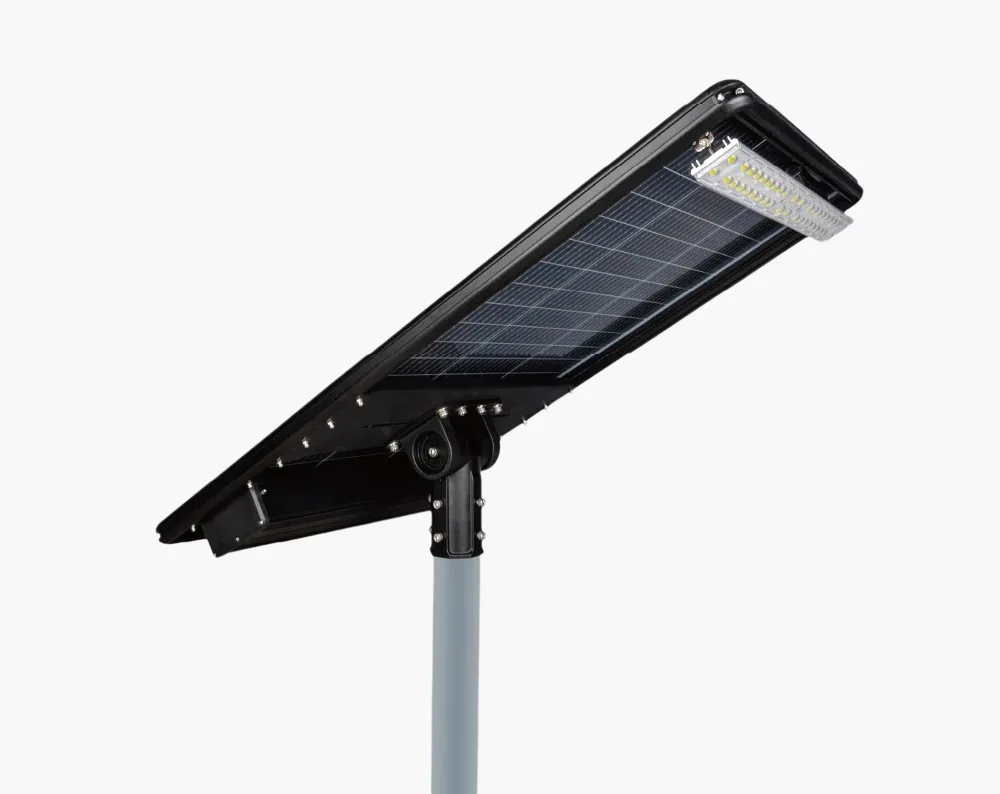
SIRIUS (INL-AIO9)
Linterna AIO de alta potencia con cabezal ajustable, óptica de tipo II/III, LED 5050 y batería LiFePO4: diseñada para carreteras de doble sentido y autopistas.
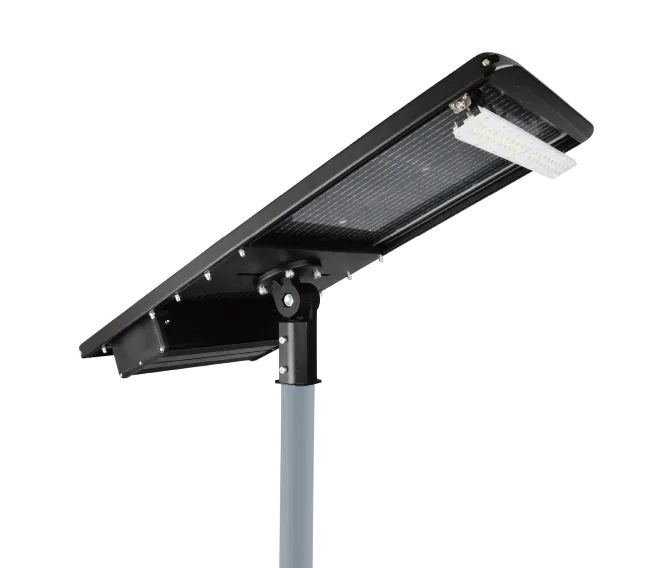
GALAXY (INL-AIO6)
Sistema AIO modular para aplicaciones de pequeña y mediana escala; LED 5050, LiFePO4 y sensores de movimiento/IoT opcionales: fácil mantenimiento para calles, senderos y estacionamientos.
Productos recomendados de alumbrado público LED
Review LED roadway luminaires for perimeter routes, gates and yard interfaces. Confirm the selected optic, mounting arrangement and control requirements through a site-specific lighting review.

INL-LED25 — Farola LED
Paquetes de 100–200 W, ópticas para carreteras y controladores preparados para su instalación en vías principales y colectoras.

INL-LED24 — Farola LED
50–200 W con óptica de precisión de tipo II/III/V; mantenimiento sin herramientas y opciones SPD para municipios.

INL-LED23 — Farola LED
Rango de alta potencia de 50 a 240 W para distancias entre puntos de iluminación más amplias; múltiples opciones de montaje con brazo o con soporte deslizante.

INL-LED22 — Farola LED
Plataforma versátil de 60–200 W con opciones de distribución y control para vías públicas.

INL-LED13 — Farola LED
60–200 W con carcasa fundida a presión de gran durabilidad y clasificaciones IP/IK para calles y estacionamientos urbanos.