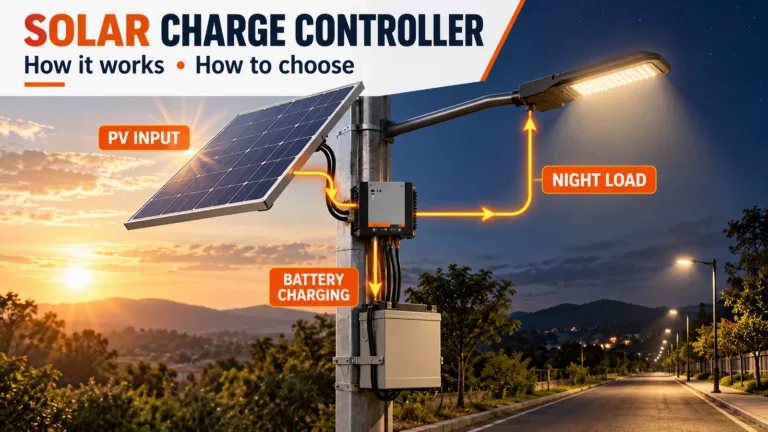
A solar street light is an off-grid outdoor lighting system that uses a photovoltaic (PV) panel to charge a battery during the day and power an LED luminaire after dark. A project-grade system also includes a charge controller, optics, mounting structure and a programmed lighting profile.
For roads, parking areas and public spaces, the right solar street light is selected by more than wattage. Road width, pole height, target light level, operating hours, local solar conditions, low-sun autonomy, wind exposure and maintenance access must all be checked before a model is specified.
Quick project check: prepare the installation city, road width, pole height, pole spacing, operating schedule, autonomy target and quantity before asking for a recommendation.
المكونات الرئيسية
- الوحدة الكهروضوئية (ألواح أحادية/نصف خلية),
- وحدة التحكم في الشحن MPPT/PWM,
- بطارية (LiFeFePO₄ أو بطارية ليثيوم أيون رئيسية لدورة حياة عالية),
- مصباح LED عالي الكفاءة والبصريات,
- عمود/دعامات وأسلاك، حساسات اختيارية/مراقبة عن بُعد.
كيف تعمل (دورة النهار/الليل)
- اليوم: تقوم الطاقة الكهروضوئية بتحويل ضوء الشمس إلى تيار مستمر → تقوم وحدة التحكم بشحن البطارية باتباع خوارزمية محسّنة (MPPT لتحسين الحصاد).
- طابت ليلتك: تقوم وحدة التحكم بتشغيل الصمام الثنائي الباعث للضوء (على سبيل المثال، 100% في ذروة الإشغال؛ 30-50% في وقت متأخر من الليل) لتحقيق التوازن بين مستويات الإضاءة واستقلالية الطاقة. (ممارسة عامة في تصميم الإضاءة خارج الشبكة).

For a component-by-component explanation of charging, storage and control, read how solar lights work from sunlight to light at night.
الأنواع ووقت استخدامها
| System type | Best fit | Choose it when | Use caution when | Project inputs to confirm |
|---|---|---|---|---|
| مصابيح الشوارع بالطاقة الشمسية الكل في واحد | Community roads, pathways, parks, parking areas and fast-deployment projects | You want compact equipment, minimal cabling and straightforward installation. | The site needs very large battery capacity, flexible panel orientation or extended low-sun autonomy. | Road width, pole height, mounting space, dimming profile and autonomy target. |
| All-in-Two Solar Street Light | Municipal roads, main corridors and sites where panel orientation needs more flexibility | You need a separate PV panel position while keeping the battery and luminaire in a compact assembly. | The buyer requires the smallest possible fixture or has very limited pole space. | PV orientation, pole-arm design, wind load, battery capacity and lighting layout. |
| مصابيح الشوارع بالطاقة الشمسية من النوع المنفصل | Wide roads, higher-output public lighting, rainy-season projects and remote infrastructure | You need more flexibility to size and locate the PV panel, battery and luminaire separately. | The project cannot support more detailed installation, cabling and maintenance planning. | Solar resource, low-sun days, battery service access, cable route, theft risk and civil-work scope. |
Need a deeper comparison? Read our All-in-One vs All-in-Two vs Split Solar Street Lights guide before choosing a system architecture.
موديلات مصابيح الشوارع بالطاقة الشمسية الكل في اثنين
لدينا All-In-Two Solar Street Light is available in the JAGUAR, Falcon, and Bison series. Utilizing the latest semi-integrated design, the lithium battery and solar controller are housed within the light casing, while the solar panel is mounted externally. A separate design of the solar panel ensures a large solar panel capacity to achieve big LED output and the semi-integrated design simplifies installation while significantly enhancing anti-theft security.

جاكوار (INL-IT5)
مصابيح LED عالية الإنتاجية الكل في اثنين مع 5050 مصباح LED، ومصابيح LiFePO4 كبيرة، وبصريات متطورة - مصممة للطرق السريعة والطرق الرئيسية.

فالكون (INL-IT6)
إخراج متوسط، بصريات متعددة الاستخدامات، تركيب سريع - مثالية للشوارع والممرات والساحات.

بيسون (INL-IT7)
مدمجة وفعّالة وجاهزة للساحات المجتمعية والصناعية بقدرة تزيد عن 180 لومن/ثانية.
موديلات مصابيح الشوارع بالطاقة الشمسية الكل في واحد
لدينا إضاءة الشوارع بالطاقة الشمسية الكل في واحدر متوفرة في سلسلة SIRIUS (INL-AIO9) وGALAXY (INL-AIO6) وAllien (INL-AIO5) وPOLARIS (INL-AIO2). باستخدام أحدث تصميم متكامل، يتم وضع كل من بطارية الليثيوم ووحدة التحكم بالطاقة الشمسية واللوحة الشمسية داخل غلاف المصباح. يعمل هذا التصميم على تبسيط عملية التركيب مع تعزيز الأمان ضد السرقة بشكل كبير.

سيريوس (INL-AIO9)
جهاز AIO عالي الإخراج مع رأس قابل للضبط، وبصريات من النوع الثاني/الثالث، ومصابيح LED 5050 ومصابيح LiFePO4 - مصممة للطرق ذات الاتجاهين والطرق السريعة.

المجرة (INL-AIO6)
وحدات AIO المعيارية للمخرجات الصغيرة إلى المتوسطة؛ 5050 مصباح LED، و LiFePO4 وحركة اختيارية/إنترنت الأشياء - سهولة الصيانة للشوارع والممرات ومواقف السيارات.

كائن فضائي (INL-AIO5)
جهاز AIO مزدوج الذراع مع ضبط رأسي/أفقي وبصريات دقيقة - مثالي للطرق المعقدة والحرم الجامعي والمناطق الصناعية.

بولاريس (INL-AIO2)
منفذ AIO صغير الحجم وفعال من حيث التكلفة باستخدام لوحة عالية الكفاءة، ومصابيح LED 5050 ومصابيح LiFePO4-يمكن الاعتماد عليها في الشوارع السكنية والحدائق والممرات.
For commercial, municipal and public-infrastructure applications, explore commercial solar street light systems and compare the project inputs for each type.
How to Select a Solar Street Light for a Road Project
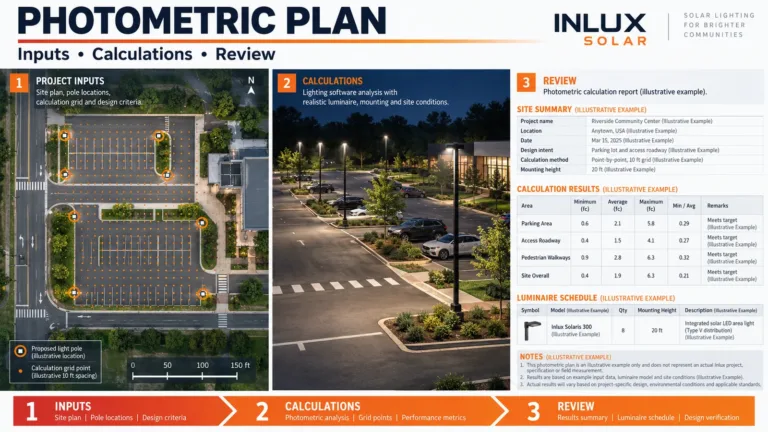
Start with the road or site, not a nominal wattage. The lighting layout should define the required pole height, spacing, optical distribution, illuminance or luminance target, and uniformity. The solar system is then sized around the LED load, dimming schedule, local solar resource, system losses and required low-sun autonomy.
Use EN 13201 or IES road-lighting criteria where applicable, then verify the proposed layout with the relevant photometric files. A higher-wattage fixture is not automatically the better choice if its optics, pole layout or solar-energy budget do not fit the site.
Before requesting a quotation, confirm:
- Road width, traffic pattern and the area to be lit
- Pole height, arm length and planned pole spacing
- Required operating hours and dimming profile
- Installation city, shading, dusty season and expected low-sun period
- Wind, corrosion and foundation requirements
- Maintenance access, monitoring needs and project quantity
Sizing Checks Before You Request a Quote
The example below explains the calculation logic only. Final PV and battery sizing must be based on the actual installation location, solar resource, temperature range, required lighting profile, component specifications and approved engineering assumptions.
المدخلات (مثال)
- طاقة الصمام الثنائي الباعث للضوء: 40 W
- ملف تعريف التعتيم: 6 ساعات عند 100% + 6 ساعات عند 30%
- كفاءة النظام (وحدة التحكم/الأسلاك): 85%
- بطارية ليثيوم، تصميم DOD = 80%
- جهد النظام: 24 V
- أيام الحكم الذاتي: 2
- أسوأ ساعات ذروة الشمس في الشهر (PSH): 4.0 ساعة/اليوم
- الاستثناءات الكهروضوئية (درجة الحرارة/التربة/التقادم): 0.75
1) طاقة الصمام الثنائي الباعث للضوء اليومية (Wh):
- 40 وات × 6 ساعات × 6 ساعات = 240 واط
- 0.3 × 40 واط × 6 ساعات = 0.3 × 40 واط × 6 ساعات = 72 واط
- الإجمالي = 312 واط/ساعة/اليوم
2) تشمل خسائر النظام:
- الطاقة اليومية المعدّلة = 312 ÷ 0.85 = 367.06 ساعة/يوم 367.06 ساعة/يوم
3) سعة البطارية (آه):
الصيغة: آه = (ساعة في الساعة يومياً × استقلالية) ÷ (النظام V × وزارة الدفاع)
- (367.06 × 2) ÷ (24 × 0.8) = 38.24 ساعة
- التوصية: اختر ≥ 40 أمبير @ 24 فولت (≈ 960 واط/ساعة قابلة للاستخدام) للهامش.
4) حجم المصفوفة الكهروضوئية (Wp):
الصيغة: Wp = Wh اليومي ÷ (PSH × المشتق الكهروضوئي)
- 367.06 ÷ (4.0 × 0.75) = 122.35 وات
- إضافة ≥ 201 هامش تصميم 20% → 150-180 وات موصى به.
القواعد الأساسية:
- عادةً ما تكون فترة الاستقلالية المعتادة من ليلتين إلى 3 ليالٍ؛ وفي المناطق الشتوية/الممطرة القاسية/المناطق الممطرة ضع في اعتبارك 5-7 ليالٍ.
- يدعم LiFePO₄ LiFePO₄ مستوى أعلى من التفجير، مما يساعد على تقليل الحجم والكتلة مع الحفاظ على عمر الدورة.
For a project-specific calculation, send the site location, operating schedule, target autonomy, road geometry and lighting target. Inlux Solar can match the system configuration to the project inputs and provide the relevant technical documentation.
What Makes a Solar Street Light Reliable in Real Conditions?
Solar street light reliability is decided by the complete system, not by the lamp head alone. A suitable design considers the local solar resource, battery temperature, panel soiling, corrosion exposure, wind loading, optical performance and the practical ability to maintain the installation.
For hot, dusty, coastal or long-rainy-season locations, ask how the proposed PV panel, battery, controller, housing, pole and mounting system are configured for those conditions. The quotation should also state the operating profile and the assumptions used to calculate low-sun autonomy.
- Solar resource and seasonal shading
- Battery temperature and usable capacity
- Panel cleaning access and dust accumulation
- IP/IK requirements and corrosion exposure
- Pole, bracket, foundation and wind-load design
- LED optics, dimming profile and maintenance access
Need a Solar Street Light Design for Your Project?
Send your project location, road width, pole height, pole spacing, target lighting level, operating schedule, autonomy target and quantity. Our engineering team can recommend a suitable system type and provide product documentation, photometric files and layout support where available.
See solar street light project examples for applications across roads, communities and public infrastructure.
قائمة مراجعة التركيب والصيانة
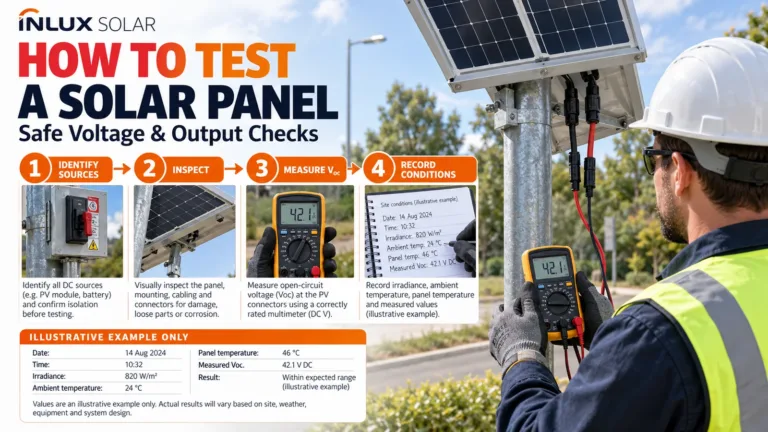
For the on-site process, use our solar street light installation guide covering site survey, foundation, pole erection and commissioning.
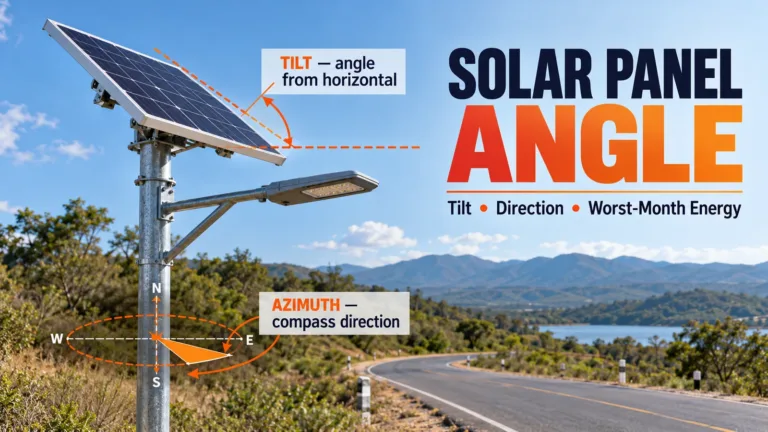
- الموقع والتظليل: تأكد من وجود PSH في أسوأ الشهور وتجنب ظل الأشجار/المباني.
- حمولة العمود والرياح: تحقق من مساحة الشراع الفعالة (خاصةً بالنسبة للرؤوس المتكاملة) واستخدم شفة مناسبة وقفص مرساة.
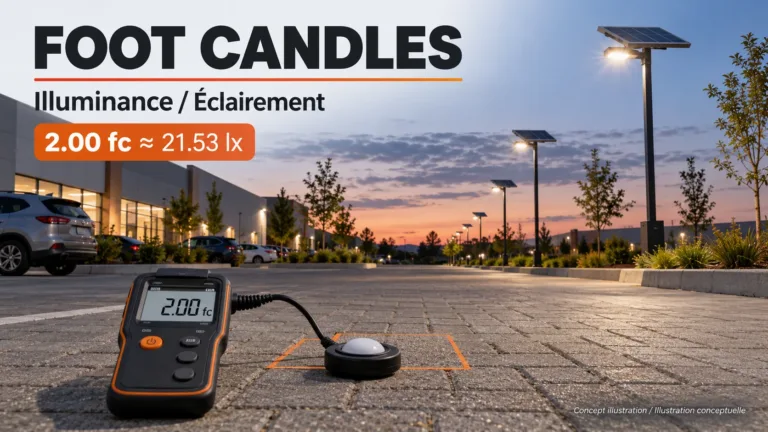
- البصريات والتصويب: مطابقة عرض الطريق والتراجع؛ التحقق من الإضاءة/التوحيد في الموقع.
- البرامج الثابتة: برمجة ملفات تعريف التعتيم المستندة إلى الوقت أو المستشعر؛ تسجيل اتجاهات الجهد/التيار.
- الرعاية الروتينية: تنظيف الألواح كل ثلاثة أشهر إلى نصف سنوي (أكثر في المناطق المتربة/الساحلية)؛ إعادة ضبط عزم دوران المثبتات؛ مراجعة سلامة البطارية سنوياً.
الشهادات والتقييمات
- تصنيف IP (IEC 60529): للطرق والبيئات الساحلية, IP66 عادةً ما يتم تحديدها.
- تصنيف IK (EN/IEC 62262): IK08-IK10 لمقاومة الصدمات/التخريب.
- رقم الأمم المتحدة 38.3: اختبارات النقل الإلزامية لبطاريات الليثيوم (الجو/البحر/الطريق).
- الاستخدام IES RP-8 أو EN 13201 كأساس لقبولك لمشاريع الطرق ومواقف السيارات.