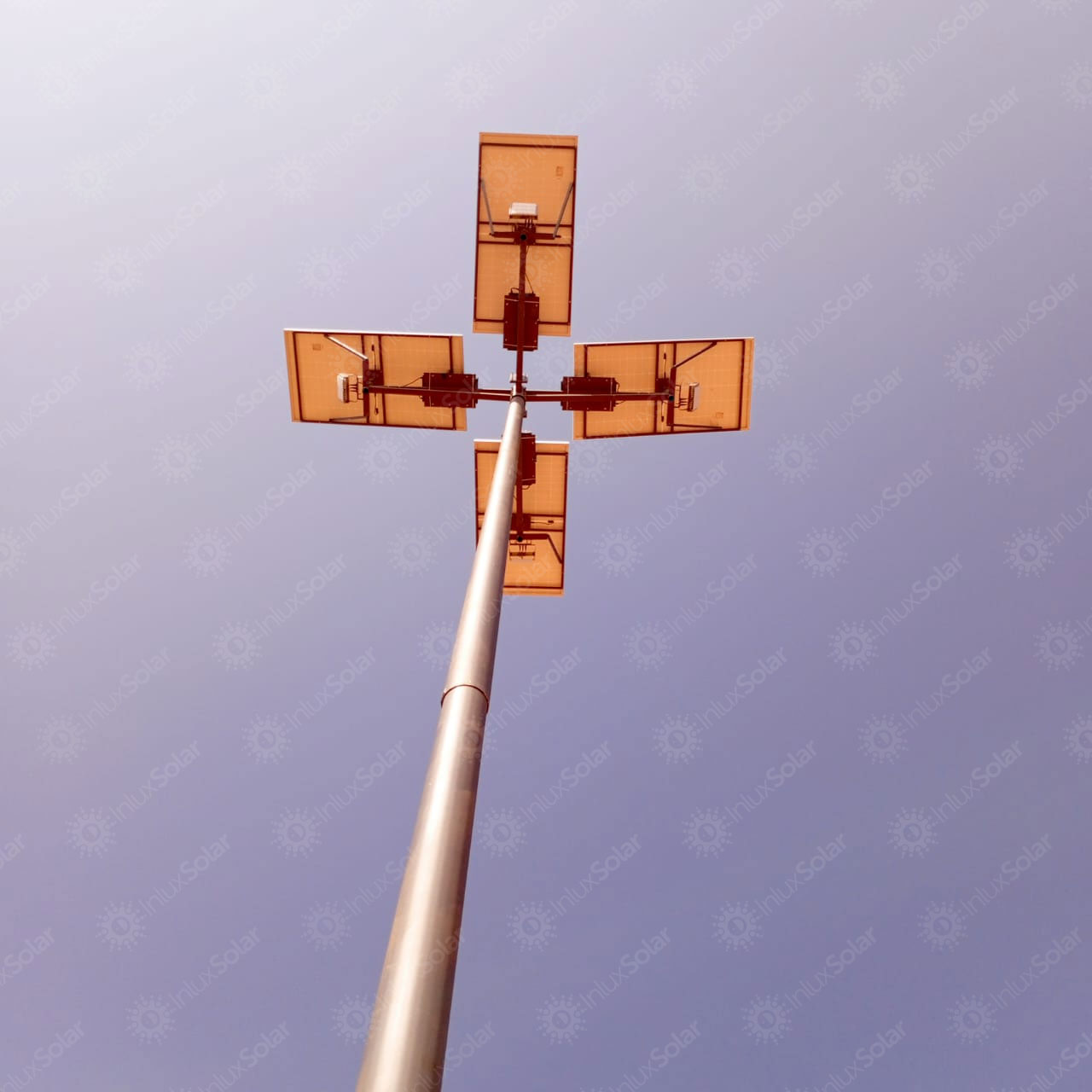
This project case presents a 15-meter solar high-mast lighting installation in Juba, South Sudan. According to the submitted project record, the project used 4 sets of INL-FLED-02 lighting equipment, with 150W LED power, a 15 m Q235 steel pole, a 100Ah / 25.6V battery, and IP65 protection. Because the project record does not specify the solar panel wattage, controller type, dimming profile, completion date, measured illuminance, or customer feedback, those details are not claimed on this page.
For buyers planning similar solar high-mast or large-area lighting projects, this case is useful because it shows the basic specification items that must be confirmed before procurement: pole height, pole material, LED power, battery voltage and capacity, protection rating, packing plan, shipping cycle, and installation method. It also helps avoid a common mistake in project comparison: judging a high-mast system only by LED wattage without checking pole structure, battery sizing, site access, and long-distance shipment requirements.
Site Application & Lighting Requirement
The project was recorded for Juba, South Sudan, where a 15 m pole height was selected for an area-lighting application rather than a standard low-pole street light layout. A higher mounting height is normally considered when the site needs broader coverage from fewer lighting points, or when the buyer wants to reduce the number of individual poles, foundations, and cable-related work on site.
For similar public-space, yard, parking, perimeter, or community-area applications, buyers should not treat the pole height as a standalone specification. A 15 m solar high-mast system should be reviewed together with the lighting area, floodlight aiming, pole foundation, wind-load assumptions, battery autonomy, and installation equipment. If the project is closer to a roadway application, buyers should also compare it with commercial solar street lights. If the project is a large open area, a dedicated high mast light system may be more suitable.
Why This Configuration Was Selected
The confirmed project record lists INL-FLED-02, 150W LED power, a 15 m Q235 pole, 100Ah / 25.6V battery capacity, and IP65 protection. This configuration should be understood as a project-specific combination, not as a universal standard for every 15 m solar high-mast project. Final sizing should always be checked against the local solar resource, nightly working hours, autonomy requirement, installation height, and target lighting area.
- 15 m mounting height: suitable for projects that need wider area coverage than a conventional pole-mounted solar street light.
- Q235 steel pole: gives the project a structural base for a tall-pole installation, while final foundation and wind-load design should still be confirmed by project conditions.
- 150W LED power: provides a clear starting point for light output comparison, but buyers should still request beam angle, aiming plan, and photometric files.
- 100Ah / 25.6V battery: gives a confirmed battery capacity and voltage for procurement review, while battery chemistry and cycle life should be verified before order confirmation.
- IP65 protection: supports outdoor use, but cable entry, junction protection, battery box sealing, and installation quality should also be checked.
For projects where the main requirement is off-grid large-area lighting, buyers can compare this case with Inlux Solar’s solar high mast light solutions. If the luminaire module itself is the key sourcing item, the related high mast lamp page can be used as a product reference, while the exact INL-FLED-02 model should be confirmed during quotation.
Procurement Value for Similar Buyers
This South Sudan project is most useful for buyers who need a practical reference for a small-to-medium quantity solar high-mast order. The submitted record shows 4 sets and a sea shipping cycle of 2 months with 2 containers. For procurement teams, that means the project should not be evaluated only as a lighting fixture purchase. It should be managed as a combined system package involving pole manufacturing, battery configuration, lamp supply, packing volume, container planning, and site lifting preparation.
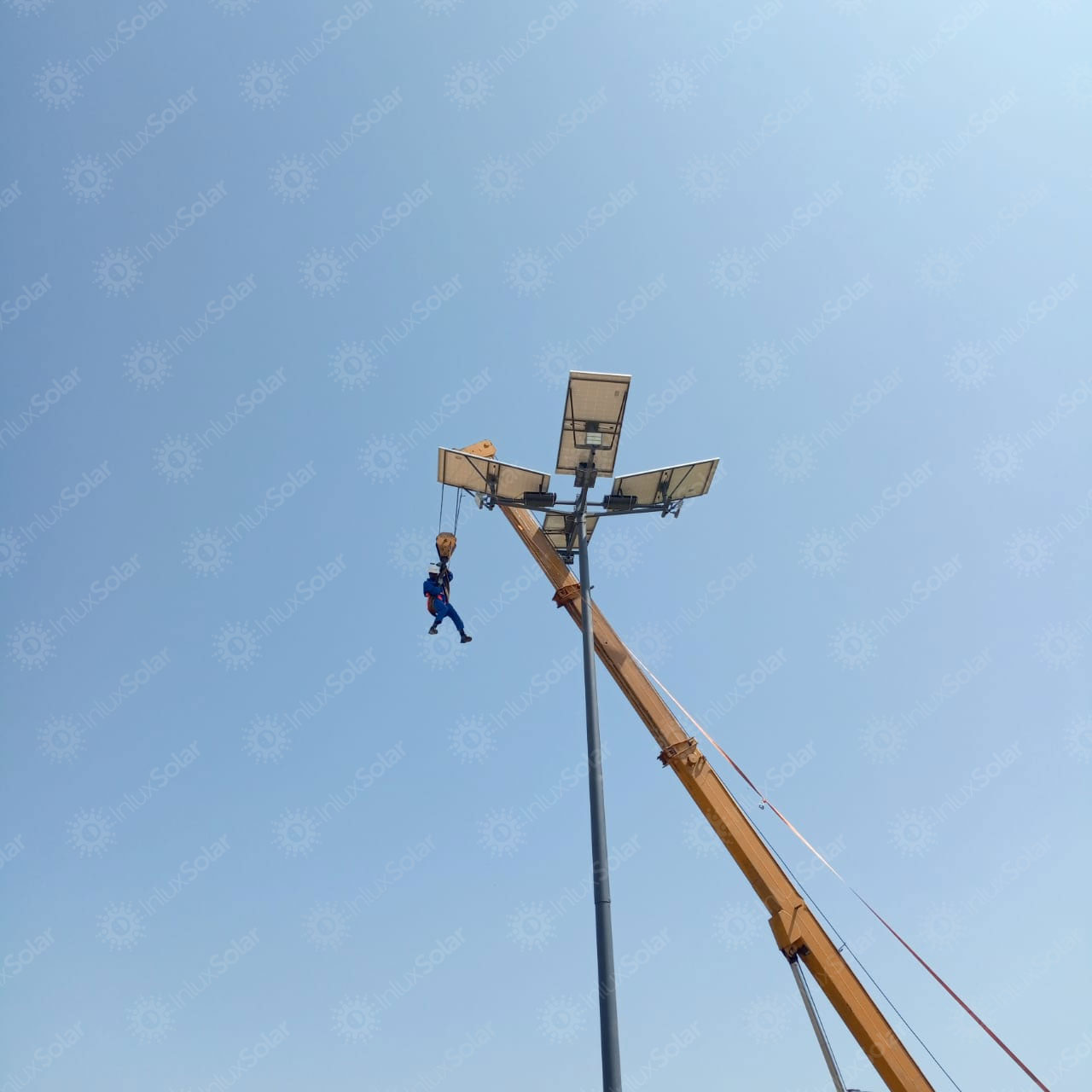
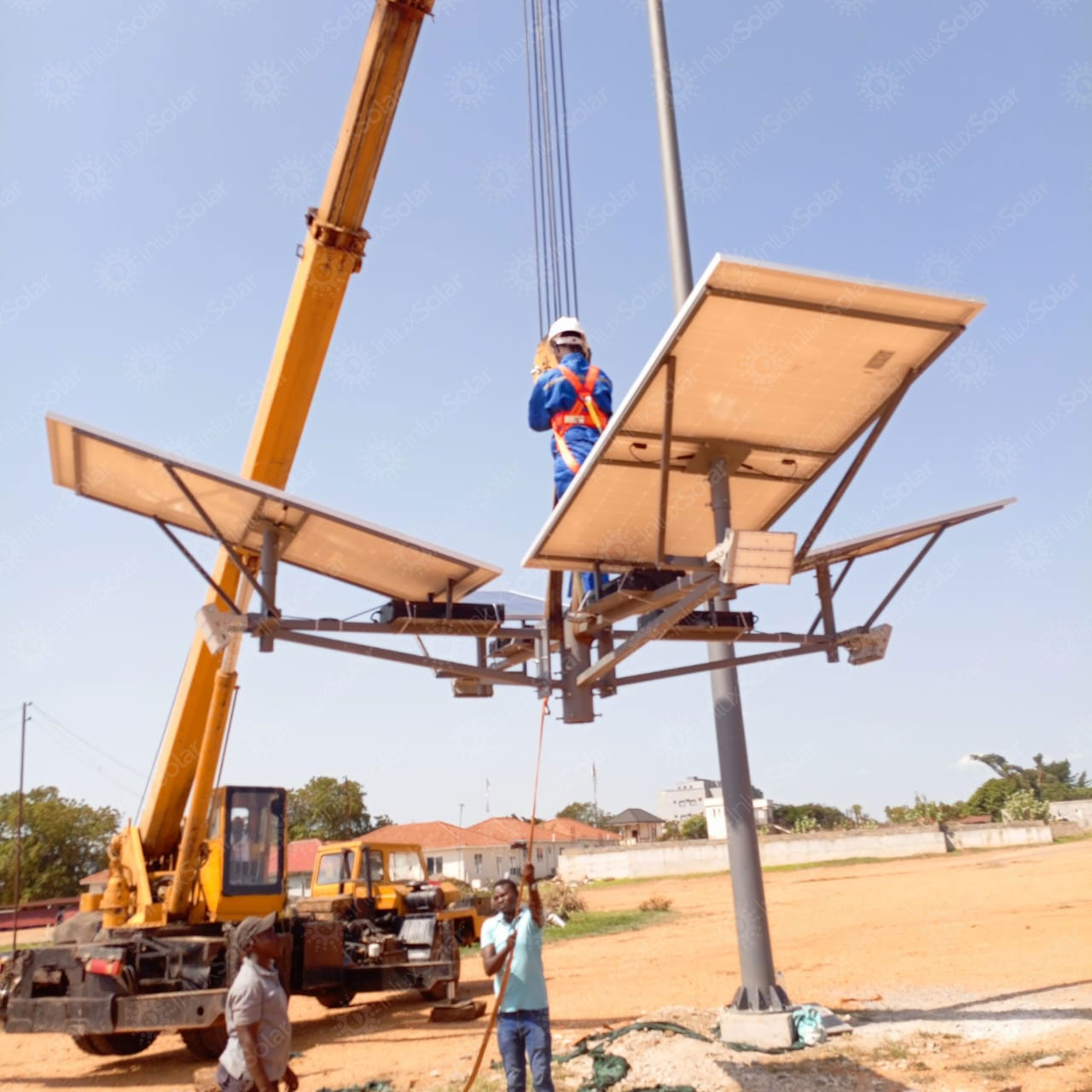
- For EPC contractors: confirm foundation drawings, anchor bolts, lifting access, installation sequence, and whether crane support is required.
- For distributors: confirm whether the product model, pole height, battery voltage, packing size, and spare parts can be standardized for repeat orders.
- For private project owners: confirm the expected lighting area, operating schedule, maintenance access, and after-sales documentation before comparing prices.
- For municipal or community-area buyers: request layout support and avoid relying only on product photos or wattage claims.
If the project area is a parking facility, campus, warehouse yard, or open commercial space, buyers may also review solar parking lot lights. If the project is mainly for boundary visibility or night security, perimeter and security lighting may be a closer application reference. For residential or community-use areas, the residential community lighting page may help compare lower-pole alternatives.
What Similar Project Buyers Should Confirm
Before copying this configuration into a new project, buyers should confirm whether the site conditions are truly comparable. A 15 m solar high-mast system can work well for wide-area lighting, but the final design depends on many site-specific inputs that are not fully listed in the submitted project record.
- Project location, nearest port, and expected shipping route
- Lighting area dimensions and target illumination level
- Floodlight quantity per pole, beam angle, and aiming direction
- Solar panel wattage and mounting structure
- Battery chemistry, cycle life, autonomy days, and replacement access
- Controller type, dimming schedule, and operating hours
- Pole surface treatment, wind-load requirement, and foundation design
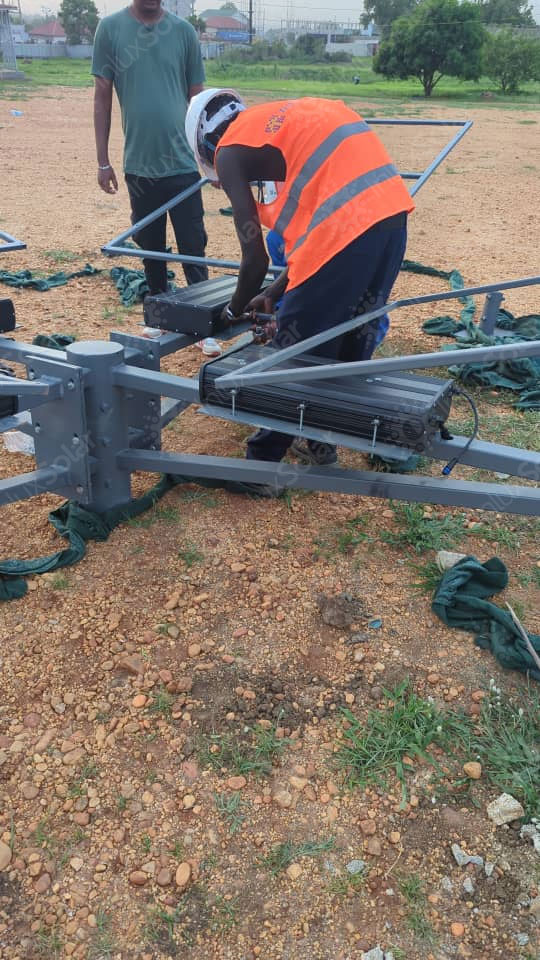
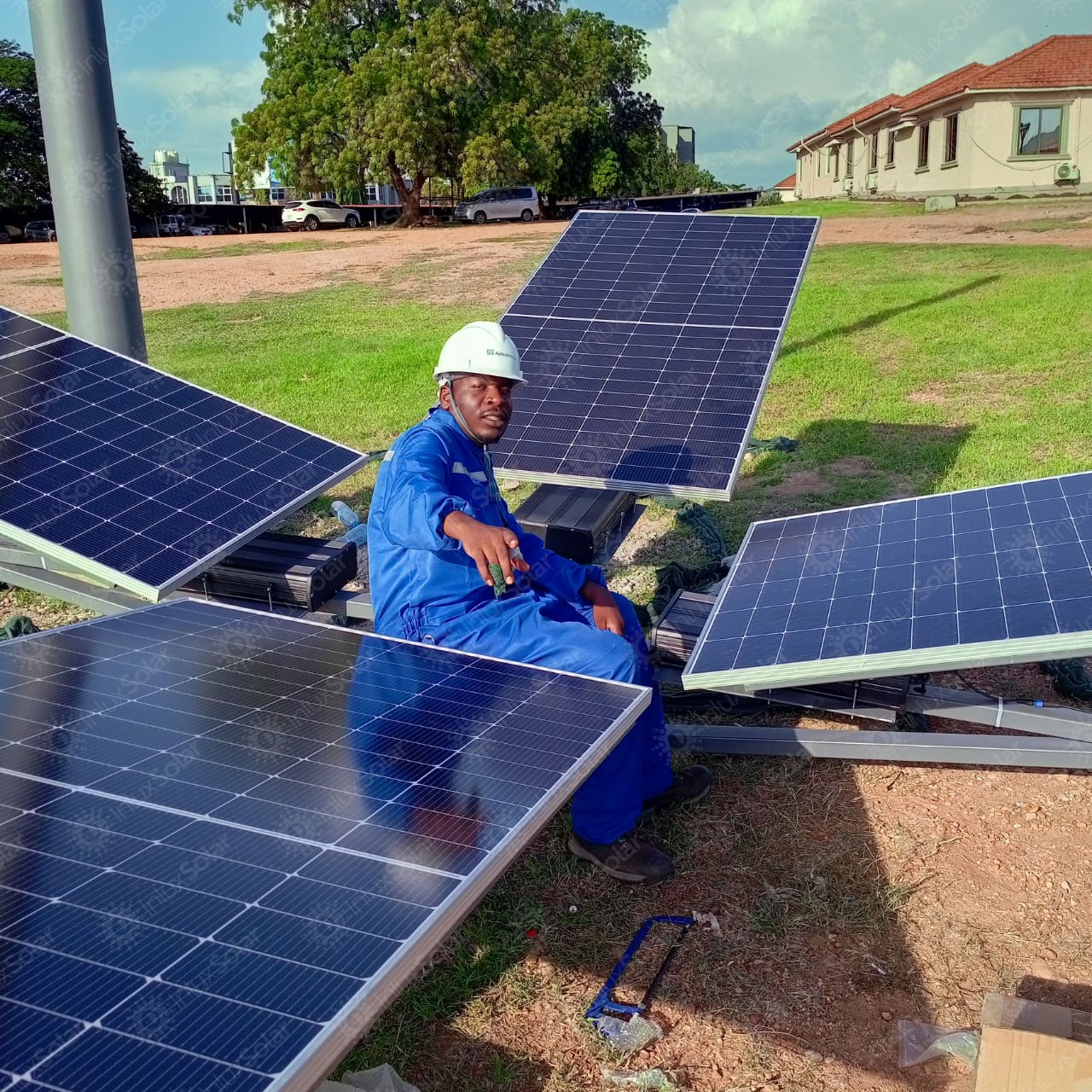
- Installation method, crane access, and local installer responsibility
- Spare parts, warranty terms, and maintenance documentation
For tender or engineering review, do not accept a quotation that only says “15 m solar high mast light.” Ask for a full bill of materials, pole drawing, battery and solar panel specification, packing list, and installation notes. This makes the quotation easier to compare and reduces the risk of under-sized batteries, unsupported pole designs, or unrealistic installation assumptions.
Related Solar Lighting Solutions
- Solar High Mast Light — for off-grid large-area lighting projects that require taller poles and wider coverage.
- High Mast Light Systems — for comparing AC, solar, and stadium high-mast configurations.
- High Mast Lamp — for reviewing luminaire options related to high-mast projects.
- Solar Street Lights — for projects where standard pole spacing may be more suitable than high-mast coverage.
- Solar Parking Lot Lights — for open-area commercial, campus, and parking applications.
- Perimeter & Security Lighting — for boundary, site-security, and controlled-visibility applications.
FAQ
What type of lighting project was completed in South Sudan?
This case is a 15-meter solar high-mast lighting project in Juba, South Sudan. The submitted project sheet records 4 sets, using the INL-FLED-02 model, 150W LED power, a 15 m Q235 pole, a 100Ah/25.6V battery, and IP65 protection.
Is the solar panel specification listed for this project?
No. The submitted project sheet does not list the solar panel wattage or configuration. For a similar project, the PV array should be confirmed together with the battery capacity, local solar resource, operating hours, and dimming strategy.
Does the record confirm the battery chemistry or cycle life?
The record confirms the battery capacity and voltage as 100Ah/25.6V, but it does not specify battery chemistry or cycle life. Those items should be verified before procurement.
What should buyers confirm before specifying a 15-meter solar high-mast system?
Buyers should confirm the lighting area, target illuminance, wind-load requirement, pole foundation, floodlight quantity per pole, PV/battery autonomy, controller and dimming profile, shipping plan, and installation method.
Can this project be used as a reference for similar public-space or area-lighting applications?
Yes, it can be used as a reference for buyers planning 15-meter solar high-mast or large-area solar lighting projects in Africa, especially where independent power supply, pole strength, packing, and installation planning must be reviewed.
Project Gallery
About Me