







All-In-Two Solar Street Light
All-in-two solar street lights use a separate solar panel and a compact lamp head that integrates the LED module, LiFePO4 battery, and controller. This structure gives projects more freedom in panel orientation, supports broader power ranges than compact integrated units, and adapts better to more demanding field conditions.
At INLUX Solar, our All-in-Two range includes four series: DRAGON, JAGUAR, FALCON, and BISON. JAGUAR is designed for higher-demand roadway lighting, FALCON for medium-duty roads and public areas, and BISON for smaller roads and value-driven projects that still require dependable off-grid performance. DRAGON is also part of our current range; explore the DRAGON product page for its available configurations and specifications.
The comparison table below covers JAGUAR, FALCON, and BISON.
What Is an All-in-Two Solar Street Light?
An all-in-two solar street light is a semi-integrated solar street lighting system: the solar panel is mounted separately, while the LED module, LiFePO4 battery, controller, sensor logic, and fixture housing are integrated in the lamp head. This structure gives the project team more freedom to orient the panel toward local sun conditions while keeping the lamp head compact and easier to maintain.
For distributors, EPC contractors, municipalities, and NGO projects, the format is useful when a site needs stronger charging flexibility, higher mounting positions, wider roads, or longer nightly operation than a compact all-in-one system can comfortably support. If the site needs the largest separated battery and panel capacity, also compare split-type solar street lights; if compact installation is the priority, compare all-in-one solar street lights.
Choose the Right All-In-Two Series
All-in-two solar street lights separate the solar panel from the integrated lamp head, helping projects achieve better charging flexibility, stronger power configurations, and easier adaptation to different pole and road conditions.
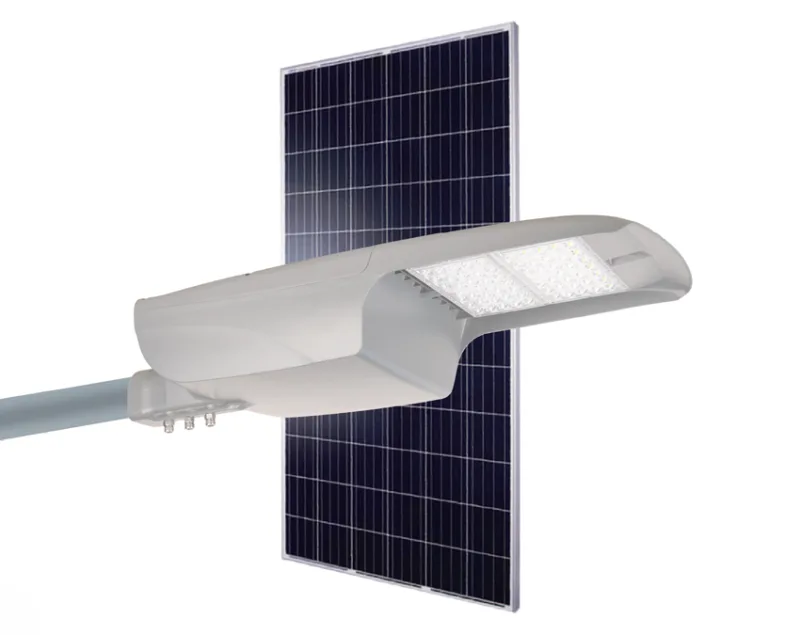
Dragon Series
Best for: highways, primary roads, industrial parks, large outdoor areas, and high-demand infrastructure projects
DRAGON is the heavy-duty option in this range, covering 50–200W, with a suggested pole height of 6–12 meters. Its larger battery capacity and higher-power configuration make it well suited to projects that require stronger output, longer backup time, wider-area coverage, and dependable operation under demanding conditions.

JAGUAR Series
Best for: highways, municipal roads, wider carriageways, and higher-demand roadway projects
JAGUAR serves higher-demand roadway projects in this range, covering 30–150W, with a suggested pole height of 6–12 meters. It is the right fit when your project needs wider coverage, stronger output, and more flexibility for demanding road layouts.

FALCON Series
Best for: township roads, secondary roads, public streets, and medium-duty off-grid lighting projects
FALCON covers 20–80W, with a suggested pole height of 5–8 meters. It suits projects that need a balanced combination of output, compact installation, and reliable off-grid operation without moving into larger-duty highway configurations.

BISON Series
Best for: local roads, village roads, pathways, public compounds, and value-driven commercial or municipal deployments
BISON covers 10–60W, with a suggested pole height of 3–7 meters. It is the most compact option in the range and is well suited to smaller roads and projects that need a simpler, lighter, and more budget-conscious all-in-two solution.
If you are not sure which series matches your project, send us your location, road width, pole height, spacing, target lux, runtime, and quantity. We can recommend the most suitable configuration based on your actual application.
All-in-Two Series Comparison: JAGUAR, FALCON, and BISON
Do not choose an all-in-two solar street light by wattage alone. For roadway projects, the correct decision depends on the full combination of pole height, road width, spacing, illumination target, and operating profile.
| Series | LED Power | Suggested Pole Height | Luminous Flux | Best For | Selection Cue | Model Page |
|---|---|---|---|---|---|---|
| JAGUAR | 30–150W | 6–12 meters | 5,400–27,000 lumens | Highways, municipal roads, larger roadway projects | Choose JAGUAR when the project needs stronger output, higher poles, and wider road coverage. | Explore JAGUAR |
| FALCON | 20–80W | 5–8 meters | 3,500–14,000 lumens | Township roads, secondary roads, public-area lighting | Choose FALCON when you need a balanced medium-duty system for general road and street applications. | Explore FALCON |
| BISON | 10–60W | 3–7 meters | 1,750–10,500 lumens | Local roads, village roads, compounds, smaller public projects | Choose BISON when the project needs a compact, practical, and more value-driven all-in-two solution. | Explore BISON |
Quick selection rule: if your project uses taller poles and needs wider roadway coverage, start with JAGUAR. If the site is a mid-range street or township road, start with FALCON. If the project is smaller-scale, lower-height, or more budget-sensitive, start with BISON.
What Affects All-in-Two Solar Street Light Price?
For B2B and municipal projects, all-in-two solar street light price should not be judged by lamp wattage alone. The quote changes with LED power, solar panel wattage, LiFePO4 battery capacity, controller and dimming logic, pole height, target lux, operating schedule, autonomy days, IES layout requirements, certification scope, order quantity, packaging, and destination shipping.
Use the price discussion as an RFQ checklist rather than a generic online price list. Two all-in-two fixtures with similar nominal wattage can perform very differently if one has stronger solar input, a larger battery, better thermal design, verified photometric files, or a project-specific dimming schedule. Send Inlux Solar the road width, pole height, spacing, target lux, location, autonomy target, and quantity to receive a project-based recommendation.
Request an all-in-two solar street light RFQ review
Why Choose Inlux All-In-Two Solar Street Lights
Inlux Solar all-in-two systems are designed for projects that need stronger charging flexibility and more adaptable installation than a typical all-in-one structure can provide. They sit within our wider range of solar street lights for municipal and industrial projects.
More Flexible Solar Panel Positioning
The separated panel allows better orientation and tilt adjustment, helping improve charging performance in more complex installation conditions.
Suitable for Larger Power Configurations
All-in-two systems are often preferred for projects that need stronger output, longer operating time, or wider roadway coverage than compact integrated units can comfortably support.
Project-Based Engineering Support
Get datasheets, IES/LDT files, and project-oriented recommendations based on road width, pole height, spacing, and target lux.
Built for Real Outdoor Projects
These systems are suitable for highways, municipal roads, township roads, and off-grid public projects where reliability, layout flexibility, and documentation support are important.
All-in-Two vs All-in-One vs Split: When to Choose Each
Solar street light buyers often compare all-in-one, all-in-two, and split-type systems before issuing an RFQ. The right choice depends on installation speed, road width, pole height, solar-panel orientation, battery capacity, maintenance access, and the level of engineering documentation required for the project.
- All-in-one: choose when compact installation, simple logistics, and lower mounting heights matter most.
- All-in-two: choose when the project needs better panel orientation, stronger charging flexibility, and a compact lamp head for roads, parking areas, campuses, or off-grid public projects.
- Split-type: choose when the project needs the largest separated solar panel and battery capacity, complex autonomy requirements, or more flexible component placement.
For a side-by-side selection framework, review the all-in-one vs all-in-two vs split-type solar street light comparison.
Check the Panel and Lamp Head on the Same Installation Drawing
A separate panel gives an all-in-two solar street light more positioning freedom, but “adjustable” does not mean it will fit every pole or avoid every shadow. Before choosing DRAGON, JAGUAR, FALCON or BISON, review the proposed assembly rather than approving the series name alone.
- Check the solar view. Show panel direction, tilt and nearby obstructions on the site drawing. Review seasonal shading, not just a clear view at midday; a larger panel does not remove an obstruction.
- Keep roadway aiming separate. Confirm the lamp-head direction, optic and mounting geometry in the lighting layout. Turning the PV panel toward the sun should not be treated as proof that the road receives the intended light distribution.
- Confirm the physical interfaces. Match the proposed pole, bracket and fixture connections to the selected configuration. Include the panel area and mounting arrangement in the project structural review; an adjustable bracket is not a universal wind-load approval.
- Plan the service visit. Identify how the panel will be cleaned and the lamp-head battery and controls accessed safely. Agree the cable route, connector access and required lifting arrangements before the installation price is accepted.
Ask for these checks alongside the configuration sheet and photometric layout. They help compare installation-ready proposals without changing the lighting target or assuming that every series uses the same mounting hardware.
Recommended Applications
All-in-two solar street lights are commonly selected for projects that need more flexible solar panel positioning, stronger charging performance, and better adaptation to wider roads or higher mounting heights.
Highway Lighting
All-in-two systems are often preferred for higher-power roadway projects because the separate PV panel gives more freedom in solar orientation while the lamp head can remain compact and maintenance-friendly.
Road & Street Lighting
For municipal roads, township roads, and secondary streets, all-in-two systems offer a practical balance between power, adaptability, and project-based engineering selection.
Parking Lot Lighting
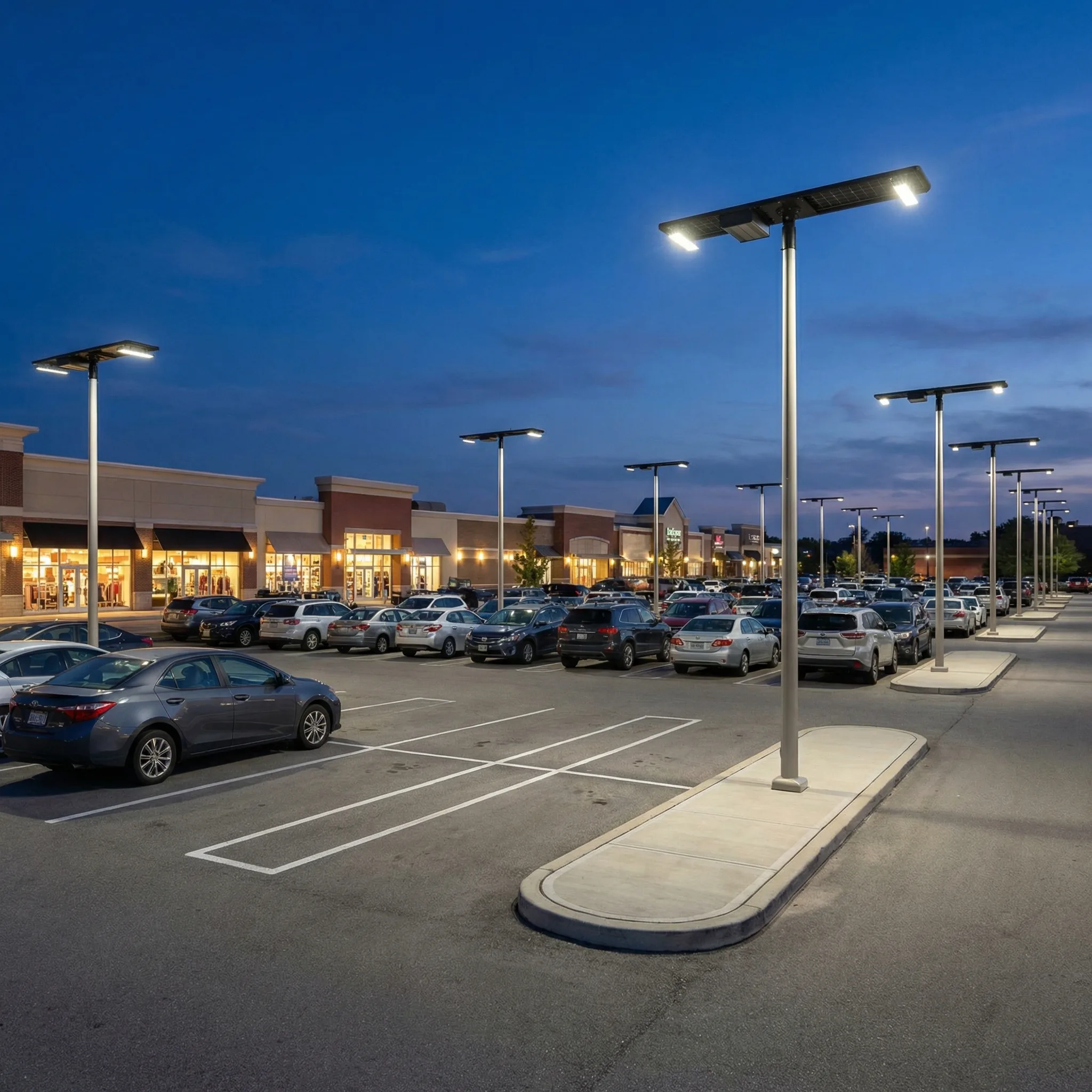
Parking lot and open-area projects often benefit from flexible panel placement and a wider configuration range, especially when runtime, spacing, and illumination targets vary across the site.
Refugee Camp Lighting
In rapid-deployment or infrastructure-limited environments, all-in-two systems can provide dependable off-grid lighting while allowing better solar-panel positioning for local conditions.
Engineering Support for EPC & Municipal Projects
For public tenders and commercial projects, product selection should be based on real project inputs rather than generic wattage claims. Inlux Solar supports project evaluation with configuration-based technical information and documentation support.
IES/LDT Files for Simulation
Photometric files can be provided for lighting simulation, spacing validation, and distribution review during project evaluation.
Layout Input Support
Send your road width, pole height, spacing, target lux, runtime, and location. These inputs help us recommend the right all-in-two series and configuration for your scenario.
Configuration-Specific Technical Documentation
Datasheets, technical communication, and project-oriented selection support can be prepared based on the series and application you are evaluating.
RFQ-Ready Coordination
We can help contractors, consultants, municipalities, and distributors review the right model before RFQ submission so the selected product better matches the real lighting requirement.

JAGUAR All-in-Two Solar Street Lights in Bamako, Mali
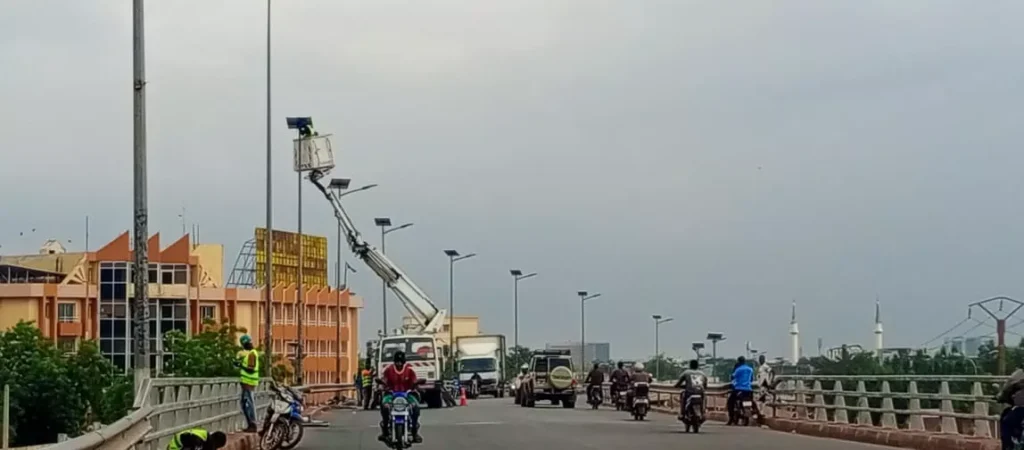
The published Bamako municipal project record identifies 3,162 JAGUAR (INL-AIT5) solar street lights replacing grid-powered street lighting. This gives buyers a named all-in-two product reference to check, rather than a general company delivery total.
For a tender reference, match the named product family to the proposed supply—not merely to the appearance of a fixture. This record does not establish the photometric performance, autonomy or component sizing of a new quotation, and it does not identify DRAGON, FALCON or BISON as the supplied model.
Open the Bamako project record, full gallery and deployment video.
Manufacturer Checklist for Distributor, EPC, and Municipal Buyers
Before choosing an all-in-two solar street light manufacturer, verify the supplier behind the fixture, not only the product photo or nominal wattage. For distributor, EPC, municipal, and NGO projects, request engineering files, factory capacity evidence, warranty terms, and project references before comparing final quotations.
- Factory capacity: Inlux Solar operates a 28,000 m2 factory with 20,000 sets/month capacity.
- Project proof: 300,000+ total units delivered across 60+ countries and 1,000+ projects.
- Engineering support: request datasheets, IES/LDT files, layout review, and model selection support before tender submission.
- Quality evidence: check certifications, warranty terms, battery specification, controller logic, housing protection, and maintenance access.
- RFQ clarity: confirm road width, pole height, spacing, target lux, operating schedule, autonomy days, quantity, destination, and project deadline.
For manufacturer qualification or distributor sourcing, review the solar street light manufacturer page or send your all-in-two solar street light project details.
Frequently Asked Questions
What is an all-in-two solar street light?
An all-in-two solar street light uses a separated solar panel and an integrated lamp head that combines the battery, LED module, and controller. This structure offers more flexible solar panel positioning than a typical all-in-one system.
When should a project choose all-in-two instead of all-in-one solar street lights?
All-in-two systems are usually preferred when a project needs more flexible solar panel orientation, stronger charging performance, larger power configurations, or better adaptation to wider roads and higher poles.
How do I choose between JAGUAR, FALCON, and BISON?
JAGUAR is better for higher-demand roadway projects, FALCON is well suited for rural and off-grid public roads, and BISON is a balanced choice for local roads and value-driven commercial applications.
Can all-in-two solar street lights work in hot or rainy regions?
Yes, when the system is sized correctly for local solar conditions, operating hours, and autonomy targets. Project location, rainy season conditions, and installation details should be reviewed before final model selection.
Can Inlux Solar provide IES files and DIALux support?
Yes. Inlux Solar can support project evaluation with IES/LDT files, technical datasheets, and layout-related engineering support for qualified municipal, commercial, and EPC projects.
What information should I send for a fast recommendation?
Please send your project location, road width, pole height, spacing, target lux or brightness requirement, operating hours, and quantity. This helps the engineering team recommend the most suitable all-in-two series.
Need Help Choosing the Right All-In-Two Solar Street Light?
Send us your road width, pole height, spacing, target lux, project location, operating hours, and quantity. Our team can recommend the most suitable all-in-two series and support your project with datasheets, IES/LDT files, and RFQ-ready documentation.