







All-in-One Solar Street Light (Integrated Systems)
Inlux Solar all-in-one solar street lights are integrated systems that combine the solar panel, LiFePO4 battery, LED module, controller and sensor into one compact fixture. They are designed for municipal roads, rural streets, parking lots, campuses and commercial projects where simplified installation and reduced civil work matter. Compare the right series and request RFQ-ready engineering support from Inlux Solar.
- Compare SIRIUS, GALAXY, ALIEN, and POLARIS by project type
- Request IES/LDT files, datasheets, and layout support
- Get a fast recommendation based on road width, pole height, and target lux
Choose the Right All-in-One Solar Street Light Series
Different projects require different integrated solar lighting configurations. Use the guide below to match the right series to your road type, mounting height, and project environment.
SIRIUS Series
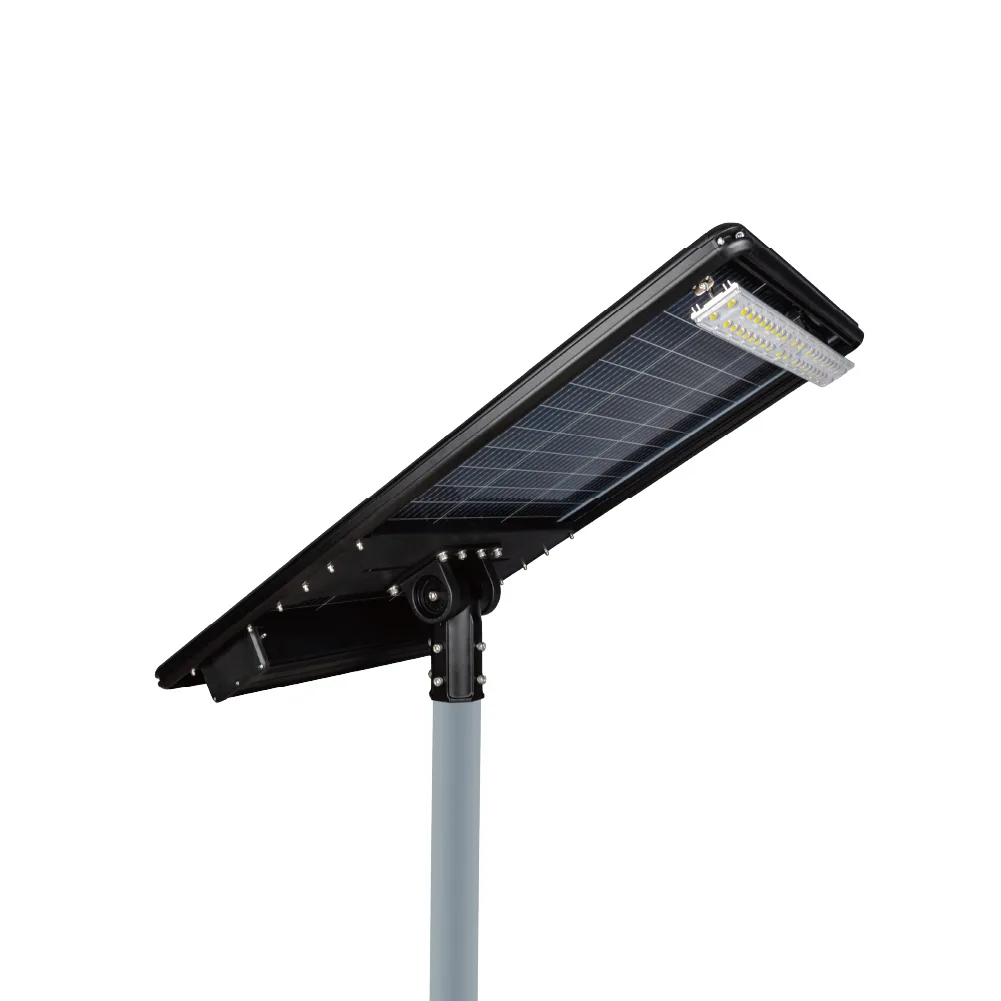
Best for: Highways, arterial roads, and higher-demand municipal projects
Not ideal for: Lower-height community roads that do not require higher-output positioning
Typical use case: Wider roads, major streets, and tender-driven projects that require stronger illumination and engineering support
Next step: Review the SIRIUS product page for detailed configurations and submit your road layout for recommendation.
GALAXY Series
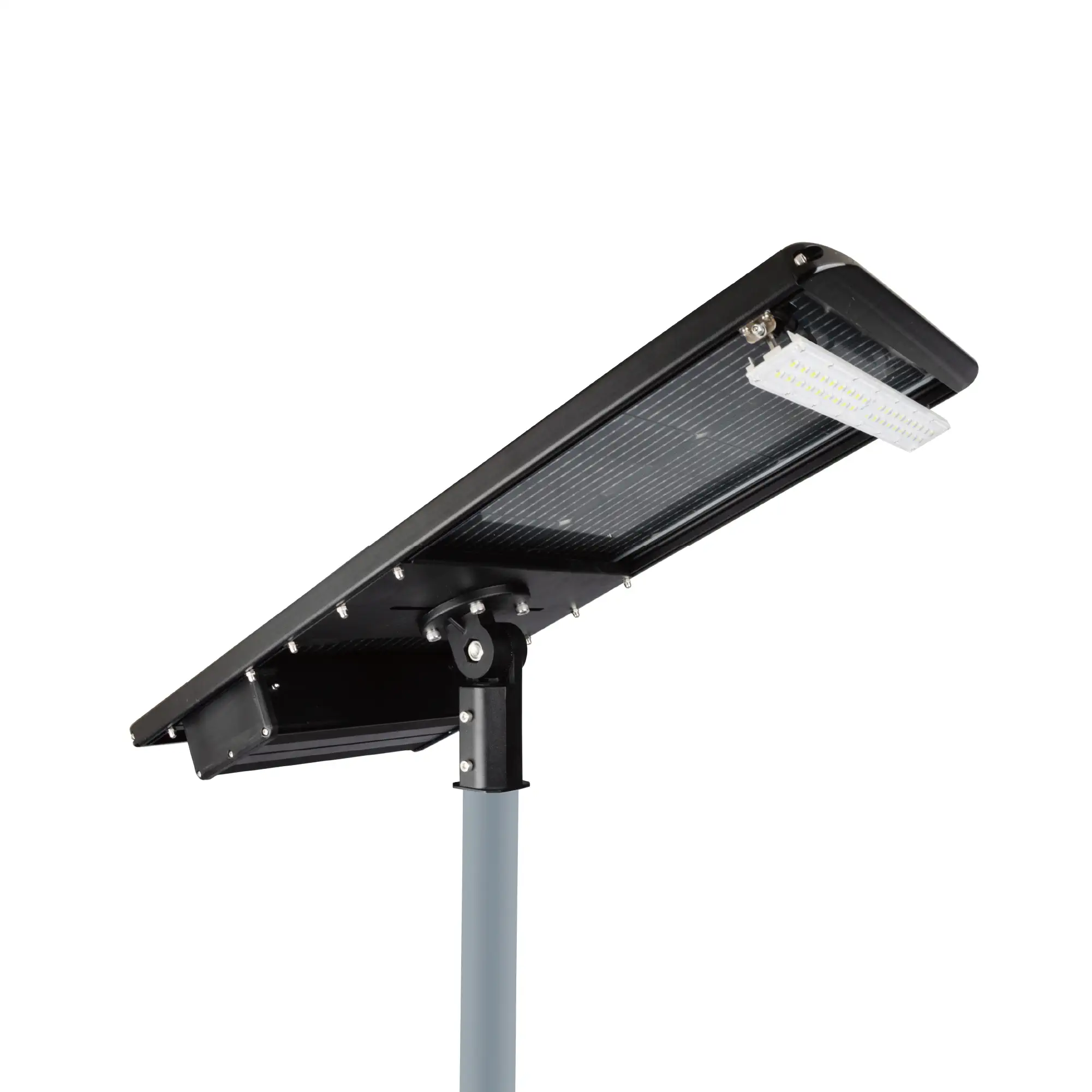
Best for: Rural roads, village streets, and cost-sensitive off-grid projects
Not ideal for: Higher-spec urban roads that need stronger output and broader coverage
Typical use case: Secondary roads, remote areas, and practical deployments where easy installation and simple maintenance are priorities
Next step: Review the GALAXY product page and send us your pole height and spacing for a quick match.
ALIEN Series

Best for: Anti-theft projects, campuses, parks, and semi-public spaces
Not ideal for: Projects where separated components or split-type architecture are preferred
Typical use case: Public environments where appearance, anti-theft design, integrated structure, and balanced output all matter
Next step: Review the ALIEN product page if your project needs a more secure and visually integrated lighting system.
POLARIS Series

Best for: Community roads, compounds, and lower-height local developments
Not ideal for: Major-road projects that require higher mounting positions or stronger roadway coverage
Typical use case: Community streets, gated developments, and local public roads where compact integrated design is preferred
Next step: Review the POLARIS product page and tell us your installation height and target lux for a fast recommendation.
For a project-based recommendation, send us your road width, pole height, pole spacing, target lux, project location, autonomy target, operating schedule and quantity. Our team can recommend the most suitable integrated solar street light series and provide datasheets, IES/LDT files and RFQ support.
Need a faster recommendation? Send us your road type, pole height, spacing, target lux, and quantity for a project-based recommendation.
Engineering Support for EPC, Municipal, and Tender Projects
Inlux Solar supports project buyers with engineering files and documentation that help move from product evaluation to tender submission and installation planning.
Datasheets for Each Series
Get configuration-based technical datasheets for SIRIUS, GALAXY, ALIEN, and POLARIS to support product comparison and internal review.
IES/LDT Photometric Files
Request photometric files for DIALux, AGi32, and lighting evaluation workflows.
Project-Based Recommendation
Share your road width, pole height, spacing, target lux, and location to receive the most suitable series recommendation.
Tender and RFQ Assistance
We support project teams with product documentation, specification confirmation, and quotation preparation for municipal and commercial projects.
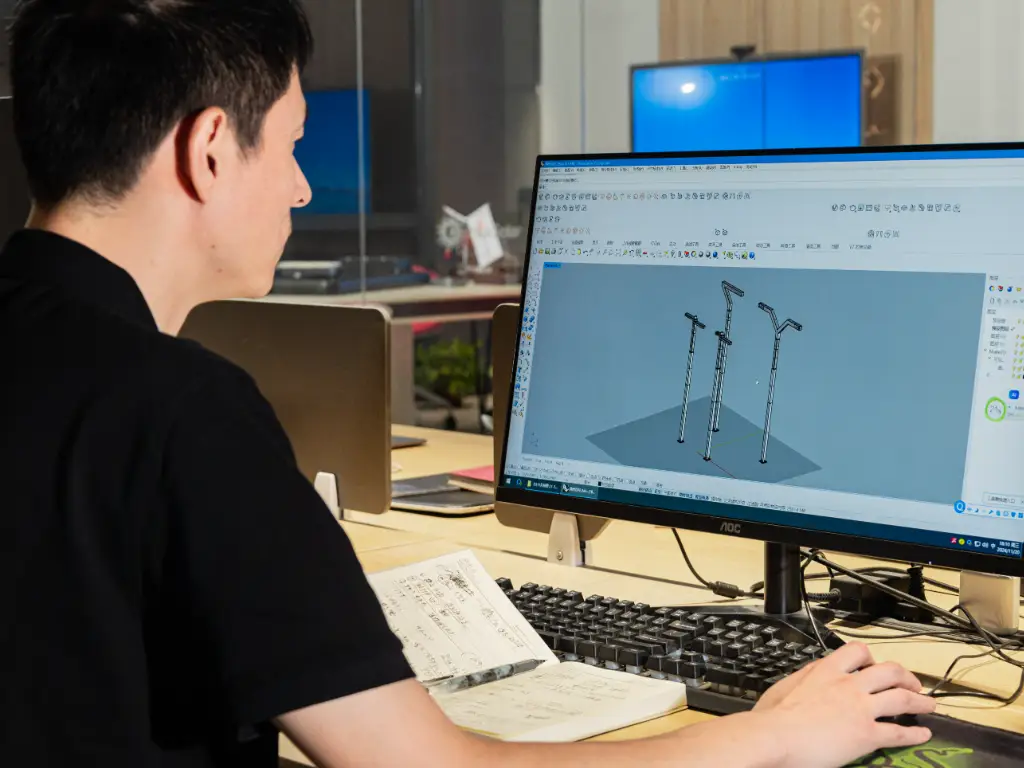
Specifications & Model Comparison
Compare our all-in-one solar street light series by application, mounting height, output level, and engineering support. The right model depends on road type, spacing, lighting target, and project environment — not nominal wattage alone.
| Series | Best For | Typical Project Type | Typical Pole Height | Output Positioning | Key Advantage | Engineering Files | Next Step |
|---|---|---|---|---|---|---|---|
| SIRIUS | Highways and major roads | Municipal tenders, arterial roads, and higher-demand commercial lighting projects | Higher mounting height applications | High-output roadway lighting | Stronger illumination and project-ready engineering support | Datasheet / IES / LDT / Layout Support | View SIRIUS |
| GALAXY | Rural roads and village streets | Village roads, secondary roads, and remote off-grid installations | Medium-height road lighting | Practical off-grid road lighting | Dependable autonomy and simplified installation | Datasheet / IES / LDT / Layout Support | View GALAXY |
| ALIEN | Anti-theft public-space lighting | Parks, pathways, campuses, and public landscape lighting | Lower to medium mounting heights | Balanced lighting for public environments | Anti-theft design, clean integrated appearance, and visual comfort | Datasheet / IES / LDT / Layout Support | View ALIEN |
| POLARIS | Communities and local roads | Community roads, gated compounds, local developments, and lower-height projects | Lower mounting height applications | Compact integrated area lighting | Simple deployment and compact project-friendly design | Datasheet / Layout Support | View POLARIS |
Need a faster recommendation? Share your road type, pole height, spacing, target brightness, and project quantity, and our team will suggest the most suitable series.
The ranges below are a comparison reference, not a final supply specification. Confirm lamp power, lumen output, solar-panel rating and battery capacity together on one dated configuration sheet before ordering. Lamp wattage and solar-panel wattage are different ratings; do not combine values from different model versions for a tender.
| Series | Lamp Power | Luminous Flux | Pole Height | LiFePO4 Battery | Solar Panel |
|---|---|---|---|---|---|
| SIRIUS (INL-AIO9) | 80–150 W | 9,500–28,500 lm | 7–15 m | 40Ah/12.8V–70Ah/25.6V | 130–400 W |
| ALIEN (INL-AIO5) | 30–120 W | 3,700–12,040 lm | 5–12 m | 256–768 Wh | 60–180 W |
| POLARIS (INL-AIO2) | 30–120 W | 3,700–12,040 lm | 5–12 m | 256–768 Wh | 60–180 W |
| GALAXY (INL-AIO6) | 20–80 W | 2,280–8,500 lm | 4–8 m | 10–40 Ah/12.8V | 50–120 W |
All series share: 3000K–6500K CCT · Type II/III distribution · MPPT controller (10–20A) · up to 15 h/night · up to 7 days rainy-day backup · IP66/IK09 · −20 °C to 65 °C · >120 km/h wind resistance · 10-year-plus design life · LED chips by series: SIRIUS and GALAXY use 7070; ALIEN and POLARIS use 5050.
What Affects All-in-One Solar Street Light Price?
For B2B and municipal projects, all-in-one solar street light price should not be judged by lamp wattage alone. The quote changes with battery capacity, solar panel size, LED efficacy, controller logic, motion-sensor mode, housing material, pole height, lighting schedule, autonomy days, IES layout requirements, certifications, order quantity, packaging, and shipping.
Use the price discussion as an RFQ checklist, not a generic online price list. Two fixtures with the same nominal wattage can perform very differently if one has a larger LiFePO4 battery, stronger solar input, verified photometric files, or a project-specific dimming schedule. Send Inlux Solar the road width, pole height, spacing, target lux, location, autonomy target, and quantity to receive a project-based recommendation.
Compare the Operating Profile, Not Just the Wattage
Two all-in-one solar street light quotations can both say “50 W, 10 hours” while describing different operating profiles. Put the actual power at each scheduled level beside the price. The example below is illustrative, not an Inlux model specification, test result or recommended lighting schedule.
| Comparison item | Illustration A | Illustration B |
|---|---|---|
| Advertised maximum LED power | 50 W | 50 W |
| Operating profile | 50 W for 10 hours | 50 W for 2 hours, then 20 W for 8 hours |
| LED-load arithmetic | 50 × 10 = 500 Wh | (50 × 2) + (20 × 8) = 260 Wh |
These profiles do not provide an equivalent lighting service merely because the maximum wattage is the same. Calculate Wh by multiplying actual power by time in each interval, then adding the intervals. A controller dimming percentage is not automatically the same percentage of electrical power or illuminance.
The figures exclude controller and wiring losses, temperature effects, battery aging and reserve. They are not battery or PV sizes. Before comparing prices, require the quoted operating profile and the lighting calculation for each scene, then check the separate energy design against the site and required autonomy.
Request an all-in-one solar street light RFQ review
Recommended Applications
All-in-one solar street lights are commonly selected for projects where simplified installation, reduced civil work, and integrated system control are priorities.
Highway Lighting
Suitable for selected highway and major-road projects where integrated solar lighting systems are required with project-based photometric support.
Road & Street Lighting
Used for municipal roads, secondary streets, and public roadway projects that require efficient deployment and dependable off-grid performance.
Parking Lot Lighting
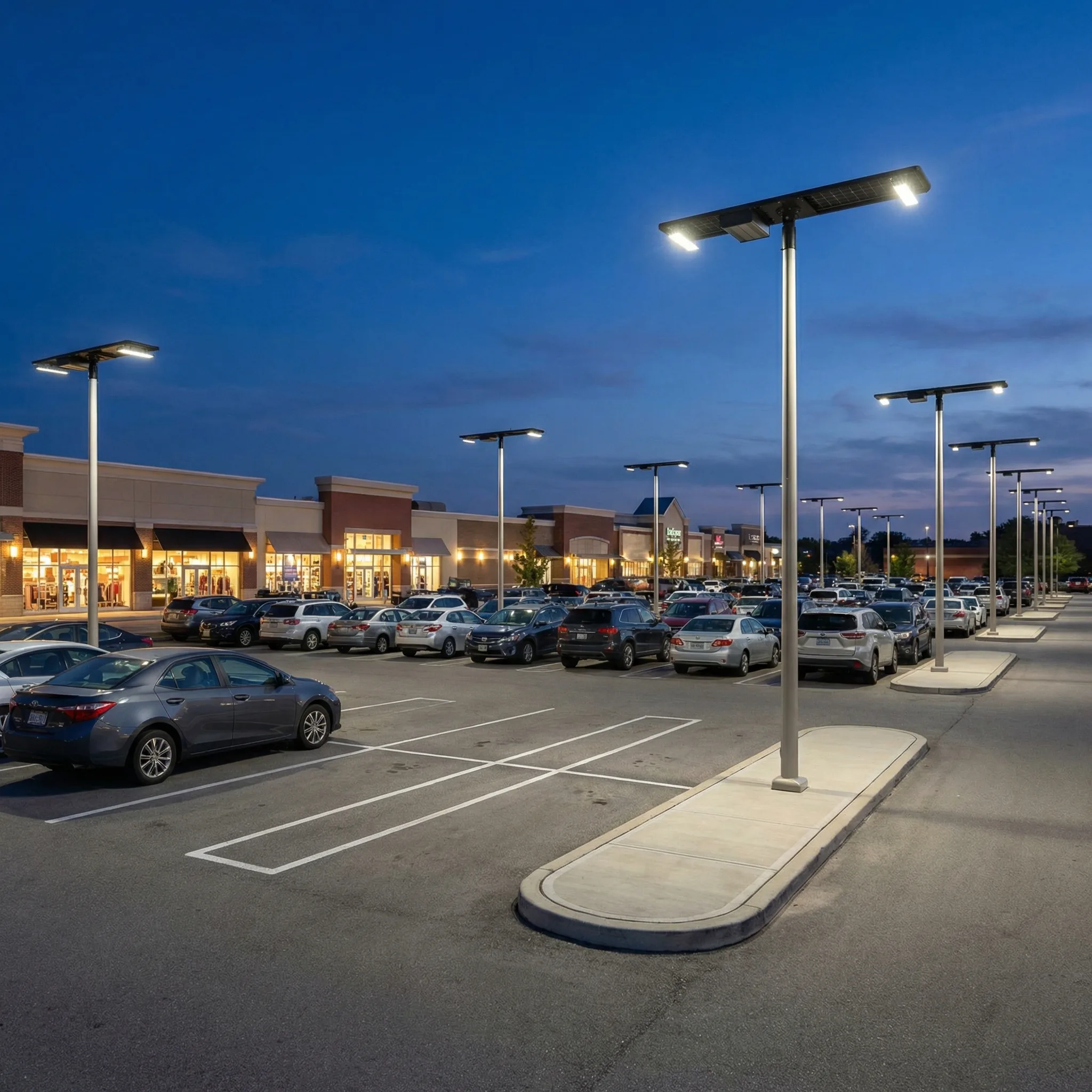
Well suited for commercial and public parking areas where balanced output, clean appearance, and reduced trenching work are key priorities.
Refugee Camp Lighting
Ideal for fast-deployment humanitarian and off-grid projects where installation speed, autonomy, and simplified maintenance matter.
Why Project Buyers Choose Inlux All-in-One Solar Street Light (Integrated Systems)
Inlux Solar all-in-one systems are designed for commercial and public-sector projects where simplified installation, stable autonomy, and engineering-ready documentation matter more than nominal wattage claims.
Faster Installation
Reduced cabling, trenching, and on-site assembly for off-grid and labor-sensitive deployments.
Commercial-Grade Core Components
Grade-A LiFePO4 batteries, MPPT controllers, efficient LED modules, and weather-resistant housings.
Project-Based Engineering Support
Datasheets, IES/LDT files, and layout-related assistance for evaluation and planning.
Built for Real Project Delivery
Suitable for municipal roads, rural streets, campuses, parks, and community developments.
What Is an All-in-One Solar Street Light?
An all-in-one solar street light, also called an integrated solar street light, combines the solar panel, LiFePO4 battery, LED module, MPPT controller, sensors and housing into one compact fixture. Compared with split-type systems, it reduces external cabling and can simplify installation. Final selection still depends on road width, pole height, spacing, target lux, autonomy days, local solar conditions and maintenance access.
For fast-deployment roads, campuses, parks, and community projects, all-in-one systems can reduce trenching and simplify installation. For larger roadway projects that need separated panels, larger battery capacity, or more flexible component placement, compare all-in-two solar street lights and split-type solar street lights before finalizing the RFQ.
- Best fit: rural roads, community streets, campuses, parks, parking areas, and selected municipal roads where simplified installation matters.
- Check carefully: high-speed roads, high mounting positions, long autonomy requirements, shaded sites, or projects that need large separated components.
All-in-One Solar Street Light vs All-in-Two vs Split Type
Choose All-in-One for compact installation on community roads, parks and poles where the head can carry the panel and battery. Choose All-in-Two when the panel must be aimed separately and the battery stays in the lamp head. Choose Split-Type when the project needs a larger separated panel or battery, longer autonomy, or a battery location away from the head. See the selection table.
Will an All-in-One Solar Street Light Fit the Proposed Pole Position?
A fixture can fit the pole yet fail the site. The light must cover the intended road surface while the panel collects enough sunlight at its actual installed angle. Check those two tasks together before choosing an integrated configuration.
| Site-fit question | Evidence that resolves it | If the proposed arrangement cannot satisfy it |
|---|---|---|
| Can the panel and the light face the required directions? | One installation drawing showing the proposed bracket, luminaire aiming and panel plane—not an unrelated catalogue picture. | Reassess the mounting arrangement or compare a separated-panel architecture; do not assume every all-in-one model adjusts in the same way. |
| Is the panel clear of nearby shade? | A site review that includes trees, roofs, signs and other obstructions around the actual pole position. | Move or redesign the installation where feasible. A different LED wattage does not remove a shadow from the panel. |
| Does the solar estimate match the installed geometry? | A solar assessment using the proposed panel orientation and tilt, with the relevant seasonal conditions. | Recheck the configuration rather than substituting an annual optimum angle the fixture cannot actually achieve. |
| Can the installed unit be maintained? | The selected variant’s service instructions and access plan, including the ability to restore the approved mounting position. | Resolve the access method or choose a more suitable configuration before committing to that location. |
A useful distinction: road direction is not panel direction
Turning a fixture to improve road coverage can also change panel orientation if those adjustments are coupled in the selected design. Confirm what moves independently on the actual variant. For SIRIUS, GALAXY, ALIEN or POLARIS, use the matching installation drawing rather than transferring a feature from another series.
The European Commission’s PVGIS methods documentation explains the importance of the panel plane and the limits of its shading model. A terrain-horizon calculation does not clear nearby trees or buildings. Site shading and mounting feasibility still need a local check.
For a project recommendation, send the road width, pole height, spacing, target lux, location, autonomy target and quantity to the Inlux Solar engineering team.
Why Project Buyers Work with Inlux Solar
- Global project references: View Projects
- Verification materials: View Certifications & Patents
- Technical guidance: Open Guides Hub
- Specs, QC, and RFQ materials: Open Resources Hub
- Procurement workflow support: Open solar street light buyer’s guide hub
GALAXY All-in-One Solar Street Lights in Field Projects
Abéché, Chad: off-grid rural route
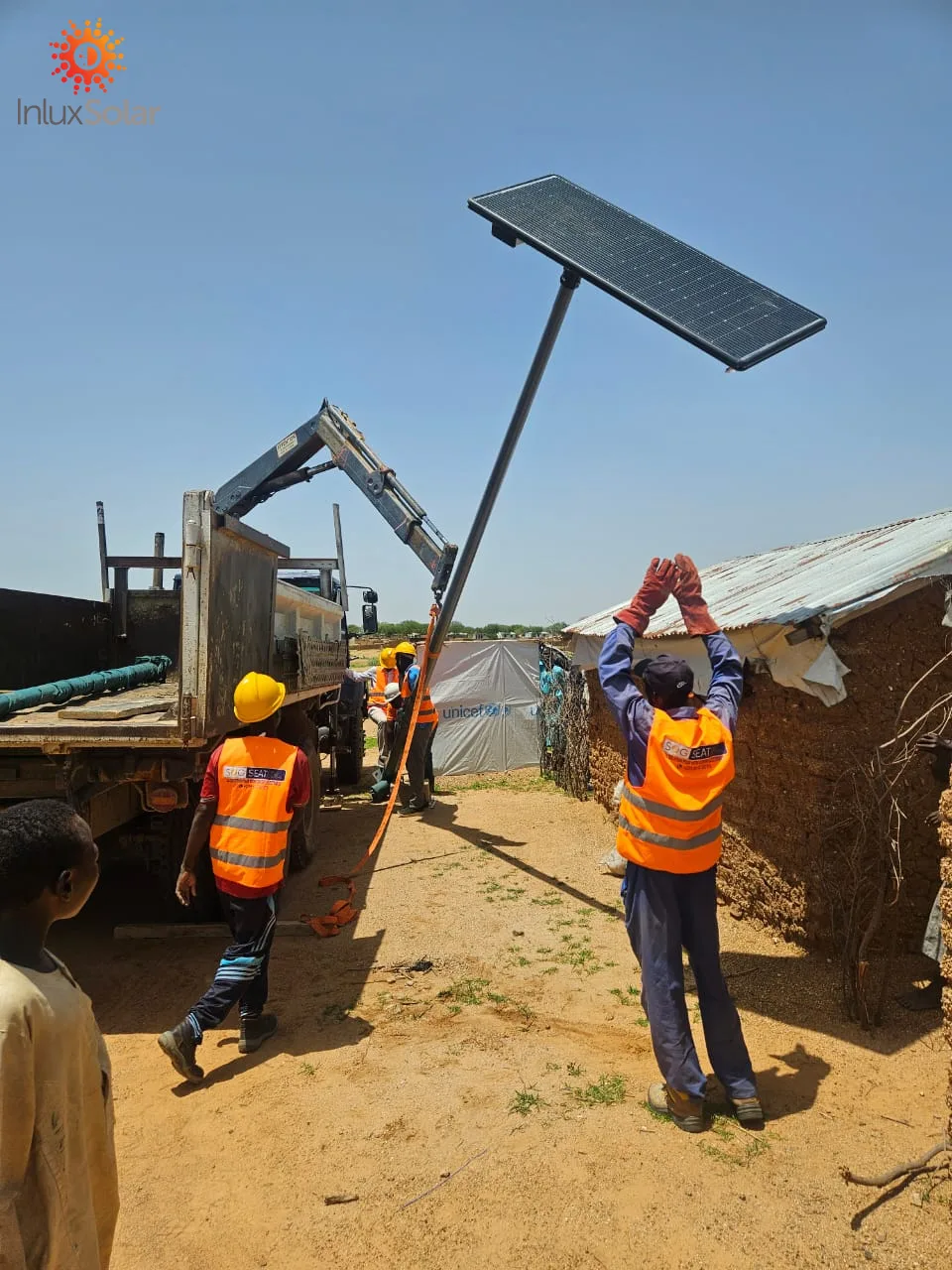
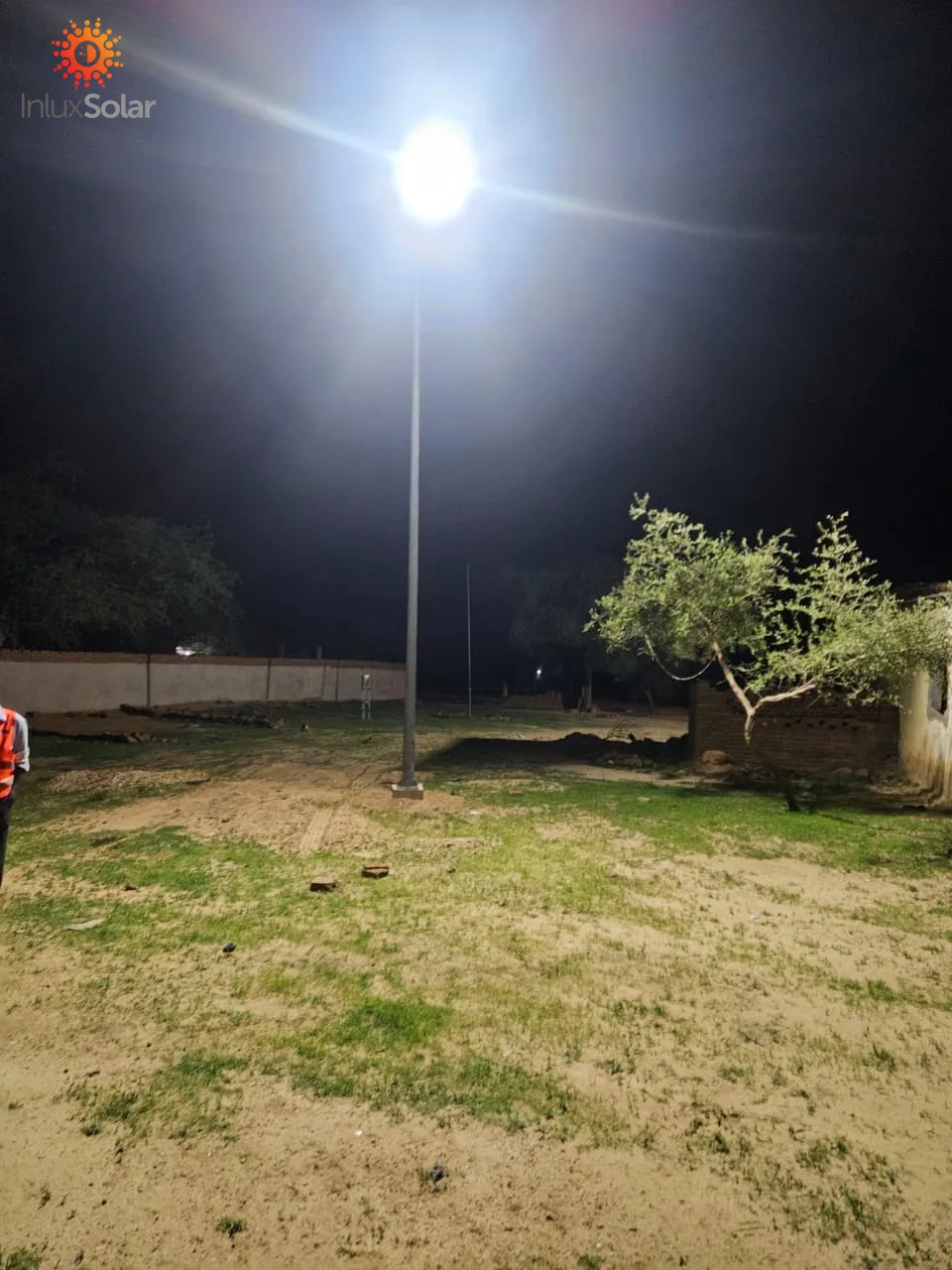
- Published project scope
- 165 AIO6 all-in-one solar street light sets.
- Installation responsibility
- Local contractor; a single-side route arrangement is recorded.
- Useful procurement reference
- Equipment supply and local installation were separate parts of the project. Review the route drawing and installation responsibilities with the proposed configuration.
Zambia: small-town road lighting
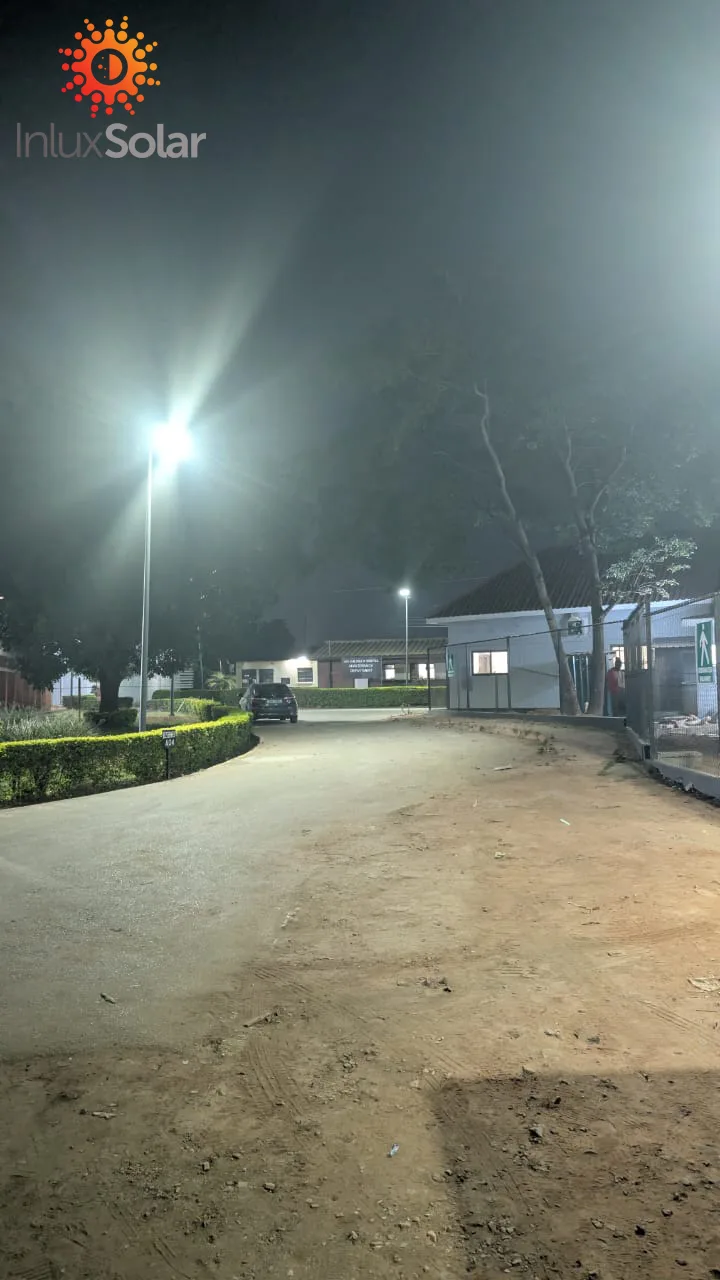
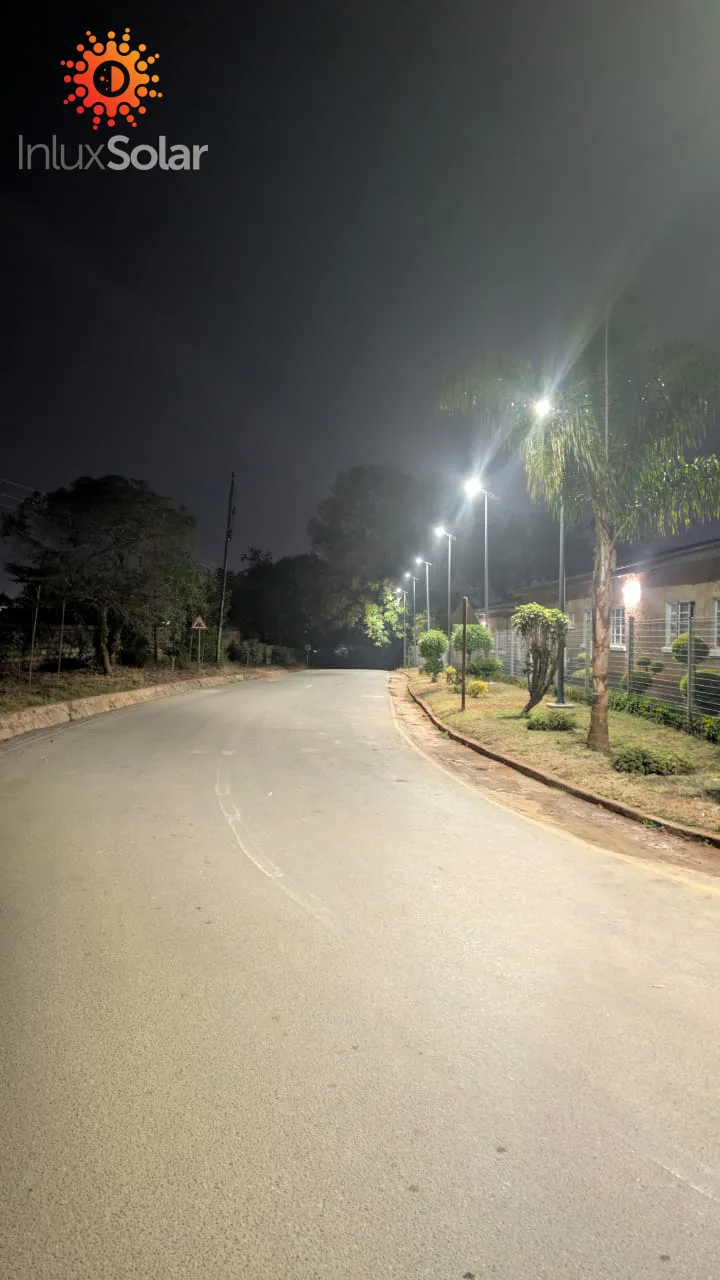
- Published project scope
- 50 GALAXY all-in-one solar street lights supplied through an EPC contractor.
- Installation responsibility
- The client’s team installed the equipment on site.
- Useful procurement reference
- The project record covers different road surfaces and pole arrangements. A new site still needs its own layout and energy review rather than a copied wattage.
These references document GALAXY/AIO6 deployments, not every series in this collection. Project photos and historical configurations do not establish the photometric performance or autonomy of a new quotation.
Manufacturer Checklist for Distributor, EPC, and Municipal Buyers
Before choosing an all-in-one solar street light manufacturer, verify the supplier behind the product, not only the fixture photo. For distributor, EPC, and municipal projects, request engineering files, factory capacity evidence, warranty terms, and project references before comparing final quotations.
- Factory capacity: Inlux Solar operates a 28,000 m2 factory.
- Project proof: 300,000+ total units delivered across 60+ countries and 1,000+ projects.
- Engineering support: request datasheets, IES/LDT files, layout review, and model selection support before tender submission.
- Quality evidence and warranty: Inlux Solar’s standard warranty is five years. Verify covered components, exclusions, site labour and freight responsibilities in the written offer—not a blanket maintenance-free lifetime. Check model-matched certificates, battery specification, controller logic, housing protection and maintenance access for the quoted configuration.
- RFQ clarity: confirm road width, pole height, spacing, target lux, operating schedule, autonomy days, quantity, destination, and project deadline.
For manufacturer qualification or distributor sourcing, review the solar street light manufacturer page or send your all-in-one solar street light project details.
Need More Selection Support?
- Explore the commercial solar street light hub
- Read the All-in-One Solar Lighting Contractor’s Guide
- Municipal solar street lighting guide — specification steps, pole heights, and example configurations for city projects.
- Ask Inlux engineers for an all-in-one project recommendation
Frequently Asked Questions
How do I choose between SIRIUS, GALAXY, ALIEN, and POLARIS?
Inlux offers four all-in-one series matched to project scale. GALAXY (INL-AIO6) is the cost-optimized choice for rural roads, village streets, and community projects, covering 20–80W with 2,280–8,500 lumens on 4–8 m poles. ALIEN (INL-AIO5) suits parks, resorts, and modern cityscapes with an anti-theft design, 30–120W and 3,700–12,040 lumens. SIRIUS (INL-AIO9) is the high-power option for highways, arterial roads, and tenders, delivering 80–150W and 9,500–28,500 lumens on 7–15 m poles with optional CCTV/IoT. POLARIS (INL-AIO2) shares ALIEN’s specs in a compact housing for community and local roads. All four use LiFePO4 batteries, MPPT controllers, IP66/IK09 protection, >120 km/h wind resistance, and a 10-year-plus design life. Choose by required brightness and mounting height; our engineers confirm the exact model with an IES/DIALux layout for your road width and pole spacing.
What is an Integrated Solar Street Light?
An all-in-one solar street light integrates the solar panel, LiFePO4 battery, LED module, MPPT controller, and sensor into one compact pole-top fixture. Because there is no separate battery box or external cabling, installation needs no trenching and is far faster than a split-type system. Each unit charges by day, stores energy, and runs autonomously at night—Inlux models deliver up to 15 hours of lighting per night and up to 7 days of rainy-day backup. Inlux all-in-one units span the GALAXY, ALIEN, SIRIUS, and POLARIS series, covering 20–150W and 2,280–28,500 lumens, with 3000K–6500K color temperature, Type II/III distribution, IP66/IK09 protection, and a 10-year-plus design life. They are commonly specified for rural roads, community streets, parking areas, parks, and roadway projects where speed of deployment and minimal civil works matter most.
What applications are best for all-in-one solar street lights?
All-in-one solar street lights are best for projects that need reliable night lighting without grid power or trenching. Typical applications include rural and village roads, community and residential streets, parking lots, parks and campuses, perimeter and security areas, refugee camps, and selected highway or arterial sections. The right series depends on brightness and pole height: GALAXY (2,280–8,500 lm, 4–8 m) fits rural and community roads; ALIEN (3,700–12,040 lm, 5–12 m) suits parks and urban areas with its anti-theft design; SIRIUS (9,500–28,500 lm, 7–15 m) handles highways and high-demand roadways. Every unit provides up to 15 hours per night, up to 7 days of rainy-day autonomy, IP66/IK09 ingress protection, and >120 km/h wind resistance. Inlux supplies IES/LDT files and DIALux layouts so specifiers can confirm lux levels and uniformity before ordering.
When should a project choose all-in-one instead of split-type solar street lights?
Choose all-in-one when fast installation, minimal cabling, and simplified maintenance are the priorities. Because the panel, LiFePO4 battery, controller, and LED are integrated into a single pole-top unit, there is no battery box to mount or wire, so deployment is quicker and civil works are lower—ideal for rural roads, community streets, parking areas, and parks. Inlux all-in-one models cover 20–150W and 2,280–28,500 lumens on 4–15 m poles. Choose split-type instead when a project needs higher power, taller mounting heights, larger battery autonomy, or a separately positioned panel for shading or sun-angle reasons—our APOLLO, VESTA, and MARS split series serve those cases. Rule of thumb: all-in-one for speed and standard road classes; split-type for maximum power, custom autonomy, or difficult sun-angle sites. Inlux can model both options with a DIALux layout so you compare lux, uniformity, and cost before deciding.
Can Inlux Solar provide IES files and DIALux support?
Yes. Inlux Solar provides IES/LDT photometric files, technical datasheets, and DIALux layout support for qualified municipal, commercial, and EPC projects. With the IES/LDT file for the selected series—GALAXY, ALIEN, SIRIUS, or POLARIS—your lighting designer can model illuminance (lux), uniformity, and pole spacing for the exact road width and class before ordering, reducing specification risk on tenders. We can also recommend a model and mounting height for your project: for example, SIRIUS covers 9,500–28,500 lumens at 7–15 m for highways and arterials, while GALAXY covers 2,280–8,500 lumens at 4–8 m for rural and community roads. All series use Type II/III distribution and 3000K–6500K color temperature. Send your road dimensions and target lux level, and our engineering team will return a DIALux layout, datasheet, and IES files to support your RFQ.
Are the batteries replaceable?
All Inlux all-in-one models use LiFePO4 lithium batteries, chosen for long cycle life and stable performance across a -20°C to 65°C operating range, supporting a 10-year-plus design life with up to 7 days of rainy-day backup. Battery capacity scales with the model—from 10Ah/12.8V on entry GALAXY units to 70Ah/25.6V on high-power SIRIUS units (ALIEN and POLARIS use 256–768Wh packs). Field battery replacement is supported on the GALAXY, ALIEN, and SIRIUS series, subject to the specific configuration and safe service access; POLARIS uses a sealed compact housing and is serviced as a unit. For long-term municipal and EPC deployments, our team advises on the most suitable configuration based on service access, expected lifecycle, and operating conditions, and can specify maintenance-friendly options where field replacement is required. Contact Inlux with your service plan and we will confirm the right battery and maintenance approach.
Need Help Choosing the Right All-in-One Solar Street Light?
Send us your road width, pole height, spacing, target lux, project location, and quantity. Our team can recommend the most suitable all-in-one series and support your project with datasheets, IES/LDT files, and RFQ-ready documentation.