







Commercial Solar Parking Lot Lights with Photometric Layout Support
Inlux Solar provides commercial solar parking lot lights for projects where extending grid power would add trenching, cabling or utility coordination. We support buyers with photometric layout guidance, pole-spacing recommendations and BOM planning so the proposed system can be reviewed before procurement.
Quick Answer (for specs & proposals):
- Target first: define the required average and minimum illuminance, uniformity method, vertical-light needs and boundary limits from the project specification and local authority requirements.
- Design first: choose optics + pole height/spacing from IES photometrics, then size PV + battery using worst-month solar and the longest night profile.
- What you receive: photometric report, layout, BOM, and installation notes—so you can bid and build with confidence.
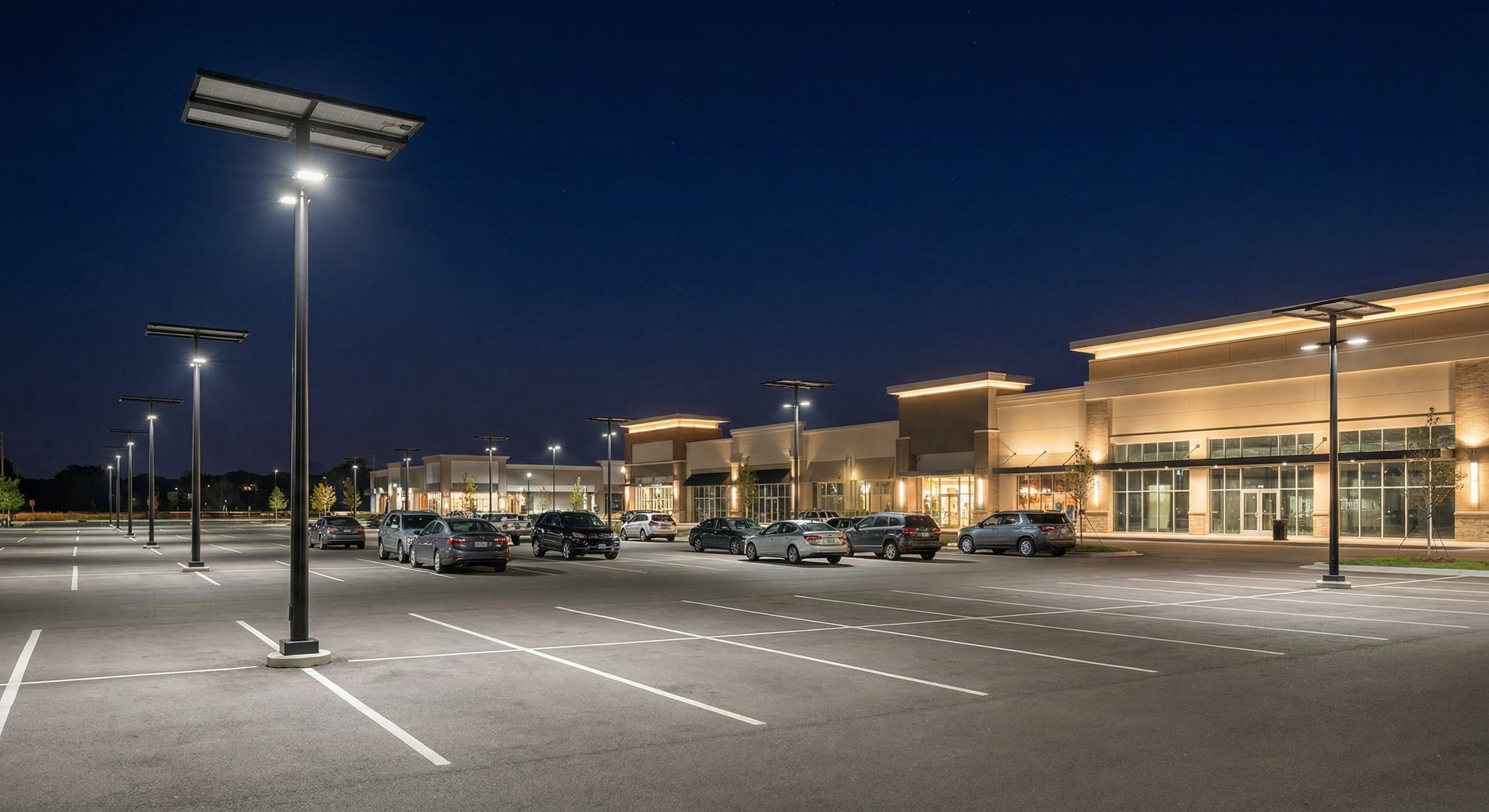
Parking Lot Lighting Targets (Foot-Candles & Uniformity)
Parking lots are judged on more than watts. The U.S. Department of Energy parking-lot lighting guide explains why photometric distribution and uniformity matter, while DarkSky Approved criteria emphasize limiting uplight, glare, over-lighting and light trespass. These are design references; the project specification and authority having jurisdiction control the final targets.
- Required criteria: record the specified average, minimum and vertical illuminance, plus the exact average-to-minimum or maximum-to-minimum uniformity method.
- Site conditions: separate drive aisles, parking bays, entrances, pedestrian routes and camera-critical zones instead of applying one target to the entire site.
- Boundary control: test distribution, mounting height, aiming and pole location against property-line spill, glare and uplight constraints in the photometric layout.
Approve the Parking Lot by Zone, Not One Average
A single site-wide average can conceal a weak entrance, a dark pedestrian route or spill into a neighbouring property. Put the review zones on the same drawing used for the luminaire schedule, so a supplier cannot demonstrate one easy grid while leaving the critical areas untested.
| Review zone | Question before approving the layout | Evidence in the proposal |
|---|---|---|
| Parking bays and drive aisles | Are the occupied parking area and vehicle routes covered separately, including the weakest points? | Labelled calculation areas, point grid, minima and the specified uniformity method. |
| Entrances, walkways and accessible routes | Are people and conflict points visible along the actual route, not only at one bright pole? | Marked pedestrian routes and any required horizontal or vertical calculation surfaces. |
| Camera-critical and security zones | Does the required viewing task remain supported in every intended control scene? | Camera viewing direction and agreed scene criteria; a lighting layout alone does not guarantee usable footage. |
| Property edges and adjacent windows | Has the design checked where light must stop as well as where it must reach? | Boundary calculation points, mounting/aiming details and the applicable spill limits. |
The owner or lighting designer sets the applicable targets. Repeat the review for each proposed dimmed scene, and keep the separate solar-energy calculation tied to that same operating schedule. There is no universal pole spacing or foot-candle value that approves every parking lot.
How We Engineer Solar Parking Lot Lighting (So It Works Year-Round)
Verify Winter Autonomy and Recharge Before Approving the System
A solar parking lot light needs enough stored energy for the agreed cloudy period and enough subsequent solar input to rebuild that reserve. Those are different checks. A battery that survives three nights can remain nearly empty if each following day only replaces the energy used that night. Ask for both results at the same lighting schedule—not a longer backup claim obtained by quietly lowering the light.
Follow the reserve through a cloudy spell
Illustration only: not an Inlux model rating, field result or sizing recommendation. Assume 800 Wh of usable storage above the agreed cutoff and a 200 Wh daily battery-side demand, including the lighting schedule and system losses. The charge figures below mean energy accepted into storage after charging losses. Temperature, aging and discharge limits are already assumed in the usable allowance; no actual pack is being specified.
| Sequence | Charge accepted | Energy used | Usable energy remaining |
|---|---|---|---|
| Three cloudy days and nights | 0 Wh in this stress case | 3 × 200 = 600 Wh | 800 − 600 = 200 Wh |
| Next day and night: only balances the load | 200 Wh | 200 Wh | 200 Wh: reserve does not recover |
| First stronger charging day and night | 350 Wh | 200 Wh | 350 Wh |
| Three more identical recovery days and nights | 3 × 350 = 1,050 Wh | 3 × 200 = 600 Wh | 800 Wh: original reserve restored |
The arithmetic is a screening example, not a weather forecast. In a real assessment, charge acceptance varies, the battery cannot store unlimited surplus, and hourly timing can expose a shortfall hidden by daily totals. Merely increasing battery capacity does not correct a persistent energy deficit.
Require an energy result that matches the lighting design
- Location and season. Identify the weather dataset and period, installed panel tilt/orientation, shading assumptions and night-length profile. Request low-solar-period results, not only an annual average.
- Storage and recovery. State usable Wh, cutoff, temperature/aging assumptions and the modeled occurrence of shortages. Show how reserve is rebuilt while the approved night programme continues.
- Configuration and service. Tie the calculation to the quoted PV, battery and controller, and the photometric scenes. An all-in-one fixture has a defined component envelope; do not assume a larger battery or panel can simply be fitted.
The European Commission’s PVGIS off-grid documentation describes energy-flow simulation using demand and storage, with outputs for empty-battery occurrence and missing energy. It is a useful assessment reference, not certification of an Inlux product or a substitute for project engineering.
The Mexico City split-system reference on this page documents a parking application; it does not prove winter autonomy for a different site. Keep the required visibility unchanged when comparing offers. If the design depends on unapproved dimming or still shows shortages, revise the system architecture or define an appropriate backup arrangement before accepting the quotation. Use the existing project-plan enquiry below for the selected configuration.
If your project scope expands beyond parking areas, compare broader roadway and site-lighting options on our commercial solar street lights page. If you are reviewing vendors for a live bid or procurement package, see our solar street light manufacturer page for engineering support, BOM guidance, and tender-ready documentation. For large-footprint facilities such as ports, transport hubs, and industrial yards, continue to our high mast light systems page.
What You Get (Photometric Pack + BOM)
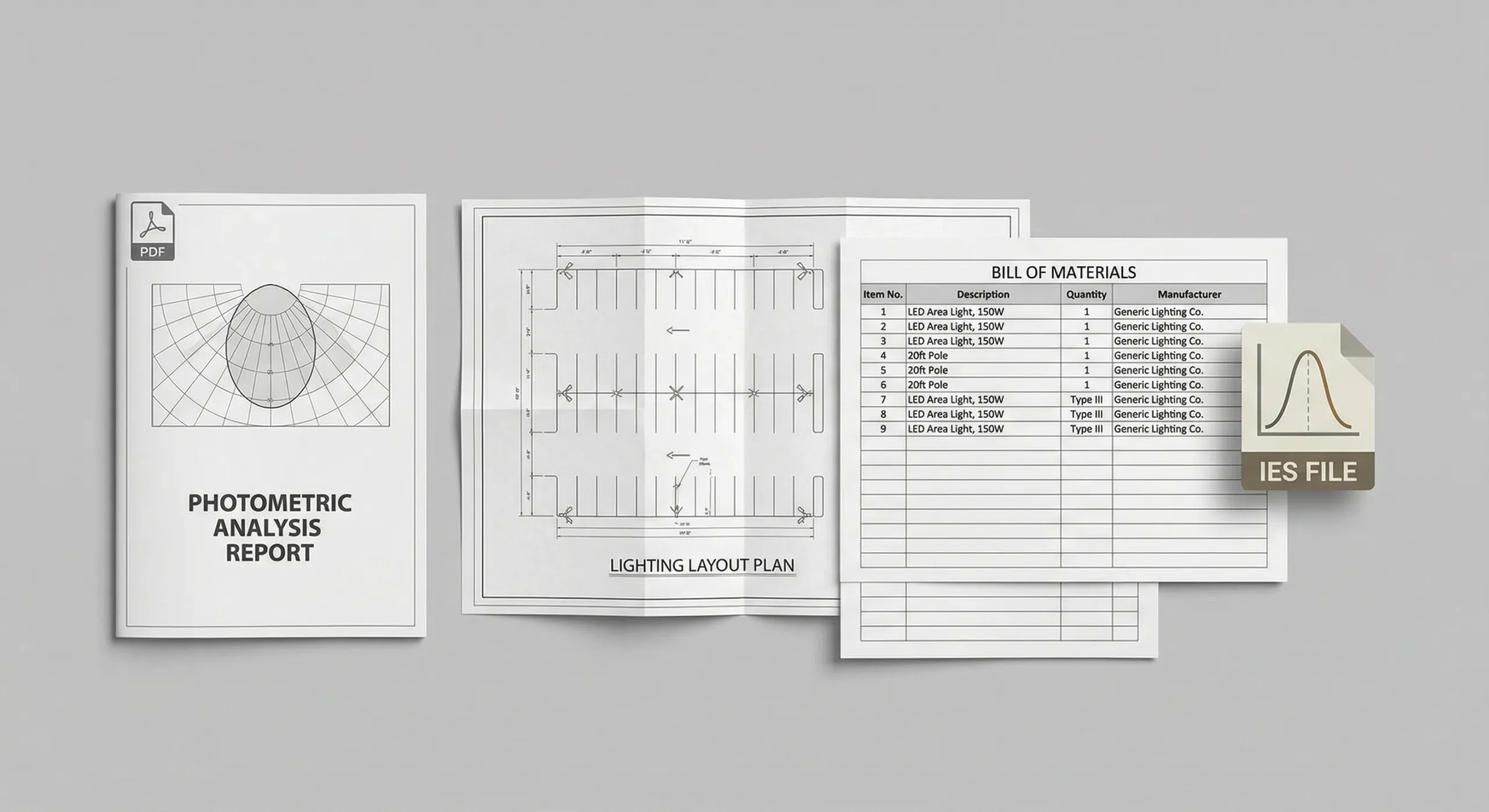
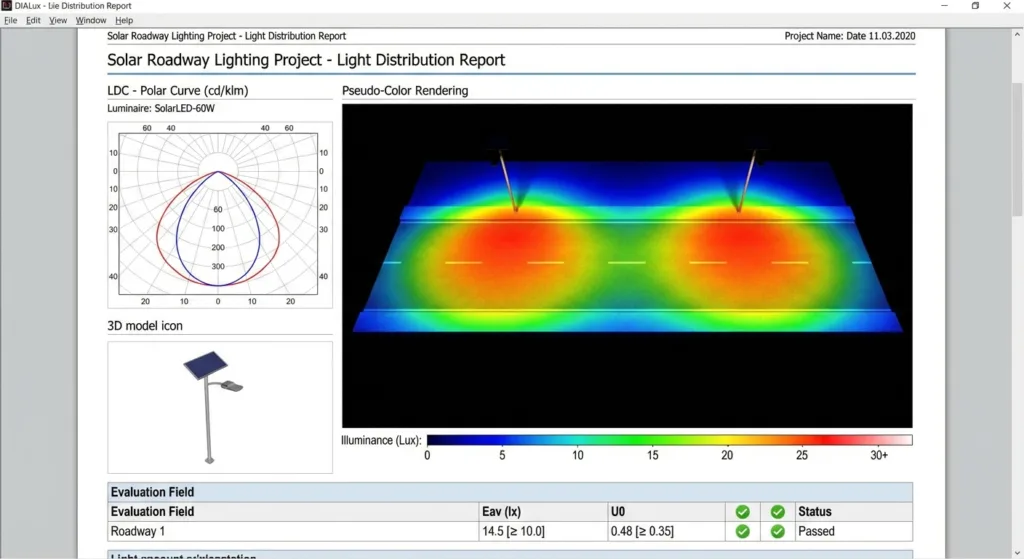
- Photometric layout (DIALux/AGi32): Avg/Min/Uniformity results and coverage map
- Fixture + pole recommendation: mounting height, spacing, and installation notes
- Bill of materials: lights, poles, brackets, anchors/foundation kit suggestions
- Spill & glare control guidance: distribution and aiming notes for site boundaries
Solar Parking Lot Lights With Pole: What Does One Set Include?
For a commercial project, “with pole” should describe a defined lighting station, not just a fixture photographed on a pole. Count the luminaires, supports and solar-energy assemblies separately. Then distinguish an equipment package from an installed system: a supplied pole does not automatically include the foundation, lifting or site work.
Compare the buying unit before the price
| Purchase scope | Define the equipment being bought | Do not assume it includes |
|---|---|---|
| Solar fixture or replacement head | The exact fixture and mounting adapter. For an integrated unit, identify the built-in components; for a separated system, list the PV, storage and controller separately. | A new pole, a suitable existing support, foundation work or installation labor. |
| Solar lighting package with pole | The agreed fixture, PV, battery, controller, pole, arm, brackets and interconnecting components. Identify which parts are integrated and which arrive separately. | Excavation, concrete, lifting, local approvals or commissioning unless the quotation explicitly includes them. |
| Installed solar parking-lot system | The defined equipment package plus the site work and commissioning expressly included in the contract. | Responsibility for surveys, underground-service checks, foundation design, approvals and reinstatement unless assigned in writing. |
Twelve lighting heads do not necessarily mean twelve poles
A supplier can count a “set” by luminaire or by pole-mounted station. The following quantity illustration shows why two proposals cannot be reconciled from the headline light count alone. Neither arrangement is a recommended layout.
| Quantity to reconcile | Illustration A | Illustration B |
|---|---|---|
| Pole-mounted stations | 6 | 12 |
| Lighting heads per station | 2 | 1 |
| Total lighting heads | 6 × 2 = 12 | 12 × 1 = 12 |
| PV, battery and controller quantities | Itemize the actual shared or independent assemblies. | Itemize the actual shared or independent assemblies. |
Both illustrations have 12 heads, but six mounting positions and twelve mounting positions create different design choices. A shared energy assembly must account for the loads it actually supplies; do not silently budget one battery or one PV panel per head. Reconcile the pole schedule, luminaire schedule and energy-system BOM against the same drawing before comparing the totals.
When the project will reuse existing poles
Keep “existing pole” as a conditional scope item until its condition, mounting interface, complete proposed loading and foundation have been reviewed. Adding solar equipment is not merely replacing an LED head. Check the proposed panel position and service access as well as the light distribution; a visually compatible bracket does not establish structural suitability.
The DOE parking-lot lighting guide discusses retaining suitable poles and locations, but also explains why a one-for-one replacement may not satisfy the new lighting design. Use it as design-method background, not as the current local approval standard. Keep the supply boundary separate from the photometric and solar-energy acceptance checks elsewhere on this page.
Typical Parking Lot Projects We Support
Solar parking lot lighting is commonly used in:
- Retail and shopping-center parking areas
- Warehouse and logistics yards
- Factory and industrial compounds
- Schools, campuses, and institutions
- Residential and mixed-use developments
- Remote sites where utility extension is expensive
Solar Parking Lot Lighting in Mexico City: A Split-System Reference
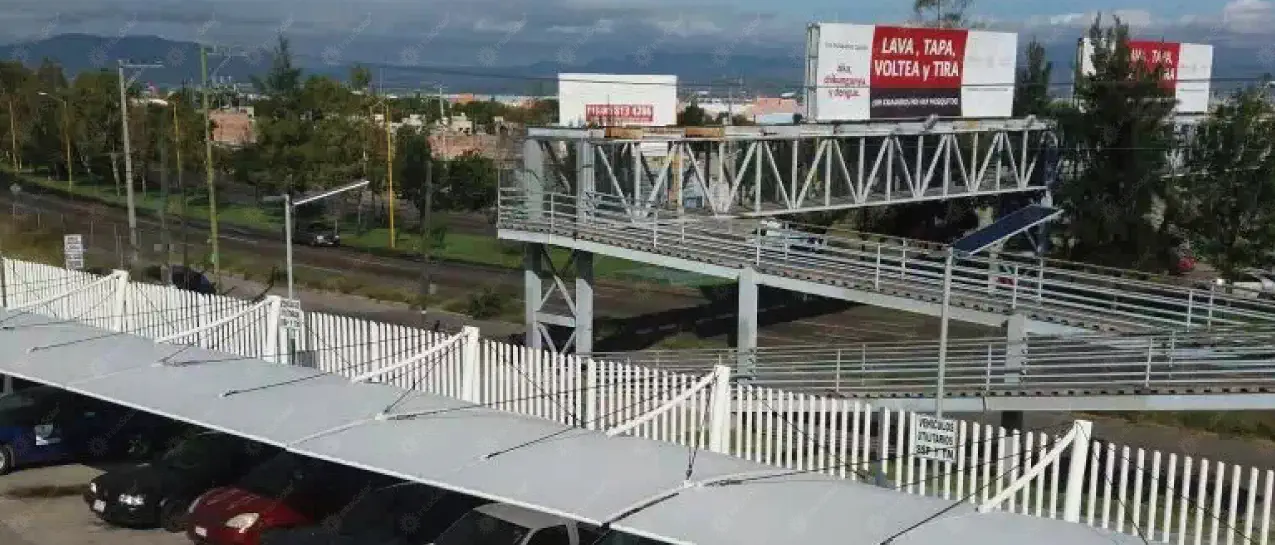
- Published project scope
- 28 solar street light sets for an urban parking lot in Mexico City, completed in 2023.
- Recorded system
- MARS split-type solar street lights with gel-battery storage. This is the project’s historical configuration, not a specification for every parking lot.
- Why compare a split system?
- A parking project need not start with an all-in-one fixture. Compare a split arrangement when panel position, component access and the installation scope need separate consideration. Approve the layout and energy budget for the actual site before fixing the equipment list.
Open the Mexico City parking project, configuration record and full photo gallery
The photographs are installation references. They do not demonstrate a specified foot-candle level, uniformity, glare limit or backup-night result; those require project-specific design and acceptance evidence.
Each project has different requirements for pole height, boundary spill control, overnight runtime, and maintenance access. That is why layout-based design is more reliable than choosing by wattage alone.
How to Select the Right Solar Parking Lot Lights
Choosing the right solar parking lot lighting system is not just about wattage. A reliable design starts with the lighting target, site layout, operating profile, and the worst-month solar condition for the project location. The goal is to deliver safe visibility, stable overnight performance, and a layout that can actually be installed and maintained in the field.
Before selecting a model, define the required light level and uniformity for the parking area, pedestrian paths, entrances, and high-traffic zones. From there, the design team should determine pole height, spacing, optic distribution, battery autonomy, and control strategy. A good supplier should explain the trade-offs clearly instead of pushing one standard configuration for every project. If you are weighing pole-mounted options for the lot, our solar pole lights guide compares commercial-grade vertical-PV systems against consumer fixtures.
- Lighting target: Confirm the required average illuminance and uniformity for the lot, drive aisles, and pedestrian circulation areas.
- Pole height and spacing: Match pole height and pole spacing to the site geometry instead of forcing a generic layout.
- Optics and distribution: Select the right beam pattern to reduce dark zones, glare, and wasted spill light beyond the property boundary.
- Battery autonomy: Size the battery based on the operating schedule and the weakest solar month, not just ideal summer conditions.
- Control mode: Decide between dusk-to-dawn operation, timed dimming, or motion-based dimming depending on traffic patterns.
- Installation conditions: Consider wind load, foundation conditions, corrosion environment, and maintenance access before finalizing the system.
For commercial projects, the best approach is to evaluate the system as a complete engineering package: luminaire, optics, PV module, battery, controller, pole interface, and site layout. This is also why a parking lot lighting design strategy should be reviewed before comparing product models.
What to Send for a Faster Proposal
To prepare a useful proposal, please send:
- Site plan or parking layout
- Target light level if available
- Pole height preference or site restrictions
- Operating profile such as dusk-to-dawn or dimming schedule
- Project country and installation environment
- Whether you need poles, brackets, foundations, or only luminaires
With these inputs, the proposal can be aligned more closely with real project conditions.
How to Evaluate a Parking Lot Lighting Manufacturer
Not all suppliers approach parking lot lighting as an engineering problem. Some only provide a fixture data sheet, while others can support the full decision process with layout work, battery sizing logic, installation details, and after-sales documentation. For commercial and municipal projects, that difference matters.
When comparing manufacturers, focus on whether they can explain design assumptions, document performance, and support execution after the quotation stage. A strong supplier should be able to show how the proposed system works on your specific site, not just send a generic catalog.
- Photometric support: Can they provide IES files and a real parking lot lighting layout instead of only a brochure image?
- System sizing logic: Can they explain how the PV module and battery were sized for autonomy and local solar conditions?
- Optics and layout understanding: Can they discuss beam distribution, glare control, pole spacing, and spill light trade-offs?
- Installation detail: Can they define pole interfaces, brackets, anchor requirements, and foundation coordination clearly?
- Project evidence: Can they show relevant project references, application photos, or case studies for similar sites?
- Warranty and support: Inlux Solar’s standard warranty is 5 years. Check the written offer for covered components and exclusions, together with the BOM, installation notes and after-sales responsibilities.
If a supplier cannot explain the layout logic, battery basis, or installation assumptions, the quotation is incomplete no matter how attractive the headline specification looks.
Get My Free Photometric Layout →
Pole Height & Spacing (US-Friendly Guidance)
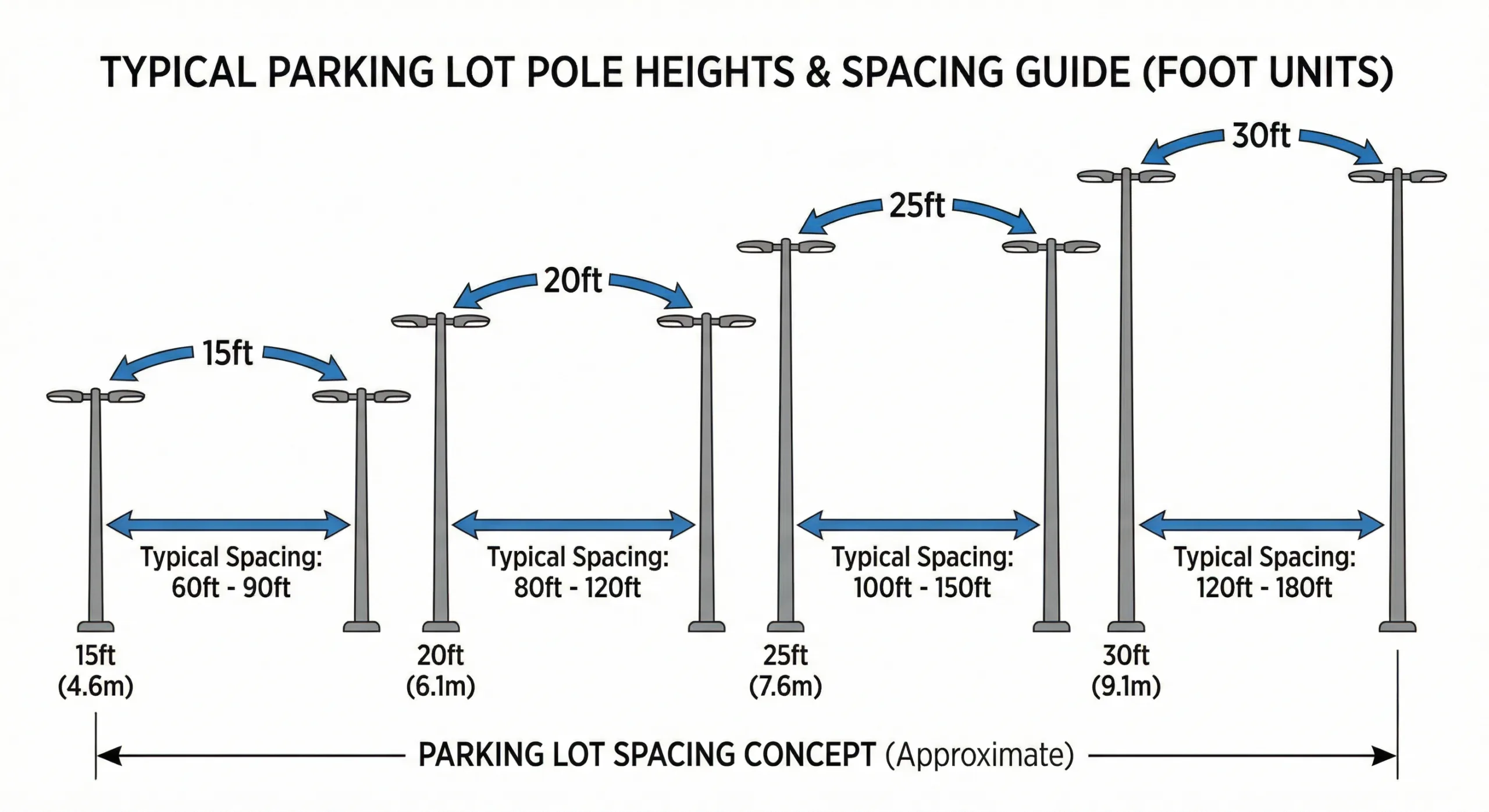
Parking lots are commonly designed in feet and foot-candles. We can deliver layouts in ft + fc (and include metric equivalents). A safe workflow is: target fc → select distribution → choose pole height → iterate spacing until uniformity is met.
- Typical commercial pole heights (common packages): 15 ft, 20 ft, 25 ft, 30 ft (site dependent)
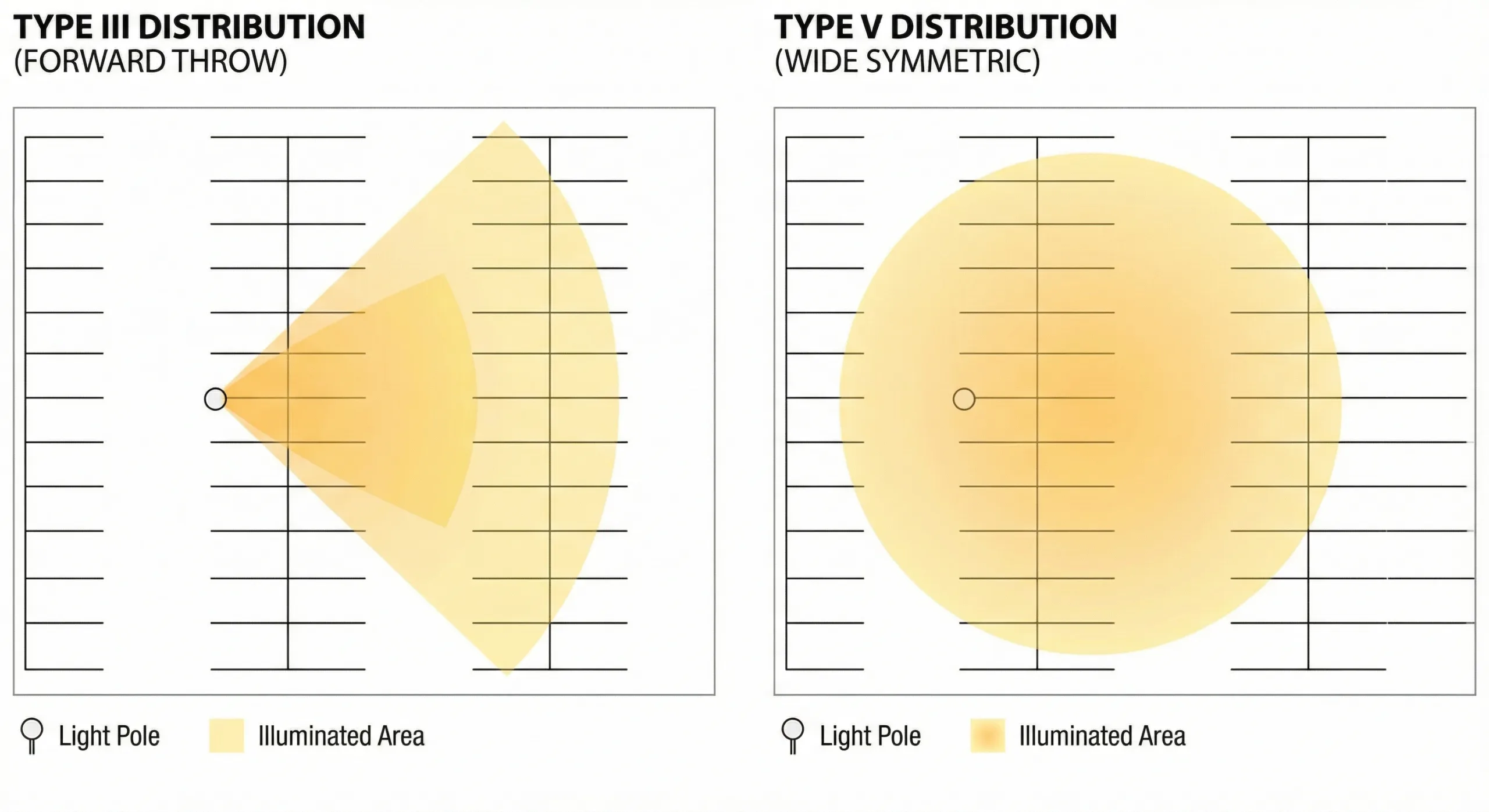
- What changes spacing most: optics (Type III/IV/V), mounting height, and required uniformity
- Tip: if you must reduce pole count, you usually need higher mounting height and a wider distribution—then validate glare and boundary spill in the report
Buyer’s Checklist Before Requesting a Quote
A faster and more accurate quotation starts with better input. If you can provide the items below, the supplier can usually prepare a more useful photometric layout, BOM, and preliminary recommendation with fewer revisions.
- Site plan or marked layout: A drawing, marked Google map, CAD file, or hand sketch showing the parking area.
- Pole height preference: If you already have a target mounting height or existing pole standard, include it.
- Lighting requirement: Share any target in lux or foot-candles, or note whether the project must follow a local standard.
- Operating profile: Specify full-night operation, dimming schedule, motion response, or part-night use.
- Power condition: Confirm whether the site is fully off-grid, grid-optional, or part of a hybrid lighting plan.
- Climate and environment: Include project location, rainy season concerns, dust, salt air, snow, or high wind conditions.
- Foundation and installation constraints: Mention any restrictions related to trenching, concrete bases, underground services, or access equipment.
- Project timing: Provide the expected tender date, delivery window, or installation deadline if available.
If you send us a site plan and basic operating requirements, we can usually return a preliminary lighting layout, product recommendation, and bill of materials for review.
Get My Free Photometric Layout & BOM
Compare Solar Parking Lot Lights by System Fit
The best solar parking lot lights are the ones that meet the approved layout and night-time lighting requirement at the proposed mounting positions. Use this shortlist to choose what to evaluate—not to select a model from the size of the property or a “best seller” label.
| Parking-lot candidate | Why consider it? | What can rule it out? | Product route |
|---|---|---|---|
| BISON (All-in-Two) | Compact lamp head with a separate solar panel; a starting point for small-to-medium output needs. | The matched layout or energy assessment cannot support the required service at each lighting point. A large property does not make this a heavy-duty model. | Review BISON |
| GALAXY (All-in-One) | Cost-optimized integrated arrangement where a compact installation suits the project. | The selected variant’s panel and light-module adjustment cannot satisfy both solar exposure and the required light distribution. | Review GALAXY |
| ALIEN (All-in-One) | Integrated public-space option to assess against the parking and pedestrian layout. | The required base lighting depends on an unapproved motion-dimming assumption. Confirm the actual control option rather than treating “security” as a specification. | Review ALIEN |
| MARS (Split Type) | A separated-component alternative when the panel and battery locations need their own installation and service plan. | The proposed component locations, cable routes or maintenance access cannot be accommodated. Do not force an integrated model into that constraint. | Review MARS |
If none of these candidates meets the approved lighting and energy design, revise the configuration or system architecture with the engineering team. Do not lower the required lighting service just to keep a preferred model. Use the existing proposal form below for the selected scope.
Compact All-in-Two candidate
Start with small-to-medium output needs, not the size of the property.

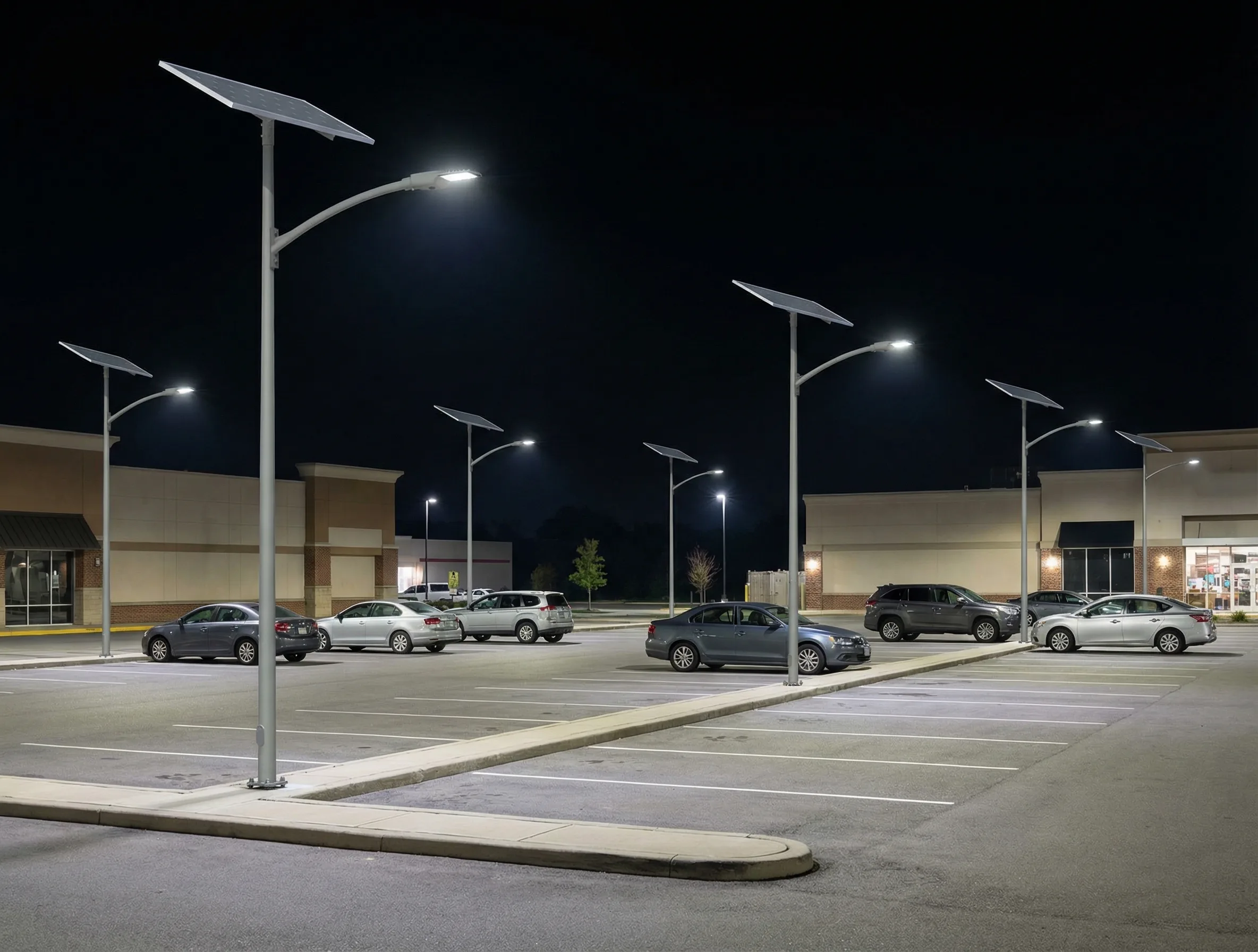
BISON Series (All-in-Two)
For larger lots, compare the proposed all-in-two configuration against the mounting layout, nightly load and worst-month solar conditions. Confirm the backup-night target and maintenance access for the selected system; the series name alone does not guarantee winter autonomy.
Cost-optimized All-in-One candidate
Check the selected panel and light-module adjustment before fixing pole positions.
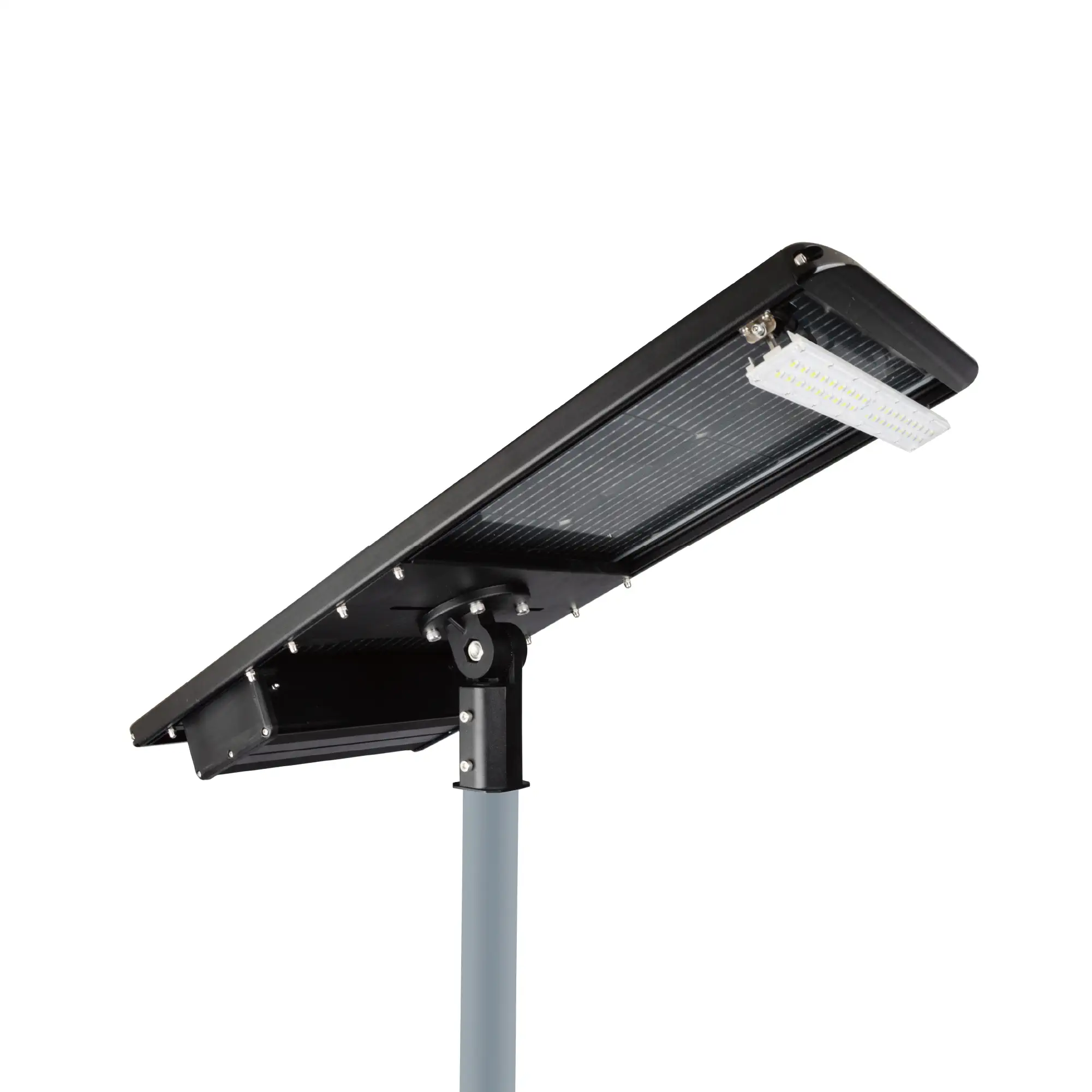
GALAXY Series (All-in-One)
For compact all-in-one installations, check whether the proposed mounting position supports both the lighting layout and suitable panel exposure. Confirm the exact GALAXY panel arrangement, available options and installation scope in the quotation rather than assuming one feature set or installation time for every configuration.
Integrated public-space candidate
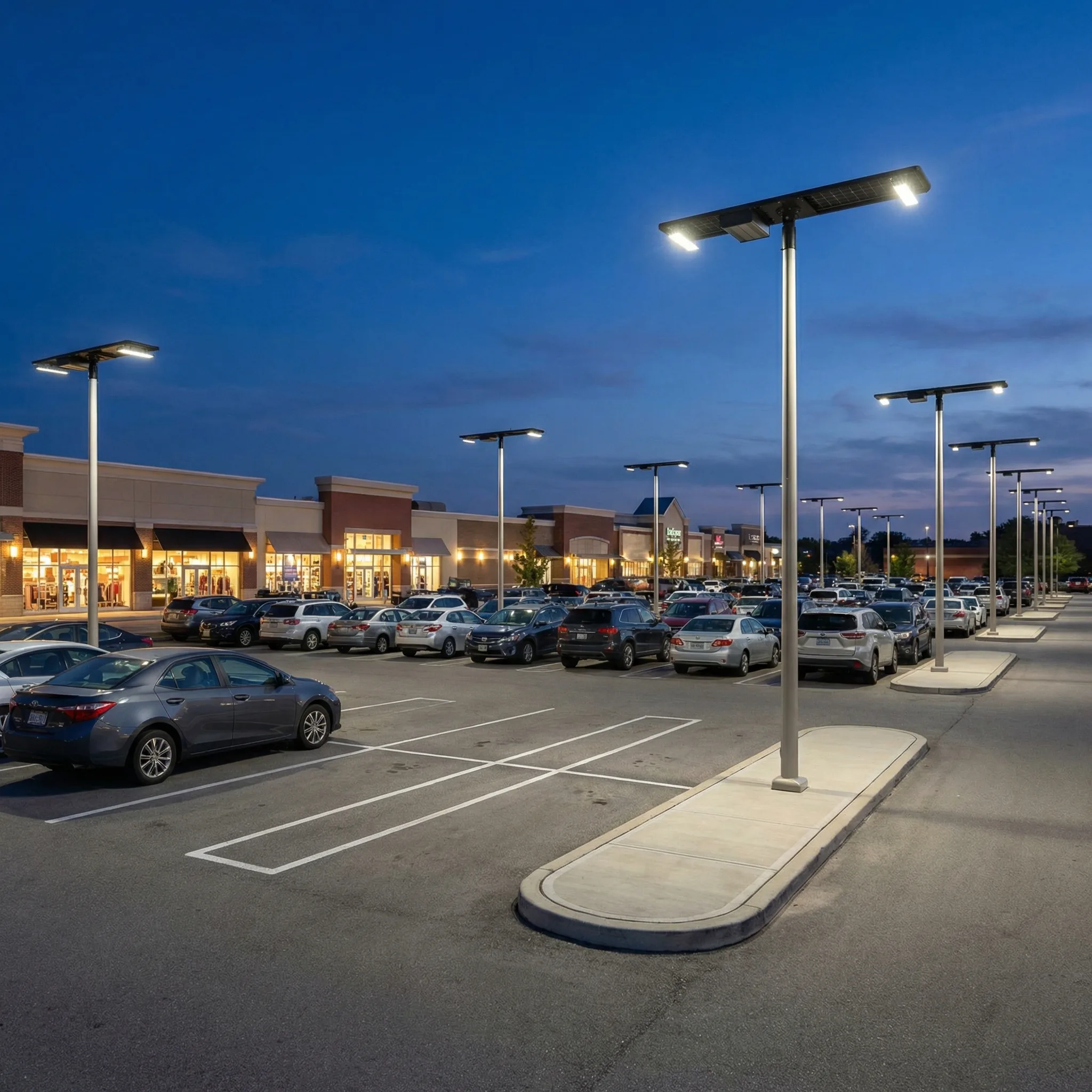
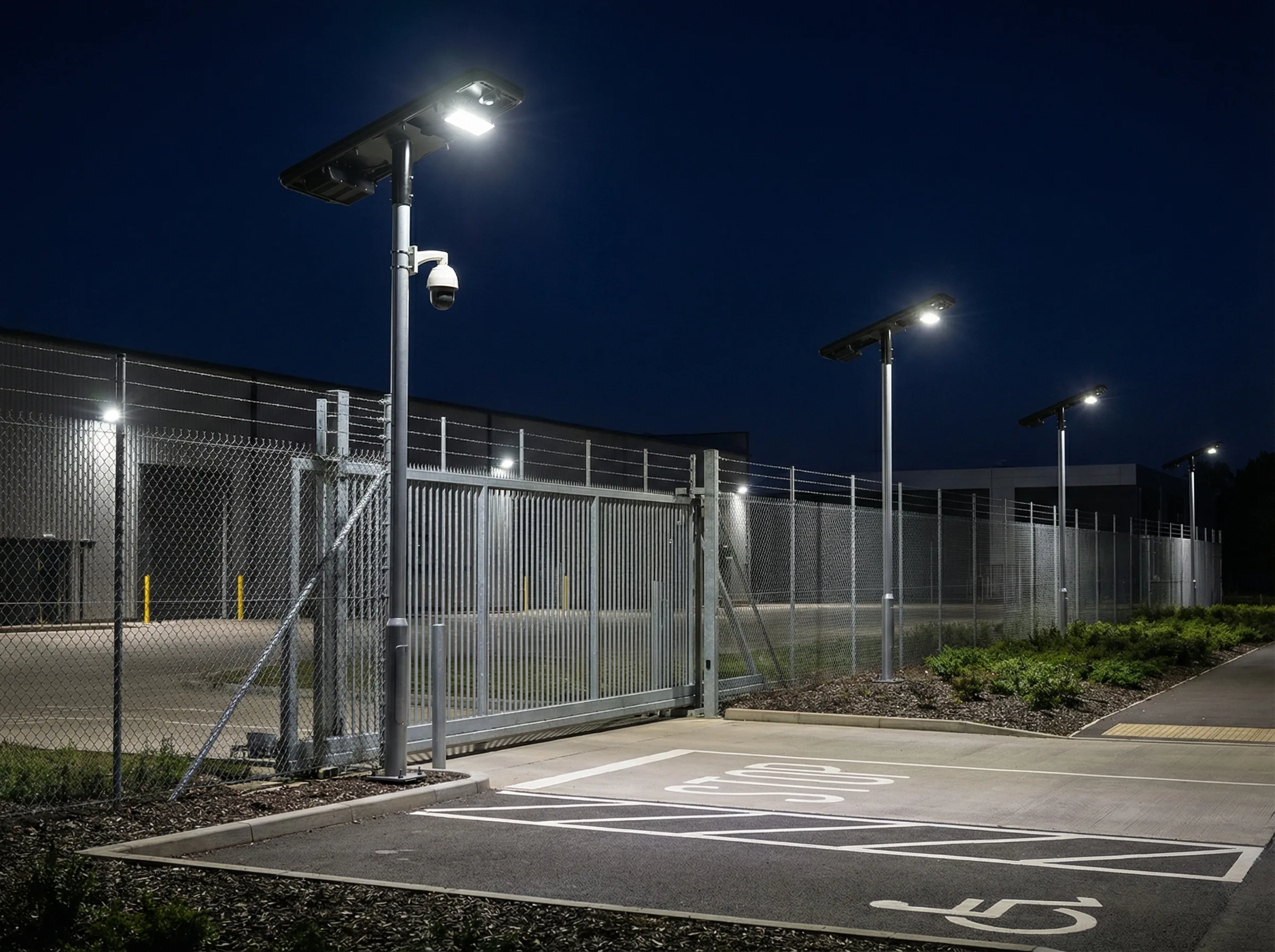
Agree the security lighting requirement before choosing motion-based dimming.

ALIEN Series
For lower-activity zones, specify the required occupied and unoccupied lighting scenes, trigger behaviour and hold time. Confirm the selected ALIEN control configuration and energy design; motion sensing alone does not guarantee all-night operation.
Optics for Parking Lots
Tailored Solutions for Every Parking Facility
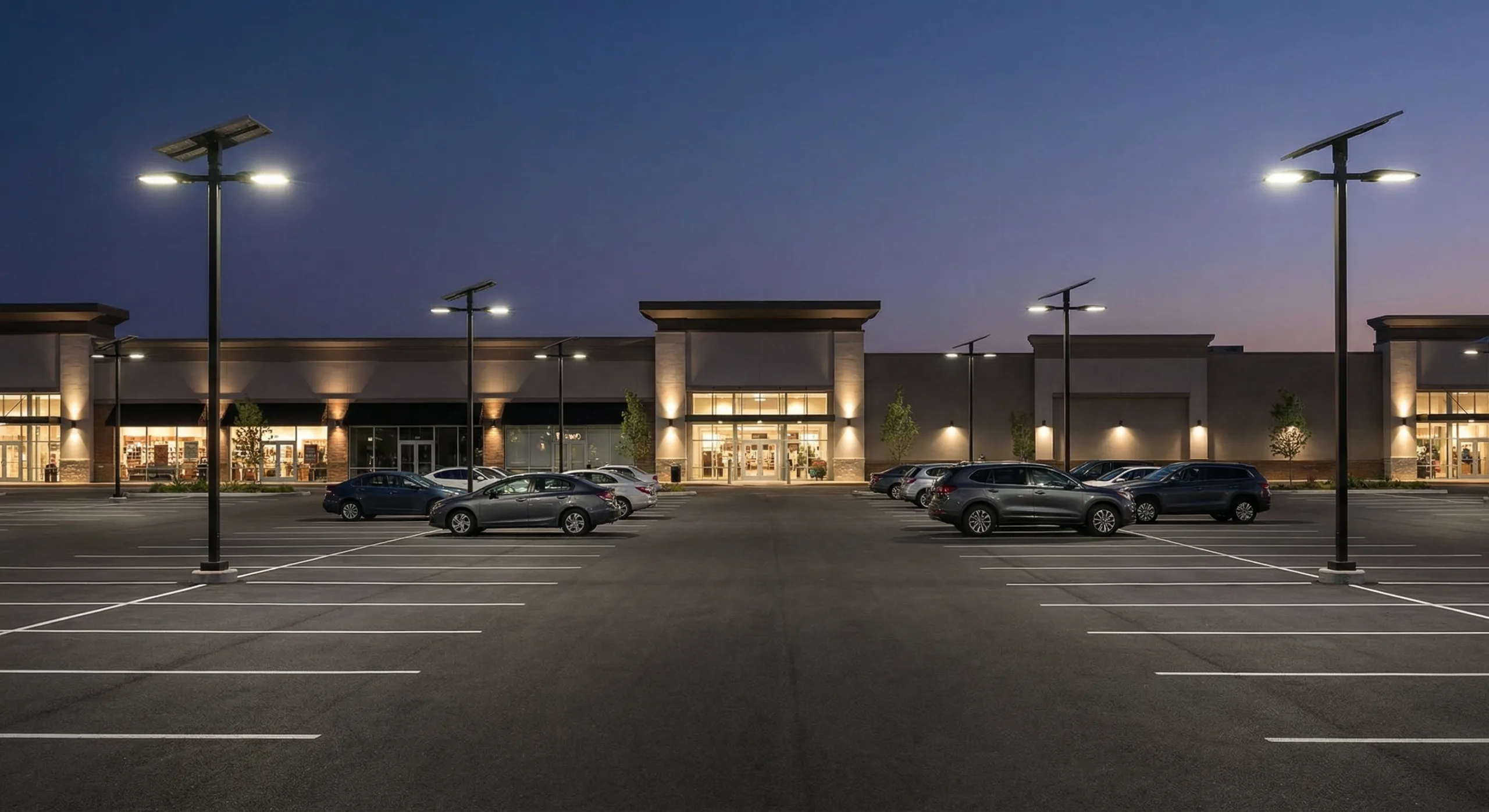
Retail & Shopping Malls
Increase shopper safety and extend business hours with high-lumen output. Our GALAXY Series is aesthetically pleasing for customer-facing areas.
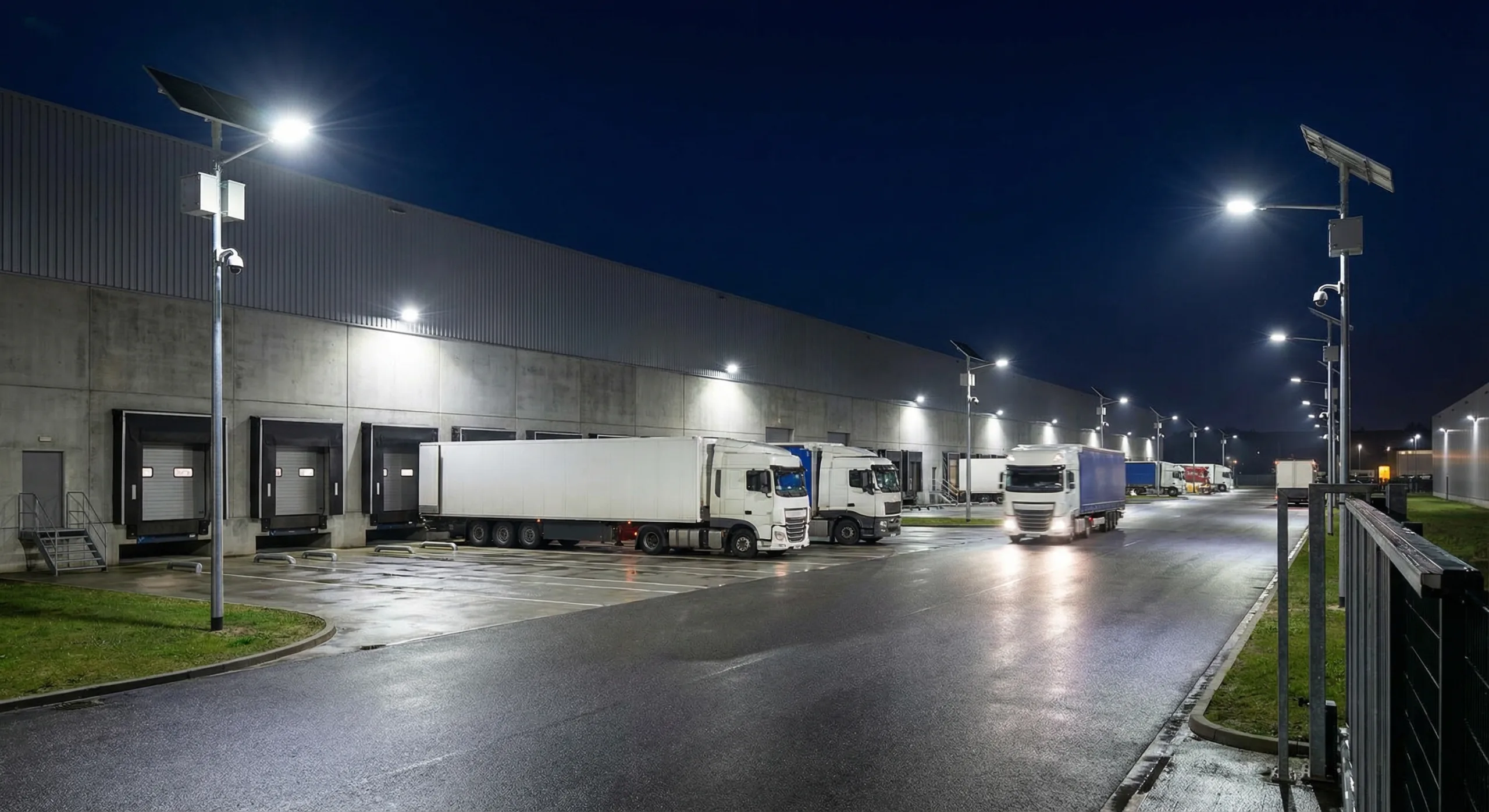
Industrial & Warehouses
For shipping yards and factory perimeters, define the required base level, trigger level, hold time and return behavior in the control schedule. A BISON configuration should be confirmed against the quoted controller and operating profile rather than assumed from the product family name.
Send Your Parking Lot Plan for a Lighting Proposal
Upload your lot plan and tell us the project city, operating hours and any fixed pole locations or boundary restrictions. If you are still comparing solar with grid lighting, say so in the message.
FAQ — Solar Parking Lot Lights
How many foot-candles do I need for a parking lot?
There is no single universal foot-candle target for every parking lot. Start with the project specification and local authority requirements, then state average, minimum and vertical illuminance, the uniformity calculation, light-loss assumptions, glare limits and property-line spill criteria in the photometric brief.
Why do “watts” and “lumens per watt” fail as selection methods?
Because a parking lot is a geometry problem. Optics, pole height, spacing, and aiming determine uniformity, glare, and boundary spill. Two fixtures with similar wattage can produce very different fc results on the pavement.
Do solar parking lot lights work in winter or cloudy regions?
They can—if sized correctly. Reliable solar lighting is designed using local solar availability (worst-month), the longest night operating profile, and conservative assumptions, then validated with a photometric + energy plan. For sites that cannot tolerate any dark nights, a solar street light with pole and battery hybrid kit adds automatic AC-grid backup.
How many nights of backup (autonomy) should I target?
Autonomy depends on battery size and your operating profile. Many systems use scheduled dimming and/or motion-dim to preserve energy while maintaining safety lighting all night. Model specifications list target rainy-day backup by mode.
All-in-one vs all-in-two: which is better for parking lots?
All-in-one favors fast installation and cleaner integration. All-in-two offers more flexibility in PV sizing and mounting angles, which can help in demanding climates and higher-output designs. Choose based on layout results and the energy budget.
What optics should I use (Type III / IV / V)?
Many parking lots use broader distributions to cover rectangular areas efficiently, but the right choice depends on pole locations, boundary spill constraints, and required uniformity. We select optics from photometrics and document results in the report.
How do you prevent glare and light trespass?
We control it through distribution choice, mounting height, aiming, and spacing. Boundary conditions are checked in the photometric plan so you can defend the design in approvals.
Do you provide photometric files and simulation reports?
Yes. We provide a photometric layout/report and BOM so you can verify lighting performance before purchase.
Can I use motion sensors for parking lots?
Yes—motion-dim is often used to protect autonomy while maintaining a safety baseline. For security zones, sensors can keep higher output when activity is detected.
What environmental ratings should I insist on for commercial sites?
For outdoor commercial use, confirm the enclosure rating (IP), impact rating (IK), operating temperature range, corrosion finish, and wind resistance suitable for your region. Verify ratings on the specific model datasheet.
What information do you need to quote correctly?
Lot dimensions/site plan, target fc/lux + uniformity, pole height limits, operating profile, project location, and any boundary/spill constraints.