







Split Type Solar Street Light
Split type solar street lights mount the solar panel, battery, controller, and LED fixture separately, letting you orient the PV for maximum yield, scale battery capacity, and service parts easily. This architecture is ideal for higher wattages, challenging latitudes, or sites that demand specific panel angles and maintenance access. This collection includes three families: MARS with gel batteries for robust, cost-effective storage; APOLLO with LiFePO4 for long cycle life and lightweight integration; and VESTA. Compare each model’s published component layout before selecting a configuration. Pair high-efficacy 5050 LEDs with roadway optics (Type II/III) and adaptive controls to achieve uniform coverage and nightly autonomy across roads, pathways, parks, and industrial areas.Share your layout, target lighting levels and autonomy days with us, and our engineers will design a split type solar street lighting solution tailored to your roads, climate and maintenance strategy.
Explore Our Split Type Solar Street Light Types
Higher charging efficiency, brighter output, project-proven reliability.

APOLLO Lithium Battery
Split-type system with LiFePO4 storage, 5050 LEDs and optional controls. Review the component arrangement and project configuration for roads, pathways and parking areas. View APOLLO configurations.
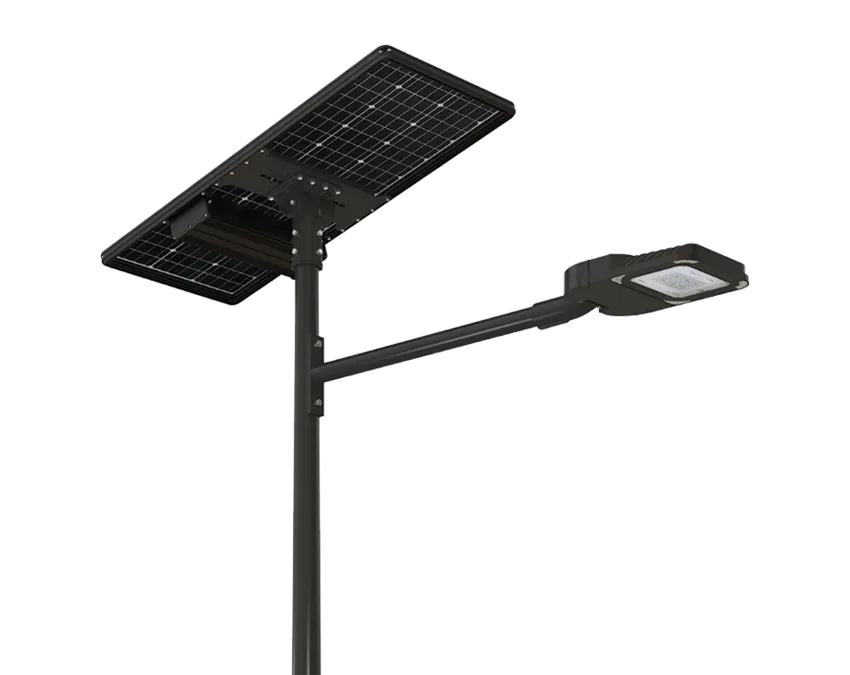
VESTA Lithium Battery
VESTA is a lithium-battery option within this range. Review its product-specific component layout, mounting arrangement and available controls before choosing a configuration. View VESTA configurations.

MARS Gel Battery
Split-type system using gel batteries, with a separately positioned solar panel and project-specific battery enclosure. Compare service access and the installation layout before ordering. View MARS configurations.
Engineering Guide: How Split Type Solar Street Lights Work and When to Use Them
Split type solar street lights separate the PV panel, battery, controller and LED luminaire into distinct components connected by cables. This architecture gives you maximum flexibility in panel orientation, battery capacity, mounting positions and maintenance access. It is especially valuable for higher-wattage systems, challenging latitudes, complex road layouts and sites where panel angle and shading must be carefully controlled.
How a split type solar street light works
In a split type system, one or more PV panels are mounted on dedicated brackets or structures with the correct tilt and azimuth for local solar conditions. The panels feed a charge controller, which manages energy flow into the battery bank—either gel or lithium, depending on the project. The battery and controller are typically housed in a ground-level or pole-mounted enclosure. From there, DC power is delivered to the LED street light head via properly sized cables. At dusk, the controller turns the luminaire on and follows a dimming schedule or sensor inputs throughout the night before switching off at dawn.
When split type is the right choice
Split type solar street lights are most suitable when your project requires higher power levels, larger battery capacity or very specific panel angles. Examples include wide highways, high-mast or long-span lighting, cold climates where batteries should be insulated, and sites with partial shading where panel placement must be optimized independently of the poles. In these scenarios, compact all-in-one systems may not have enough panel area or battery volume, and even all-in-two designs can be limiting. Split type layouts allow you to place panels and batteries where conditions are best, while positioning poles and luminaires purely according to lighting design.
Design considerations for split type systems
Because the components are separated, split type systems require careful engineering of cable runs, brackets, foundations and enclosures. Cable sizing must account for distance and voltage drop. Panel structures need to withstand local wind loads and keep tilt angles stable over time. Battery and controller enclosures should provide adequate ventilation, weather protection and security. Integration with smart controls—such as scheduled dimming, motion sensing or remote monitoring—should be planned from the beginning, including communication wiring or wireless gateways. When these factors are addressed systematically, split type solar street lights can deliver robust, long-term performance in demanding environments.
Compare Split-System Quotes at the Component Interfaces
A split type solar street light quotation can cover the equipment yet leave important installation items unpriced. Compare the proposed MARS, APOLLO or VESTA configuration against an installation drawing and an itemized supply list. Confirm the actual component positions for that model; do not assume that every split-series battery is mounted at ground level.
| Interface | Evidence to compare | Possible gap in the price |
|---|---|---|
| PV module to support structure | Panel arrangement, bracket drawing and project structural review | Panel supports, fixing hardware or structural review excluded |
| PV, storage, controller and lamp connections | Actual cable routes and lengths, connectors, protection and the designer’s electrical checks | A cable allowance that does not match the installed route |
| Battery and controller service access | Quoted enclosure position, environmental limits, access and replacement method | Enclosure, access equipment or replacement work outside the equipment price |
| Equipment to completed installation | Supply list matched to drawings, local works and commissioning responsibilities | Foundations, erection, testing or handover treated as included without agreement |
Longer cable routes and different enclosure locations can change the design and installed cost. Have the project designer confirm cable sizing, voltage drop and protection for the selected equipment; the table is a quotation review, not a wiring design. Resolve exclusions before comparing totals, then assess the same lighting schedule and autonomy requirement across the offers.
Split Type Solar Street Lights Video Gallery
Discover how our solar street lights provide sustainable, efficient, and reliable illumination through real-world applications and product demonstrations in these videos.
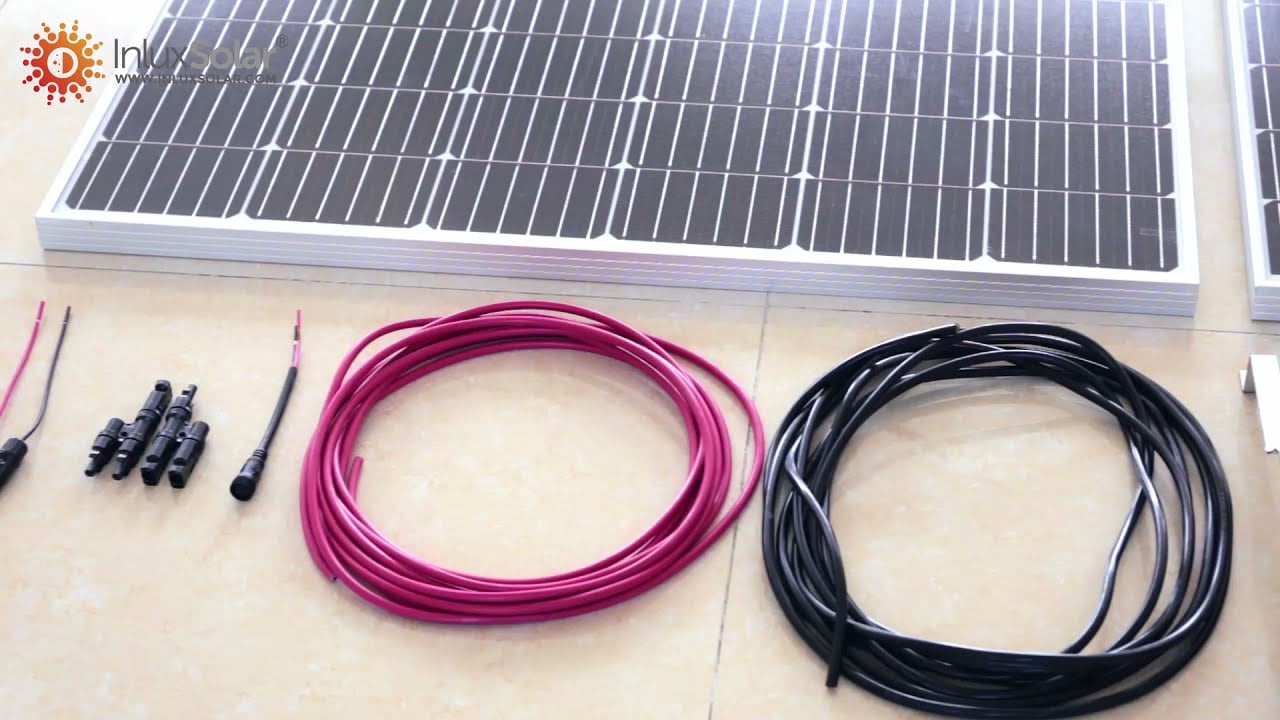
Quick and easy installation guide for INL LED 05, ensuring optimal performance and reliability.

Inlux Solar lit up Selangor highways with high-power solar street lights, winning government praise.
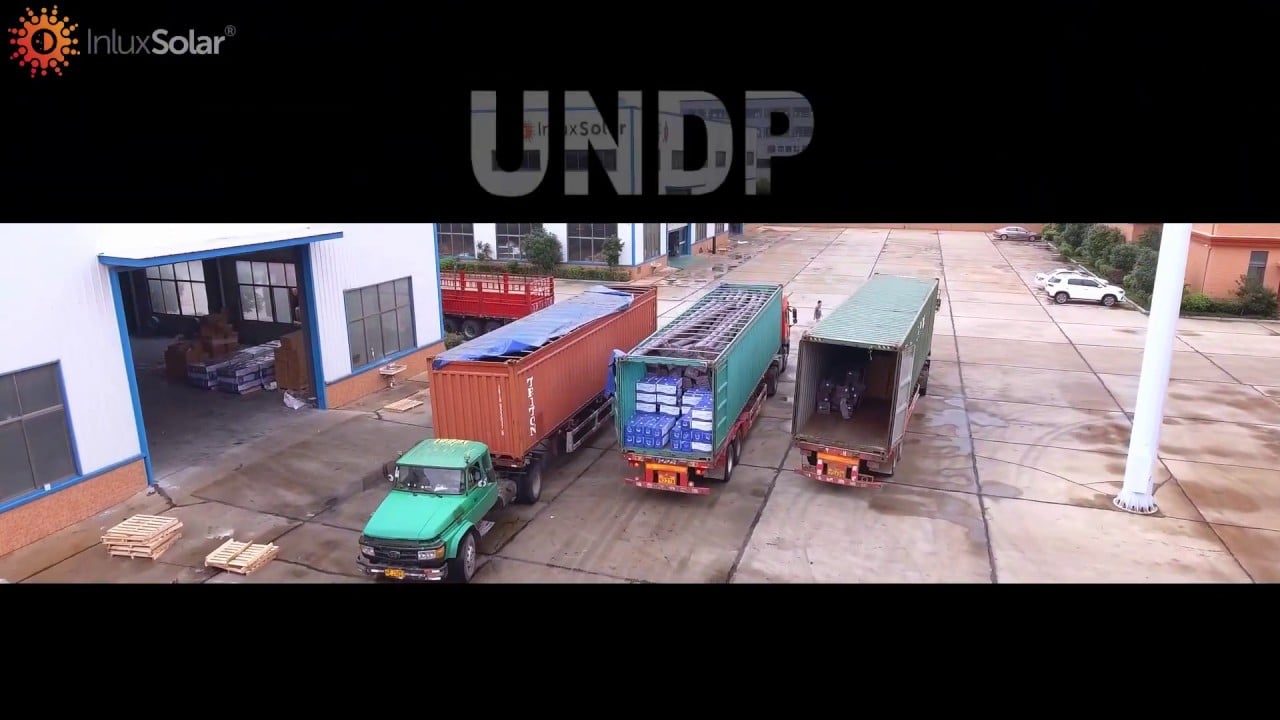
14 containers of solar street lights shipped for UNDP this week.
Trusted by UN agencies & World Bank.
Guides & Engineering Resources (Tender-Ready)
Split systems win when you need higher capacity, adjustable PV tilt, and robust worst-month performance. Use the resources below to validate assumptions and keep bids comparable.
Resource Centers
Most Relevant Guides for Split Type
- Worst-Month / Rainy Season Sizing — split systems are often chosen for this exact reason.
- Autonomy Days Calculation — compare usable Wh and runtime fairly.
- MPPT vs PWM — why controller efficiency matters in weak-sun scenarios.
Compare System Types
- All-in-One — compact and fast for standard constraints.
- All-in-Two — serviceable, flexible PV placement on the pole.
Request Tender-Ready Files (Datasheet + IES/LDT + Layout Proposal)
Download: Project Input Sheet (Tender-Ready)
Use this template to send sizing inputs and request IES/LDT + layout validation.