This Ivory Coast project applies an APOLLO split type solar street light configuration to industrial-zone lighting at a local solar power plant. It includes 14 sets and was completed in July 2026. For EPC buyers evaluating a similar site, the key RFQ questions are the pole layout, photometric design, solar sizing, battery specification and installation responsibility.
Lighting Context for an Industrial-Zone Site
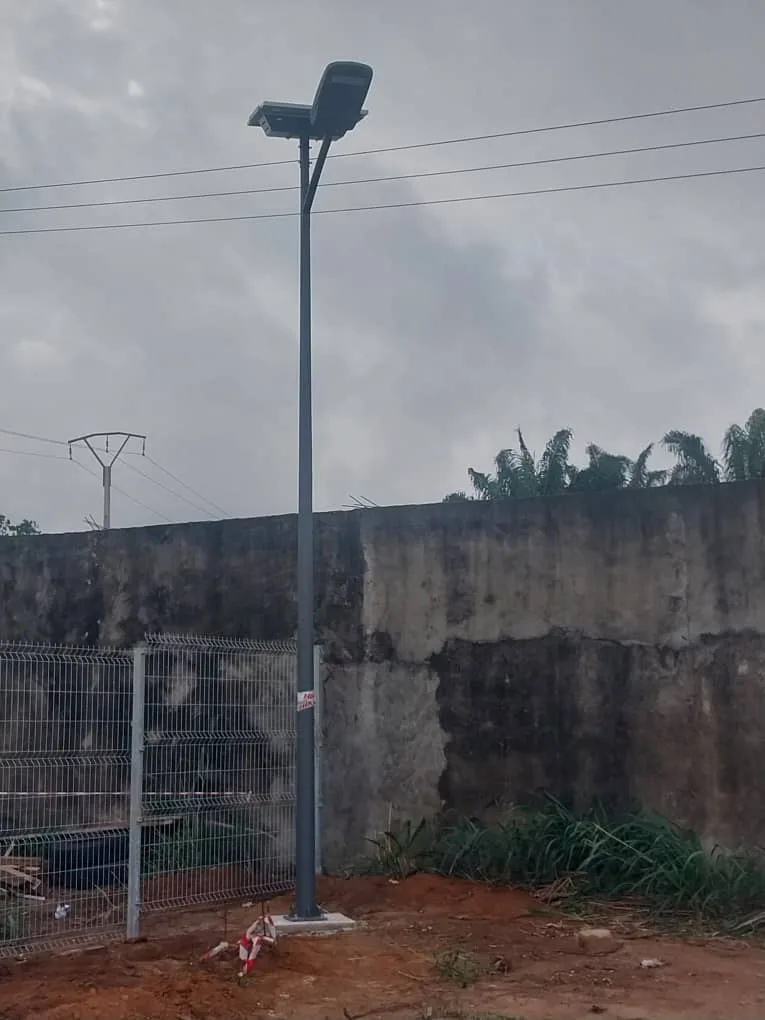
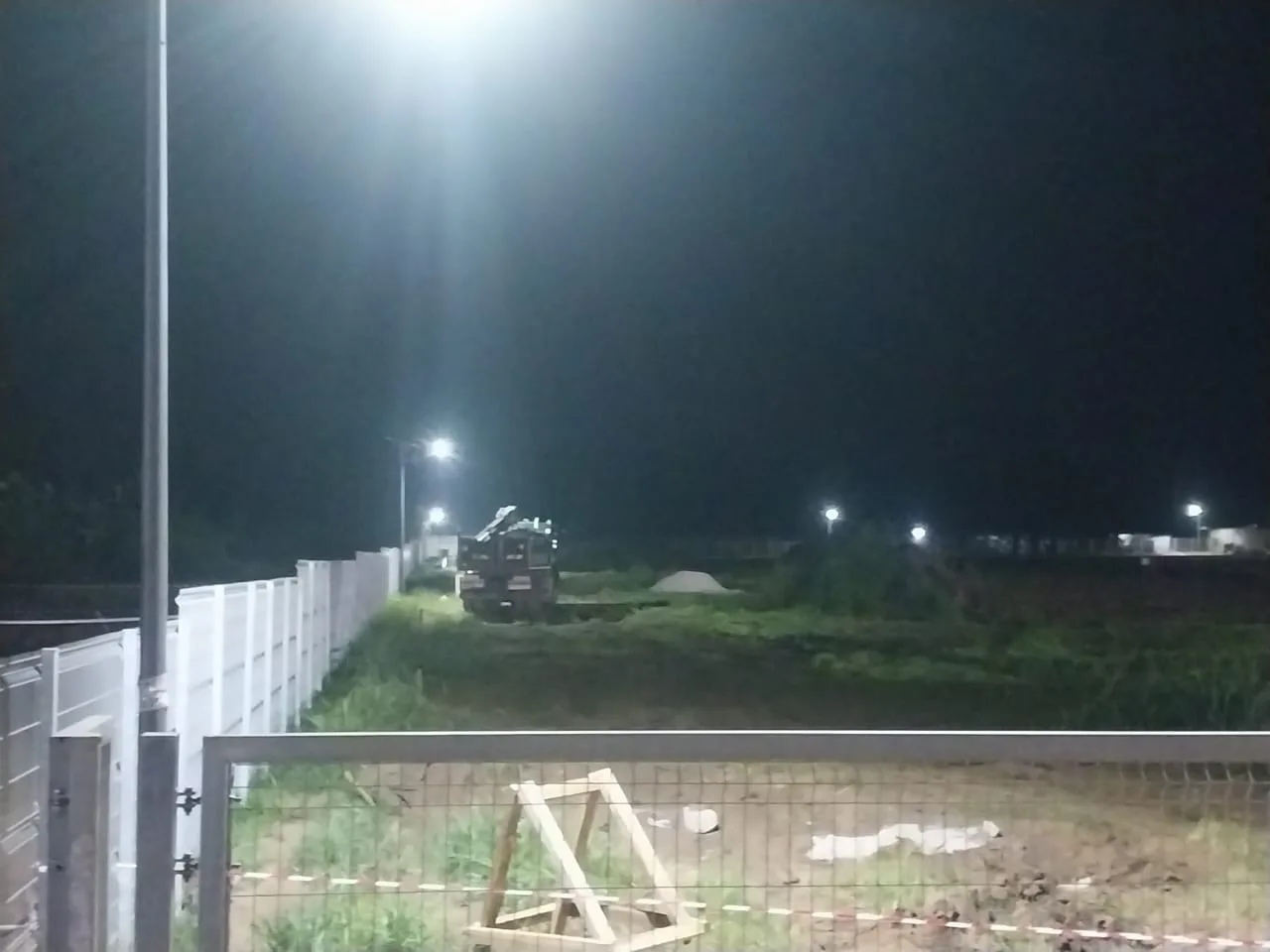
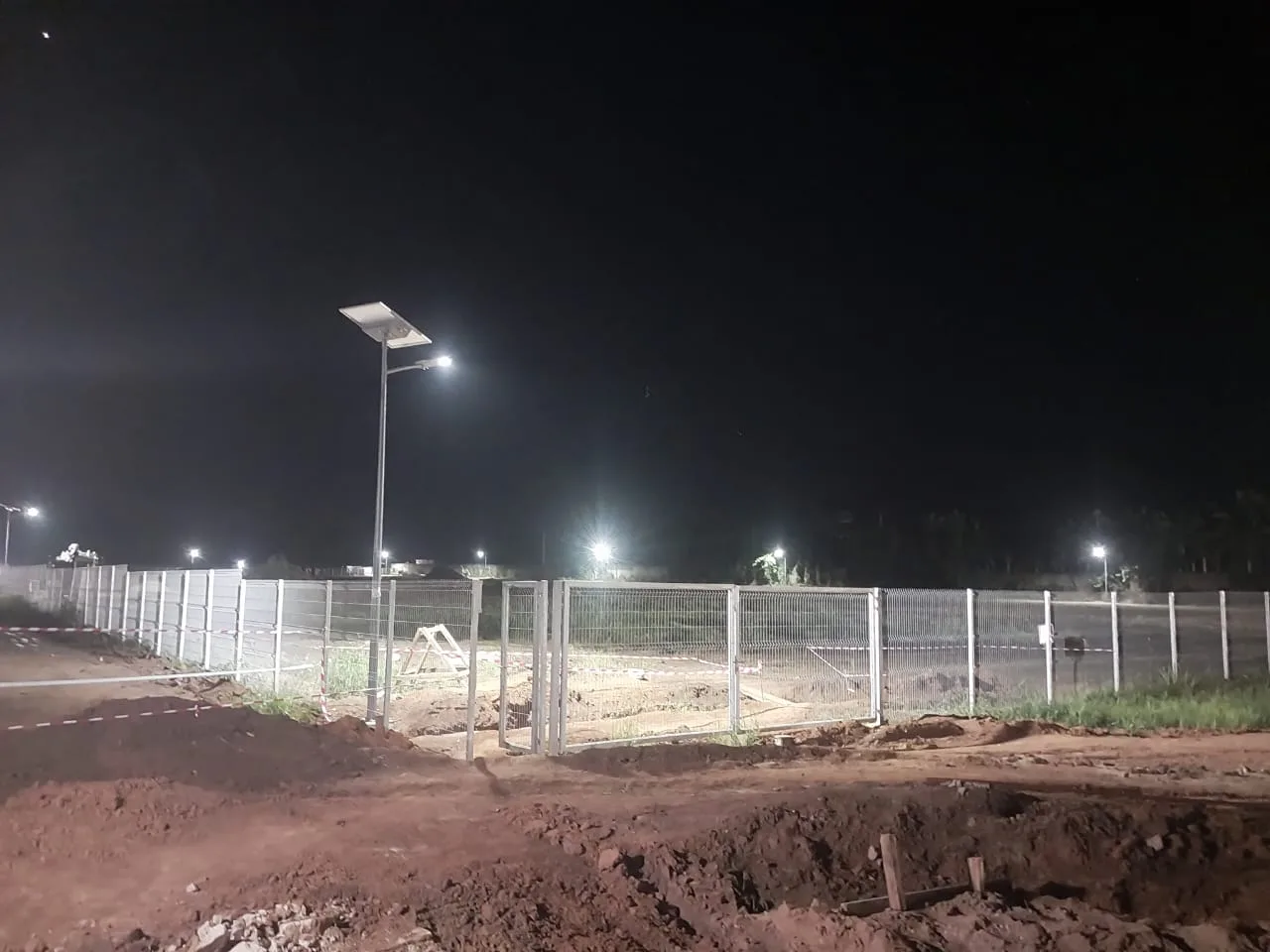
The project context combines an industrial-zone setting with a local solar power plant. The site photos show solar street lights along fenced areas, access routes and active ground works, including both daylight and nighttime views. These conditions make it important to define the lighting boundary, pole spacing, access requirements and maintenance route before the final equipment schedule is approved.
The page does not provide measured illuminance or a completed photometric report. Buyers should therefore treat the 14-set installation as a project reference and request a site-specific IES/DIALux design before making performance or lighting-class decisions.
Why the APOLLO Split Type Configuration Fits the Scope
The selected product is the APOLLO split type solar street light with a lithium battery configuration. The project details list 40W LED power at 6000K, a 50Ah / 25.6V battery specification and a stated 3,500-cycle life. The pole is listed as Q235, 5.8 m high and hot-dip galvanized, with IP66/IK09 also recorded for the lighting equipment.
These parameters create a clear starting point for comparing split type solar street lights, but they do not replace the final solar-panel sizing, charge-controller selection, autonomy calculation, foundation review or local installation documentation. Confirm the component scope of the IP/IK rating in the final datasheet rather than applying it automatically to the complete installed system.
Procurement Checks for Similar EPC Projects
- Map the 14-unit layout against the site boundary, access road, work areas, pole spacing and maintenance access.
- Request IES/DIALux files or an equivalent photometric package for the actual site geometry and required lighting class.
- Confirm solar-panel size, charge controller, operating profile and autonomy calculation; these project details do not provide those values.
- Verify the 50Ah / 25.6V / 3,500-cycle battery specification against the final lithium-battery datasheet and procurement documents.
- Review the Q235 pole, hot-dip galvanizing, foundation interface and local structural requirements together; no project-specific wind-load value is provided.
- Clarify the handover boundary between equipment supply, delivery, owner-side installation, commissioning, documentation and after-sales support.
Preparing the Next Solar Street Light RFQ
For a comparable EPC or industrial-zone project, Inlux Solar can support the technical package with product datasheets, IES/DIALux files, drawings, a bill of materials and QC documentation. A complete RFQ should include the site plan, pole spacing, required lighting class, soil or foundation information, local wind basis, battery-autonomy target and installation scope so the proposed system can be checked against the site rather than selected from wattage alone.
For broader system comparison, buyers can review solar street light solutions and use the solar street light guides to structure the next technical request.
Related Solar Lighting Solutions
The most relevant next step is to compare the APOLLO reference with other split type solar street light options, then confirm the site design, battery autonomy and installation scope through an RFQ. The collection and guide links above are intended to support that decision process, not to replace project-specific engineering.
FAQ
What product was used for this Ivory Coast project?
The project uses the APOLLO split type solar street light with a lithium battery configuration.
How many solar street light sets are included in the project?
The project includes 14 sets.
What LED configuration is listed for the project?
The listed LED configuration is 40W at a 6000K color temperature.
What pole specification is listed for the project?
The project details list a Q235 pole, 5.8 m high, with a hot-dip galvanized finish.
Does this case page provide a complete solar sizing and lighting design?
No. It lists a 50Ah / 25.6V lithium battery with a stated 3,500-cycle life, but buyers should confirm panel size, controller settings, autonomy, photometric design and measured lighting requirements for their site.
Project Location
Key Configurations
Applied Products
Project Gallery
About Me