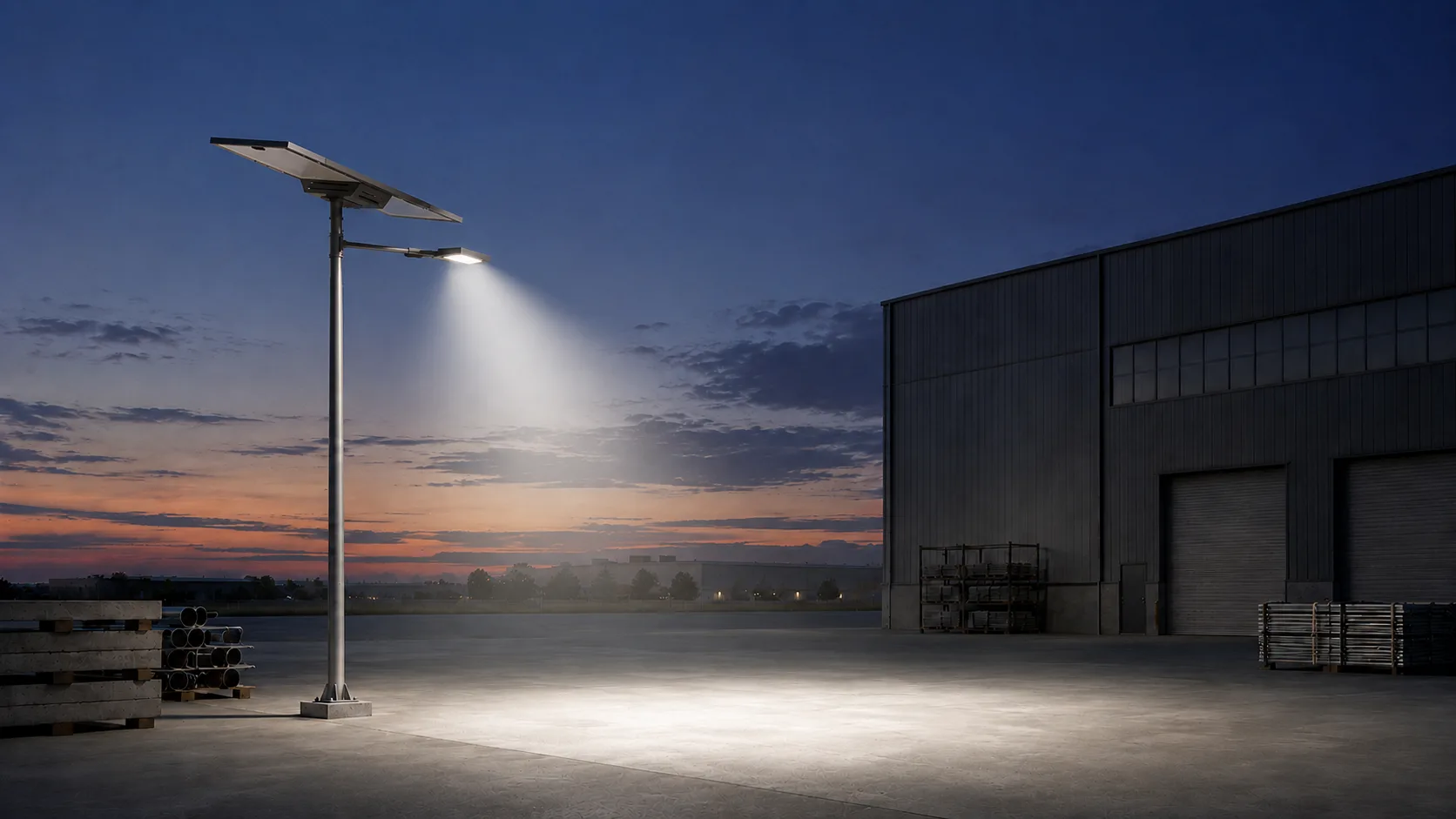
Commercial solar flood lights are self-contained area-lighting systems that use a solar panel, energy storage, controls and an LED luminaire to light a defined outdoor zone after dark. They can be a practical option for yards, perimeters, precast facilities, billboards and other locations where trenching a new electrical supply is difficult or undesirable.
The important question is not simply “how many watts?” A project team needs to establish the target area, mounting point, required operating schedule, available solar exposure and maintenance access before selecting a system. This guide explains the project inputs that shape a commercial solar flood-light solution and when an AC LED flood light may be the better choice.
Start With the Area You Need to Light
A solar flood light should be selected for a defined task, not as a generic replacement for every exterior light. A loading yard may need usable light across vehicle and pedestrian routes. A fence line may need consistent illumination for security observation. A billboard needs light aimed at a surface, while a work area needs light on the ground plane.
Write the lighting task in one sentence before comparing products. For example: “Light the vehicle access and loading zone between dusk and the end of the evening shift,” or “Illuminate the face of a roadside sign without spilling light into adjacent properties.” That simple statement keeps the conversation focused on the result, rather than on a catalogue number alone.
For a project that is already grid-connected and operates for long or variable hours, commercial LED flood lights may be the more appropriate path. Solar and AC systems can both use LED luminaires and controlled optics; the difference is how the site supplies and manages energy.
Solar Flood Light or AC LED Flood Light?
| Project question | Solar flood light may fit when | AC LED flood light may fit when |
|---|---|---|
| Power access | A new cable run or trench would be disruptive, costly or impractical. | Reliable grid supply is already close to the mounting point. |
| Solar exposure | The proposed panel location has a clear, site-checked solar window. | Buildings, trees or process structures create persistent shading. |
| Operating profile | The duty cycle and dimming plan can be designed around local charging conditions. | The site needs long, changing or high-output operation independent of daily solar input. |
| Site changes | The lighting point may be moved with a temporary or expanding work zone. | The installation is permanent and electrical infrastructure is part of the project. |
| Maintenance plan | The team can inspect panel cleanliness, mounting and system health. | Electrical maintenance is already managed as part of the facility. |
Neither route is automatically “better.” A solar system is an energy, storage and lighting design problem. An AC system is an electrical distribution and lighting design problem. The correct route follows the site constraints.
Six Engineering Inputs That Determine the System
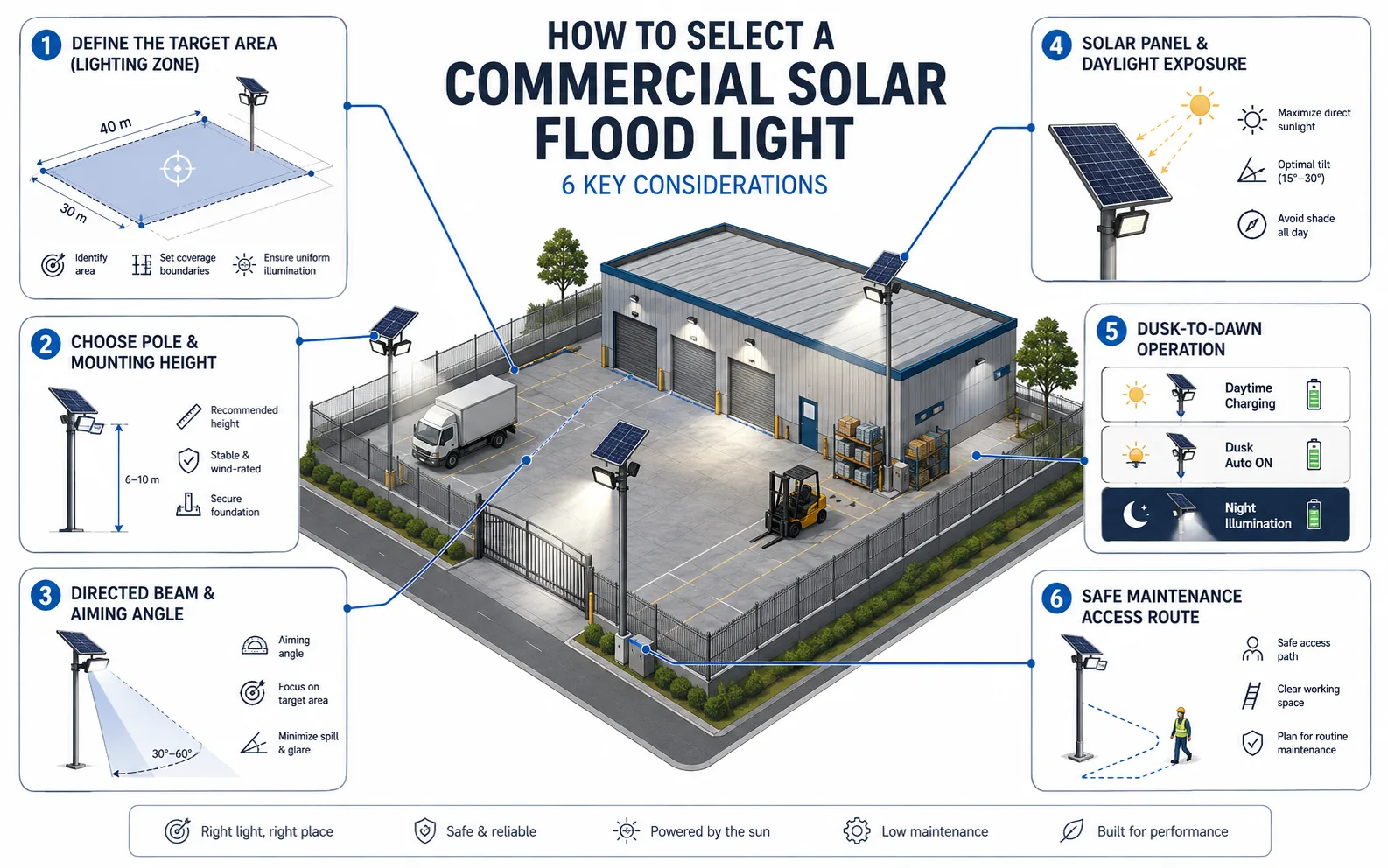
1. The target area and lighting task
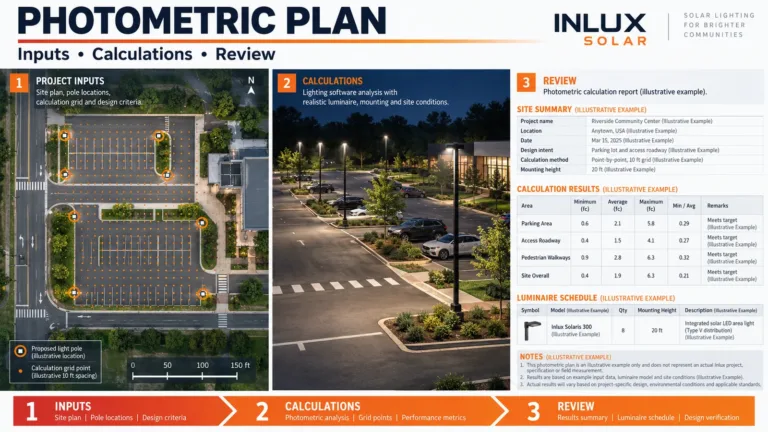
Provide a site plan, dimensions and an indication of what must be visible after dark. Include vehicle routes, gates, work zones, signs, cameras and nearby properties. A plan also helps the lighting team identify where light should stop, not only where it should reach.
2. Mounting height and mounting structure
The mounting height, bracket orientation, pole capacity and access method affect the final optical layout and installation method. A luminaire that appears suitable at a low height may not deliver the same result on a taller pole or beside a wide yard. Confirm whether the equipment will be wall-mounted, pole-mounted, or installed on an existing structure before finalising a selection.
3. Beam direction and glare control
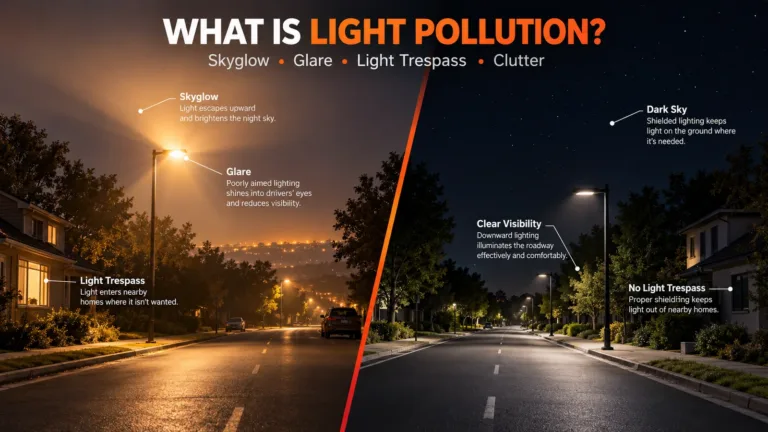
A flood light should be aimed at the task area, with attention to drivers, pedestrians, adjacent properties and cameras. The appropriate beam and aiming angle depend on the shape of the area and the mounting position. Ask for a layout rather than treating a broad beam as a universal answer.
4. Solar exposure and shading
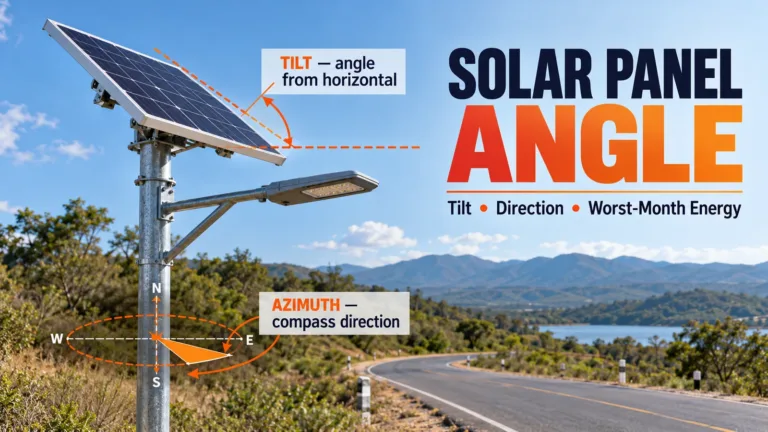
Solar exposure must be assessed at the proposed panel location, not assumed from the city name or a satellite image. Check for seasonal tree growth, buildings, equipment, dust and future construction that may shade the panel. A good luminaire location and a good solar-panel location are not always the same point, so the layout may need to resolve both.
5. Runtime, dimming and consecutive low-sun days
State when the light is expected to operate and whether the whole site needs the same output all night. A controlled operating schedule can be more realistic than an undifferentiated dusk-to-dawn requirement. The system design should consider the desired lighting schedule, the local solar resource and the project’s approach to periods of reduced charging.
6. Maintenance and project delivery requirements
The last input is often missed: who will clean the panel, inspect fasteners and report a fault? Also identify the required drawings, bill of materials, delivery schedule and tender documents. These are project inputs, not optional paperwork added after a product choice has already been made.
A Practical Project Brief for Solar Flood Lighting
Use this checklist when requesting a recommendation or quotation:
- Project location and local installation environment
- A site plan, photos or dimensions of the target area
- Required mounting locations and approximate mounting heights
- Intended operating hours, control logic and any dimming requirement
- Solar-panel exposure notes, including known shade risks
- Required lighted areas, excluded areas and any camera or road-facing constraints
- Quantity, target delivery date and required drawings or documents
This brief gives an engineering team enough context to decide whether one solar flood-light configuration is appropriate, whether several zones need different solutions, or whether AC lighting should remain part of the plan.
Inlux Solar Product and Project Paths
TORCH or FLD24? Start With the Power Architecture
For commercial solar flood lights, a model name or wattage is not enough to establish what will arrive on site. These two Inlux product routes have different published electrical starting points.
| Decision | TORCH solar flood light | FLD24 flood-light luminaire |
|---|---|---|
| Electrical starting point | Separate solar panel; battery and solar controller inside the luminaire. | The published technical table lists AC100–277V, 50/60Hz input. |
| Storage included in the product architecture | LiFePO4 storage is inside the lamp. Specify the actual pack, not just the maximum capacity shown for the model. | Do not infer a battery or PV package from the product name. A complete solar supply is a separate system design. |
| What must be positioned on site | The light must illuminate the task area; the separate panel must receive suitable sunlight. Both mounting positions matter. | Plan the luminaire, its mounting and the compatible electrical supply. An off-grid proposal must also show how that supply is produced. |
| How to compare proposals | Compare the same nightly output schedule, battery Wh and site-specific solar input—not LED watts alone. | Separate the luminaire quotation from any generation, storage and power-conversion equipment. Compare complete supply boundaries. |
For an off-grid yard, start with TORCH when reviewing a separate-panel, lamp-integrated battery arrangement. If FLD24 is proposed, require an electrical diagram that shows how its stated AC input will be supplied; PV modules cannot simply be assumed to connect directly to that AC input.
Panel watts, LED watts and battery watt-hours describe different parts of the system. A maximum battery capacity is not a promise of a full night at maximum LED output. Compare the actual configured pack and operating schedule before comparing prices.
There is also a documented Malaysia GRC precast-yard solar flood-light project. It is relevant because a precast yard is a real area-lighting use case with mounting, operating and maintenance constraints. It should not be used to promise that every yard will have the same configuration or result.
For sign faces and roadside display applications, see the separate solar billboard lighting solutions page. A billboard is a distinct optical task: the light must be directed onto a vertical surface, rather than distributed across a general work area.
Inlux Solar reports more than 300,000 total units delivered in 60+ countries. This is a company-wide delivery figure, not a solar flood-light project count. For an individual project, request the applicable product data, layout inputs and delivery documents for the selected configuration.
Applications and Limits
Commercial solar flood lights can be considered for the following applications when the engineering inputs support them:
- Perimeters and gates: light the relevant observation and access zones without treating a generic flood light as a complete security design.
- Yards and open storage: support defined circulation or working areas where cable installation is difficult.
- Precast, construction and temporary work areas: accommodate changing site layouts, subject to mounting safety and the actual operating schedule.
- Billboards and signs: use an application-specific arrangement for the sign face and its surroundings.
They are not automatically suitable for heavily shaded locations, every high-output task, sites with unrestricted overnight demand, or installations without a safe mounting and maintenance plan. In those cases, an AC option, a hybrid design or a different mounting strategy may be the more dependable answer.
Frequently Asked Questions
How many lumens does a commercial solar flood light need?
There is no single number that fits every yard or perimeter. Required output depends on the target area, mounting height, beam direction, lighting task, surface reflectance and operating schedule. Start with the site plan and requested result, then ask for a lighting layout.
Can a solar flood light work in rainy weather?
Rain alone does not decide whether a system can operate. The relevant question is whether the solar resource, storage design, operating profile and installation conditions are appropriate for the location. A project review should also account for shading, soiling and periods of lower charging.
Can solar flood lights be mounted on an existing pole?
Possibly, but the pole, bracket, foundation, access method and panel position all need review. The existing structure must be appropriate for the proposed equipment and must allow the luminaire and panel to be aimed safely.
Is solar or AC flood lighting better for an industrial yard?
It depends on grid access, solar exposure, runtime and lighting demand. Solar can reduce the need for a new cable run in a suitable site. AC can be more appropriate where the site has reliable power and requires extended or variable operation. Compare both options against the same site brief.
What should I send with an RFQ?
Send the project location, target area dimensions, mounting information, operating hours, shade notes, quantities and delivery requirements. Photos and a simple plan are often more useful than a wattage request without site context.
Request a Solar Flood-Light Layout
For a project recommendation, send the site plan, mounting heights, operating schedule and target areas to the Inlux Solar engineering team. The team can confirm which information is needed for a product selection, lighting layout, bill of materials and delivery discussion.