







Solar Power System for Solar Street Lighting Projects (Off-Grid & Hybrid)
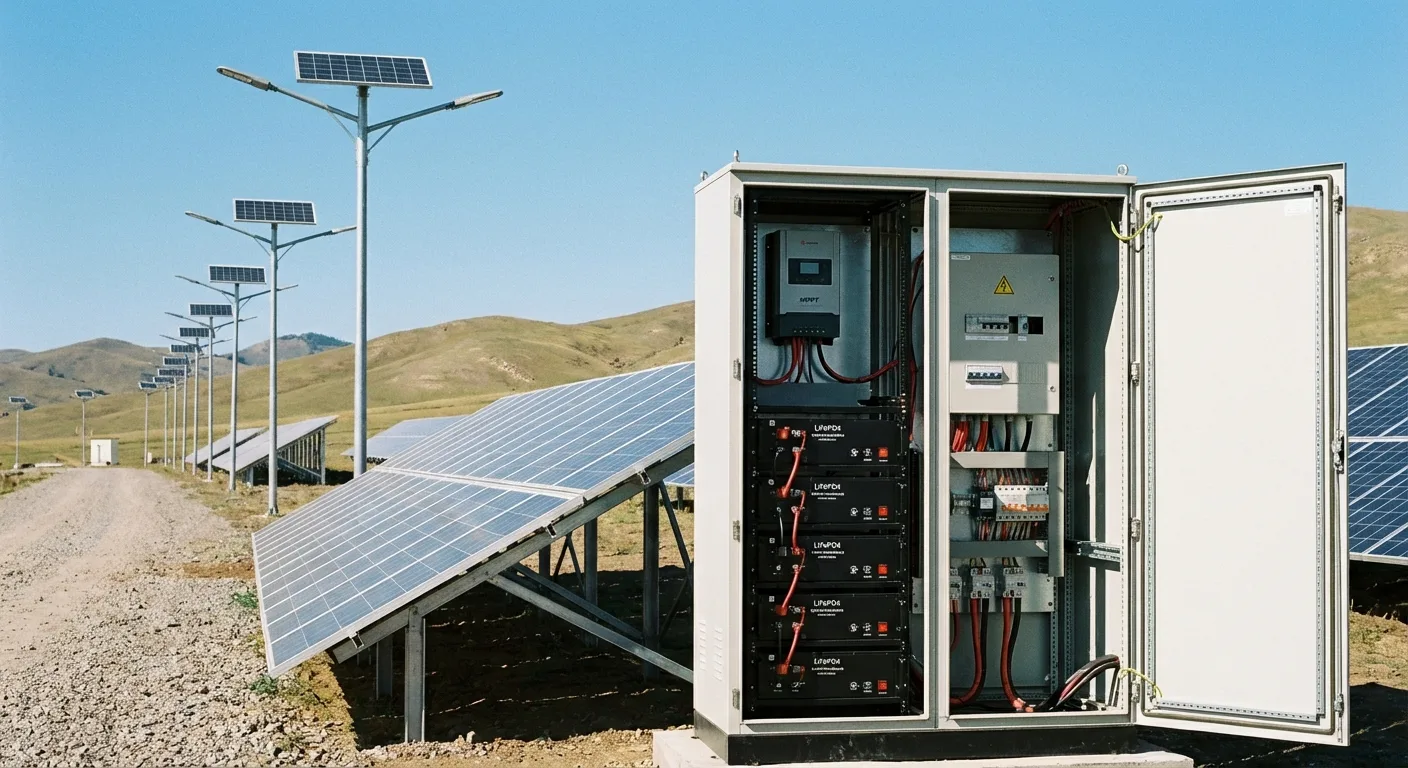
Need a reliable power backbone for solar street lighting, CCTV poles, or smart-city roadside devices? Inlux Solar designs project-ready solar power systems that match real loads, real sun-hours, and real seasonal risks — not brochure watts.
Quick Takeaways
- We size by load profile + autonomy days + worst-month sun hours, not by panel wattage alone.
- Choose LiFePO4 when cycle life and high-temperature reliability matter.
- DC-only systems reduce loss; add inverter only when you truly need AC loads.
- Surge protection, grounding, and correct cable sizing prevent the “mystery failures” most projects face.
- We deliver a BOM + single-line diagram + wiring diagram for tender and site teams.
What’s Included in a Street-Light Solar Power System
A typical project package can include:
- PV modules (mono PERC / TOPCon options)
- Battery bank (LiFePO4 recommended for 5000+ cycles and high heat stability)
- MPPT solar charge controller (with programmable load modes)
- Inverter (optional) for AC loads or hybrid configurations
- Protection: DC/AC breakers, fuses, surge protector (SPD), isolators
- Enclosure: outdoor-rated battery cabinet / pole-mount box / ESS cabinet
- Mounting: PV bracket, pole mount hardware, cable glands and connectors
Inputs We Need to Size Your System Correctly
Send these, and we can return an engineer-reviewed sizing proposal:
- Location (city/country) + installation type (road, yard, campus, industrial)
- Load list (street lights wattage, hours/night, dimming schedule; CCTV/WiFi/IoT if any)
- Required autonomy (e.g., 2–3 nights without sun)
- Mounting constraints (pole height, bracket space, cabinet position)
- Environment (high heat, coastal corrosion, dust, lightning zone)
How We Size: The Method That Avoids Underpowered Projects
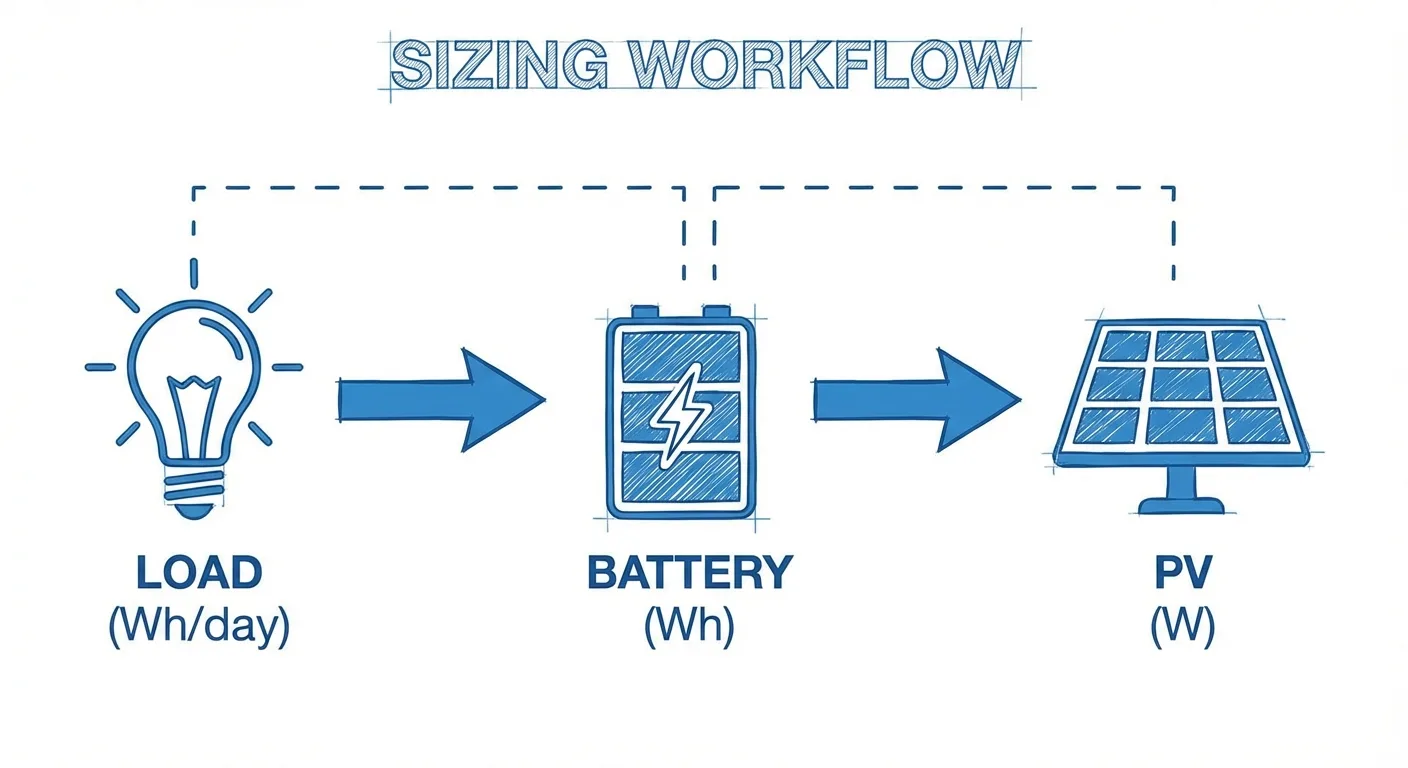
Step 1 — Daily Energy (Wh/day)
Daily Energy = Sum of (Load W × Hours) × system loss factor.
Step 2 — Battery Capacity (Wh)
Battery Wh = Daily Energy × Autonomy Days ÷ (Allowed DoD × Temperature derating).
Step 3 — PV Array (W)
PV W = Daily Energy ÷ (Worst-month Peak Sun Hours × MPPT efficiency × derating).
We can provide a simple sizing sheet for tender submission and a final check after the lighting layout is confirmed.
Common Configurations (Pick the Right One)
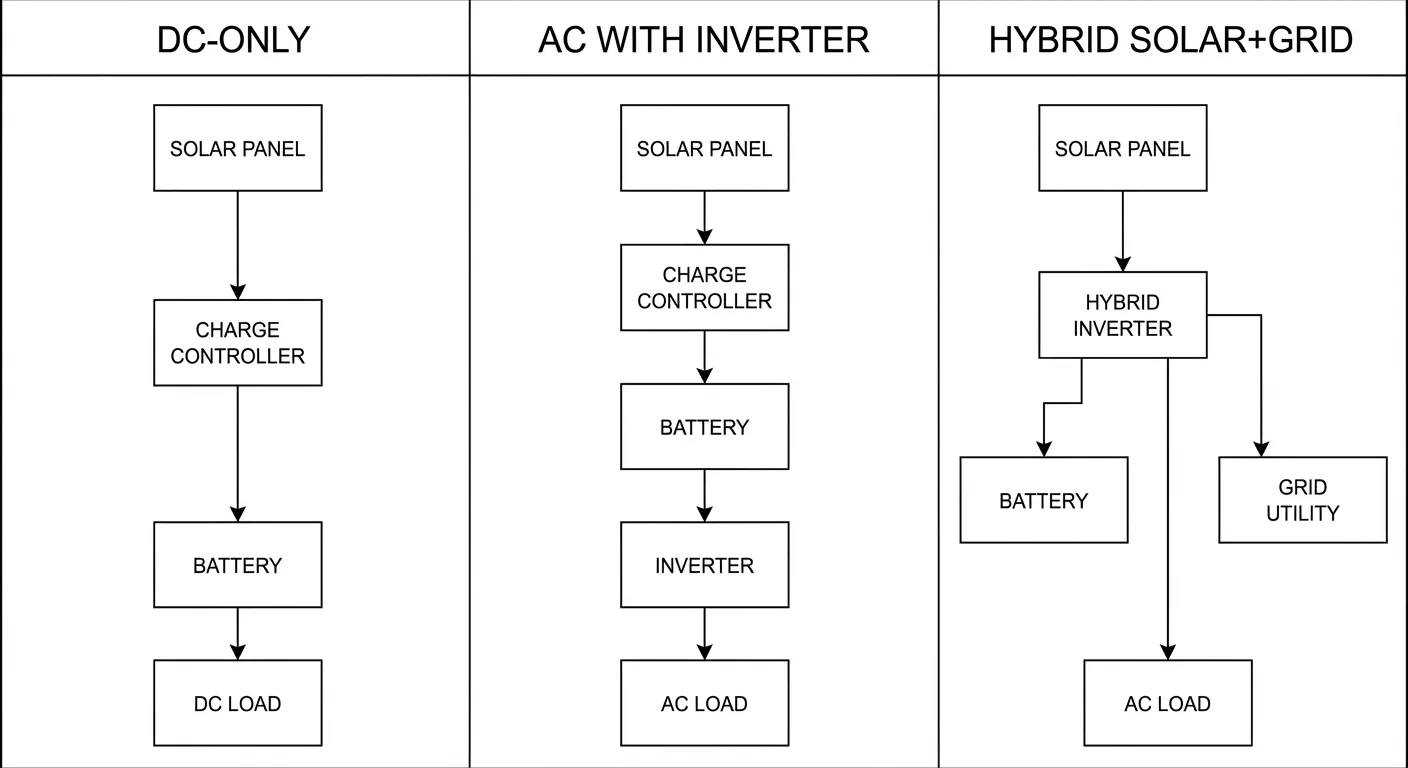
1) DC-Only (Most Efficient for Street Lights)
- PV → MPPT → Battery → DC load (LED drivers, DC cameras)
- Lowest loss, simplest maintenance, strong reliability
2) AC Output (When You Must Run AC Loads)
- Add inverter to support AC devices
- Use only if you truly need AC — it adds conversion loss and complexity
3) Hybrid Solar + Grid (All-Season Continuity)
- Solar priority; grid backup when battery is low
- Ideal for rainy seasons, high-latitude winters, or high reliability requirements
Engineering Protections That Prevent Field Failures
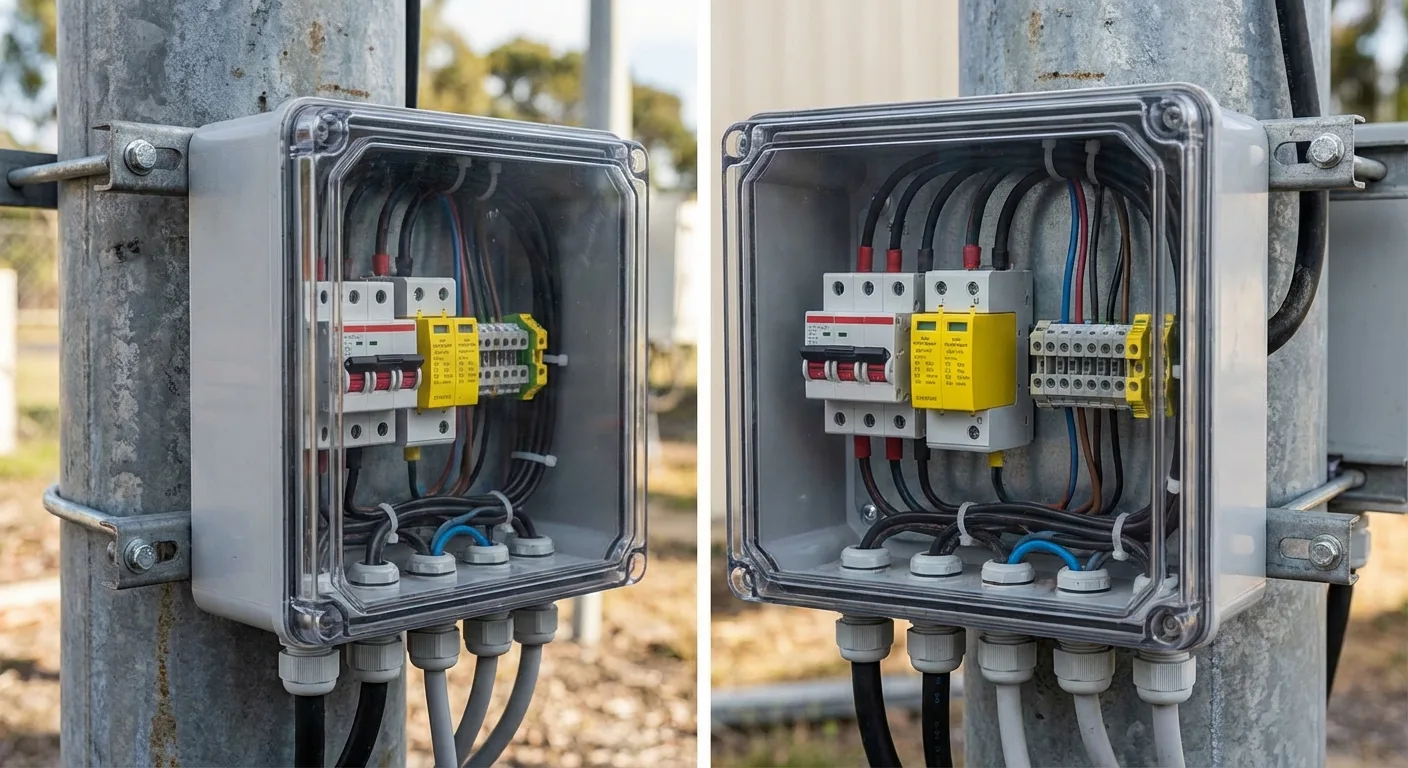
- Surge & lightning: SPD selection, grounding routes, and bonding points
- Battery safety: BMS protections, cell matching, and thermal design
- Waterproofing: cable glands, breathing valves, IP-rated enclosures
- Cable sizing: voltage drop control for long pole runs
Where This Fits in Your Solar Street Light Project
If you are choosing street light systems, start here and then match the power backbone to your final lighting plan.
- Solar Street Light Hub
- All-in-One Solar Street Lights
- Split Type Solar Street Lights
- Solar Street Light Installation Guide
Deliverables You Can Use for Tender & Site Teams
- Bill of Materials (BOM) with compatible components
- Single-line diagram (SLD) + wiring diagram
- Protection list (breaker/fuse/SPD) and installation notes
- Optional: monitoring plan for ESS / hybrid configurations
Request a Project-Ready Sizing Proposal
Send your location + load schedule + autonomy requirement. Our team will recommend a configuration and provide a sizing proposal you can validate with your engineer and submit in bidding.
FAQ
How many solar panels do I need for street lights?
It depends on daily energy use, worst-month sun hours, derating, and battery autonomy. We size PV based on the worst-month scenario, not average months.
What battery is best for solar street lighting power systems?
LiFePO4 is preferred for high cycle life, better thermal stability, and consistent performance in harsh environments, especially for municipal projects.
How many nights of autonomy should I design for?
Common choices are 2–3 nights. Rainy regions or high-reliability zones may require more, but it increases battery size and cost.
Do I need an inverter?
Not for most DC street lights. Add an inverter only when you have AC loads or a hybrid architecture that requires AC output.
Why do “high wattage” systems still fail at night?
Typical causes are undersized battery capacity, wrong load profile, poor wiring/voltage drop, weak protections, or inflated panel claims that ignore derating.
How do you protect the system from lightning?
We use SPD selection, grounding/bonding design, correct cable routing, and enclosure practices to reduce surge-related failures.
Can this power CCTV and smart poles together with lighting?
Yes. Provide the load list (power + hours) for cameras, WiFi, sensors, and we size the PV and battery accordingly.
What do you need from me to quote?
Location, lighting wattage and schedule, additional loads, autonomy requirement, mounting constraints, and environment conditions.