Street lights can look blue for more than one reason. The visible colour may come from the lamp or LED specification, the optical system, the contrast with surrounding darkness, weather or camera processing, or an emerging equipment issue. A blue-looking installation should therefore be documented before anyone assumes that it is either normal or faulty.
The useful first question is whether the appearance is intentional and consistent across a planned group of luminaires, or whether it is new, isolated or changing. This guide gives asset managers and project teams a safe way to separate those possibilities without attempting a live electrical diagnosis.
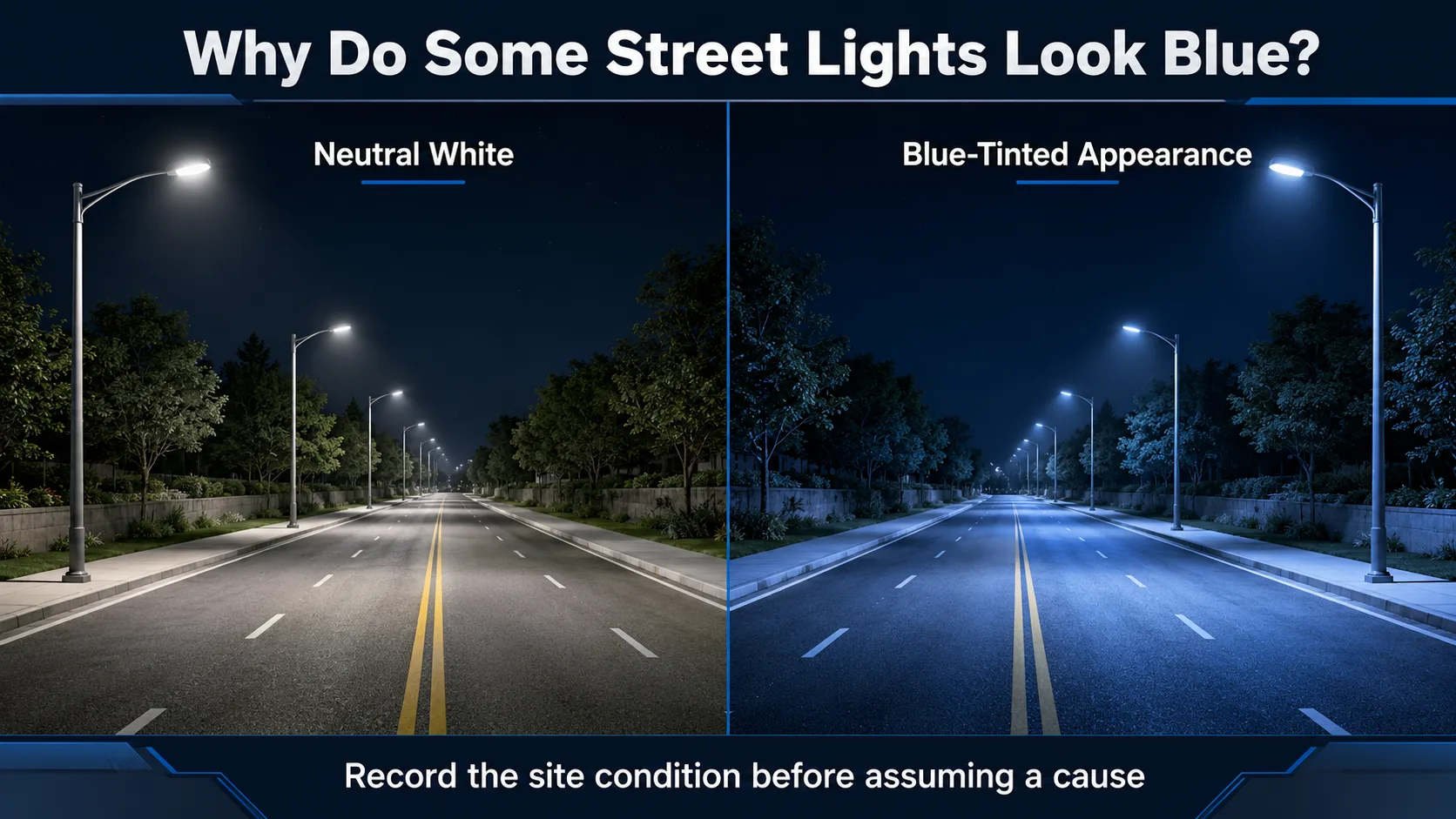
Blue Light Is Not the Same as Purple Light
Blue and purple can look similar in a night-time photo, but they should not be treated as the same observation. A blue appearance may be associated with an intended light source or visual context. A purple appearance may be reported as a colour-shift concern. The starting point for either case is to record the actual site condition, rather than infer a root cause from a photo.
For the related colour-shift workflow, see why some street lights look purple. For another distinct lighting-colour explanation, see why street lights can look orange.
What to Record Before Replacement or Repair
Create a short record for each affected location:
- Exact location, fixture ID and whether nearby luminaires look the same
- Photos from a consistent viewpoint, plus the time and weather conditions
- Fixture model, installation date, batch information and warranty record where available
- Whether the appearance was present from installation, appeared suddenly, or changed gradually
- Any related operating issue, such as cycling, dim output, damage or water ingress
This record helps a supplier, installer or maintenance team decide whether the question is optical design, a control issue, a component concern or a site-condition effect. Do not open an energized fitting or work at height merely to investigate a colour observation.
When an Asset Manager Should Escalate
Escalate the case through the normal maintenance or warranty process when the colour change is new, affects a growing group of fittings, is paired with flicker or abnormal operation, or creates a safety or visibility concern. Preserve the installation and purchase documentation, and request a compatible replacement assessment rather than assuming any visually similar luminaire can be substituted.
For new projects, colour quality should be included in the project brief alongside the lighting task, mounting geometry, controls and maintenance requirements. The existing LED outdoor lighting path can help frame the product discussion; it does not replace a site inspection or a fixture-specific technical review.
Inlux Solar reports more than 300,000 total units delivered in 60+ countries. This is a company-wide delivery figure, not evidence that blue light has one cause in every installation. For a specific issue, provide the site record and request the relevant product, warranty and replacement information from the Inlux Solar engineering team.
Frequently Asked Questions
Are blue street lights always a fault?
No. A blue appearance can have several explanations. Compare the condition across the installation and record whether it is intended, new or changing before drawing a conclusion.
Is a blue street light the same as a purple street light?
No. They are different visual observations and may require different follow-up. Document the actual appearance and fixture history rather than using the terms interchangeably.
Can I replace one blue fixture with any LED street light?
Not without checking mounting, optics, electrical compatibility, controls and the project lighting requirement. A replacement should be assessed for the specific installation.
What should I send to a supplier?
Send photos, location, fixture identification, installation date, affected quantity, operating observations and warranty or procurement records if available.
Should staff inspect the light at night?
Only within the site’s safe maintenance process. Do not perform live electrical work, access elevated equipment or dismantle the fixture solely to investigate colour.