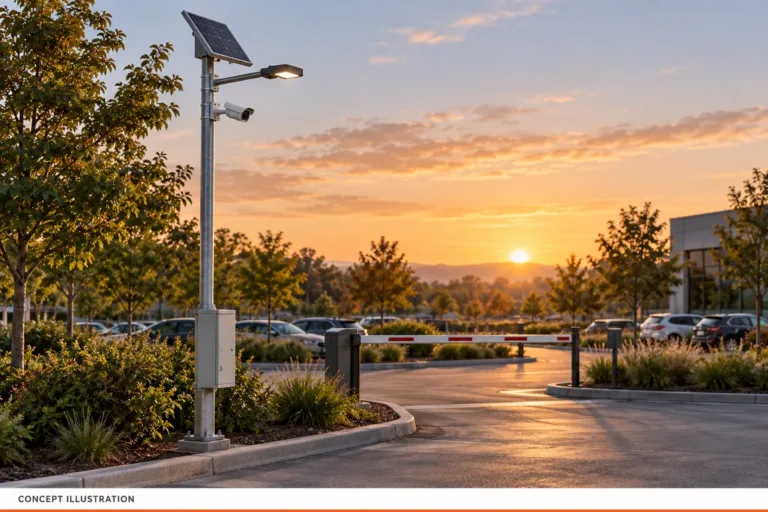







Yes—some street lights do have cameras, but many do not. In most cases, the camera is mounted on the pole, bracket arm, or a separate housing for traffic monitoring, public safety, parking control, or smart city systems. It is usually visible and is not built into every street light fixture.
Modern street light poles are often used as convenient mounting points because they already provide height, roadside coverage, and access to power. That is why some cities use them to support cameras, sensors, and communication devices in selected locations.
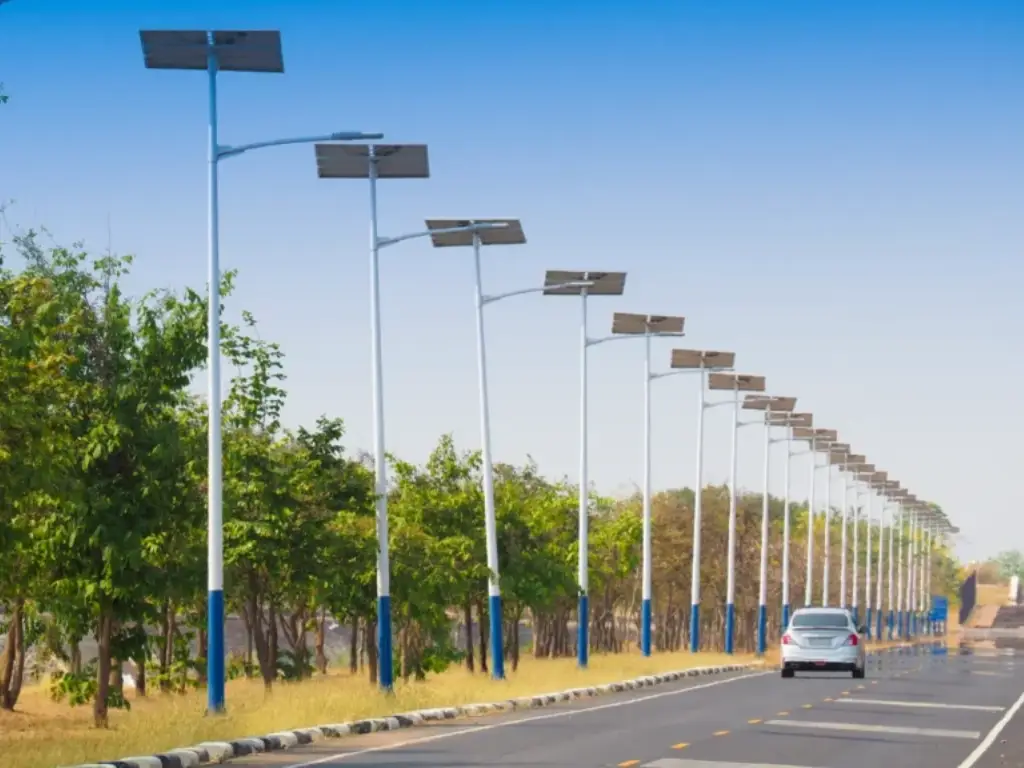
The Traditional Street Light Role
In its essence, streetlights were initially designed to serve the purpose of making public space usable for more hours through artificial lighting. This function was, and still is, crucial for increasing visibility, which in turn helps to minimize the number of traffic accidents and increase the safety of pedestrians and cyclists. In addition, areas that are well lit are believed to be safer and help in reducing some forms of criminal activities and also make people feel more secure during the night.
The early street lighting systems were not very complex in terms of the technology used in their construction. They included lamps that converted electrical energy to light and fittings that were used to disseminate the light. Control mechanisms were as basic as manual switches or even timers that were preset to turn on or off at a given time. The main function of the pole was to support the structure and to be as tall as possible to light up the largest area and to be able to withstand such factors as wind. These were dedicated lighting assets, which did not have the ability to monitor or collect data beyond the basic control functions such as on/off based on time.
First Steps: Adding Basic Sensors
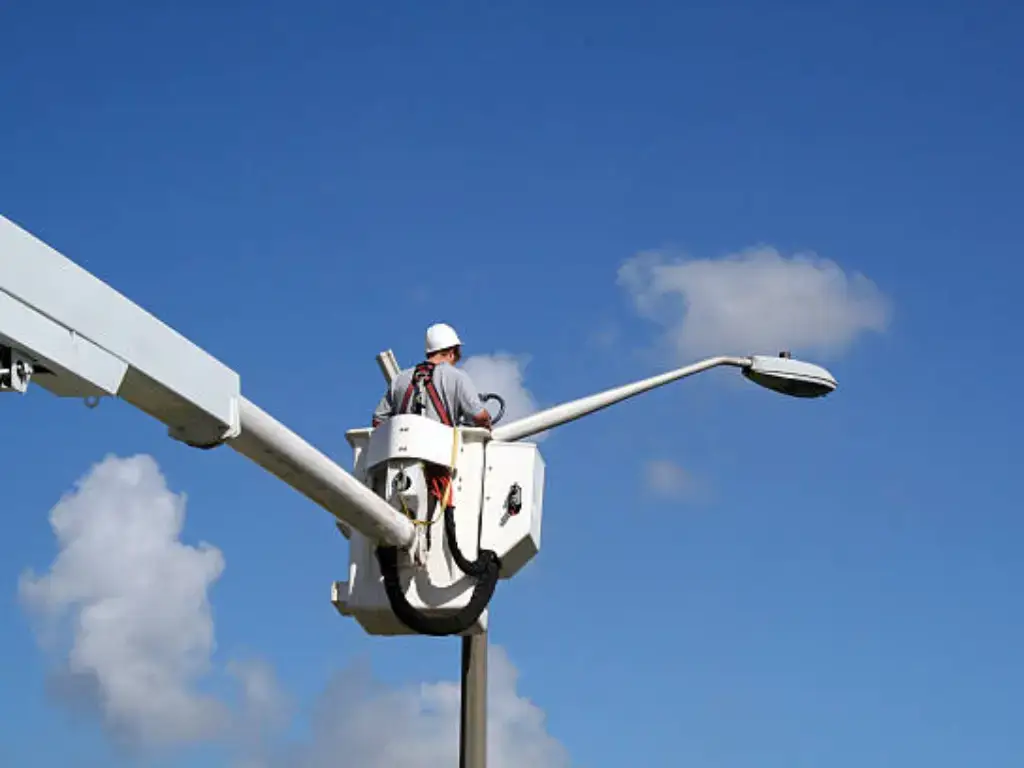
The first technological advancements made on traditional street lights were aimed at enhancing functionality and automating the system. Photocells, small devices that measure the level of natural light, were installed to control the street lights; they switched on as soon as the natural light began to fade and switched off as soon as the sun came up. This small addition was a major advancement, allowing lights to change based on conditions instead of time-based schedules, which helped save energy and provide better lighting.
After this and sometimes as part of the control systems situated at the base or within the pole, came the addition of traffic and motion sensors. These include inductive loops installed in the road, passive infrared (PIR) sensors, or microwave radar sensors mounted on the pole to detect the presence and flow of vehicles, pedestrians, or cyclists. It could be used to control traffic signals at junctions or to set up intelligent lighting systems where the intensity of the light is changed depending on the activity on the street, reducing the brightness when there is no activity and increasing it when there is movement. These sensors were for presence, motion, and flow, but they were not equipped to take pictures that could recognize people or cars. They were an early stage where the light pole started to house technology that gathered non-sensory information for the purpose of decision-making.
When Lights Host Cameras
Beyond the basic sensors, the direct answer to the question is that, yes, street light poles are increasingly being used to host cameras. It is important to note that this means that cameras are installed on or as part of the street lighting system and not that cameras are built into each and every light fixture from the ground up.
This practice takes advantage of the street light pole as the most appropriate mounting point. Poles are already installed in urban and suburban areas, placed by roads, intersections, and other places where monitoring is needed. They have the advantage of height which is important for surveillance and monitoring of traffic among other things. In addition, they are wired to a constant power source, thus there is no need for additional electrical wiring to power the camera system.
Cameras are an extension of street lights, which means that the street light is no longer solely for the purpose of lighting but also for monitoring. These are usually mounted in visible housings on the pole, on cross arms or in integrated housing separate from the light fixture. Although contemporary designs may seek to be integrated into the body of the fixture, they are not hidden in the portion of the fixture that is designed for optical purposes and for managing the heat of the lamp.
Why Lights Are Camera Platforms
Street light poles are often used for cameras because they already stand in key public areas such as roads, intersections, sidewalks, and parking zones. They provide a high mounting position, a wide field of view, and easier access to power than building a separate camera pole from scratch.
Using existing lighting infrastructure can also reduce installation cost and disruption. Instead of adding a brand-new support structure, cities and contractors can often attach a camera to an existing pole, then connect it to available power and communication hardware where permitted.
This does not mean every street light contains a hidden surveillance device. In most cases, the camera is an added component mounted visibly on the pole, arm, or a separate enclosure.
Cameras Integrated with Lights
The addition of cameras to the infrastructure of street lights is not a one-size-fits-all approach. It entails attaching and fitting specialized cameras to the poles or their associated fittings to achieve specific functions, such as traffic monitoring, public safety surveillance, or automated enforcement for issues like red light violations using speed cameras and **license plate readers**. Integration approaches are defined by the camera’s capabilities and intended objectives.
The types of cameras most commonly integrated with street lights include:
| Camera Type | Primary Role | Typical Mounting on Pole/Arm | Link to Lighting Infrastructure | Main Use Cases |
| Traffic Monitoring | Visual data for traffic analysis | High, on cross-arm or pole | Relies on street light for nighttime visibility. | Congestion analysis, accident detection, flow optimization. |
| Safety/Surveillance | Monitoring public spaces | Side of pole, varying height | Uses street light illumination for clear images. | Crime deterrence, incident recording, public safety. |
| Red Light Enforcement | Capture vehicles running red lights | Integrated with signal arm | Powered by traffic signal/pole power. | Automated ticketing. |
| Speed Enforcement | Capture speeding vehicles | Pole side | Positioned for accurate speed measurement. | Automated ticketing. |
| ANPR/LPR | Reading license plate data | Pole side, angled | Uses existing light or IR for plate illumination. | Vehicle tracking, toll collection, law enforcement. |
| Data Collection | Anonymized counting/pattern analysis | Varies | Powered by pole; uses light for nighttime analysis. | Urban planning, infrastructure assessment. |
Many of these camera systems are part of an ‘ecosystem’ bound to the lighting infrastructure. Surveillance and traffic cameras depend on the street light to be on during the night or at very low light levels where usable images can be captured. The same voltage supply used for the lamp’s light fitting serves as the camera’s electric power, processing unit, and communication device. Because of the close association, the design and realization of such integrated systems has to masterfully balance how the components for illumination, power supply, data acquisition, and system communication are unified on one housing structure. This is more challenging than simply attaching a camera to the pole. It requires real understanding of technological synergy.
Lights as Smart Urban Nodes
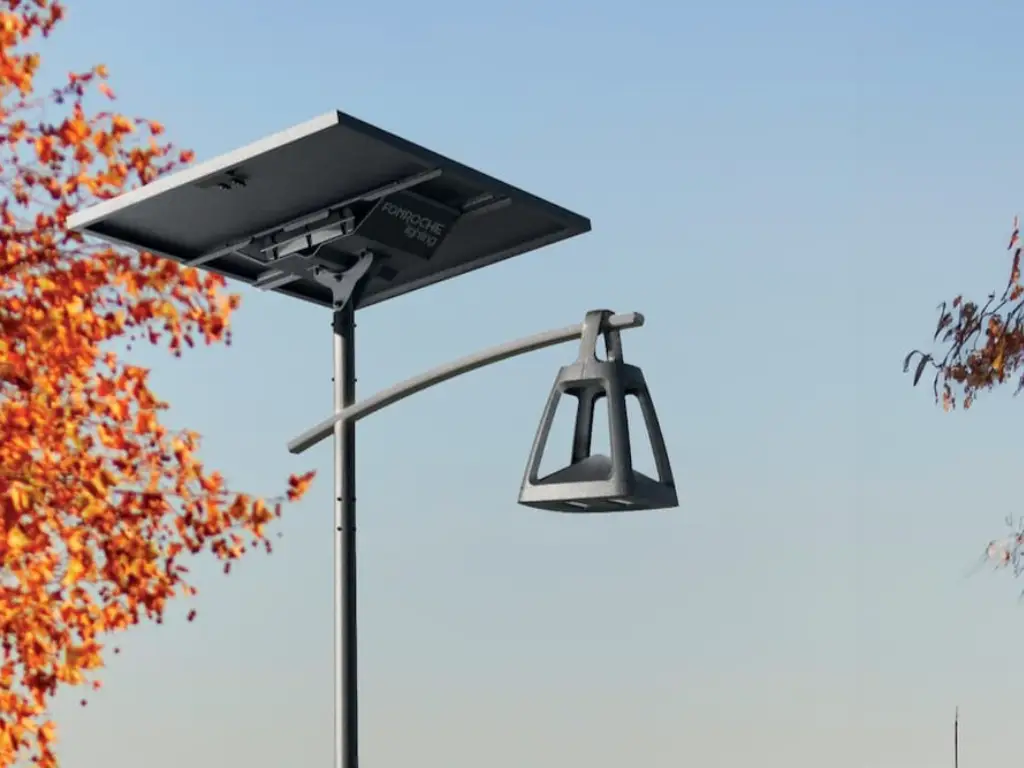
The addition of surveillance cameras, sensors, and communication technology is revolutionizing the purpose of street lights in today’s smart urban ecosystems. They are no longer passive providers of illumination, but rather serve as vital nodes within a network that actively controls and monitors a city.
In the case of a smart city, multifunctional smart light poles are transformed into intelligent data collection points. They monitor the movement of vehicles, people, the level of pollutants in the air, ambient noise, and even criminal activities. This information is usually relayed via wireless or wired connections to centralized urban data servers or control centers.
Thanks to these smart light poles, cities can monitor traffic with greater real-time awareness. The information gathered can support traffic signal timing, maintenance planning, and faster public safety response through connected monitoring systems.
Impacts on Lighting and People
Integrating cameras onto street light poles enhances their order of functionality and systematically restructures the physical attributes of the entire lighting infrastructure. Even more importantly, it restructures the experiences and perceptions of the people living within the illuminated surroundings.
In terms of technology, the addition of cameras and communication devices increases possibilities and requirements for the design of the street light system. The pole will also need additional strength to withstand the weight and wind force of the added devices. It requires enhanced strength to the electrical system so that power becomes stable and sufficiently enough for both the light and technology. There must be enough room within the pole or external boxes to house the wiring, controllers, and communication hardware. This added importance increases intricacy in the production methods and processes as well as installation procedures and long-term maintenance needs.
The general public seems to latch onto privacy as the area most impacted by surveillance. The ubiquity of surveillance cameras places fundamental concerns on monitoring people in public spaces. For example, monitoring public safety and traffic is a good intention that fosters the necessity of boundaries, albeit benign purposes. However, the possibility of monitoring all movements, recording, and advanced analytics like facial recognition capture the opposite of public freedom and privacy. The absence of reasonable limits heightens concerns of government oversight. This kind of street lighting imposing safety restrictions enhances the public’s challenge of attempting to preserve privacy, more so a concern unique to surveillance infrastructure. The balance of privacy and safety gives rise to societal debates concerning camera-equipped street lights, data collection policies, transparency, and the legal arrangements needed to govern such systems.
Choosing a Street Light System That Supports Cameras
If a city, contractor, or property owner needs street lighting with monitoring capability, the key question is not whether every street light already has a camera. The real question is whether the lighting system can safely support cameras, power hardware, communication devices, and long-term maintenance requirements.
When evaluating a lighting solution, check whether the pole and mounting structure can handle added equipment, whether the power system is stable enough for both lighting and monitoring devices, and whether there is enough space for wiring, controllers, and communication components. In camera-ready projects, reliability, maintenance access, and compliance matter more than marketing claims.
- Structural capacity: Can the pole and bracket safely support the added weight and wind load of cameras and accessories?
- Power compatibility: Can the system reliably power both the light and the monitoring equipment?
- Integration space: Is there enough room for wiring, control boxes, and communication hardware?
- Maintenance access: Can technicians inspect, service, or replace both lighting and monitoring components efficiently?
- Project suitability: Is the system designed for the actual use case, such as traffic monitoring, public safety, parking areas, or smart city infrastructure?
For readers researching the topic, the main takeaway is simple: some street lights do carry cameras, but many do not. Where cameras are used, they are usually visible add-ons mounted to the pole or arm rather than hidden inside every light fixture.
Frequently Asked Questions about Street Light Cameras
What are cameras on lamp posts used for?
Cameras on lamp posts are commonly used for traffic monitoring, public safety, parking enforcement, intersection control, and smart city data collection. They are usually installed only where monitoring is needed, not on every street light in a city.
Can I tell whether a street light has a camera?
Usually, yes. In most cases, the camera is mounted visibly on the pole, bracket arm, or a separate housing. Dome cameras, bullet-style cameras, license plate readers, antennas, and extra control boxes are often visible signs that the pole is carrying monitoring equipment.
Are all street lights connected to surveillance systems?
No. Many street lights only provide illumination. Others may carry photocells, motion sensors, or smart controls that help manage lighting but do not record video
Need a Smart Pole or CCTV-Ready Lighting Solution for a Real Project?
If you are planning a municipal, campus, HOA, or infrastructure project and need lighting with monitoring capability, contact Inlux Solar for guidance on smart poles, CCTV-ready mounts, and off-grid lighting systems.