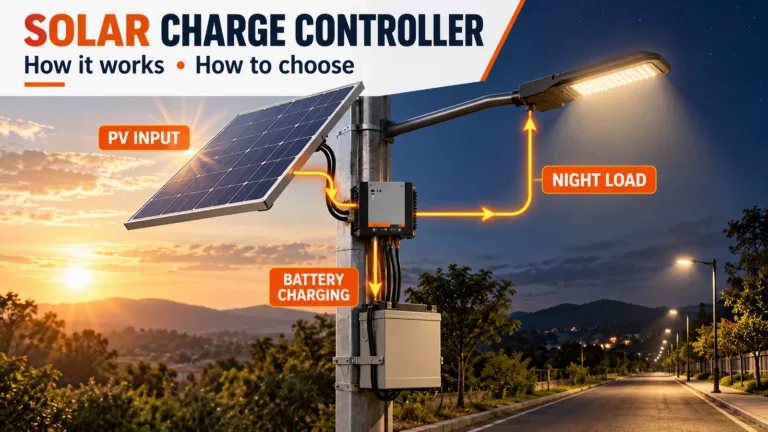
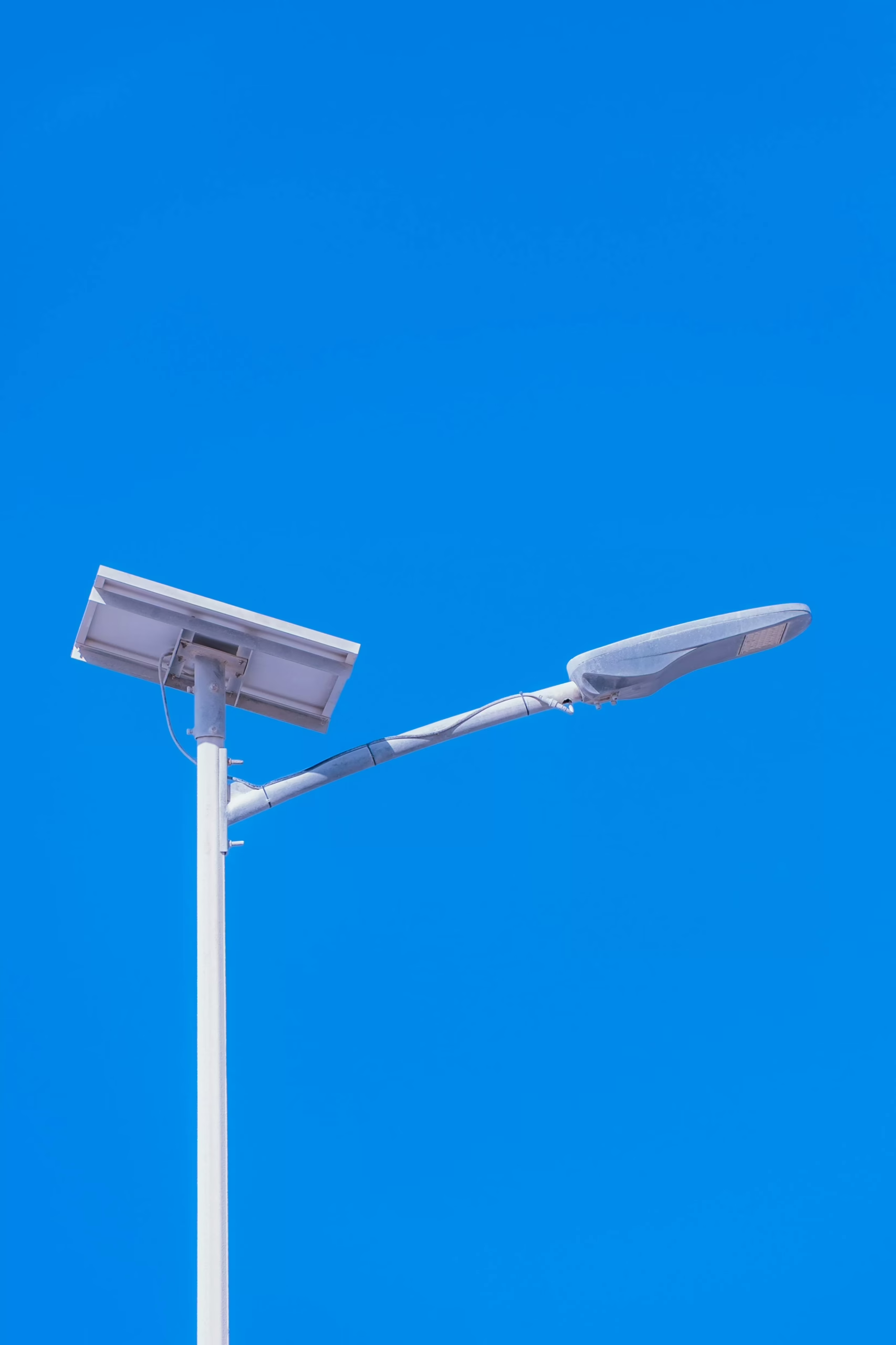
A well-designed solar street light typically lasts 10–20 years1 as a system. Expect panels 25–30 years2, LEDs 50,000–100,000 hours (L70), controllers 5–10 years, and LiFePO4 batteries 8–12 years3 depending on depth of discharge, temperature4, and sizing margins. Proper MPPT + shallow cycling maximizes life.
- PV lifetime / system view
U.S. Department of Energy (EERE). Solar Photovoltaic Technology Basics — PV modules have predictable, low annual degradation and remain productive for ~25–35 years. U.S. Department of Energy (EERE). ↩︎ - LED L70 (lumen maintenance)
DOE Better Buildings. LED Lighting Basics & Lumen Maintenance (L70) — Many street-lighting LEDs are rated L70 at 50,000+ hours with proper thermal design. DOE Better Buildings. ↩︎ - LiFePO4 cycle life
Victron Energy. Lithium battery lifetime: cycle life vs depth of discharge & temperature — LiFePO4 commonly achieves ~3,000–5,000 cycles (≈8–12 years in street-lighting duty) under moderate DoD and temperature. Battle Born Batteries. ↩︎ - NREL
Battery Energy Storage: lithium-ion performance factors. Cycle life is strongly affected by depth of discharge (DoD) and temperature.NREL. ↩︎
PV modules
25–35 years; gradual degradation.
LED engine
L70 at ~50,000+ hours; higher with good thermals.
Battery (LiFePO4)
3,000–5,000 cycles(≈8–12 years at 70–80% DoD, 25 °C)。
Controller/MPPT
5–10 years (in hot/humid environments).
Enclosure & optics
IP66/67, IK08–10, ISO 12944 C3–C5 enable long service in harsh sites。
Why it lasts that long
- LEDs don’t “burn out”—they dim to L70. Street-lighting LEDs are rated by lumen maintenance. With proper thermal design and quality drivers, they typically reach 50,000–100,000 hours to L70, and sometimes beyond, because heat—not switching—drives aging.
- PV modules degrade slowly, so they keep working for decades. Modern panels lose a small percentage per year and remain productive for ~25–35 years. Good glass/encapsulation and routine cleaning reduce soiling losses and keep energy yield closer to design.
- LiFePO₄ batteries last thousands of cycles if operated gently. In moderate temperature with shallow depth of discharge, LiFePO₄ commonly delivers ~3,000–5,000 cycles (≈8–12 years in street-lighting duty). Heat and deep cycling shorten life; BMS + MPPT + winter oversizing extend it.
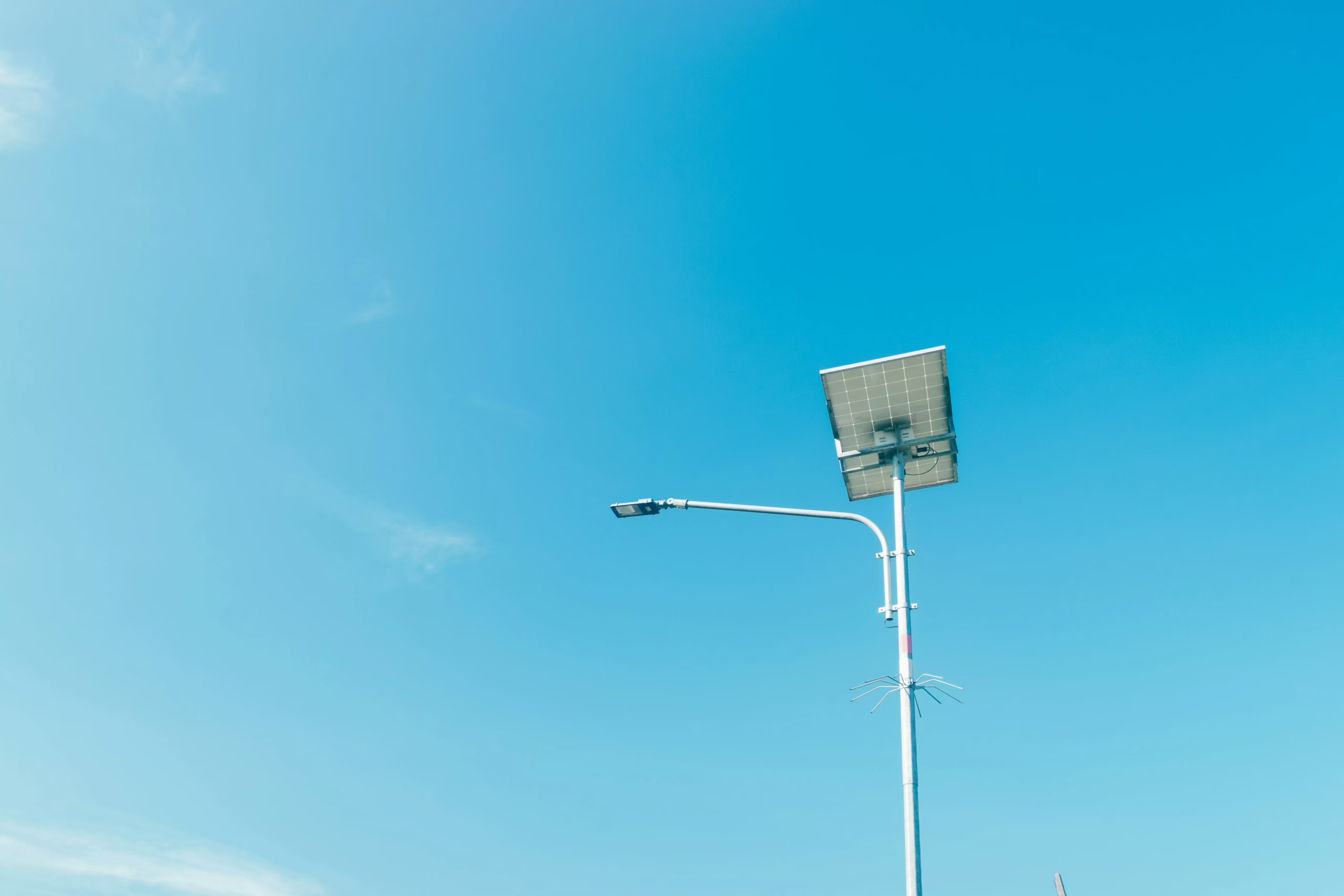
For project deployments, all-in-one solar street lights integrate the LiFePO4 pack, MPPT controller and LED engine into one sealed unit, which simplifies the lifecycle math above.
Simple Replacement Rule-of-Thumb
Battery replacement year ≈ usable cycle life ÷ (nightly cycles × utilization factor).
Example: 3,650 cycles/yr × 0.8 utilization;3,000–5,000 cycles ⇒ ≈8–12 years before capacity falls to ~80%.