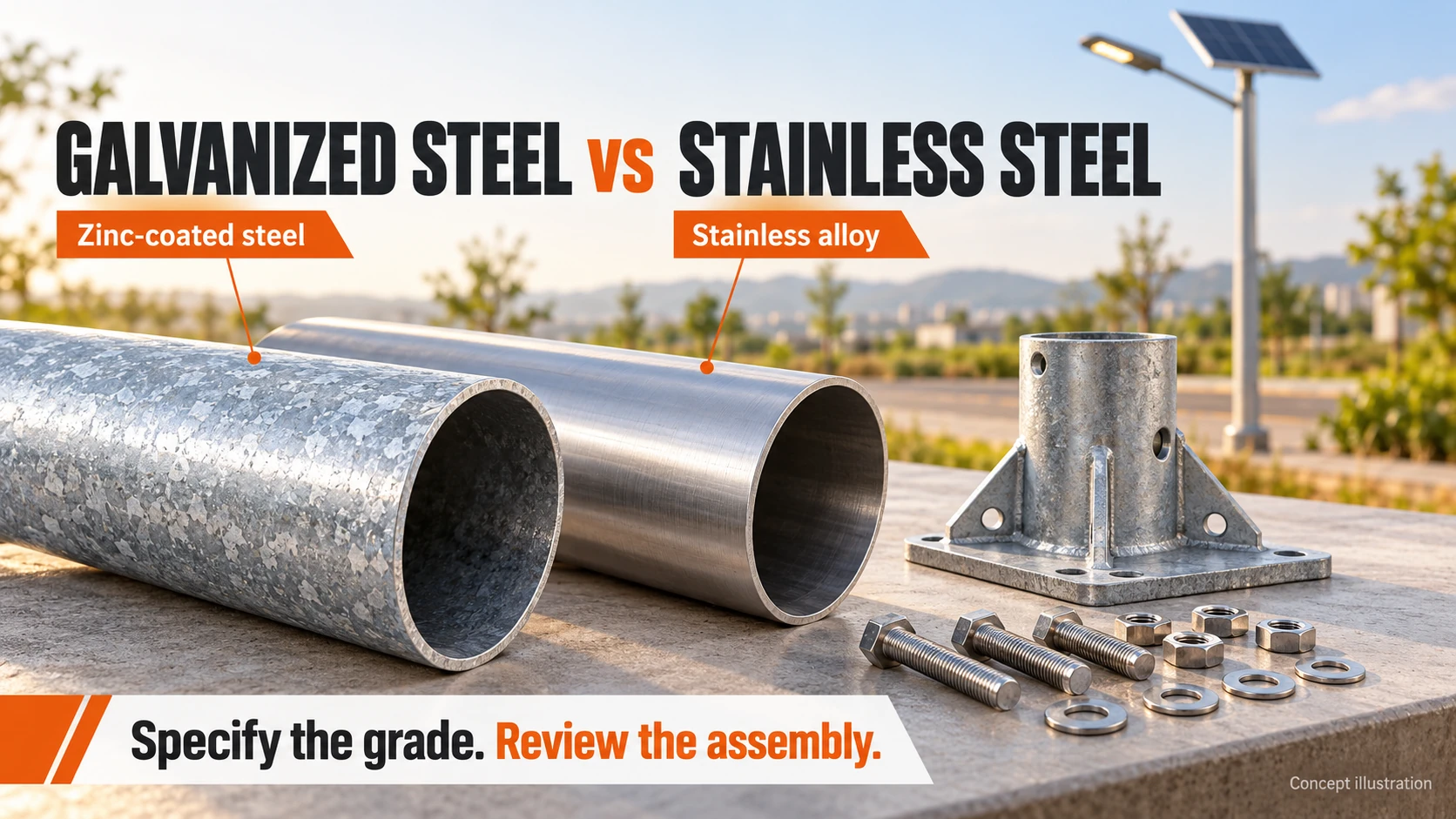
Galvanized steel vs stainless steel is a choice between a zinc-coated steel component and a corrosion-resistant steel alloy—not a simple contest between cheap and premium metal. For a solar lighting project, compare the specified grade, protective finish, exposure and complete connection detail. A stainless bolt is not automatically an upgrade, and a shiny pole is not proof of either its material or its expected service life.
This guide is for buyers reviewing poles, brackets and hardware for roads and commercial parking areas. It helps you ask for a comparable offer and spot an unapproved substitution at delivery. It is not a structural design or a recipe for changing installed anchor bolts. Any material change in a load-bearing connection needs the project designer’s approval.
1. Galvanized steel vs stainless steel: compare the specification
Start with the item being purchased. A complete pole, a panel bracket and a replacement washer have different jobs. “Galvanized” identifies a protective treatment; it does not identify the underlying steel grade. “Stainless” identifies a family of alloys; it does not specify the grade, mechanical condition or finish. Neither description alone is a complete purchase specification.
| Purchase question | Galvanized steel offer | Stainless steel offer |
|---|---|---|
| What is the base material? | Identify the steel grade and component drawing. | Identify the stainless grade and component drawing. |
| What protects the surface? | State the galvanizing process, acceptance requirement and repair procedure. | State the finish and required treatment after fabrication. |
| What is included in the assembly? | List pole, brackets, fasteners and any additional coating separately. | List each part’s grade; do not assume every part is the same alloy. |
| What proves structural suitability? | Use the approved design and material records, not the coating name. | Use the approved design and material records, not the word stainless. |
| What needs agreement before delivery? | Inspection records, packing, damage acceptance and repair responsibility. | Grade traceability, finish acceptance, packing and maintenance responsibility. |
For the broader component overview, see materials used in street lights. Here the decision is narrower: which documented metal-and-finish combination fits the actual assembly? Keep that decision separate from LED wattage or battery capacity. Those electrical ratings cannot establish whether the pole and its connections suit the site.
2. Read the exposure before choosing a metal
The Australian Stainless Steel Development Association explains that galvanized steel uses a zinc coating, while stainless steel relies on a protective oxide film. Its comparison is specifically with grade 316—not every stainless alloy. Both systems still need suitable design and maintenance. Stainless can stain or suffer localized corrosion, and galvanized steel can lose zinc and eventually expose the underlying steel. See ASSDA’s material comparison.
Turn the site description into information a supplier can use: coastal or inland location, salt spray or industrial deposits, standing water, sheltered joints and access for cleaning. “Outdoor use” leaves too much unanswered. Add photographs of the intended location when possible, particularly the base area and nearby sources of contamination. A distance from the coast alone does not describe every exposure condition.
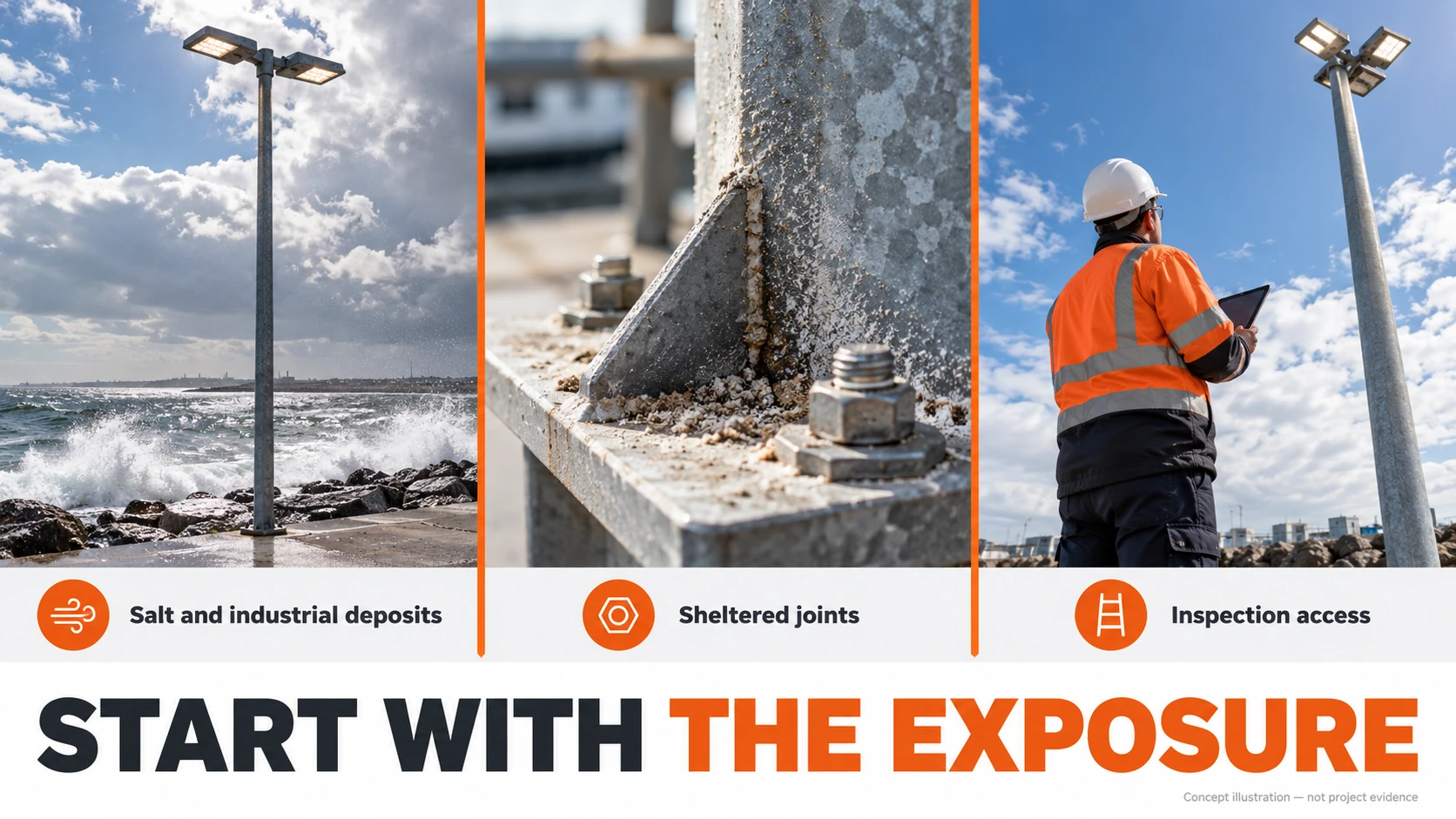
For galvanized steel vs stainless steel at a coastal site, request the proposed material and protection system for that exposure, plus the maintenance assumptions behind it. Do not turn a general online life-expectancy claim into a contractual service-life promise. Similarly, a stainless grade number is not permission to ignore drainage, fabrication quality or deposits around a connection.
Separate visible staining from a structural assessment. Record where deterioration occurs and ask a qualified inspector to assess suspect load-bearing parts. Do not grind, drill or replace hardware just to improve appearance. If the project needs a specific corrosion category or coating acceptance standard, identify its exact edition and scope in the specification rather than copying a thickness from another supplier’s website.
3. Review the joint, not just the pole
A material list can look reasonable while the assembled joint remains unsuitable. ASSDA identifies three conditions for galvanic corrosion: conductive moisture, electrical contact and a sufficient difference in metal potential. Stainless steel connected to wet galvanized steel can accelerate loss of the zinc. Relative wetted areas also matter. Paint should not be assumed to provide dependable electrical isolation. See ASSDA’s dissimilar-metal guidance.
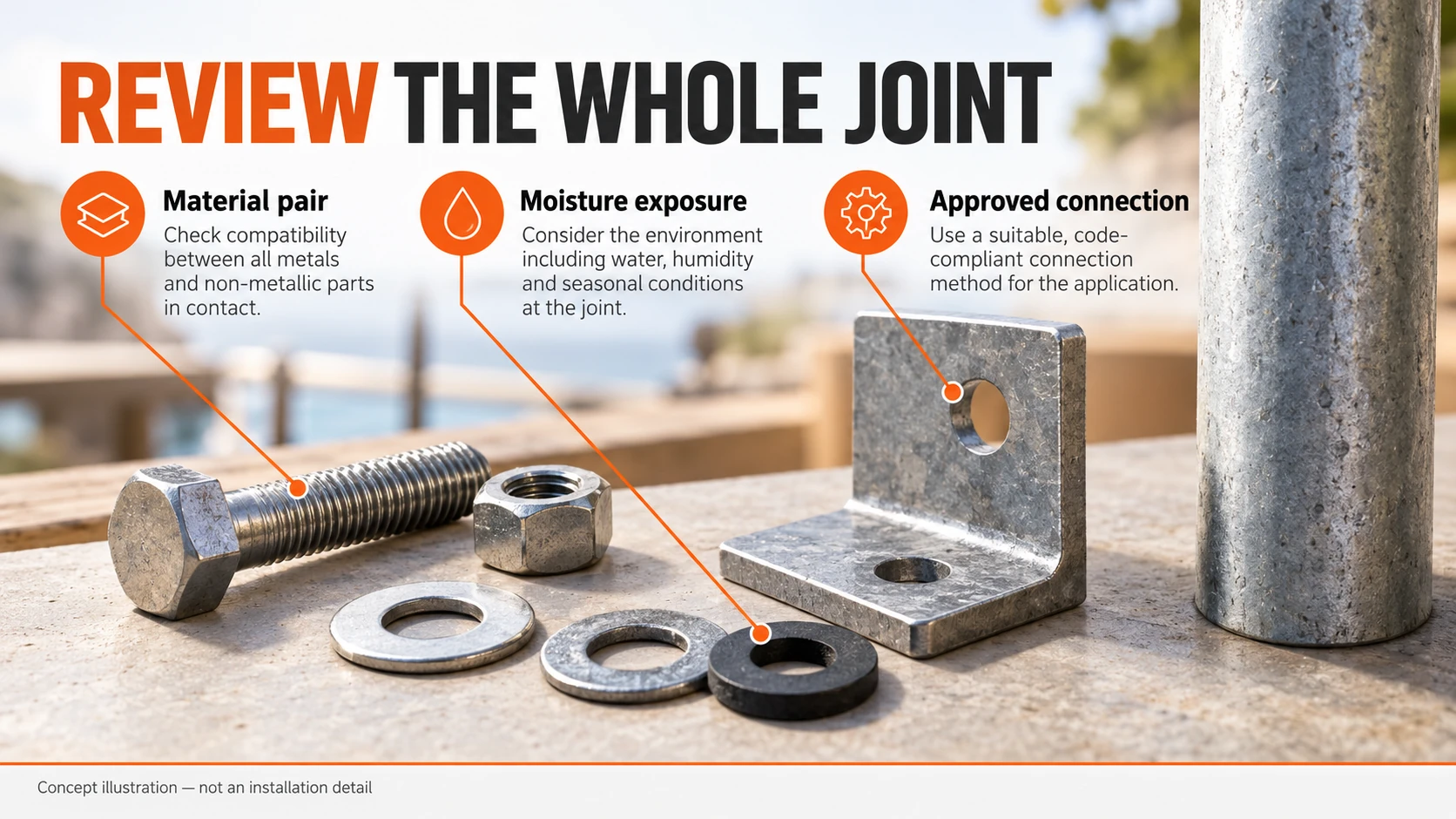
That does not mean every mixed-metal joint must be rejected. It means the supplier should identify the actual joint and its approval basis. Ask which bolt, nut, washer, bracket and pole materials touch, where water can collect and what connection detail is approved. “Stainless hardware included” is not an answer to those questions.
Do not improvise insulating washers on anchor bolts or structural brackets. A change can affect the load path, tightening requirements or electrical bonding provisions. Have the responsible designer resolve corrosion protection and structural and electrical requirements together. Purchasing staff should specify and record the approved assembly, not redesign it from a general corrosion chart.
When specifying All-in-One lighting configurations and All-in-Two lighting configurations, include the luminaire and solar-panel mounting arrangement in that review. Changing the equipment layout is another reason to reconfirm the approved pole-and-bracket assembly; the material comparison alone does not settle its design.
4. Compare complete offers and lifetime responsibilities
The cheapest galvanized steel vs stainless steel quotation is not necessarily the cheapest approved installation. Compare the same drawing, quantity, finish, hardware scope, inspection evidence and delivery basis. If one offer omits fasteners or post-fabrication treatment, mark that difference explicitly. Do not assign an omitted item a zero cost.
A useful comparison separates initial supply, installation access, planned inspection and cleaning, approved repairs, and replacement access. Ask who pays for transport and access equipment if a component needs attention. These are purchasing questions, not a claim that one material always costs a particular percentage more or lasts a fixed number of years longer.
Consider this hypothetical bid review: Offer A names the pole steel grade and finish but says only “bolts included.” Offer B names a stainless grade for its bolts but gives no connection detail. Neither is ready for a like-for-like comparison. Ask A for the complete fastener specification and B for the approved assembly detail, then compare the completed scopes. A premium material label does not close a missing design record.
Inlux Solar’s standard warranty is five years. That is a warranty term, not a blanket promise of free maintenance or a predicted pole life. Confirm the actual project scope, exclusions and maintenance responsibilities in the written offer. For commercial sites, connect the material decision to the complete solar parking lot lighting solution rather than purchasing a pole independently of the lighting layout.
5. Make delivery checks match the approved offer
Before shipment, agree which records identify the supplied components and which checks the receiving team can perform safely. Match the purchase order, approved drawing revision, material designation, finish description and packing list. A generic certificate for a different product or batch does not close a traceability gap. Availability of a particular test or report must be confirmed for the order; do not assume every document is ready for public download.
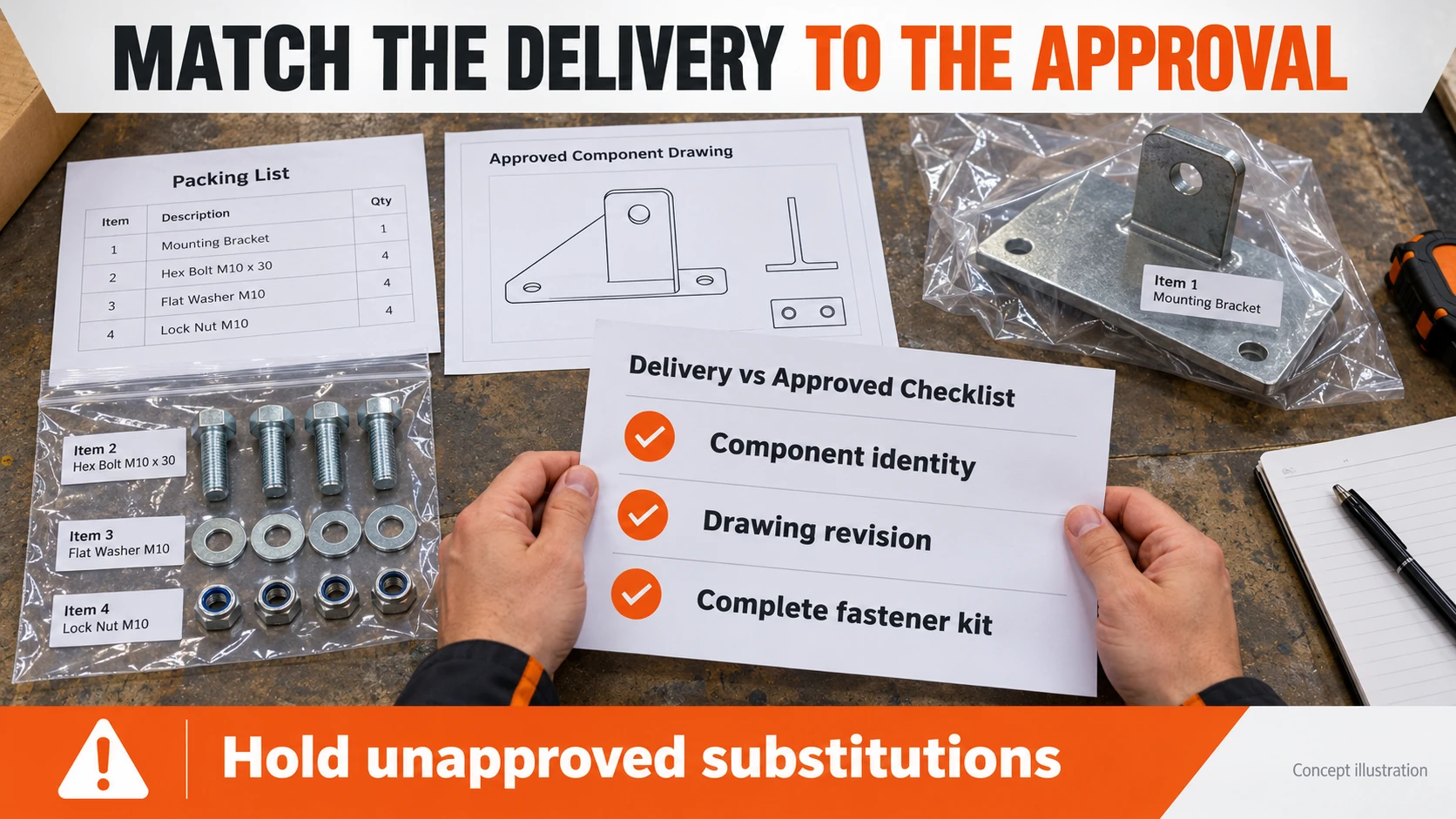
At receipt, record damaged packaging, visible finish damage, missing hardware and mismatched labels before installation. Keep photographs linked to the affected part and shipment. Compare the actual fastener kit with the approved list, not just the count of bags. Quarantine a disputed substitution and obtain a written disposition instead of fitting whatever bolt looks similar.
The practical output of a galvanized steel vs stainless steel review is an agreed assembly record: what each part is, how it is finished, which drawing it belongs to, what exposure it was selected for and how exceptions will be handled. That record is more useful during handover than a statement that one metal is universally better.
FAQs about galvanized steel vs stainless steel
Which is better for a solar street light pole?
Neither name alone determines the better pole. Compare the approved design, material grade, surface protection, site exposure and maintenance responsibilities. A galvanized pole and a stainless pole are not interchangeable merely because their height looks the same. Obtain approval for the complete configuration before ordering or substituting.
Will galvanized steel rust outdoors?
It can. Zinc protects the steel, but that protection is not unlimited. The environment, coating condition and maintenance affect the outcome. Record corrosion or damage and follow the supplier’s approved inspection and repair process; an online lifespan estimate is not a guarantee for the delivered pole.
Can stainless steel bolts be used on galvanized poles?
They may be part of an approved assembly, but they are not an automatic upgrade. Wet electrical contact between dissimilar metals can create corrosion risk. Ask for the specified fastener kit and joint detail. Do not add isolation parts or replace structural bolts without the responsible designer’s approval.
Does stainless steel mean the pole is stronger?
No. Strength must be checked for the actual grade, material condition, dimensions, fabrication and design loads. “Stainless” and “galvanized” are not comparable strength ratings. Request the design basis for the proposed lighting configuration rather than choosing by the surface label.
Can a coating or a photograph prove the material grade?
No. A photograph is useful for documenting appearance or damage, but it does not establish alloy identity or structural suitability. Match the component with its material and fabrication records. If grade identification is disputed, agree an appropriate verification method with the supplier and qualified reviewer.
What should I send when requesting a solar lighting quotation?
Send the project location, application, quantity, planned lighting layout, mounting arrangement, known exposure conditions and any required material or finish specification. Include existing drawings when available. Identify which choices are fixed and which need engineering review, so the quotation does not hide unresolved assumptions.
Get the material decision into the lighting quotation
Review the available solar street light systems and, for a material-specific offer, send Inlux Solar your project requirements. Ask for a clearly identified pole, bracket and fastener scope alongside the lighting configuration. The objective is a comparable, reviewable offer—not the longest list of corrosion claims.