A wire gauge chart compares conductor sizes. In the American Wire Gauge system, a lower AWG number means a larger conductor: 12 AWG is larger than 14, 16 or 20 AWG. For a solid round conductor, 12 AWG is approximately 2.05 mm in diameter and 3.31 mm² in cross-sectional area. Neither figure is the outside diameter of an insulated cable, and neither assigns a safe current to a finished installation.
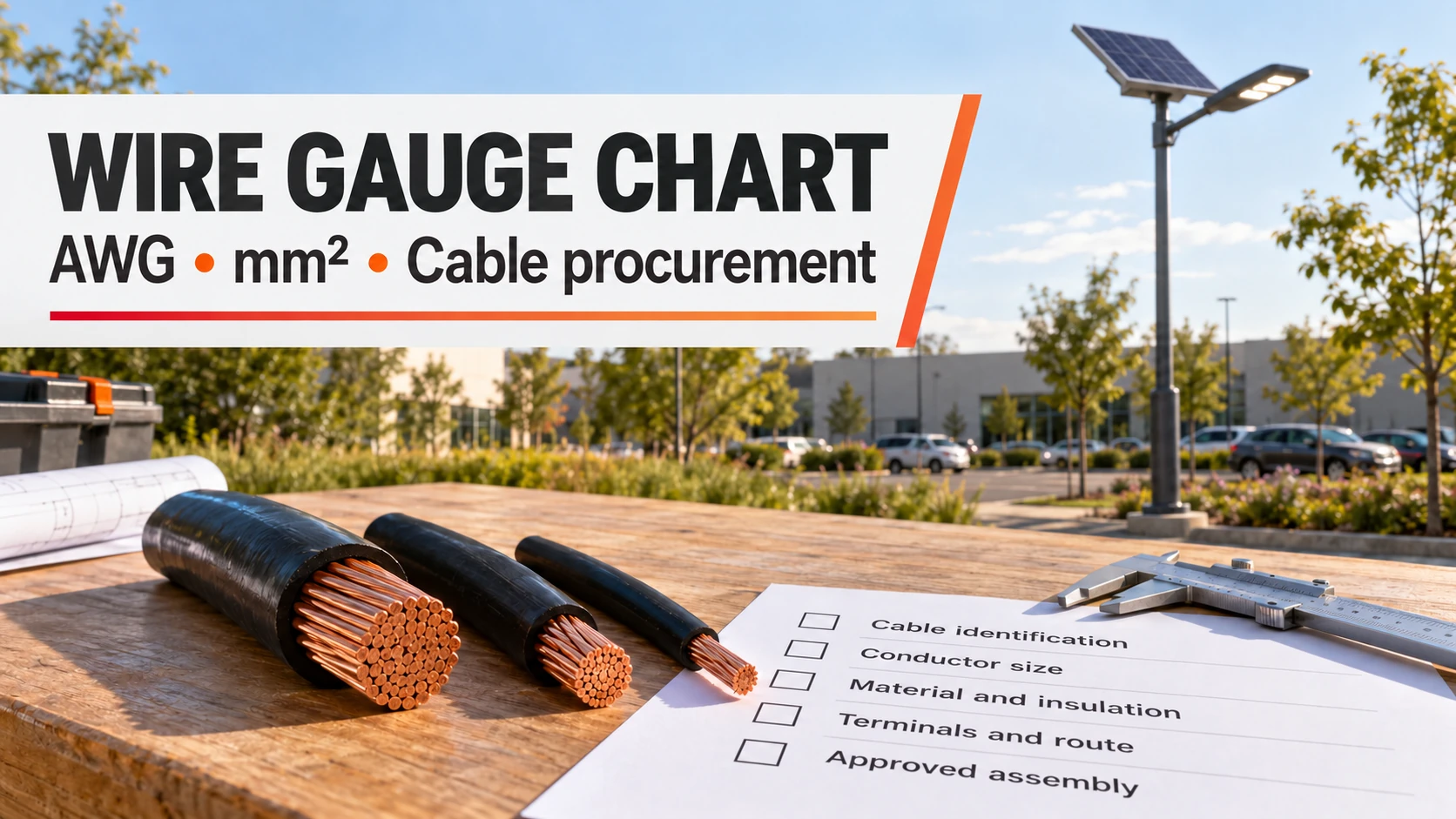
For solar street-light procurement, this distinction matters when a drawing uses AWG but a supplier quotes metric cable. Use the chart to reconcile the size description, then check the complete assembly: conductor material, insulation, terminals, route and approved equipment configuration. A conversion is a starting point for reviewing a quotation, not permission to replace a specified wire.
Wire gauge chart: AWG, diameter and conductor area
The following rounded values describe solid round conductor geometry. For stranded cable, the metal area is distributed among strands; the bundle and insulation add dimensions that this table does not predict. The sizes shown are comparison references, not recommended cable sizes for a particular street light.
| AWG size | Solid conductor diameter (mm) | Conductor area (mm²) |
|---|---|---|
| 24 | 0.511 | 0.205 |
| 22 | 0.644 | 0.326 |
| 20 | 0.812 | 0.518 |
| 18 | 1.02 | 0.823 |
| 16 | 1.29 | 1.31 |
| 14 | 1.63 | 2.08 |
| 12 | 2.05 | 3.31 |
| 10 | 2.59 | 5.26 |
| 8 | 3.26 | 8.36 |
| 6 | 4.11 | 13.3 |
| 4 | 5.19 | 21.1 |
| 2 | 6.54 | 33.6 |
| 1/0 | 8.25 | 53.5 |
| 2/0 | 9.26 | 67.4 |
Pelican Wire’s solid-wire reference provides the diameter and area values used here, rounded to the displayed precision. Its separate stranded-wire chart illustrates why construction must also be specified. Keep the original AWG or metric designation on the purchase order instead of replacing it with a rounded conversion.
How to read AWG to mm² without mixing measurements
AWG is a size designation; mm measures a length; mm² measures an area. A quoted 2.5 mm² conductor is not a conductor with a 2.5 mm diameter. For an ideal solid circular conductor, area equals π × diameter² ÷ 4. That geometry does not include insulation, jacket thickness or the gaps between strands.
DigiKey’s wire-size calculator converts nominal solid-wire dimensions and states that its results are based on solid wire. For ordinary numbered AWG sizes, the diameter in millimetres is 0.127 × 92 raised to the power of (36 − AWG) ÷ 39. Use the unrounded diameter when calculating area; rounding first adds avoidable conversion error.
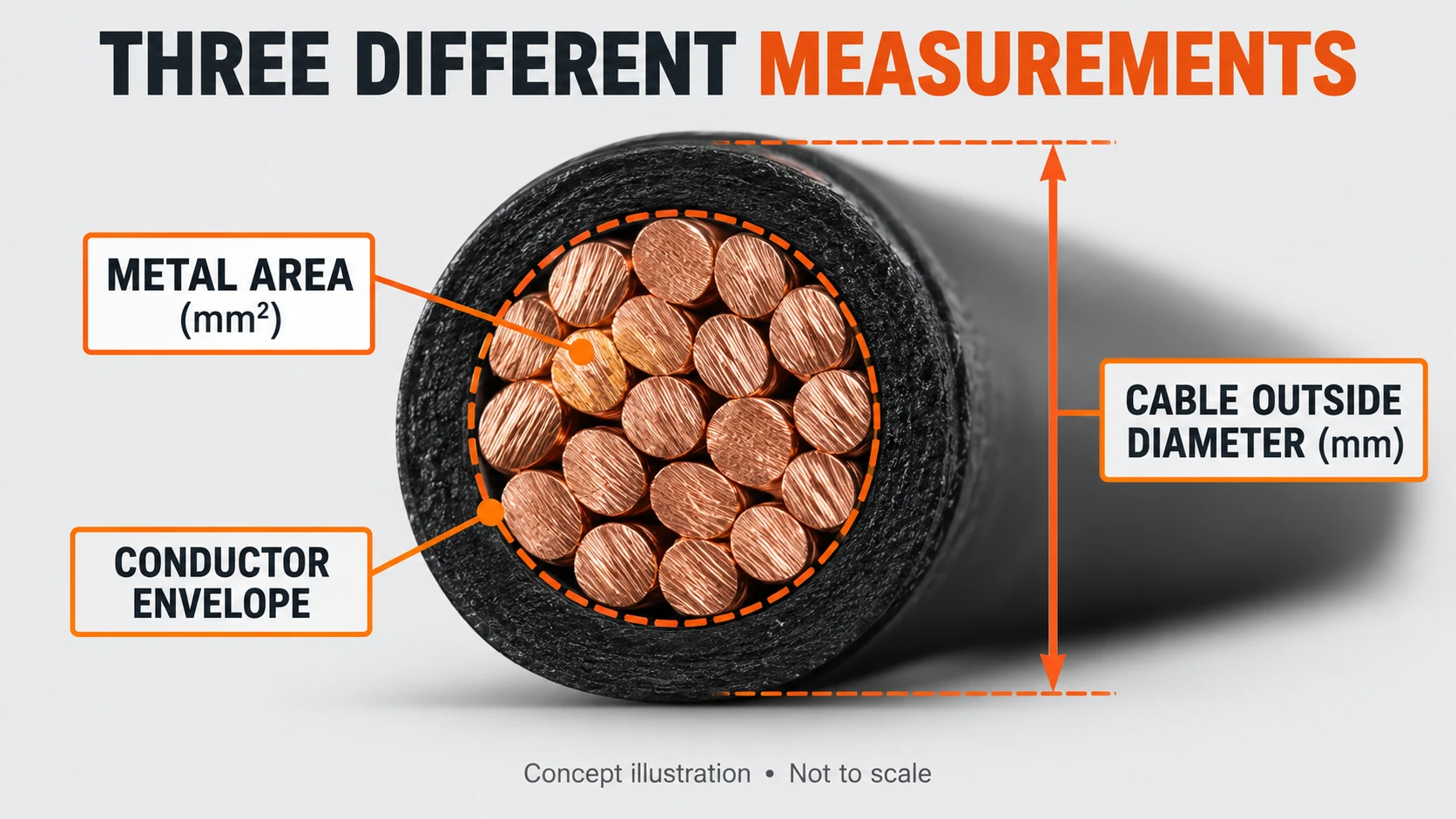
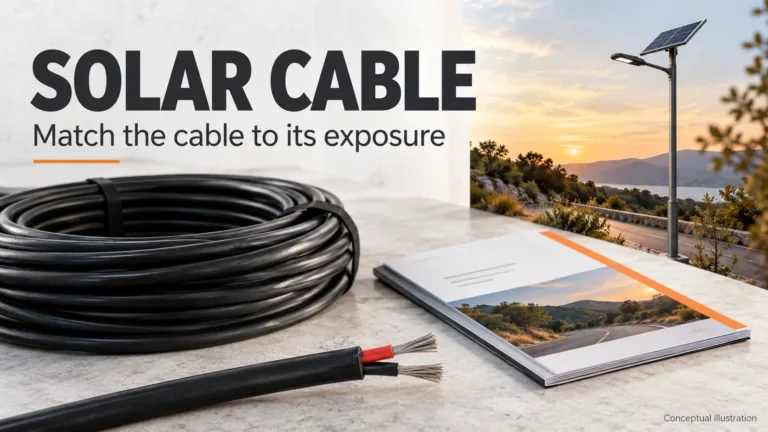
A useful procurement check separates three entries: conductor metal area, bare conductor or strand-bundle diameter, and finished cable outside diameter. Terminals may specify conductor size and construction, while a sealing gland also needs the finished outside diameter. A cable that looks thicker can simply have thicker insulation. A photograph of the jacket cannot establish its copper area.
Why a nearby metric size is not an approved substitute
Suppose a drawing calls for 12 AWG copper and an offer lists 2.5 mm² copper. The chart gives approximately 3.31 mm² for 12 AWG, so the two area descriptions are not equivalent. Do not approve the offer by rounding 3.31 down to the next familiar stock size. Ask the designer or equipment manufacturer to review the proposed part against the actual circuit and termination requirements.
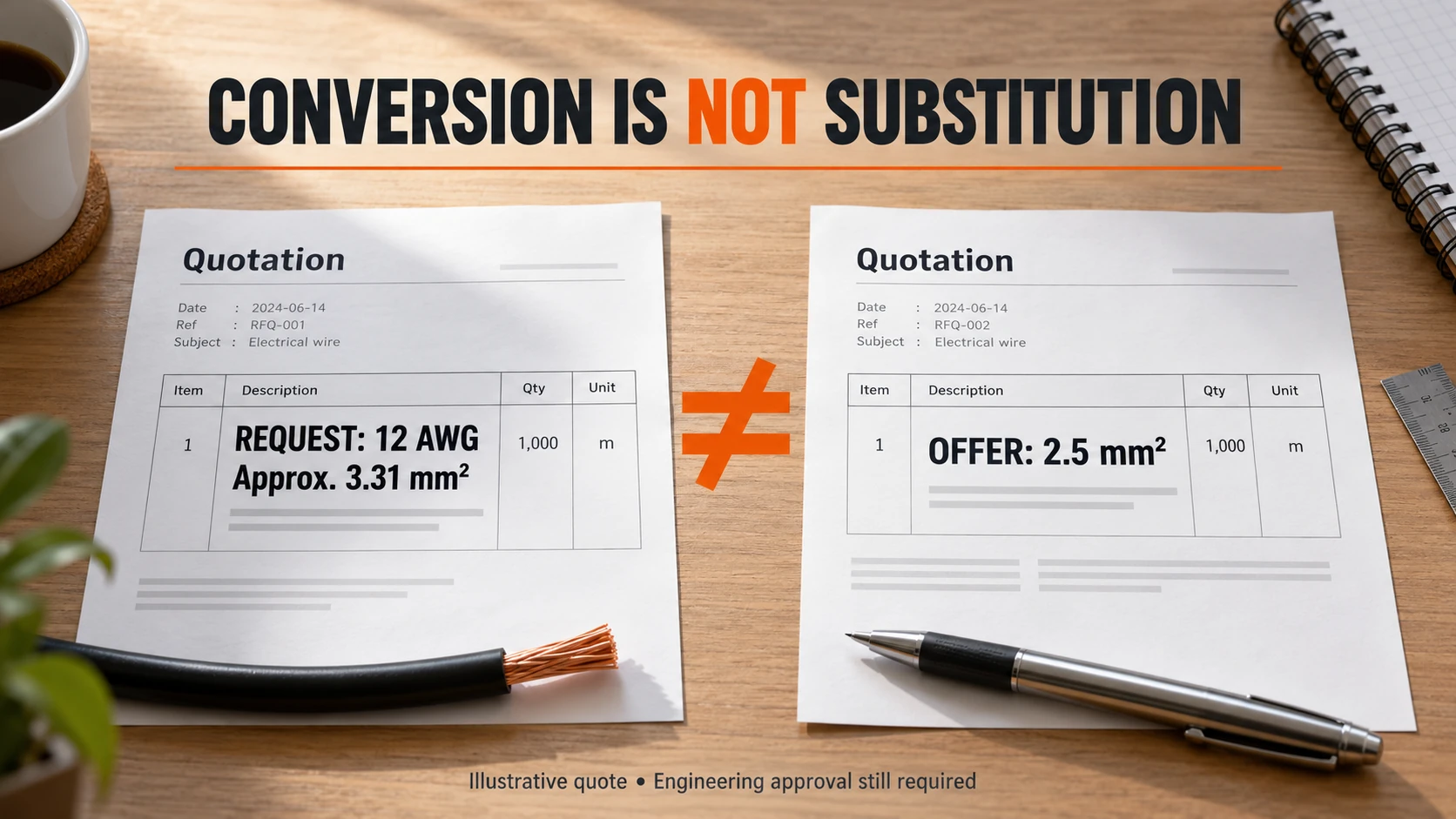
A larger nominal metric size is not automatically a drop-in replacement either. The terminal, contact, ferrule, gland, bend space and assembly tooling may no longer suit the cable. Request an approved alternative part number or a revised assembly drawing. This turns an ambiguous purchasing shortcut into a traceable configuration decision.
| Cable quotation wording | What still needs resolution |
|---|---|
| 12 AWG / 2.5 mm² equivalent | The area values differ; obtain an approved substitution, not a rounded label. |
| Same thickness as the sample | Specify conductor size and finished outside diameter separately. |
| Copper cable | Identify conductor material, construction, finish and the actual cable part number. |
| Fits the connector | Confirm the contact, conductor range, insulation range and approved assembly method. |
| Suitable for outdoor use | Identify the cable rating and the actual exposure and routing conditions. |
Where the cable belongs in a solar street-light system
A solar lighting system may contain a PV-side cable, battery connection and luminaire or driver connection. These circuits can have different voltages, currents, protection arrangements and routes. LED wattage alone does not specify the cable on every side of the system. Start by marking the two endpoints of the cable you are buying.
All-in-One solar street-light configurations can contain factory-managed internal wiring. Treat a service replacement as the specified assembly for that model and revision; a generic chart does not authorize opening a sealed unit, extending its leads or changing its internal harness.
All-in-Two solar street-light configurations make the panel-to-light arrangement an explicit procurement question. Confirm which cables are supplied, their approved length and how the chosen arrangement connects. Do not assume every model uses the same connector, conductor size or system voltage.
Commercial solar parking-lot lighting should be quoted by the selected system and site arrangement. Pole height is not automatically cable length, and the distance between poles is not necessarily an electrical cable route for independently powered lights. Show the actual endpoints and route on the project record.
A wire gauge chart cannot assign one safe amp rating
Current-carrying capacity depends on more than conductor area: material, insulation temperature rating, installation method, ambient temperature, grouping, terminal limitations and the applicable design rules all matter. Voltage drop is a separate check that may require a different size even when thermal limits are satisfied. There is no single ampacity column that safely answers every road, pole or battery installation.
The DC voltage-drop guide covers the route-length and current inputs for that calculation. Keep the one-way length and complete circuit path distinct. For this wire gauge chart, the practical decision is to record the conductor correctly and send the actual circuit conditions for qualified design review.
The solar-panel wiring guide explains why array and equipment arrangements affect electrical requirements. PV cable selection is not interchangeable with selecting a battery lead. Installation, isolation and testing must follow the equipment instructions and site procedures; this article is a procurement reference.
What to request before approving a cable assembly
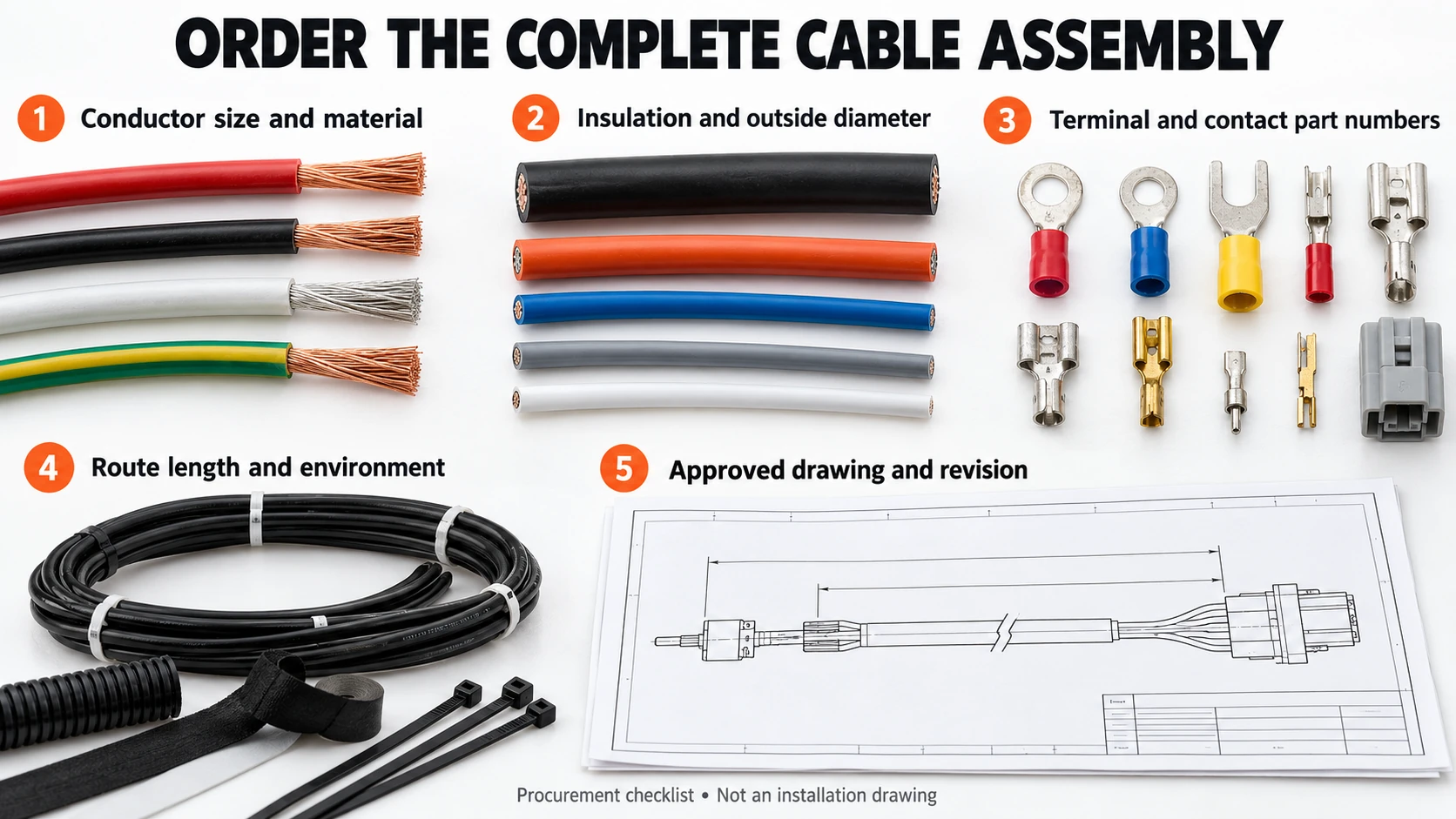
Ask for one identifiable cable assembly rather than accepting separate promises about the wire and plug. Record the cable manufacturer and part number, stated AWG or nominal metric area, conductor material and stranding, insulation rating, overall diameter, cut length and termination details. Include the drawing revision that the supplier is quoting. A sample without an identification record is difficult to reproduce in a later maintenance order.
The PV connector procurement guide addresses connector identification and compatibility. A matching-looking housing does not prove the cable, contact and sealing range are correct. Ask for the approved contact and tooling information for the chosen assembly instead of using appearance as acceptance evidence.
For an incoming shipment, compare the reel or bag identification, cable marking and assembly revision with the approved purchase record. If the markings are missing, inconsistent or different from the offer, hold acceptance and ask for traceable documentation. Do not strip an installed or energized cable to identify it. Any physical verification belongs in the qualified inspection process for a safely isolated sample.
FAQs about wire gauge charts and solar-lighting cables
Which is thicker: 12 or 20 gauge wire?
12 AWG is larger. The reference areas are approximately 3.31 mm² for 12 AWG and 0.518 mm² for 20 AWG. Compare conductors, not insulated outside diameters; different insulation thicknesses can hide the difference.
Is 14 gauge wire thicker than 16 gauge?
Yes, for the AWG system. The solid-conductor diameters are approximately 1.63 mm for 14 AWG and 1.29 mm for 16 AWG. This size comparison alone does not approve either cable for a particular load.
Is 12 gauge larger than 18 gauge?
Yes. The reference areas are approximately 3.31 mm² and 0.823 mm² respectively. Keep the AWG designation explicit: other gauge systems are not automatically the same, and jacket thickness is not a wire-gauge measurement.
How do I identify the gauge of an existing cable?
Start with its printed marking, part number, approved drawing and manufacturer data sheet. If identification is uncertain, request a qualified inspection of an isolated sample. Measuring the outside of the insulation or counting strands without their dimensions does not establish the conductor area.
Is 2.5 mm² the same as 12 AWG?
No. 12 AWG is approximately 3.31 mm². A nominal 2.5 mm² cable is not an exact area conversion. Any substitution must be approved for the electrical conditions, equipment terminals and assembly requirements.
What wire gauge does a solar street light need?
There is no universal gauge. Identify the model, circuit endpoints, voltage, design current, route length, installation conditions and specified connectors. Use the manufacturer-approved assembly or a qualified design; a wattage label and a generic chart are insufficient.
Put the cable specification into the lighting quotation
Inlux Solar street-light systems carry a 5-year standard warranty; confirm the agreed configuration and terms in the quotation. A cable conversion table does not extend that warranty to an unapproved field modification.
Request a project-specific solar lighting quotation with the location, selected model or system arrangement, quantities, cable endpoints and route sketch. If you already have an AWG drawing and a metric offer, include both exact designations and the proposed cable part number. That gives the supplier a concrete mismatch to resolve before purchasing.