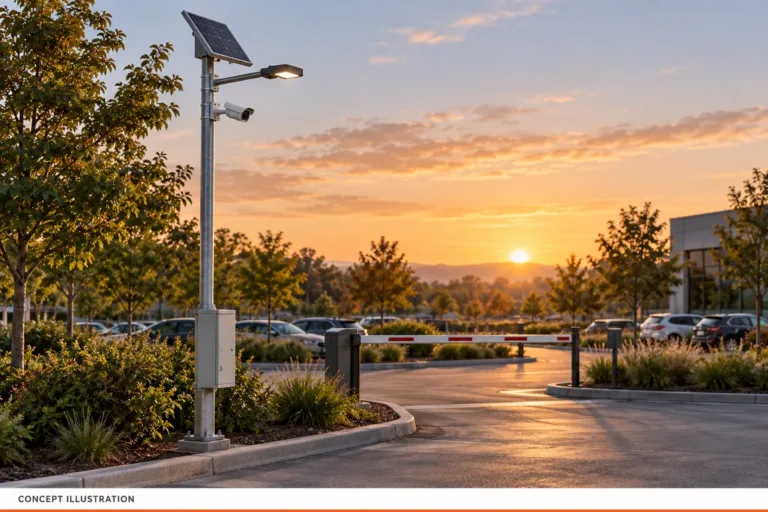
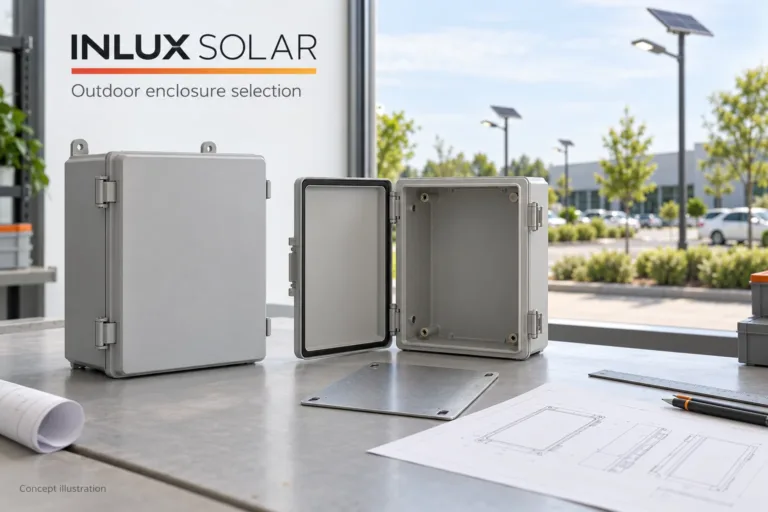
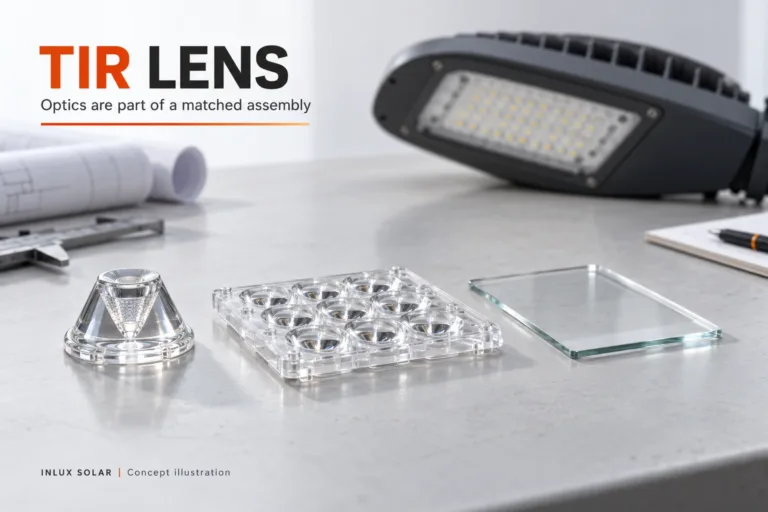
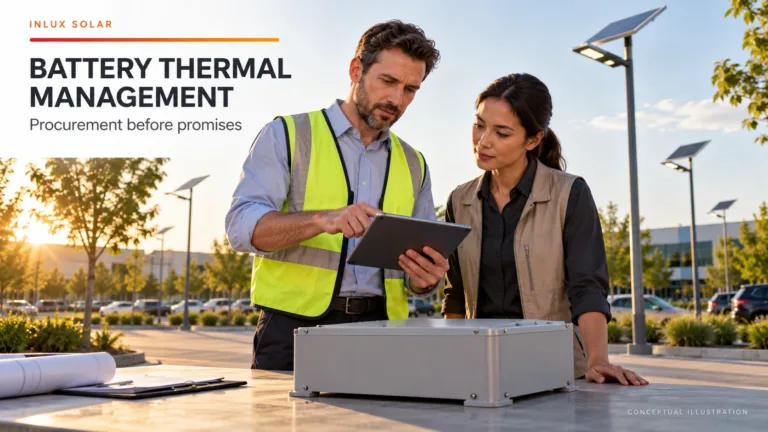
Solar street lights rely on a matched set of PV panels, batteries, controllers, LED luminaires, and mounting components. For municipal, EPC, and distributor projects, replacement parts should be selected against the installed system and its operating conditions, not by component name alone. This guide explains the main parts and the information a buyer should collect before requesting compatible spares.
This guide presents an explanation of solar light components while showing their operational relationships and providing guidance on selecting appropriate replacement parts. Understanding the purpose of each solar lighting component through solar panels and LED fixtures enables better outdoor solar lighting maintenance and longevity. The information in this guide will assist you in making well-informed choices about battery boxes, solar light batteries, and replacement fixtures.
What Are Solar Light Parts? An Overview of Key Components
The operation of solar lights requires multiple essential elements to work correctly. The solar panel stands as the vital component because it transforms sunlight into electrical energy. The photovoltaic cells in these panels create direct current (DC) power. The battery box functions as an energy storage system that accumulates power throughout daylight hours to supply power to LED lights during nighttime. The performance and operational lifespan of solar lighting systems depends heavily on the rechargeable battery type between lithium-ion and nickel-metal hydride.

The solar light system contains power storage and generation components together with control circuits for energy regulation and fixtures for LED bulb housing. The waterproof housing shields internal parts from rain and dust to maintain system durability. The security features of solar lanterns include motion sensors that are integrated into their parts. Solar illumination requires all these vital components to function as one unit.
| Part | Function |
| Solar Panel | Transforms sunlight into electrical energy (direct current – DC power). |
| Photovoltaic Cells | Located within the solar panel, they create direct current (DC) power. |
| Battery Box | Functions as an energy storage system that accumulates power throughout daylight hours to supply power to LED lights during nighttime. |
| Rechargeable Battery | Stores the electrical energy. The type (lithium-ion or nickel-metal hydride) significantly affects the performance and operational lifespan of the solar lighting system. |
| LED Lights | Provide illumination during nighttime. |
| Control Circuits | Regulate energy within the solar light system. |
| Fixtures | Provide housing for the LED bulbs. |
| Waterproof Housing | Shields the internal parts of the solar light from rain and dust, which is crucial for maintaining the system’s durability. |
| Motion Sensors | Integrated into some solar lanterns to enhance security features. They detect movement and can trigger the light to turn on. |
How Solar Light Parts Work Together to Generate Illumination
The solar lighting system starts its operation when solar panels collect sunlight throughout daytime hours. The solar panels transform solar power into electricity before storing it inside rechargeable batteries that reside in the battery box. The charge controller maintains energy flow control to protect batteries from both overcharging and deep discharging that shortens their operational life. The efficient energy management system enables operation of light even when there is limited sunlight.
The system turns on automatically at night through its built-in light sensor or manual control. The stored solar energy from the batteries activates LED bulbs because these bulbs demonstrate exceptional efficiency and extended operational life. The illumination distribution throughout the area depends on the fixture along with wall lights and lanterns that serve as accessories. Solar lighting performance must be checked against the exact model’s rated conditions, site solar resource, battery state and operating schedule.
Types of Solar Light Parts and Their Functions
The different components of solar lights perform individual functions to support the system. The performance level of solar panels depends on their type because monocrystalline panels deliver higher efficiency than polycrystalline panels. The design of battery boxes varies between models because some versions have waterproof casings for outdoor use. The choice of rechargeable batteries—lithium-ion, lithium iron phosphate (LiFePO4), or nickel-metal hydride (NiMH)—impacts energy storage capacity and lifespan.
The essential solar light components consist of fixtures which contain LED bulbs and come in wall light and solar lantern designs. The functionality of solar lighting systems increases through the addition of motion sensors and controllers and mounting brackets as accessories. The selection of appropriate components among these parts leads to reliable outdoor solar lighting systems that operate efficiently.
| Part | Function/Characteristics |
| Solar Panels | Convert sunlight into energy. Performance level depends on the type; monocrystalline panels offer higher efficiency than polycrystalline panels. |
| Battery Boxes | Contain the rechargeable batteries. Design varies between models; some have waterproof casings for outdoor use. |
| Rechargeable Batteries | Store energy for nighttime use. Different types impact energy storage capacity and lifespan: lithium-ion, lithium iron phosphate (LiFePO4), or nickel-metal hydride (NiMH). |
| Fixtures | Contain LED bulbs and come in various designs, including wall lights and solar lanterns. |
| LED Bulbs | Provide illumination within the fixtures. |
| Motion Sensors | Increase the functionality of solar lighting systems by detecting movement and potentially triggering the light. |
| Controllers | Increase the functionality of solar lighting systems by managing charging, discharging, and other operations. |
| Mounting Brackets | Serve as accessories to facilitate the installation and positioning of solar lights. |
Some commercial systems add a small wind turbine as a secondary charging part — see how the components combine in a solar wind hybrid street light.
Common Issues with Solar Light Parts and How to Fix Them
The main issue with solar light parts stems from inadequate charging because of debris or dirt accumulation on the solar panel. Regular cleaning of the solar panel will improve its performance levels. Solar light batteries suffer from failure at the point where they reach their maximum lifespan. The replacement of a suitable spare battery component solves this problem efficiently.
The two main problems with LED lights and sensors involve malfunctions or failure of these components. The LED will not turn on so inspect the battery box and fixture connections to determine the source of the problem. To maintain waterproof solar lights you should check that all seals are intact to stop water from entering the device. Keeping verified, model-compatible spare components can simplify planned repairs.
How to Choose the Right Solar Light Parts for Your Needs

Before sourcing a replacement, identify the original luminaire and controller model, electrical ratings, connector type, battery chemistry and capacity, and the installation environment. For PV modules, compare rated power and electrical specifications with the existing system; a matching wattage alone does not establish compatibility. For multi-site replacements, include quantities and any differences between installed configurations in the RFQ.
The selection of an excellent solar lighting company remains essential. Companies with good reputations maintain large component inventories which helps users locate high-quality solar light replacement parts. Upgrading your system requires waterproof components to ensure better durability.
For hazardous locations, every part — housing, battery box and wiring — must be certified as a unit; see the explosion-proof solar street light for how that changes component selection.
How to Specify Solar Street Light Spare Parts for a Project
For a project spare-parts request, provide the installed product or controller model, photos or part numbers, electrical ratings, required quantities, and destination. Replacement options, compatibility, pricing, and lead time should be confirmed against the specific project in the quotation.
When comparing suppliers, request the applicable component datasheet, connection details, warranty terms, and documents relevant to the specified part. For a fleet of street lights, distinguish a one-off replacement from planned maintenance supply so the RFQ reflects the procurement scope.
Tips to Maintain and Extend the Life of Your Solar Light Parts
The lifespan of solar light parts depends heavily on regular maintenance activities. Regular cleaning of the solar panel helps maintain energy absorption by removing accumulated dust and dirt. Regularly check the battery box for dryness while inspecting rechargeable batteries every few months to detect signs of deterioration.
The lifespan of solar light components can be extended by replacing any worn-out fixtures and accessories. The use of premium solar light replacement components helps decrease failure frequency. The basic maintenance procedures will help your outdoor solar lighting system function for multiple years.
Need commercial-grade solar light components that actually last?
Every Inlux system is engineered in-house — LiFePO4 batteries, MPPT controllers and high-efficiency panels — with BOM and spec sheets available on request.
Request Specs & Quote → See Solar Street LightsConclusion
Knowledge of solar light components helps users maintain and improve their outdoor solar lighting system. The solar light system depends on its individual components including solar panels and battery boxes and LEDs and fixtures to function efficiently. The combination of regular maintenance with high-quality spare parts purchased from a reputable solar lighting company will improve system performance and extend its lifespan.
The selection of appropriate solar lantern parts and wall lights and complete solar illuminations will lead to enduring and dependable outdoor illumination. The right knowledge combined with resources makes solar light system maintenance and repair tasks simple and affordable.