A project runs fine for weeks—then a storm season hits. A few lights start flickering, then go dark. The quote said “10 kV surge protection,” but the site team can’t show where the SPD is installed, how it’s earthed, or any acceptance records. This is the classic “mystery failure” pattern: the protection exists on paper, not on the pole.
Quick Takeaways (TL;DR)
- Surge failures are rarely “bad luck.” Most come from unclear scope, wrong SPD placement, poor bonding, or long lead lengths.
- For solar street lights, protect both power paths and sensitive electronics: controller, driver, sensors, radios, and (if present) AC inverter interfaces.
- Specify protection using a test method reference (e.g., surge immunity test method) and demand deliverables (report + photos + records), not just “kV” marketing.
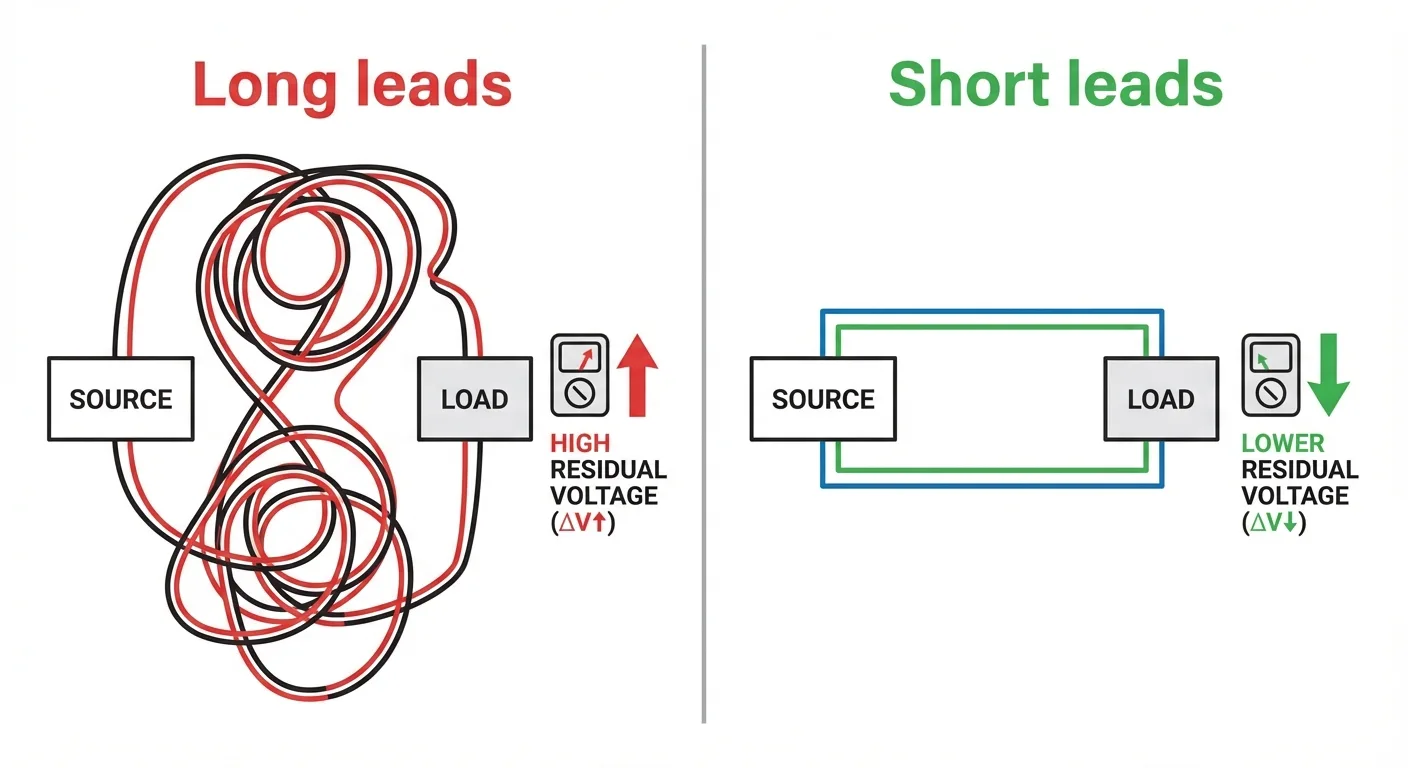
- Keep SPD leads short and straight. Long loops raise residual voltage and defeat the purpose.
- Make surge protection verifiable: add a tender clause + a commissioning checklist (copy/paste provided below).
Start here (internal): Solar Street Light Resources Hub · Guides Hub (Engineering Playbooks) · Tender Pack: Project Input Sheet · Spec Definitions (Standards & Deliverables) · solar street light specification checklist
What “Surge Protection” Really Means (and why kV-only specs fail)
Outdoor lighting failures are commonly triggered by lightning-induced transients (nearby strikes), switching events, or poor grounding/bonding. A surge protective device (SPD) is designed to divert transient energy to earth so sensitive electronics see a safer residual voltage.
The problem: many bids only say “10 kV” without stating the test method, installation constraints, or what exactly is protected. That’s why you need a procurement rule: if the supplier can’t name the method and deliver the evidence, the bid is not comparable. (This is exactly the approach used across our tender-ready hubs: Buyer’s Guide Hub.)
If you want a practical, manufacturer-grade explanation of how lightning over-voltages affect outdoor luminaires and what to do about it, see this surge protection guidance for lighting systems: Philips Color Kinetics – Surge Protection.
Figure 1 — Surge Path & SPD Placement (Solar Street Light)
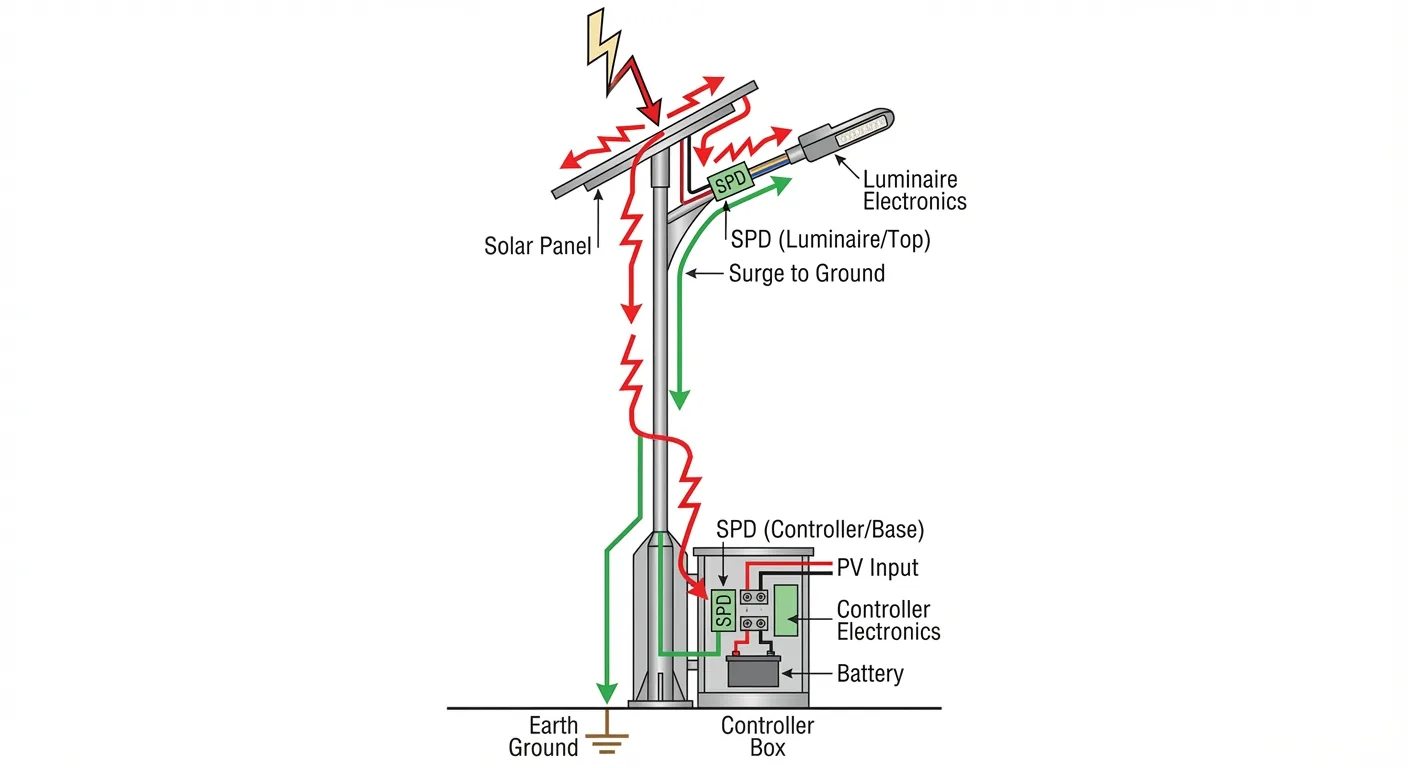
Where surges enter in real projects
- Pole / luminaire housing: induced transient couples into wiring and electronics.
- Long cable runs: longer wiring increases coupling and loop area (more induced voltage).
- Accessory electronics: sensors, 0–10V/DALI interfaces, NEMA sockets, radios are often the first to fail.
- Hybrid / AC interfaces (if used): additional paths exist through inverter/AC distribution.
If your system includes a separate PV/battery/controller architecture, align protection with your single-line diagram deliverable. (See: Solar Power System for Street Lighting Projects.)
SPD Selection: The Only Specs That Matter in Tenders
1) Don’t buy “kV marketing.” Specify test method + configuration
In tenders, request: (a) the surge immunity reference/test method used, (b) the SPD level provided, (c) where it’s installed, and (d) evidence (report + photos). Our Guides Hub uses surge immunity method reference as a procurement checklist item: Solar Street Light Guides Hub.
2) Coordinate SPD types (upstream vs equipment-level)
In many electrical standards and guidance summaries, SPDs are described as Type 1/2/3 with different roles (service entrance vs distribution vs point-of-use). The key idea for lighting: you often need coordination—an upstream protector + a close-to-load protector. Reference overview: SPD Types Overview (Type 1/2/3).
3) Require protection for “small electronics,” not only the driver
- LED driver (power stage)
- Controller / MPPT (solar)
- Sensors (PIR / photocell)
- Smart node interfaces (NEMA socket, communication module)
If your product series offers SPD as an option, lock it as a named configuration (no substitutions). Example product language that must become contract language: SIRIUS All-in-One Solar Street Light (SPD option).
Figure 2 — Bonding & Grounding (What “Good” Looks Like)
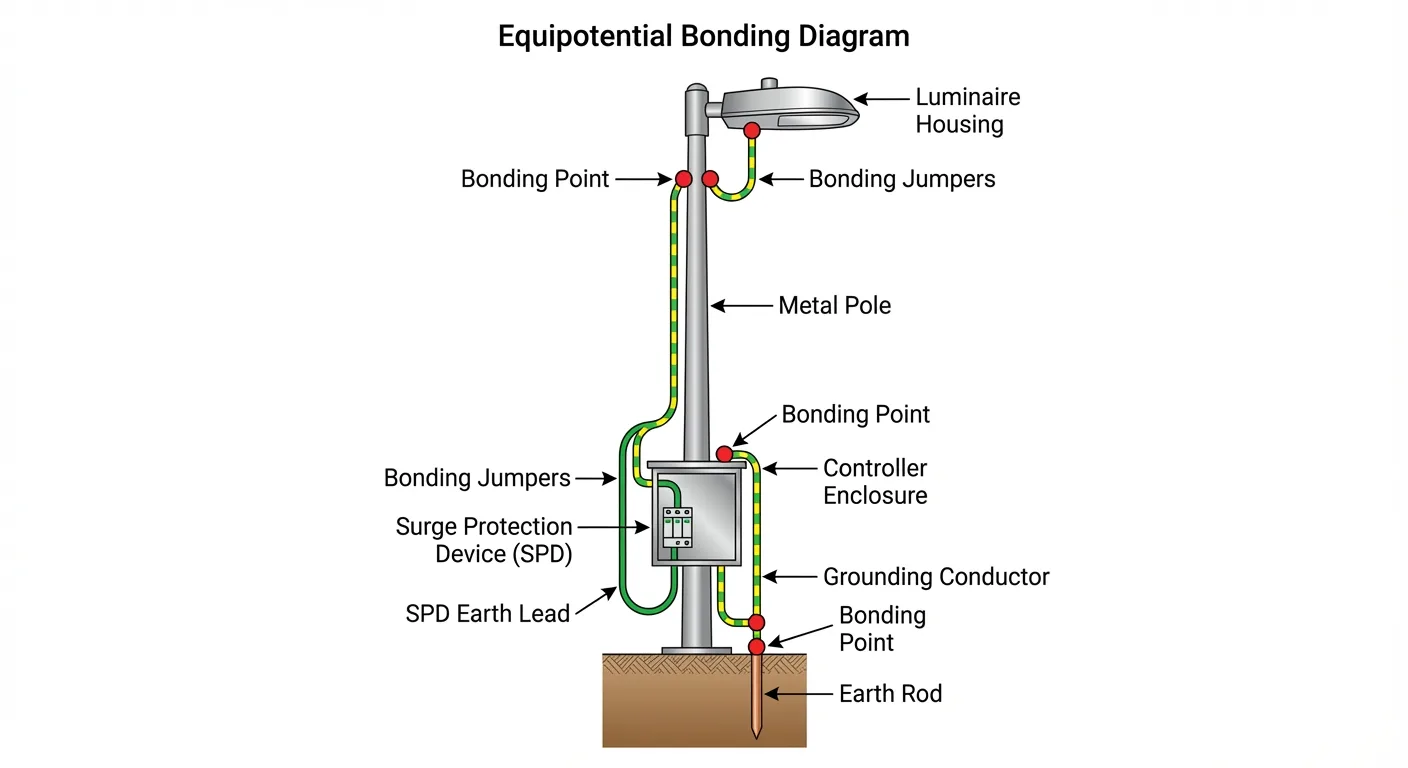
Grounding / bonding rules that prevent repeat failures
- One clear bonding plan: define exactly what bonds to what (pole, luminaire housing, controller box, SPD earth).
- Short, direct earth leads: avoid loops. Keep conductors straight where practical.
- Corrosion-aware connections: coastal/industrial projects need compatible metals and proper sealing.
- Document it: photos + records at commissioning (see checklist section).
If you need a practical “how to install surge protector in luminaires” reference, see this design-in guide: Philips – Surge Protector Design-in Guide (PDF).
Figure 3 — Why Lead Length Matters (It’s the silent killer)
Installation rules you should write into the tender
- SPD leads must be as short as practical and routed to minimize loop area.
- No “creative wiring” inside poles—follow the wiring diagram and label circuits.
- Seal cable entries properly; water ingress can turn surge events into permanent faults.
For component-level surge design and installation concepts used in outdoor LED lighting, this engineering guide is useful: Littelfuse – LED Lighting SPD Module Design & Installation Guide (PDF).
Copy/Paste Tender Clauses (Surge + Grounding)
Clause A — Evidence requirement
“Bidder shall submit surge protection scope and evidence for the proposed solar street light system: (1) SPD level and where installed, (2) surge immunity test method reference and report (or accredited equivalent), (3) grounding/bonding diagram, and (4) commissioning photos and records. Bids lacking evidence are non-comparable.”
Clause B — No silent substitutions
“No substitutions of LED driver, controller/MPPT, SPD module, wiring harness, or firmware dimming profile are permitted without written approval and updated evidence files.”
Clause C — Deliverables for site teams
“Bidder shall provide BOM, single-line diagram, wiring diagram, and protection list (breaker/fuse/SPD) with installation notes.” (This is aligned with: Solar Power System Deliverables.)
Figure 4 — Tender Scope Matrix (Stop “scope gaps”)
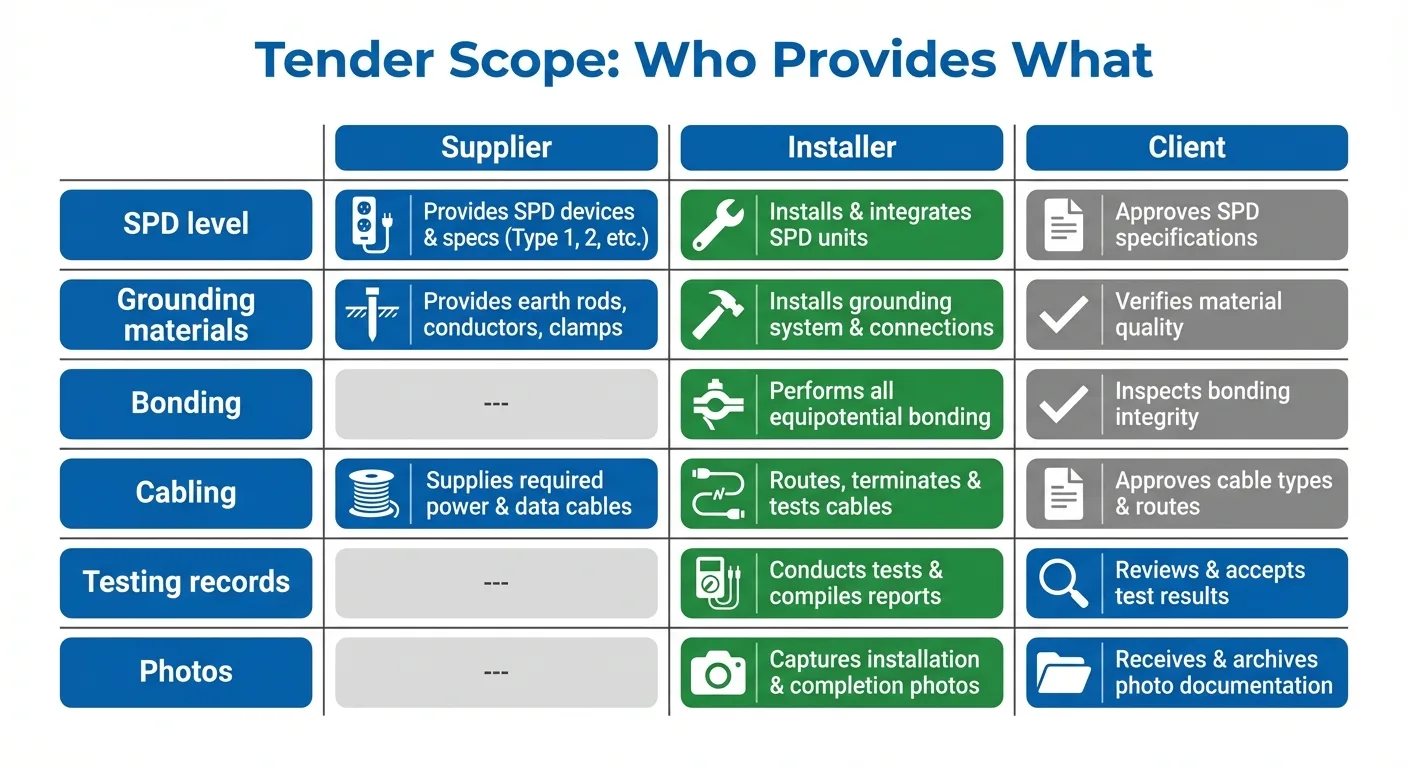
What must be explicit in the PO
- SPD included or optional? If optional, list it as a line-item and lock configuration.
- Who provides grounding materials (rod, conductor, clamps) and who is responsible for testing/recording?
- What evidence is required at commissioning (photos, part numbers, labels, records)?
If you also have high-mast assets in the same program, you can cross-reference the high-mast surge guide here: Lightning & Surge Protection for High Mast Lighting.
Figure 5 — Commissioning & Acceptance Checklist (Copy/Paste)
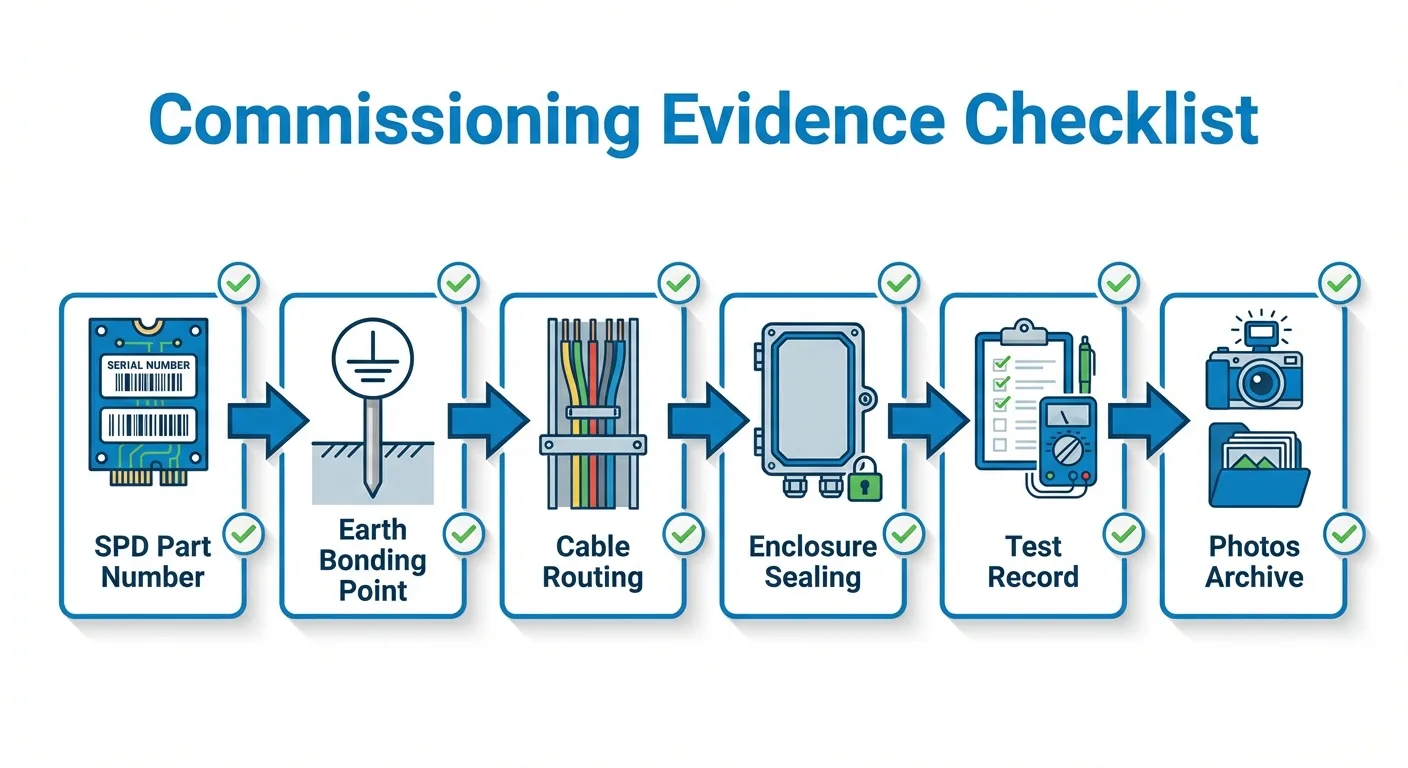
Use this checklist at installation handover. (Related acceptance workflow: Commissioning & Acceptance Checklist.)
- Record installed model/configuration (including SPD option if applicable) + luminaire ID/traceability.
- Photo: SPD part number/label + indicator status (if the device provides one).
- Photo: SPD earth/bonding connection point and routing (show “short and straight” lead practice).
- Photo: pole/base bonding and grounding connection (show clamps, conductor, corrosion protection).
- Photo: enclosure sealing and cable entry (prevent water ingress that worsens surge damage).
- Record: wiring diagram + protection list used on site (breaker/fuse/SPD).
- Archive: commissioning folder per site section (GPS tag or pole ID + photos + records).
FAQ (Tender-Friendly)
What causes surge failures in solar street lights?
Most failures come from lightning-induced transients, switching events, poor bonding/grounding, and long wiring loops that increase coupling.
Is “10 kV surge protection” enough?
Not by itself. You must define the test method/evidence, placement, wiring constraints, and what electronics are protected.
Where should the SPD be installed?
Coordinate protection: close-to-load protection (luminaire/control electronics) and, when applicable, upstream protection depending on system architecture.
Why do SPDs fail even when installed?
Common causes: long lead lengths, poor earth path, incorrect bonding, water ingress, or the SPD isn’t matched to the system.
What’s the biggest installation mistake?
Long, looped SPD wiring. Keep leads short and straight to reduce residual voltage at the electronics.
Do solar street lights need grounding if they are off-grid?
Yes. Off-grid does not mean surge-immune. Grounding/bonding provides a discharge path and reduces damaging potential differences.
Should I protect sensors and smart nodes too?
Yes—photocells, PIR sensors, and communication nodes often fail before the main driver.
How do I make bids comparable?
Use a tender clause requiring evidence: protection scope, test method reference, report, wiring diagram, and commissioning records.
What deliverables should a supplier provide?
BOM, single-line diagram, wiring diagram, protection list (breaker/fuse/SPD), and installation notes. See: Solar Power System Deliverables.
How can I prevent “silent substitutions”?
Lock driver/controller/SPD/firmware configuration in contract terms and require written approval for any changes.
Does cable routing matter?
Yes. Poor routing increases loop area and coupling, raising transient voltage. Keep runs tidy and minimize loops.
Does enclosure sealing matter for surge reliability?
Yes. Water ingress can accelerate corrosion and create secondary failure paths after surge events.
Are surge issues more common in tall poles?
Exposure increases with height and site conditions. High-mast assets often require stricter scope and acceptance records.
What should I photograph for acceptance?
SPD label/indicator, SPD earth lead routing, bonding points, grounding connection, cable entries, and enclosure sealing.
Should I request a surge test report?
If the project is surge-prone or claims a specific immunity level, request evidence and the method reference rather than relying on marketing text.
What if the installer says surge protection is “included in the driver”?
That may not cover the full system. You still need bonding/grounding quality and protection for sensors and interfaces.
How does this relate to photometrics/IES files?
Photometrics ensure performance; surge protection ensures continuity. Both must be tender requirements, not afterthoughts.
Where do I store these records?
Create a commissioning folder per zone/pole ID with photos, diagrams, and part numbers—so failures can be diagnosed without guesswork.